Nevada
Nevada protects consumers from utility shutoffs in extreme heat. Advocates want more. – The Nevada Independent


As electricity costs grow steeper and Nevada summers grow deadlier, advocates are sounding alarms about the risks to low-income people who can’t afford consistent air conditioning in dangerous temperatures.
Between May and August 2025, there were at least 114 heat-related deaths in Clark County alone, according to the county coroner’s office.
This summer’s scourge of heat-related death and illness mirrors a nationwide trend. Recent studies show that extreme summertime heat is now the leading cause of weather-related deaths, according to the U.S. Environmental Protection Agency (EPA).
In 2023, the death certificates of more than 2,300 people who died in the summer mention the effects of excessive heat, the highest number in 45 years of records, according to an Associated Press analysis of Centers for Disease Control and Prevention data. Three-quarters of those deaths occurred in five states: Arizona, Texas, Florida, Louisiana and Nevada.
According to the nonprofit organization Climate Central, Las Vegas and Reno are the two fastest-warming cities nationwide. Las Vegas’ environment puts residents at particular danger from extreme heat. The city’s sprawl has created a “heat island,” where heat-absorbing roads and buildings further increase temperatures.
Yanci Hill works to protect her fellow Nevadans from extreme heat as part of the Latin-focused environmental group Chispa Nevada, which advocates for less expensive utility costs and more transparent utility policies for Nevadans. She experienced extreme heat herself in July 2024, when the central air-conditioning unit in her one-story home in Henderson broke.
Hill, her husband and their 18-year-old daughter spent five days virtually trapped inside their home. “It was 113 degrees outside,” she explained, “and 102 degrees inside. We were sleeping with cold compresses on our foreheads and ice packs under our pillows.” The heat got so bad, Hill said, one of the family cats fell ill with liver disease.
Hill said one of her friends once had her utilities shut off because she was a few dollars short on her bill.
The federal government has long recognized the need to ensure Americans can access their utilities in extreme weather. Since 1980, the federal Low Income Home Energy Assistance Program (LIHEAP) has provided funds to state governments to subsidize residents who have trouble affording their heating or cooling bills. But according to Mark Wolfe, executive director of the National Energy Assistance Directors Association (NEADA), which represents the program’s state managers, roughly 85 percent of the program’s resources are used for heating in the winter. That leaves less support available nationally for households requiring cooling.
“How do we protect vulnerable households both during periods of extreme heat and extreme cold?” asked Wolfe. “The rules haven’t caught up.”
Nationally, the cost of electricity has risen at twice the pace of the average cost of living, exacerbating this problem. According to NEADA, almost one in every five of the poorest families lacks consistent access to cooling.
To supplement the LIHEAP program’s efforts and keep utilities operating in sweltering heat, many states bar utility companies from disconnecting services in certain temperatures or during certain months.
Nevada is one of 20 states that offer protections from utility shutoffs during extreme heat and one of 41 states that offer the same protections during extreme cold. According to the Public Utilities Commission of Nevada (PUCN), utilities cannot be disconnected when the temperature is above 105 degrees. If customers are elderly or disabled, that threshold drops to 95 degrees. Utility disconnections also must be delayed for 30 days if a resident is experiencing a medical emergency.
But Olivia Tanager of the Sierra Club’s Toiyabe Chapter, one of Nevada’s largest environmental organizations, said she believes the state must do more.
Some states have their temperature-based protections kick in at a lower threshold. Arizona, for instance, prevents utilities from being shut off during summer months or whenever it hits 95 degrees.
“I think a lower threshold — in the 92 or 95 degree area — would be much more reasonable for Nevada, because we also know, especially in Southern Nevada, the heat disparities between different neighborhoods are very extreme,” said Tanager.
In this year’s legislative session, a bill that went even further — prohibiting utility cutoffs from May 1 to Oct. 31 — died without a hearing.
Along with more expansive time- or temperature-based protections, environmental and consumer advocates have encouraged the state to provide more robust financial assistance to low-income families. Nevada is one of 26 states plus Washington, D.C., that offer assistance with summer energy bills, partnering with the federally funded LIHEAP to provide support to consumers through the Energy Assistance Program (EAP). NV Energy, which controls the majority of utilities in Southern Nevada, also oversees the Special Assistance Fund for Energy (SAFE) program, which is intended to supplement state and federal assistance.
But Nevada is not one of the 21 states with explicit policies protecting low-income families from utility disconnections during summer months. Such disconnections are only barred if the temperature is above 105 degrees. But even if families keep their utilities on in such intense heat, they must foot the bill. A public utilities commission spokesperson told The Nevada Independent in a statement that Nevada places “a moratorium on disconnections during periods of extreme temperatures; the regulations do not exempt customers from paying utility bills incurred during extreme temperature periods.”
Residents are only allowed to receive EAP funds once annually, which Tanager says further prevents the program from becoming a long-term solution to an affordability crisis.
“While we do have resources, and while we appreciate those resources existing, we know that it’s not working for everybody,” she said.
Tanager’s Sierra Club and Hill’s Chispa Nevada are part of the Nevada Environmental Justice Coalition, which sent a group of activists to the state legislative session in April 2025 to advocate for greater transparency and affordability concerning utilities. They petitioned successfully for the passage of AB442, which requires the Public Utilities Commission to report quarterly data on when and where utility services are being disconnected, and AB452, which requires greater transparency around the setting of utility rates.
“AB452 was really about consumer protections — how do we know what we’re paying for as energy consumers?” said Assm. Tracy Brown-May, who sponsored the bill. “So that we know when [Nevada utility companies] purchase that natural gas, the cost of it is not all immediately passed onto the rate payer, with no data or information as to why.”
In February 2025, NV Energy proposed a revenue increase that would spike rates up to 9 percent, a move they justified by pointing to last year’s expensive heat waves. The Public Utilities Commission, forced to delay August public hearings on the matter due to the government’s recent cyberattack, is expected to vote on the proposed rate hike next week.
Tanager, for her part, said she hopes that the commission votes against the hike.
“The utility companies are bringing in record profits year-after-year, but Nevadans continue to be squeezed more and more,” she stated. “Several percentage points of people in each ZIP code are unable to pay their utility bill each year, which is, in my opinion, just disgusting.”
Cora Lewis of The Associated Press contributed to this article.



First team
Gigi Benoualid, Coronado — The senior finished seventh at the 5A Southern Region meet (19 minutes, 26.3 seconds) and was eighth at the 5A state meet (19:41).
Scarlett Cotrone, Faith Lutheran — The junior finished 11th at the 5A Southern Region meet (19:52.4) and was ninth at the 5A state meet (19:45) to help the Crusaders win the 5A team state title.
Ryen Hughes, Shadow Ridge — The junior finished fourth at the 5A Southern Region meet (19:12.4) and was fifth at the 5A state meet (19:16).
Aislin McMahon, Sky Pointe — The junior finished second at the 5A Southern Region meet (18:54.8) and was second at the 5A state meet (19:00).
Brooke-Lynn Miller, Coronado — The senior won the 5A Southern Region individual title (18:40.8) and was seventh at the 5A state meet (19:19). She is committed to Cal Baptist.
Elynn Okuda, Shadow Ridge — The senior finished sixth at the 5A Southern Region meet (19:16.1) and was third at state (19:11).
Lacy Tippetts, Sky Pointe — The junior finished third at the 5A Southern Region meet (18:58.2) and was 13th at the 5A state meet (19:57).
Sophia Weisz, Faith Lutheran — The junior finished fifth at the 5A Southern Region meet (19:13.1) and was 10th at state (19:45) to help the Crusaders win the 5A team state title.
Coach of the year
Jeff Edwards, Faith Lutheran — Guided the Crusaders to the Class 5A team state title, the program’s fifth overall and first since 2001.
Second team
Jenna Anderson, Faith Lutheran — The sophomore finished 24th at the 5A Southern Region meet (20:34.6) and was 14th at the 5A state meet (19:57) to help the Crusaders win the team title.
Lola Borsh, Desert Oasis — The freshman finished 16th at the 5A Southern Region meet (20:16.5) and was 26th at the 5A state meet (20:26).
Katherine Hodges, Sky Pointe — The junior finished 13th at the 5A Southern Region meet (20:12.8) and was 23rd at the 5A state meet (20:18).
Lacy Mayes, Centennial — The sophomore finished eighth at the 5A Southern Region meet (19:30.6) and was 19th at the 5A state meet (20:05).
Autumn McQuirter, Liberty — The sophomore finished 15th at the 5A Southern Region meet (20:15.7) and was 12th at the 5A state meet (19:54).
Mia Musemici, Desert Oasis — The senior finished 10th at the 5A Southern Region meet (19:47.8) and was 24th at the 5A state meet (20:23).
Belle Parrel, Centennial — The freshman finished ninth at the 5A Southern Region meet (19:47.4) and was 17th at the 5A state meet (20:01).
Michelle Stana, Clark — The freshman won the 4A individual Desert League (21:19.9) and state (20:43.2) titles.
Mackenzie Teel, Sky Pointe — The senior finished 14th at the 5A Southern Region meet (20:15.5) and was 37th at the 5A state meet (20:57).
Julia Vancura, Faith Lutheran — The senior finished 12th at the 5A Southern Region meet (20:01.0) and was 21st at the 5A state meet (20:10).
Honorable mention
Mandi Abney, Shadow Ridge
Savannah Abney, Shadow Ridge
Emma Ansorge, Basic
Maleah Bennett, Centennial
Allison Blazi, Amplus Academy
Kensley Bleak, Lincoln County
Isabella Bustillos-Rivera, Desert Oasis
Ava Dupuis, Palo Verde
Isabelle Franks, Faith Lutheran
Leah Groppenbacher, Arbor View
MJ Gutierrez-Hess, Green Valley
Payton Howse, Clark
Sadie Ivins, Lincoln County
Madeline Labay, Bishop Gorman
Aubrei Lay, Sky Pointe
Selina Leipard, Clark
Ava Levy, Palo Verde
Stella Lin, Coronado
Mackenzie McClain, Sky Pointe
Adalyn Mosley, Foothill
Yalitzi Muro, Western
Elizabeth Neumann, Silverado
Julianna Ondrisko, Pahrump Valley
Sophie Romero, Pahrump Valley
Isabelle Searer, Liberty
Avery Stanton, Coronado
Eliott Stepanek, Faith Lutheran
Amira Turner, Centennial
Isla Ulmer, Coronado
Olivia Wheeler, Sky Pointe
Contact Alex Wright at awright@reviewjournal.com. Follow @AlexWright1028 on X.

LAS VEGAS (KTNV) — The Justice Department on Friday sued Nevada and three other states, claiming they’d failed to provide requested voter roll information.
Nevada officials, however, said the federal government hasn’t answered basic questions about how the information would be kept secure and questioned why officials wanted the data.
WATCH | What to know about the lawsuit
Justice Dept. sues Nevada over voter rolls
The 10-page lawsuit, filed in federal District Court in Nevada, says the government is seeking the information to enforce the provisions of the National Voter Registration Act, the Help America Vote Act and the Civil Rights Act.
It says the Justice Department asked the state on June 25 for information including a copy of its computerized statewide voter registration list. It said the information could be sent via encrypted email or by using the department’s secure file-sharing system.
The state immediately replied, sending a copy of the voter registration list, including names, addresses and birthdates, but not drivers license information or the last four digits of Social Security numbers.
The department responded on Aug. 14, again asking for the full database and adding “the purpose of the request is to ascertain Nevada’s compliance with the list maintenance requirements of” federal election laws.
The state, according to the lawsuit, wrote back to say the federal government had no basis for the request and claimed it was concerned about privacy of voter data.
The lawsuit asks the court to declare Nevada’s refusal to provide the entire database unlawful, and order the state to turn it over.
In response, Nevada Secretary of State Cisco Aguilar said in a statement Friday that the state’s concerns have gone unaddressed.
“The Department of Justice is making sweeping demands of states to hand over private voter data. Despite our simple requests for information on how they’re going to keep this data secure, they’ve given us no clear answers,” Aguilar said in the statement. “It’s my duty to follow Nevada law and protect the best interests of Nevadans, which includes protecting their sensitive information and access to the ballot.
“While these requests may seem like normal oversight, the federal government is using its power to try to intimidate states and influence how states administer elections ahead of the 2026 cycle. The Constitution makes it clear: elections are run by the states. Nevada will continue to run safe, secure and accessible elections and I’ll always stand up for the rights of our voters.”
In an interview on Friday, Nevada’s senior U.S. Sen. Catherine Cortez Masto questioned the motives of the Justice Department.
KTNV
“You’ve got to question why DOJ is asking for this information and why they’re pushing for this information,” she said. “Is it really to protect voting rights across this country, or is there some other nefarious purpose?”
Added Cortez Masto: “What I have seen is a focus on immigration, right? And their idea of purging all undocumented individuals from this country, including DREAMers, including those that are married to U.S. citizens, including those that are not violent criminals. We have seen that they are continuing down this path, and they are trying to figure out how to gather as much data as they can to use it against individuals in this country.”
President Donald Trump has falsely asserted that he won the 2020 election, nationwide and in Nevada, where Joe Biden defeated Trump by 2.39 percentage points or 33,596 votes statewide.
Six Republican electors were later indicted for sending false Electoral College certificates to Washington, D.C., part of a nationwide plot to keep Trump in office. The case was challenged on a technical issue, but the Nevada Supreme Court upheld the charges, and a trial is expected in the new year.
An email seeking comment from the attorney general’s office — which will defend Nevada in court — was not immediately returned Friday.
Do you have a question about politics in Nevada? Ask Steve Sebelius by emailing Steve.Sebelius@ktnv.com.


LAS VEGAS (KTNV) — A Nevada nonprofit organization and the Attorney General’s Bureau of Consumer Protection are challenging the Public Utilities Commission of Nevada in court after the organization approved new NV Energy policies.
Vote Solar is a nonprofit advocacy group that focuses on state policies affecting solar and clean energy solutions.
WATCH | Darcy Spears breaks down challenge against PUCN
Nevada nonprofit, BCP challenging PUCN over NV Energy’s daily demand charge
According to their petition for judicial review, they are questioning the PUCN’s decision to approve two separate policies:
- A new daily demand charge for residential and small business customers in Southern Nevada
- A new 15-minute net metering policy for rooftop solar customers in Northern Nevada
In the petition, Vote Solar officials claim the PUCN’s final decisions are:
- In violation of constitutional or statutory provisions
- In excess of the statutory authority of the Commission
- Made upon unlawful procedure
- Affected by other error of law
- Clearly erroneous in view of the reliable, probative and substantial evidence on the record
- Arbitrary or capricious or characterized by abuse of discretion
“The PUCN’s decision is a major step backward for Nevada’s clean energy future,” said Chauntille Roberts, Regional Director at Vote Solar. “Nevada deserves energy policies that protect consumers, expand access to solar, and move our state forward—not backward.”
The Attorney General Office’s Bureau of Consumer Protection has filed a separate petition for judicial review.
“The demand charge rate structure (if permitted to be implemented), the 15-minute NEM netting methodology, and the approved affiliate charges result in rates that are unjust, unreasonable, and unlawful in contravention of NRS 704.040, and undermine the Commission’s fundamental duty under NRS 704.001 to provide utility ratepayers with just and reasonable rates,” the filing states in part.
The filing also states commissioners approved $2.7 million worth of affiliate charges that ratepayers would cover.
“The Commission’s decision concerning affiliate charges is belied by the record as the evidence in this docket demonstrates that NPC failed to provide any evidence, let alone substantial evidence, sufficient to support the recovery of an aggregate of $2.7 million,” the filing states. “Not only is the $2.7 million in affiliate charges unsupported by actual charges, it is also unreasonable and an unsupported monetary number, resulting in the Commission’s decision being arbitrary and capricious.”
No future court hearings have been scheduled for that case, as of Friday morning.
Channel 13 has reached out to NV Energy and the PUCN to see if they would like to comment on the petition.
NV Energy sent the following statement to us.
“NV Energy believes the changes that were approved and reaffirmed by the Public Utilities Commission of Nevada are consistent with state law, and we will be following this filing closely.
The demand charge more accurately captures the cost of energy delivery. It also helps to fix inequities between rooftop solar and non-rooftop solar customers. Because of the current billing structure, rooftop solar customers pay less than non-rooftop solar customers for the cost of service, shifting costs to non-rooftop solar customers.
Between 2018 and 2024, the total cost shift born by non-rooftop solar customers in Southern Nevada is $424 million. The total subsidy in Southern Nevada in 2025 is expected to grow by an additional $80 million, based on expected growth for the rest of the year.
The recently approved demand charge helps fix the inequities caused by the current system, and helps ensure that customer bills more accurately reflect the cost it takes to provide them with service.”
NV Energy Spokesperson
As of the time this article was published, we have not heard back from the PUCN.
In September, the PUCN approved the new rate model, which has sparked controversy among many Southern Nevadans who claim this will make their energy bills continue to go up.
“It’s painful. I just wanted to express concern as a private citizen that corporate America is going to do what it’s going to do to maintain profits and dividends,” Las Vegas local Joel Tauber told us in October.
“Why can a monopoly, a utility monopoly, dictate how I live in my residence,” retiree Jody Rodarmal told us in September. “If you believe there’s not going to be any increase, then why go to a new style of billing?”
SEPTEMBER 2025: NV Energy’s new billing structure sparks concern among Las Vegas residents
NV Energy’s new billing structure sparks concern among Las Vegas residents
How would the daily demand charge work?
According to NV Energy, the daily demand charge will be calculated by taking the highest amount of energy used in a 15-minute period each day and multiplying it by the current kilowatt-per-hour rate.
That charge will then be added to your bill. For the average customer, NV Energy estimates this will amount to roughly $20 per month.
WATCH: Ryan Ketcham explains NV Energy’s new daily demand charge
NV Energy is adding a ‘daily demand charge’ to power bills. What does that mean for consumers?
In past statements to Channel 13, NV Energy officials have stressed the rate increase requests are intended to recoup the costs of projects it undertakes to shore up the power grid.
However, there have been questions about that over the last year after scandals involving overcharging customers and trying to pass on the costs of things like luxury hotels, travel, and liquor to ratepayers, including a $1.2 million tab at Red Rock Resort.
According to NV Energy, Nevada customers already pay a lower average rate than the rest of the country. Through June 2025, the company says its rates were 22% lower than the U.S. average and 60% lower than in California.
Do you have a concern or question about something happening in the valley? Email Darcy.Spears@ktnv.com.

EPA wrongly found Detroit area safe for smog, judge rules in split decision

San Francisco’s Union Square sees holiday boost as Winter Walk begins

Dallas-Fort Worth might see some sunshine on Sunday. Will the coming week be cloudy?

Charging e-bike suspected in destructive Miami house fire

BU spoils Northeastern final game at Matthews Arena

Florida High School Football Rankings: Top 25 teams – Oct. 21

Cleary's 21 help Le Moyne down Central Connecticut State 69-64 in OT

How old is Bo Nix? What to know about Oregon quarterback ahead of 2024 NFL Draft

99th annual Pony Swim held in Virginia

Video: ‘It Didn’t Have to Happen This Way:’ U.Va. Faculty Call for Review of Police Response to Protests

Video: At Least Two Killed in Shooting at Brown University

FBI ousts reinstated whistleblower over unauthorized media talks, ‘poor judgment’

EU dismisses Russia’s lawsuit against Euroclear as ‘speculative’
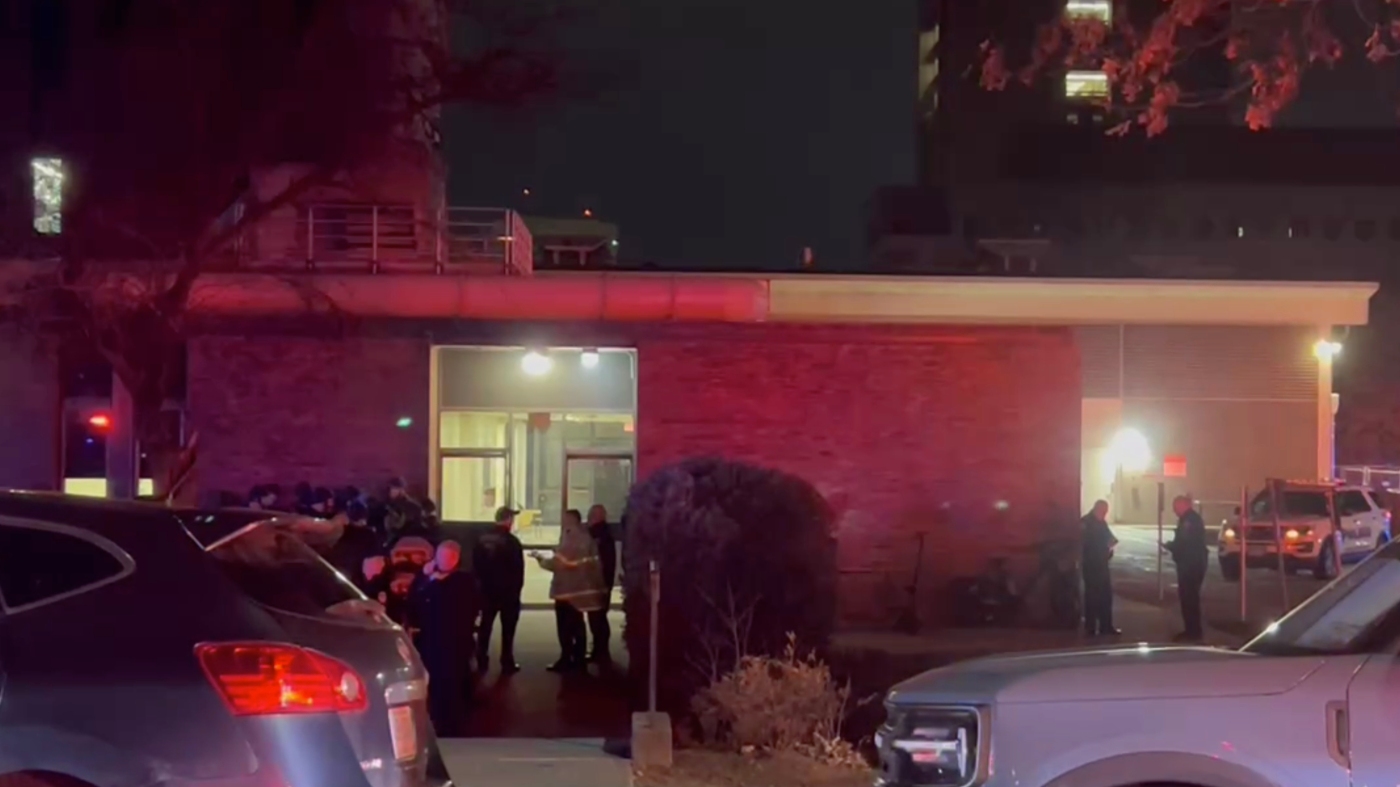
Multiple people shot near Brown University, police say

Inside Minnesota’s $1B fraud: fake offices, phony firms and a scandal hiding in plain sight
-

 Alaska1 week ago
Howling Mat-Su winds leave thousands without power
-

 Texas1 week ago
Texas Tech football vs BYU live updates, start time, TV channel for Big 12 title
-

 Ohio1 week ago
Who do the Ohio State Buckeyes hire as the next offensive coordinator?
-

 Washington5 days ago
LIVE UPDATES: Mudslide, road closures across Western Washington
-

 Iowa7 days ago
Matt Campbell reportedly bringing longtime Iowa State staffer to Penn State as 1st hire
-

 Miami, FL1 week ago
Urban Meyer, Brady Quinn get in heated exchange during Alabama, Notre Dame, Miami CFP discussion
-

 Cleveland, OH7 days ago
Man shot, killed at downtown Cleveland nightclub: EMS
-
World6 days ago
Chiefs’ offensive line woes deepen as Wanya Morris exits with knee injury against Texans

