Nevada
Nevada DMV receives nearly 21,000 reports of illegal drivers in two months


LAS VEGAS (KTNV) — The Nevada Department of Motor Vehicles has received nearly 21,000 complaints about illegal drivers through its new online reporting portal in just two months, with more than 83 percent of those reports coming from Clark County.
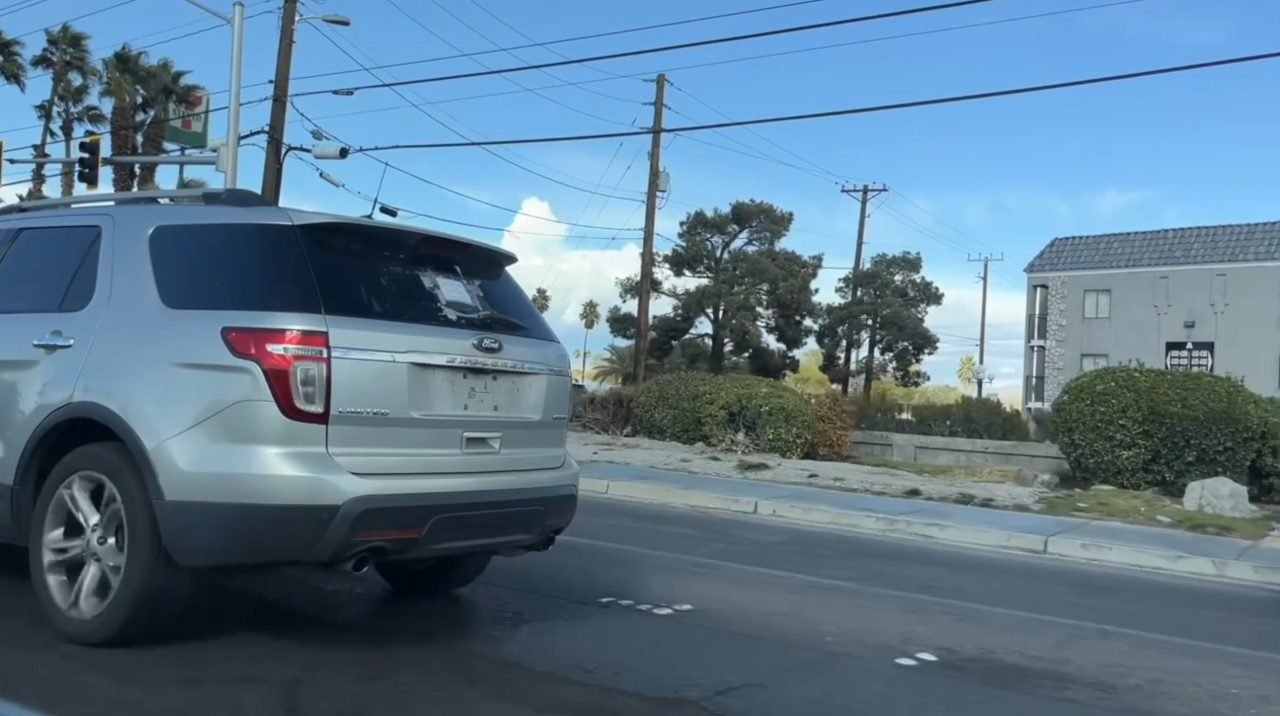
The Registration Spotter tool, launched in October on the DMV’s website, allows residents to report vehicles with no plates, expired or invalid registration, or illegal out-of-state plates. The initiative was part of an effort to address what officials call a pervasive problem affecting road safety and contributing to rising car insurance costs.
WATCH | Plenty of reports, not enough action — what’s the deal?
Nevada DMV receives nearly 21,000 reports of illegal drivers in two months
“It’s everywhere all the time,” said J.D. Decker from the DMV’s Compliance Enforcement Division during a February ride-along.
However, some residents who have filed reports are questioning the effectiveness of the system, like Las Vegas resident Paul who emailed to ask, “Darcy, what’s the deal?”
“I reported a car without plates over two months ago and I still see it parking where I live. Why don’t they investigate? I also see so many cars on the road without plates and even see cops that don’t stop them. Why don’t police stop them?” Paul asked.
KTNV
DMV officials acknowledge that enforcement is lacking. DMV spokesperson Hailey Foster said the agency agrees “this is certainly an issue we, the DMV, would like to see be enforced more.”
The DMV admits it’s still working to distribute data from the online portal to other agencies and cannot guarantee specific action on reports. Foster explained that if a vehicle is parked in someone’s driveway and not being operated, that’s technically legal. Officers need to see the car being driven on streets to issue a citation.
“This takes everybody, and there’s so much of it right now, and it’s going to take all of Nevada law enforcement to address,” Decker said.
KTNV
The DMV does not track enforcement statistics based on whether action comes from patrol, investigation or complaints submitted by residents, making it impossible to determine how many Registration Spotter tips have led to enforcement action.
But, traffic enforcement overall is increasing. Las Vegas Metropolitan Police made about 82,000 traffic stops this year, according to a Dec. 16 social media post.
A newly formed multi-agency traffic task force, which we told you about on Dec. 8, has logged 26 registration violations and 14 insurance violations since its formation, though their primary focus is on dangerous driving.
KTNV
We also asked other agencies for their enforcement statistics over the last two months. North Las Vegas Police said, “While NLVPD does not receive or track the individual public-submitted reports sent directly to the DMV as part of that program, we are able to provide our department’s registration-related enforcement statistics during the same general timeframe.
For the period October 1, 2025 through December 18, 2025, North Las Vegas Police Department officers issued:
- 557 citations
- 601 total offenses related to registration and license plate violations
These offenses include, but are not limited to:
- Failure to possess or surrender certificate of registration
- Improper display of license plates
- Operating a vehicle without valid Nevada vehicle registration
Henderson Police citations from 10/01/2025 – 12/17/2025:
Operate vehicle w/expired registration or plates: 214
Operate unregistered vehicle-trailer or semi trailer: 84
Display fictitious vehicle registration/plate/title: 8
Fail to obtain and properly display permit to operate unregistered vehicle: 3
Operate unregistered moped: 1
Rear license plate lamp violation: 1
License plates improperly displayed: 1
Nevada State Police was only able to provide citation information for the month of October.
Nevada Highway Patrol statewide citation information:
Total citations issued: 12,962
Registration-related citations: 1,475
All other citations: 11,487
Statement from the Department:
“The Nevada State Police Highway Patrol Division recognizes public interest related to unregistered vehicles and has and will continue to enforce all traffic laws on Nevada’s roadways, including laws related to vehicle registration. Enforcement of unregistered vehicles has long been part of routine traffic enforcement efforts statewide. As with all enforcement activity, the Nevada Highway Patrol prioritizes public safety and responds based on observed violations, calls for service, and operational considerations, including impaired driving and other serious safety concerns. Traffic enforcement is continuous and ongoing, and troopers take appropriate enforcement action when unregistered vehicles are encountered during patrol or traffic stops. The Nevada Highway Patrol strongly encourages drivers to ensure their vehicles are properly registered in accordance with Nevada law.”
The DMV is asking each law enforcement agency in the state to increase enforcement of the types of violations reported through Registration Spotter. DMV officials say the best outcome would be for each agency to conduct their own enforcement patrols and crack down on these violations.
Wondering what the deal is with something happening in the valley? Reach out to Darcy Spears at Darcy.Spears@ktnv.com.

This story was reported on-air by a journalist and has been converted to this platform with the assistance of AI. Our editorial team verifies all reporting on all platforms for fairness and accuracy.






Beach Boys co-founder selling Tahoe mansion for $43 million
The Lake Tahoe mansion of one of the original members of the Beach Boys was listed for $43 million.
You love to see it: local artists on local stages. Here are 12 shows featuring local artists between now and Labor Day, including rock, metal, punk, folk, jazz, hip-hop and more.
Bark Hardly
This indie-folk group from Reno headlines an all-local bill with Glitter Bats, Sad Giants and Anabelle and the Desert Scrubs. It starts at 7 p.m. at Holland Project, 140 Vesta St.
The show is July 10. Tickets are $12. Details: 775-742-1858 or hollandreno.org.
Thrashmob
It’s an all-local hip-hop night featuring this artist as headliner. They perform at 7 p.m. at Club Underground, 555 E. 4th St.
The show is July 11. Tickets are $20-$25. Details at clubundergroundreno.com.
Shared Scars
This Reno metal band celebrates the release of its new EP with a show that also features area metal bands Emberwake, Desolist, Titvn and Everglade. It all begins at 7 p.m. at The Alpine, 324 E. 4th St.
The show is July 11. Tickets are $20-$25. Details at thealpine-reno.com.
Cruz Control featuring Bree Rose
Rock, soul and hip-hop mix with this group from Reno. They play at 7 p.m. the first night and 8 p.m. subsequent nights at Terrace Lounge, Peppermill Resort Casino, 2707 S. Virginia St.
Free shows are July 16-18. Details at peppermillreno.com.
Next Question
The popular indie-punk group from Reno kicks off its tour at this show, which also features locals Blackstallion and Ring Pop Wedding. It begins at 7 p.m. at Holland Project, 140 Vesta St.
The show is July 17. Tickets are $10-$12. Details: 775-742-1858 or hollandreno.org.
Vampirates
The longtime local progressive-punk/noise band performs with Sacramento ska punks Lesdystics and local hardcore punk band The Scattering. It all begins at 7:30 p.m. at Lost Highway, 1526 S. Wells Ave.
The show is July 17 and there is a $10 suggested donation. Details at instagram.com/corrigans_losthighway.
Fireman’s Ball Reignited
A benefit for the Silver City Volunteer Fire Department, this show features some big northern Nevada and regional names including former Tahoe resident and country-rock singer/songwriter Matt Axton. Also on the bill are Darren Senn, Charity Kiss and Next Question, among others. It all starts at 1 p.m. at Silver City Park, 385 High St., Silver City.
This free show, with donations accepted, is July 18. Details at instagram.com/silvercityvfd_nv.
Everything Sucks Fest 2026
The annual punk-band event returns, this time with locals Hired Fun, Irreplaceable Beings, Flicker And Fade and Cold Amber Medicine. It begins at 4 p.m. at Shoe Tree Brewing Co., 1496 Old Hot Springs Road, Carson City.
This free show is July 25. Details at instagram.com/shoetreebrewing.
Reno Jazz Orchestra with Matt Mauser
For their Artown show, this local group will be joined by Mauser, an “America’s Got Talent” finalist who specializes in pop and jazz standards. The show starts at 7 p.m. at Robert Z. Hawkins Amphitheater, 6000 Bartley Ranch Road.
This show is July 29. Tickets are $35. Details at artown.org.
Reno Devilles
Rockabilly meets surf-rock with this local band. They play at 8 p.m. at Pele Utu, 1275 Stardust St.
This free show is Aug. 1. Details at instagram.com/peleutureno.
Jakota Wass
A country singer/songwriter from Gardnerville, Wass plays at 7 p.m. at the Outdoor Stage, Brewery Arts Center, 449 W. King St., Carson City.
The free show is Aug. 8. Details at breweryarts.org.
The Electric
A straight-ahead alternative rock band from Reno, the Electric headline an all-local bill that also features Sad Giants and The Jackeyes. They play at 7 p.m. at Holland Project, 140 Vesta St.
The show is Aug. 15. Tickets are $8-$10. Details: 775-742-1858 or hollandreno.org.
Cape Fear Quartet
This swing-jazz quartet from Reno performs at 8 p.m. at Pele Utu, 1275 Stardust St.
This free show is Aug. 15. Details at instagram.com/peleutureno.
Jelly Bread
Soul music meets alternative rock with this Reno group. They perform at 7 p.m. at the Outdoor Stage, Brewery Arts Center, 449 W. King St., Carson City.
The free show is Aug. 15. Details at breweryarts.org.
Band Wars Music Festival
An extension of the contest at Club Underground earlier this year, the participants now get to play at Bartley Ranch. Contest winners No One Good are joined by Split Persona, Interstate, Giant Skunk and Quitter, among others. It all begins at 2 p.m. at Robert Z. Hawkins Amphitheater, 6000 Bartley Ranch Road.
The show is Sept. 5. Tickets are $25-$35. Details at clubundergroundreno.com.

The dilapidated fishing vessel from which “Rose of Nevada” takes its name disappeared into the sea off the coast of Cornwall, England, in 1993, bringing with it two members of a shorthanded crew. A young fisherman who had called out sick that day later died by suicide; some speculate because of survivor’s guilt. There’s a lot of speculation about that old boat. It was the kind of tragedy from which a tight-knit community never really recovers, and this quaint Cornish fishing village has since been stricken by decades of poverty and rot. Now, 33 years later, the Rose has mysteriously returned. It just showed up, ship-shape and empty, sitting there in the harbor one misty Monday morning. All she needs now is another crew.
How and why the boat returned is not for me to say, nor are such matters of much concern to writer-director Mark Jenkin. A time travel adventure with the cadence of a ghost story, “Rose of Nevada” haunts the viewer like the sound of a faint, distant horn on a foggy night. George MacKay stars as Nick, a loving husband and doting dad who has been out of work for some time now. He’s also a bit of a dummy, caving in their apartment’s roof while trying to patch a leak during a rainstorm. Nick finds himself crewing the Rose out of financial necessity — he’s literally trying to put a roof over his family’s heads — while Callum Turner’s gruff drifter Liam comes aboard seemingly because he’s got nothing better to do.
Any other movie would probably try to explain exactly how these boys return from their maiden voyage with a robust catch to find themselves transported back to 1993. They discover their little town thriving and keep running into younger, happier versions of characters we’ve met in the miserable present. Everyone seems to know who Nick and Liam are, but they’re calling them different names. It’s as if the two have somehow stepped into the shoes of those doomed crewmembers from 33 years ago, brought back here by the Rose either to fix history or repeat it.
Part of what makes the movie so mesmerizing is Jenkin’s artisanal approach. He shoots on an ancient, hand-cranked 16mm Bolex camera — a model slightly less advanced than what my film school class was using three decades ago. Jenkin leans into the grainy imperfections of the image, keeping in all the scratches and light leaks that professional labs and technicians typically scrub out. It’s impossible to capture synchronized sound with this equipment, so background noises and the necessarily sparse dialogue are added later in post-production, lending an eerie, uncanny quality to the proceedings.
The set of self-imposed limitations creates its own aesthetic. Jenkin’s hand-cranked camera won’t run for more than 28 seconds at a time, forcing him to tell the story in a series of punchy, discrete images. Instead of wide establishing shots, he favors tight closeups made even more claustrophobic by 16mm’s boxy 1.33 aspect ratio. Our brains assemble the scenes almost like a mental jigsaw puzzle, getting a full sense of the boat without ever getting a complete look at it. Same goes for the town. It’s amazing how many gaps your mind fills in for you when prompted properly.
Jenkin takes a similar approach to the screenplay, allowing rhyming images and visual cues to provide most of the exposition. I went back and watched the movie a second time to try and understand how I always felt like I knew what was happening, even though I couldn’t possibly explain what was going on. The rhythms of the picture feel almost like a dream, obeying their own strict logic that locks in perfectly at the end. Jenkin’s previous picture, the cryptic Cornish island folk tale “Enys Men,” tried similar tactics, but with annoying, off-putting results. Two of the reasons this film connects so much better are the appealing lead performances by MacKay and Turner, a couple of genuine movie stars with whom we are happy to get lost at sea.

MacKay made no impression at all in the insipid, Oscar-winning World War I gimmick film “1917,” but has since revealed himself to be one of our most adventurous young actors. He was electrifying as a bi-curious, homophobic hooligan in the 2024 Boston Underground Film Festival favorite “Femme,” and nailed multiple roles from swoon-worthy stud to psychopathic incel stalker in Bertrand Bonello’s brain-melting “The Beast.” There’s a performative aspect when most actors play dumb, a theatricality that reminds the audience they’re actually smarter than the character. As our stranded family man Nick, MacKay offers no such condescension. He’s a dim bulb with a big heart in an unfathomable situation; his eyes sometimes touchingly, hilariously blank. So much is already beyond Nick, and then all this happens.
Most readers probably know Turner as Mr. Dua Lipa. For those who have trouble keeping track of their cute British boys, he’s the jug-eared, scruffy one who isn’t Josh O’Connor. I’ve never understood the hubbub about this guy, but he won me over here. It’s tough to recall a character in a science-fiction story quite like Liam, who, when experiencing something as foundation-shattering as time travel, figures, “Sure, why not?” and rolls with it. MacKay has some hilarious reaction shots to his screen partner’s blithe acceptance of their new reality. Though I suppose it helps that in this alternate 1993 timeline, Liam winds up with a beautiful wife and daughter, while Nick just gets stuck with overbearing parents.
I’ve been turning over the movie’s ending in my mind for a couple of weeks. “Rose of Nevada” comes to a conclusion both hopeful and bittersweet, depending on how you want to read it. This is an odd, beguiling film that doesn’t look or sound like anything else you’ll see in theaters this year. The raggedly beautiful imagery is a feast of rust and decay, the film itself dinged up like it’s followed the boat here from a distant, mysterious time.
“Rose of Nevada” opens at the Coolidge Corner Theatre on Friday, July 10.

After decades of cheatgrass-fueled wildfires across Nevada, researchers at the University of Nevada, Reno are testing whether cattle can help restore damaged rangelands by spreading native seeds as they graze.
Cheatgrass, an invasive plant common across the Great Basin, dries out early and can fuel larger wildfires, making it harder for native vegetation to return. UNR postdoctoral scholar William Richardson said the plant helps create a self-reinforcing cycle.
“Cheatgrass grows, it creates more wildfires, that allows more cheatgrass to grow, and it becomes a bigger and bigger issue. That’s why we’re seeing all these mega fires spreading across the Great Basin,” Richardson said.
The challenge continues after flames are out. In Nevada’s arid climate, native plants can struggle to reestablish, while cheatgrass often returns quickly.
UNR tests whether cow manure can help restore Nevada landscapes after wildfires
“We struggle with getting five to eight inches of rain a year. Trying to restore a native community in those very arid conditions are extremely difficult,” Richardson said.
Ewe won’t believe it: Sheep munch away at Reno’s wildfire worries in Arrowcreek area
Ranchers already use targeted grazing to reduce cheatgrass. Now, UNR researchers are studying whether cattle can also help reseed the landscape. The approach mixes native grass seeds into protein supplements cattle already eat. Researchers then track whether the seeds can survive digestion and be spread naturally across the range after being deposited in manure.
“We’re already using cattle to combat cheatgrass through targeted grazing, and the ultimate goal is to bring native species back across the landscape, so why don’t we combine those two ideas?” Richardson said.
In lab testing, researchers evaluated special seed coatings designed to help some seeds survive a cow’s digestive system. The results showed certain species could make it through the process and still germinate after being deposited in manure, Richardson said, though some seeds need more protection than others.
UNR tests whether cow manure can help restore Nevada landscapes after wildfires
“Some species naturally have a very thin seed coat and require more protection, while others can go through the gut of a cow easy peasy lemon squeezy,” he said.
The project is expected to move into field testing this fall at Horseshoe Ranch near Eureka, where researchers will track whether seeds can not only survive digestion but also establish new plants on the landscape.
“It’s a passive way to restore the landscape. Instead of having to go in with a tractor or seed from an airplane, you can use cows that are already there,” Richardson said.
UNR tests whether cow manure can help restore Nevada landscapes after wildfires
Researchers said the method is not intended to replace traditional restoration work, but to add another tool for land managers and ranchers. If the field trials are successful, they said the approach could eventually help restore thousands — or even hundreds of thousands — of acres across the Great Basin.
-

 Texas3 minutes ago
Longhorns Daily News: Texas coach Steve Sarkisian named among Dodd Trophy watch list
-

 Utah6 minutes ago
Utah Jazz vs Washington Wizards recap: Darryn Peterson is only a man
-
Vermont11 minutes ago
VT Lottery Gimme 5, Pick 3 results for July 9, 2026
-

 Virginia18 minutes ago
Virginia cannabis budget language triggers legal confusion, political fallout
-

 Washington21 minutes ago
Trump’s proposed 250ft Washington arch clears key planning hurdle
-

 Wisconsin26 minutes ago
A Wisconsin family is suing Target after their 10-month-old died from swallowing a water bead
-

 West Virginia33 minutes ago
How midsummer wild berries connect people, wildlife, and West Virginia’s forests – West Virginia Explorer
-

 Wyoming36 minutes ago
Fourth Annual Wyoming Firearms & Outdoor Recreation Expo, Wyoming Governor’s Match returning to Casper July 18, 19

