Nevada
In Nevada, Clean Energy Divides the Senate Race – Inside Climate News


In November’s election, Nevadans will vote between two U.S. Senate candidates with vastly different climate and energy positions—particularly regarding solar energy, an issue that has even divided climate and environmental advocates in the state.
Incumbent Sen. Jacky Rosen, a Democrat and Nevada’s junior senator, has consistently backed legislation supporting the renewable energy transition and pro-climate policies, like the landmark Inflation Reduction Act, and has fought against tariffs on imported solar panels.
Her Republican opponent, Army veteran Sam Brown, has said the construction of solar and wind farms across the state would ruin the state’s landscapes and is “not for the benefit of Nevadans,” while touting former President and current Republican presidential nominee Donald Trump’s “drill, baby, drill,” slogan in support of promoting domestic oil and gas production.
This election cycle, the Silver State is yet again a key battleground state, along with Arizona, Michigan, Montana, Ohio, Pennsylvania and Wisconsin, where Democrats hope to hold onto Senate seats in ultra-competitive races. A single loss would set up a divided and gridlocked government even if Vice President Kamala Harris wins the White House in November.

Explore the latest news about what’s at stake for the climate during this election season.
Flipping the Senate would have major implications for passing legislation to address climate change. If Democrats lose both the White House and the Senate, meanwhile, it could allow Republicans to reverse the climate wins of the Biden administration, like the hundreds of billions of dollars in clean energy tax credits delivered by the Inflation Reduction Act. Trump has vowed to repeal it if he’s elected.
Also vulnerable would be rules from federal agencies promoting the use of public lands managed by the federal government for renewable energy development and conservation, which Republicans have pushed back on. Such rules are of huge importance in Nevada, the state with the highest proportion of federal public lands in the country.
Polling has consistently shown Rosen in the lead in the Senate race, with Harris also leading recent polls in the state, though with smaller margins than the Democratic senator.
“Nevada is leading the nation in building a robust clean energy economy, which is creating new good-paying jobs and lowering costs across my state,” Rosen said in a statement to Inside Climate News. “While my extreme MAGA opponent Sam Brown would rather bash clean energy to score political points, I’m working to jumpstart Nevada’s energy future in areas like solar and geothermal so that we can continue this growth and improve people’s lives.”

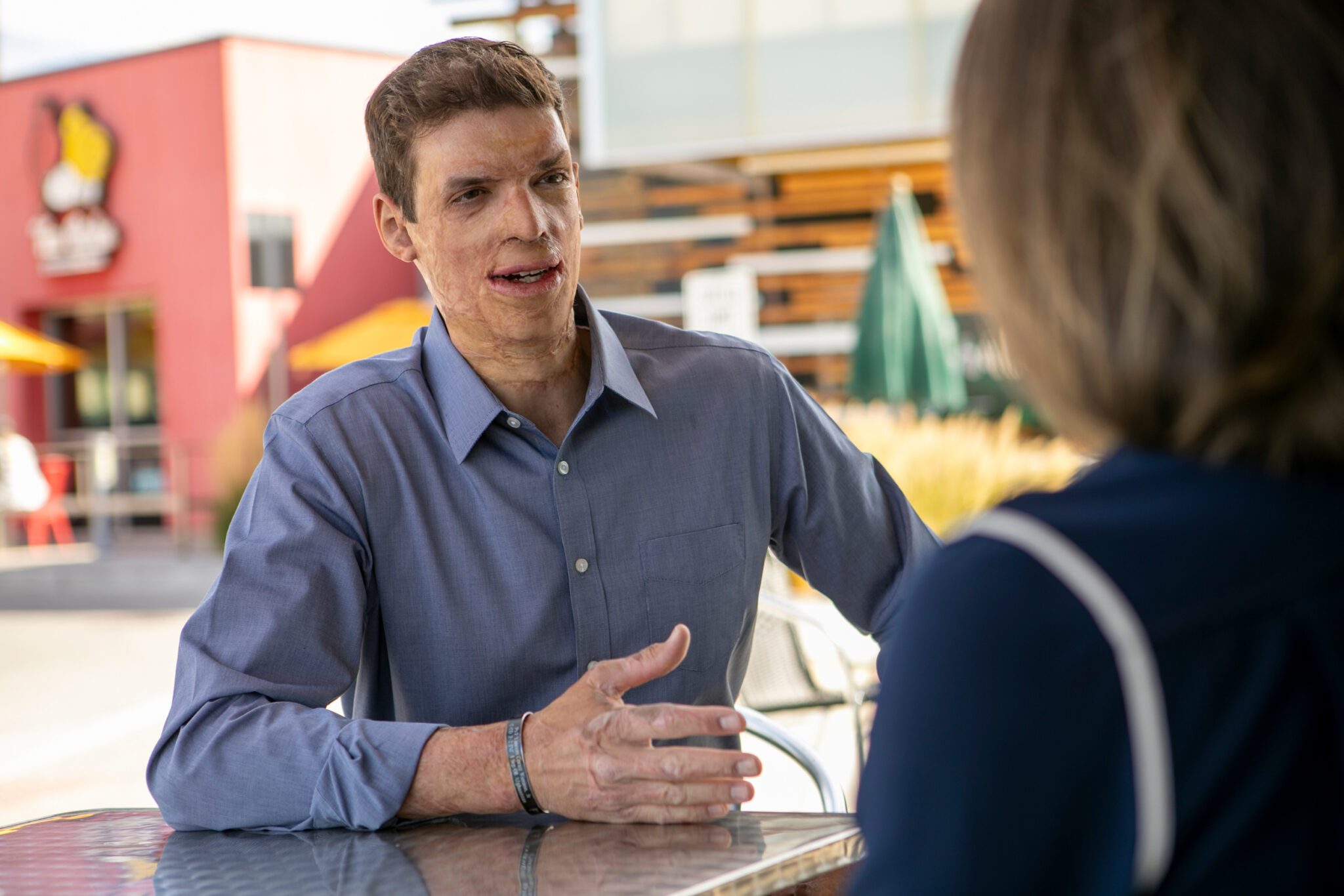
Brown fell short in the 2022 Republican primary for Senate in Nevada after moving to the state from Dallas in 2018 and has never held elected office. In speeches across the state, he has adopted an energy policy rebuking Rosen’s positions and focused his campaign on addressing inflation and highlighting his military service. In Afghanistan in 2008, his Humvee struck a roadside bomb, leaving him permanently scarred.
“We have solar fields being built across the state right now, on our land. Not for the benefit of Nevadans but for the energy policies of [California Gov.] Gavin Newsom,” Brown told KTVN 2 News Nevada last year in an interview announcing his campaign. “That power is going directly into California. We need someone who will be an advocate for us here.”
Brown has previously said he would not have supported the Bipartisan Infrastructure Law or the Inflation Reduction Act and has proposed cutting federal agencies that cover the same issues as state agencies, like the Department of Energy. And he has been hammered on all sides for comments he made in 2022 about his willingness to allow nuclear waste to be stored in Nevada’s Yucca Mountain—a third rail in Nevada politics for decades—but has since backtracked from that position. Brown’s campaign did not respond to a request for comment.
Climate, environment and renewable energy advocates alike are supporting Rosen’s reelection bid, even though they sometimes fall on different sides of environmental fights within the state.
“When the environment needed someone to stand up for it, very often Jacky Rosen was there,” said Patrick Donnelly, the Nevada political director for the Center for Biological Diversity Action Fund, the environmental group’s advocacy and political arm, noting his organization can often be at odds with the senator.
Few states are seeing the impacts of climate change more profoundly than Nevada, with Las Vegas—where most of the state’s population lives—on track to have its hottest summer on record. The state has long been known as the driest in the union, a fact that’s only growing truer in recent decades, with the Southwest experiencing a megadrought and the city of Las Vegas having to impose drought mitigation measures years before other large cities in the region because of its limited water supply. Reno and Las Vegas are the fastest-warming cities in the country, but both continue to grow rapidly in population. And in recent years, the state has seen record-breaking wildfire seasons.
“Nevadans are feeling the brunt of climate change already and we can expect that to get subsequently worse in the years to come,” said Olivia Tanager, the director of the Sierra Club’s Toiyabe Chapter, as she watched smoke from nearby wildfires outside her home in Reno. “The heavy-hitting climate issues in the state are certainly at the top of most people’s radar.”
One of the biggest issues Tanager hears every day from chapter members is the “nexus between conservation and solar,” with “a lot of members who are concerned about how rapidly solar is being deployed.” But, she said, Nevadans are already seeing the effects of “extreme heat, drought and wildfires and all of the other aspects of climate change, and so broadly recognized the need to transition away from fossil fuels. And a large portion of that is solar and solar deployment.”
Rural stretches of the Mojave and Great Basin deserts are seeing a surge of proposals and construction of large solar farms, to take advantage of the region’s abundant sunshine and the chance to export solar energy to neighboring states. The industry is becoming a major driver of the state’s economy, which has the highest number of solar jobs per capita in the nation and is on track to have 28,000 jobs in the industry by 2028. That’s in large part because of the passage of the Inflation Reduction Act, said Stephen Hamile, the chief operating officer of Sol-Up Solar and board member of the Nevada Solar Association. The legislation is allowing Nevadans to lower their energy costs, creating more jobs in the industry and giving the state the opportunity to export energy to other states.
“Sam Brown is deeply opposed to solar energy development and would have been a major roadblock to major solar investments,” Hamile said. “If he is in [the Senate], unfortunately, he’s so divisive with regards to solar energy and [climate issues], you have basically a regressive energy policy that would ultimately harm Nevadans.”
Nevada is also home to a new mining boom for lithium, the metal vital for creating the batteries needed for electric vehicles and storage of electricity from solar and wind farms. The state has the only operating lithium mine in the U.S., with others likely to come online in the coming years, despite being highly controversial for their environmental and cultural impacts.
That’s because roughly 80 percent of Nevada’s land is public land overseen by the federal government, which has the final say on its best use—such as for mining or for solar farms. The Biden-Harris administration has consistently presented public lands overseen by the Interior Department as a vital part of the solution to climate change, providing the space needed for massive solar and wind farms, new mines for critical minerals like lithium and copper, conservation programs to offset carbon emissions and more experimental solutions like carbon storage projects and geothermal plants, which are also being proposed in Nevada.
With its abundance of public lands, critical minerals and sunshine, Nevada is seeing firsthand both the drawbacks and benefits of the nation’s pivot away from fossil fuels—making the energy transition and climate change both critical issues in the state’s Senate race.
At the local level, the surge of developments near rural communities can be divisive. The town of Beatty, two hours northwest of Las Vegas, is facing a surge of proposals for new gold and lithium mines, utility-scale solar operations and transmission lines to send the energy they generate to major urban areas. Erika Gerling, chair of the town’s advisory board, said the community has focused on developing its economy around recreation and ecotourism, given its clear skies, wide-open spaces and proximity to Death Valley National Park and Ash Meadows National Wildlife Refuge. She said residents and the board are worried about how the proposed projects will impact the local community and have opposed many of them.
“We’re not against energy or solar in any way,” she said. “We are opposed to the location of these projects.”
It’s an issue she could see influencing voters in rural places like hers, though the town itself does not weigh in on political matters. Environmentalists and clean energy advocates recognize the importance of addressing such concerns going forward. But they say Rosen recognizes those challenges, has worked with local communities on them before and is familiar with public-lands issues. Whether now or later, advocates say, Nevadans’ concerns over addressing climate impacts will likely outweigh some of the other concerns that make up Brown’s stance.
“We aren’t looking to have solar fields in every spot in our backyard,” said Kristee Watson, executive director of the Nevada Conservation League. “But at the same time, if we don’t do this now, we’re not going to be able to support human life in this state.”
About This Story
Perhaps you noticed: This story, like all the news we publish, is free to read. That’s because Inside Climate News is a 501c3 nonprofit organization. We do not charge a subscription fee, lock our news behind a paywall, or clutter our website with ads. We make our news on climate and the environment freely available to you and anyone who wants it.
That’s not all. We also share our news for free with scores of other media organizations around the country. Many of them can’t afford to do environmental journalism of their own. We’ve built bureaus from coast to coast to report local stories, collaborate with local newsrooms and co-publish articles so that this vital work is shared as widely as possible.
Two of us launched ICN in 2007. Six years later we earned a Pulitzer Prize for National Reporting, and now we run the oldest and largest dedicated climate newsroom in the nation. We tell the story in all its complexity. We hold polluters accountable. We expose environmental injustice. We debunk misinformation. We scrutinize solutions and inspire action.
Donations from readers like you fund every aspect of what we do. If you don’t already, will you support our ongoing work, our reporting on the biggest crisis facing our planet, and help us reach even more readers in more places?
Please take a moment to make a tax-deductible donation. Every one of them makes a difference.
Thank you,

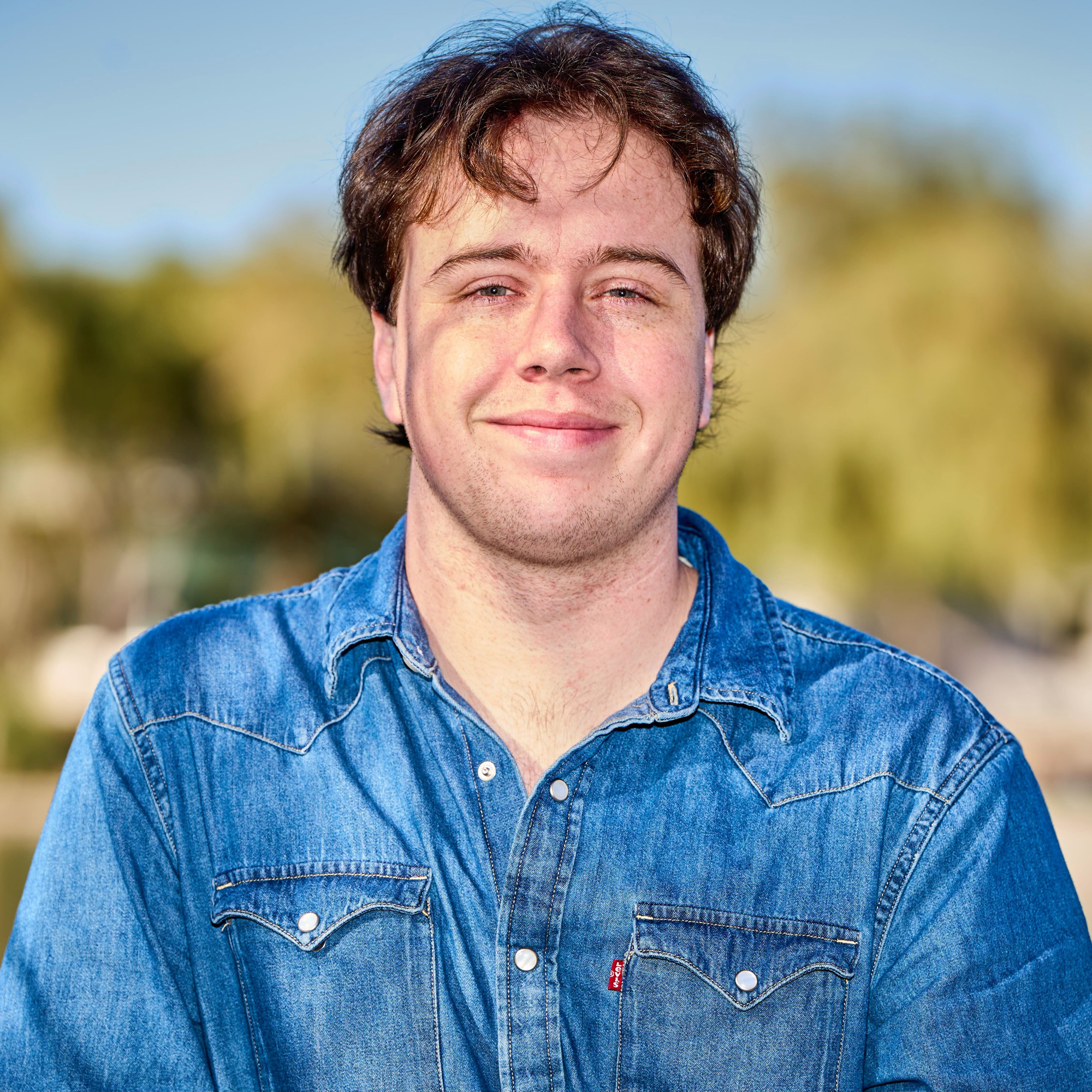
Wyatt Myskow
Reporter, Phoenix
Wyatt Myskow covers drought, biodiversity and the renewable energy transition throughout the Western U.S. Based in Phoenix, he previously reported for The Arizona Republic and The Chronicle of Higher Education. Wyatt has lived in the Southwest since birth and graduated from Arizona State University with his bachelor’s degree in journalism.



Arguing Kalshi is taking hundreds of millions of dollars in wagers on the World Cup and the NBA and Stanley Cup finals, the Nevada Gaming Control Board Friday asked a district court to hold the prediction market operator in contempt, arguing it hasn’t complied with a May 18 judicial order against offering sports betting in the state.
Filed with the First Judicial District Court for the State of Nevada, the filing accuses Kalshi of not geofencing its operations as required, so that “it does not offer or facilitate the offering of any sports-, election-, or entertainment-related event contracts” to anyone located in Nevada.
“Kalshi’s stubborn refusal to comply with the preliminary injunction is causing severe and ongoing harm to Nevada, its finances, and its citizens,” the court filing said. “Every day, Kalshi takes in hundreds of millions in wagers on such events as the NBA Finals, the Stanley Cup Finals and FIFA World Cup. At the same time, Kalshi is severely harming the gaming industry because it refuses to follow the same rules as its licensed sportsbook competitors who actually geofence. This is an intolerable state of affairs. In light of the Board’s investigation and Kalshi’s own admissions that establish its violation of the court order, the court shall hold Kalshi in contempt. Kalshi will never get the message otherwise.”
The Board requested the court to enter a finding of contempt and to impose significant monetary penalties for violation of the court order — either a “disgorgement of all ill-gotten gains” or a sanction of $120,000 a day.
“The court has required Kalshi to stop offering covered event contracts in Nevada,” Board Chair Mike Dreitzer said in a statement. “We will continue to vigorously enforce Nevada law to safeguard gaming in our state.”
In its filing, The Board said that Kalshi by its own admission has spent $190,000 on what regulators referred to as a “homegrown solution that relies only on internet protocol geofencing solutions” that regulators called “notoriously unreliable” for determining user’s locations. The Board accuses Kalshi of being unwilling to use accurate commercial geofencing solutions.
“This is just more from the same old Kalshi playbook; delay, delay, delay,” the court filing said. “Rather than comply with the court’s order Kalshi has taken only a half-hearted and ineffective measure, apparently hoping that the court will deem its meager efforts good enough, so that it can continue profiting at the expense of the state and its citizens.”
The Board said investigators were able to purchase sports betting contracts on Kalshi’s app for NBA playoff games, MLB games, a boxing match, a tennis match, and a celebrity wedding.
The Board has taken action in recent months to halt the operations of other prediction markets in the state and has successfully restricted all unlicensed prediction markets that had been known to be operating in Nevada, Dreitzer said.
The Board considers the offering of sports event contracts, along with certain other event contracts to constitute wagering activity under state law, meaning they must be licensed.
“Nevada’s public policy, as expressed by the Legislature, is that the gaming industry is vitally important to the economy of the state and the general welfare of the inhabitants and therefore must be licensed, controlled, and assisted to protect the public health, safety, morals, good order, and general welfare of the inhabitants of the state,” Dreitzer said.

LAS VEGAS (KSNV) — Nevada’s 2026 election landscape is taking shape after primary results that set up high-stakes general election matchups for governor and the state’s U.S. House delegation. Political strategist Tal Eslick said the central question will be where voters focus.
“The question will be: If Nevada voters are willing to judge Governor Lombardo on his performance as governor or if they are going to really allow this election to be a referendum on President Trump,” said Eslick, a public affairs strategist with Vista Consulting.
Lombardo won his Republican primary handily with around 90 percent of the vote. Democratic challenger Aaron Ford won the Democratic primary with around 63 percent of the vote.
Eslick said Ford’s strategy may be to nationalize the contest. “A national question about the direction of the country under President Trump. And to a certain extent under Republican rule both in the Senate and the House,” Eslick said.
Nevadans will not have a U.S. Senate race this cycle, but all three U.S. House seats in southern Nevada are on the ballot. Candidates endorsed by Trump won their primaries and are set to face Democratic incumbents Susie Lee and Dina Titus. Republican Cody Whipple won the District 4 primary and will face incumbent Democratic Congressman Steven Horsford. Trump did not endorse a candidate in District 4.
“The ability to win a primary is very different than the ability to win in a general election,” Eslick said.
Eslick said both parties could face challenges appealing to voters in the political middle, with Democrats confronting the dynamics of being longtime incumbents and Republicans having to answer for current policy. He pointed to independent voters as a key bloc in November.
“You have independent voters. Voters who do not associate with either party. And they are going to be the deciding factor in this race beyond that obvious enthusiasm gap, and that is why you might see the messages coming from both candidates tacked towards the middle,” Eslick said.
In Clark County, a contentious Republican primary for county commissioner also appeared to be settled, with Heidi Kasama defeating fellow Republican Albert Mack in District F.
“It certainly makes it tough when you have a nasty primary to then go back to voters and say, ‘Hey, we can appreciate your perspective,’” Eslick said. “Because in a general election, obviously, you want some support from any majority; whether it is of your party or otherwise.”
Groups supporting Kasama circulated an AI or photoshopped image of a sign showing Mack supposedly next to former Secretary of State Hillary Clinton, suggesting Mack supported Clinton—an allegation Mack denies.
Eslick said attacks involving AI may be less effective in the general election, given public concerns about the technology and its broader impacts.
“There is a real underlying question, and certainly in Nevada, about what AI means for American workers, what AI means for developing energy, what it means for the cleanliness of water,” Eslick said. “That is going to be a debate that, again, people are going to be talking about at their kitchen tables as they are deciding who they are going to support in the election.”
The general election for all races is set for November 3, 2026.

Here’s to more resources for Nevada entrepreneurs.
The state of Nevada has launched Build Nevada, an AI-powered platform connecting founders, operators and growth-stage companies with Nevada’s capital infrastructure and expansion opportunities. The platform helps companies identify pathways to funding and growth in the state.
Through the platform, companies submit structured project profiles outlining what they are building, their traction, team, and growth plans. Projects are then matched with relevant capital pathways, financing tools and strategic partners across Nevada’s innovation ecosystem. Typical opportunities range from $250,000 to over $3 million, including venture equity, equipment financing, growth lending and expansion capital tied to Nevada operations.
-

 Augusta, GA4 minutes ago
1 dead, teen arrested after Burke County shooting
-

 Washington, D.C7 minutes ago
The Resy Guide to D.C.’s New Old-School Restaurants — Resy | Right This Way
-
Cleveland, OH12 minutes ago
Thousands without power after storms hit Northeast Ohio
-

 Austin, TX19 minutes ago
Texas closer Sam Cozart is the NCBWA Stopper of the Year
-

 Alabama21 minutes ago
Texas battles Alabama in CWS elimination game
-

 Alaska27 minutes ago
The Sunday Minefield – June 14, 2026
-

 Arizona34 minutes ago
Arizona Lottery Pick 3, Fantasy 5 results for June 14, 2026
-
Arkansas37 minutes ago
Arkansas Lottery Cash 3, Cash 4 winning numbers for June 14, 2026

