Nevada
5 of the most significant atomic blasts at the Nevada Test Site


The Nevada Test Site didn’t waste any time.
President Harry Truman established the site, a 680-square-mile section of the Nellis Air Force Gunnery and Bombing Range, on Dec. 18, 1950.
Less than six weeks later, a 1-kiloton device, equivalent to 1,000 tons of TNT, was dropped from an Air Force B-50 bomber.
It was the first of 928 nuclear tests, 100 of them above ground, at what was originally known as the Nevada Proving Grounds and is now referred to as the Nevada National Security Site.
We asked the Atomic Museum’s Joe Kent, deputy director and curator, and Matt Malinowski, director of education, about the most significant blasts at the test site.
Here are five of their picks, with the series name followed by the test name, along with how the Review-Journal covered them.
Ranger/Able
Date: Jan. 27, 1951
What it was: This was the first atomic test in the continental U.S. since the Manhattan Project’s Trinity test on July 16, 1945.
“It was very much, ‘OK, let’s get started. Let’s see how it goes,’ ” Kent said.
How we covered it: “Roulette wheels and dice tables, which operate 24 hours a day here, were still doing a brisk business when the blast went off around 5 a.m.,” we wrote.
“In the Golden Nugget, a man standing at one of the craps tables felt the shock. He paused and looked around.
“ ‘Must be an A-bomb,’ he said. He turned back to the table and went on with the game.”
Local insurance agent O.A. Kimball said one of his clients called before dawn to tell him the plaster on her walls and ceiling were cracked by the explosion.
“ ‘The doors really played a tune when the thing went off,’ Kimball reported her as saying, ‘and I was afraid for a few minutes the house would fall down.’ ”
Upshot-Knothole/Harry
Date: May 19, 1953
What it was: This 32-kiloton test became known as “Dirty Harry” when the fallout, which was intended to land between Alamo and Glendale, was blown downwind into St. George, Utah.
“That’s probably the quintessential test that is tied to the downwinder movement,” Kent said of the presumed victims of the blast who were exposed to radiation.
How we covered it: “The cloud, which was barely visible in Las Vegas because of the overcast, gray dawn, traveled in an east-southeast direction and the atomic energy commission (sic) established highway checkpoints on Highways 91 and 93 to warn motorists of the possibility of radioactive fallout.
“The checkpoints were established at St. George, Alamo, Glendale and Nellis air force base (sic) and were a precautionary measure. No hazardous levels of radioactivity were reported.”
The next day, we checked in on St. George.
“Having an atomic cloud hover over their town caused little concern to the men, women and children who live in St. George, Utah, who kept indoors several hours yesterday after atomic energy commission officials reported that there would be some fallout there after yesterday morning’s shot.”
St. George resident Dick Hammer estimated between 30 and 40 people, most of them tourists, were in his Dick’s Cafe when the word that people should remain indoors came over the radio. One woman, he said, wondered what would happen to them.
“ ‘Hell, lady, I don’t know,’ Hammer replied, ‘but I don’t think you have much to worry about.’ ”
Teapot/Apple 2
Date: May 5, 1955
What it was: This was the second of “two highly publicized civil effects tests just to see what would happen to a small town,” Kent said. “What would be the concerns if the town was hit with one of these bombs.”
It’s also the test that inspired the scene in “Indiana Jones and the Kingdom of the Crystal Skull” in which Indy rides out a nuclear blast in a refrigerator.
A 29-kiloton device was dropped from a 500-foot tower near Doom Town, the symbolic burgh made up of fully furnished homes, a radio station, a gas station and other signs of civilization, with mannequins representing the residents.
How we covered it: “A fearsome nuclear weapon bludgeoned this guinea-pig city today while the civil defense teams staged a dress rehearsal of their possible roles in the atomic age.
“Dummies dressed as men, women and children were grouped under the atom’s devastating might in an experiment to determine how families in an American target city might survive the fury of nuclear warfare.”
The blast was described as “a spectacular orange, blue and purple fireball.”
The next day, officials got a full look at the damage.
“Death and serious injury struck the dummy men, women and children of Doomsday Drive, the little dirt road lying only 4,700 feet from ground zero,” we wrote.
“A mannequin mother died horribly in her one-story home of pre-cast concrete slabs. Portions of her plaster-and-paint body were found in three different areas. A mannequin tot, perhaps the size of your 3-year-old, was blown out of bed and showered with needle-sharp glass fragments. This house withstood the blast, but its occupants may not have.”
Plumbbob/Hood
Date: July 5, 1957
What it was: A 74-kiloton thermonuclear device was dropped from a balloon, sending an atomic cloud 49,000 feet into the air, as part of the largest above-ground test at the site. The test is featured in the Atomic Museum’s Ground Zero Theater.
It also was part of the Desert Rock exercises, essentially war games designed to test how members of the military would perform during an atomic war.
“They would have these exercises along with the blasts,” Malinowski said. “So the troops would be put into foxholes or trenches, told to stay down low, not to look directly at the light while it was going off.”
How we covered it: “Nuclear scientists this morning fired the largest atomic blast ever to be detonated in the continental United States and the resulting explosion caused veteran observers 13 miles from ground zero to gasp with awe at its terrible immensity.
“The flash and fulminating fireball caused joshua (sic) trees and yucca plants near zero to burst into flames, making the desert floor resemble a flaming city.”
Elsewhere in that edition, it was reported that “a United Airlines pilot flying from Honolulu to Los Angeles radioed that he saw the light of the Nevada blast as his plane cruised 1,000 miles off the California coast.” A bright flash was reported in San Francisco, while residents in Hollywood, Anaheim and Newport Beach reported feeling “two jarring shocks” at 5:05 a.m., 25 minutes after the detonation.
Julin/Divider
Date: Sept. 23, 1992
What it was: This underground vertical shaft test of less than 20 kilotons proved to be the final full-scale test at the site. It wasn’t designed to be, but a nine-month testing moratorium went into effect on Oct. 1. The next year, it was extended indefinitely.
“They still do subcritical testing on the weapons stockpile out there,” Malinowski said. “So even though they’re not doing full-scale detonations, there are experiments they do to kind of verify that the stockpile is still well-maintained and active.”
How we covered it: “The United States conducted its sixth nuclear weapons test of the year Wednesday at the Nevada Test Site, five days after the last one, while four Belgian anti-nuclear activists hid within a mile or two of ground zero, U.S. authorities said.
“The four — three men and a woman — said they feared for their safety as Department of Energy scientists began counting down the last five minutes prior to the 8:04 a.m. detonation, prompting them to flee on bicycles to a safer location, some three miles from ground zero.”
They were arrested there about an hour later.
“I was kind of scared,” said Michiel De Grande, 25, outside the Foley Federal Building after he was ordered to appear the next day for a hearing on federal trespass charges. “The feeling inside was real strange, the feeling of the pain of the Earth. It shook for 10 seconds. Even before the bomb exploded you could feel the Earth crying.”
Contact Christopher Lawrence at clawrence@reviewjournal.com or 702-380-4567. Follow @life_onthecouch on X.


MESQUITE (FOX5) — Two people were transported to a hospital after an RV crashed and caught fire on Interstate 15 near the Arizona-Nevada state line, according to Mesquite Police.
Investigators believe the RV, which was traveling southbound, blew a tire, lost control, and entered northbound lanes. The vehicle made contact with the trailer of a semi-truck before bursting into flames.
Condition of those injured
One of the two people transported from the scene was listed in very critical condition. The semi-truck sustained minor damage, and its driver was not reported among those transported.
Investigation ongoing
Mesquite Police are investigating the crash. No additional information about the identities of those involved has been released.
Drivers traveling northbound are advised to use alternate routes. Updated road conditions are available at nvroads.com.
Copyright 2026 KVVU. All rights reserved.

From otherworldly red rocks to fossil beds and alpine lakes, Nevada’s state parks offer adventures far beyond the Las Vegas Strip.

Video: Visitors at Sand Harbor Beach April 29, 2020
People enjoy the warm weather at Sand Harbor Beach amid the coronavirus on April 29, 2020.
Andy Barron, RGJ
CLARK COUNTY, NV – Standing at the edge of a sea of rocks, I was transported to another world less than an hour outside Las Vegas.
Instead of water, waves of rusty red sandstone and creamy limestone crested in every direction of the Fire Canyon/Silica Dome Overlook at Nevada’s Valley of Fire State Park,
I wasn’t the only one who found it otherworldly. Park signage indicated this place portrayed the fictional planet Veridian III in the 1994 film “Star Trek: Generations.”
But Valley of Fire is very real, and it’s just one of the more than two dozen state parks offering travelers a different side of Nevada.
How many state parks are there in NV?
There are 27 state parks in Nevada.
“What’s really nice is a lot of them are pretty clumped together, so you can hit multiple of them in a few days,” said Tyler Kerver, Education and Information officer for Nevada Division of State Parks.
He said even he didn’t realize how many parks there were until he started working there.
How to choose
Kerver suggests exploring parks.nv.gov and narrowing options based on what you hope to experience.
“If I was going to hike or mountain bike, I’d probably look at the Lake Tahoe-area parks, like Spooner Lake (and Backcounty) and Van Sickle,“ he said. “Maybe you just want to relax by a lake with the family. We have a few campgrounds with reservoirs.”
On a recent RV trip, my family camped at Valley of Fire near Overton and also visited Cathedral Gorge State Park near Panaca and Kershaw-Ryan State Park in Caliente. The latter two are only about 20 minutes away from each other and roughly 2.5 hours away from Las Vegas.
“If you’re looking just to get out and explore, Cathedral Gorge is definitely a great area to set up kind of a base camp, and then you can get to not only Cathedral Gorge, but all the other parks around Cathedral Gorge, all within like a day or two,” Kerver said.
My kids enjoyed exploring Cathedral Gorge’s twisty slot canyons and taking it easy at Kershaw-Ryan, which felt like a little oasis in the desert with leisurely trails, manicured gardens, a spring-fed wading pool for young kids, and a tree-canopied picnic area, where we ate lunch.
Young explorers may enjoy Berlin-Ichthyosaur State Park near Austin, about 2.5 hours from Reno. The Smithsonian Institution describes ichthyosaurs as “extinct dolphin-shaped marine reptiles that flourished in the oceans” more than 65 millions years ago. Kerver said the park boasts the largest ichthyosaur fossil bed in the U.S.
“We do tours of the fossil house every summer, and you can walk right up to the actual fossils still laying in the ground,” he said. “Ice Age Fossils State Park is one of our newest ones in North Las Vegas, and that one is kind of similar … We have mammoth, bison, dire wolves, all kinds of cool fossils.”
One of Kerver’s personal favorites is Cave Lake State Park, near Ely. “It’s pretty cool, like Alpine summer camp,” he said.
What is the prettiest place in Nevada?
Pretty is subjective, but many people consider Lake Tahoe to be one of the state’s most beautiful areas.
Sand Harbor State Park, in Lake Tahoe, is the most visited park in the system with 1.2 million visitors a year, according to Kerver.
“Sand Harbor State Park is one of the only beaches in Lake Tahoe where you get lifeguards, an on-site restaurant, ample parking,” he said. “You can reserve your spot ahead of time, and you can’t really find that anywhere else in the Lake Tahoe Basin.”
Desert scenery is just as pretty, in a different way.
I couldn’t imagine a more spectacular campsite setting than the one we had at Valley of Fire, Nevada’s second-most visited state park. It also offers sparkling facilities.
“We get the reputation for having some of the cleanest bathrooms,” Kerver said. “We take that pretty seriously.”
How much does it cost to go to a Nevada state park?
Entry fees vary by park but are typically between $10 to $15.
Kerver said the parks pride themselves on accessibility.
“It’s not only ADA-accessible,” he said. “We’re maintaining a lower fee level than a lot of other places, so it’s still cheaper to get in … We really want to make sure that they are some of the least expensive places to visit and that they remain accessible to everyone.”
To save even more, travelers planning to visit numerous Nevada state parks or who live within driving distance may want to consider a $100 annual permit, which can be assigned to up to two vehicles.
USA TODAY reporter Eve Chen was provided access by RVshare. USA TODAY maintains editorial control of content.

Genoa was a Mormon trading post in 1851, a decade before Nevada was a state, and it has never been in a hurry since. Up and down the eastern slope of the Sierra Nevada and out across the Great Basin, the towns that grew up around silver strikes, railroad water stops, and dam construction camps mostly emptied out when the work ran dry, and what stayed behind is a string of places where the clock loosened its grip. Opera houses still host the occasional show. Saloons still pour for whoever walks in. The eleven towns below trade Nevada’s neon for porch time, dark skies, and roads with almost nothing on them.
Genoa
The Genoa Bar and Saloon has been pouring drinks since 1853, which makes it the oldest bar in the state, and most of its counter and fixtures date to the 1860s. That is the pace of the place in one building. Genoa itself is Nevada’s oldest permanent settlement, and Mormon Station State Historic Park preserves a reconstructed log trading post on the site of the original 1851 station, with a small museum and grounds that fill up for community events through the summer. Genoa Town Park carries the warm-month concert schedule. When the afternoon calls for it, David Walley’s Resort sits a short walk off, with mineral hot springs that have drawn soakers to this corner of the Carson Valley for well over a century.
Ely
At the Nevada Northern Railway Museum, the locomotives are not models behind glass; the collection is one of the most complete original short-line operations left in the country, and the steam excursions run on the same track the copper trains used. That is Ely’s main event, and it sets the tempo. The Ward Charcoal Ovens State Historic Park, just outside town, preserves six beehive-shaped stone kilns that fed the smelters during the mining boom, close enough to reach for an afternoon. The White Pine Public Museum fills in the rest, with mining, ranching, and Native history. Back on Aultman Street, the Hotel Nevada and Gambling Hall has anchored downtown since it opened in 1929, when it was briefly the tallest building in the state, and it still pours a cold one for anyone coming in off Highway 50.
Tonopah
On a clear, moonless night at the Clair Blackburn Memorial Stargazing Park, you can pick out more than 7,000 stars with your eyes alone. Most cities show you 25 or 50. The park, off Highway 95 with concrete pads laid out for telescopes, is reason enough to time a visit around the new moon. By day, the Tonopah Historic Mining Park spreads across 100 acres of the original silver works, with tunnels and headframes from the boom that built the town. The Mizpah Hotel, restored and operating since its 1907 opening, holds the Pittman Café for breakfast and the Jack Dempsey Room for a sit-down dinner, named for the heavyweight champion who once worked the hotel as a bouncer.
Virginia City
The Comstock Lode silver strike of 1859 turned Virginia City into one of the richest mining centers in the West almost overnight, and the wooden boardwalks and stacked 19th-century storefronts climbing the hillside are what the money left behind. The Virginia and Truckee Railroad runs short excursions along the old mining route, and the Chollar Mine tour takes you underground into the works themselves. The Bucket of Blood Saloon has been serving since 1876, built on the footprint of an earlier saloon right after the Great Fire of 1875 cleared the block. It is an easy place to lose a slow afternoon over a beer.
Boulder City
Gambling is illegal here by city ordinance, one of only two Nevada towns where that is true, a rule that traces straight back to why the town exists. The federal government built Boulder City in the early 1930s to house the workers raising Hoover Dam, laying out organized streets and civic buildings, and the planned layout still shapes a walkable downtown. The dam itself draws most visitors, best taken in without rushing. The Boulder City-Hoover Dam Museum, inside the historic Boulder Dam Hotel, tells the Depression-era construction story, and the Coffee Cup Café is the institution where locals linger over breakfast. At Hemenway Park, desert bighorn sheep come down to graze against the backdrop of Lake Mead country.
Caliente
The Caliente Railroad Depot, a restored Mission Revival building from the Union Pacific era, now does double duty as the town’s visitor center and the anchor of its main street. The name comes from the hot springs that first drew settlers, and cottonwoods shade a town that sits well off the southern Nevada rush. Two miles south, Kershaw-Ryan State Park tucks shaded picnic areas, spring-fed wading pools, and trails beneath steep canyon walls. The Barnes Canyon trail network gives mountain bikers and hikers desert terrain to work through at their own speed, and Meadow Valley Wash supports cottonwood stands and wildlife unusual for country this dry.
Eureka
Sixteen smelters once belched enough smoke over Eureka to earn it the nickname “Pittsburgh of the West,” back when 9,000 people and a hundred-odd saloons crowded the canyon. About 600 people live here now, and the boom-era buildings have the streets mostly to themselves. The Eureka Opera House, built in 1880 on a block cleared by the previous year’s fire, still stages performances under its restored interior. The Eureka Sentinel Museum occupies the original 1879 newspaper building, presses and type cases left where they sat. The Jackson House Hotel has put up guests since the 19th century, and the Owl Club Bar and Steakhouse feeds travelers and locals along Highway 50, the stretch a magazine once branded the Loneliest Road in America.
Gardnerville
Basque sheepherders settled the Carson Valley, and their cooking is still the reason to plan dinner in Gardnerville, served family-style at long tables in the valley’s old boarding-house tradition. The town grew as a ranching center under the Sierra Nevada, and the Carson Valley Museum and Cultural Center, housed in a former high school, lays out that agricultural and pioneer history. Lampe Park gives the community its gathering ground, with a quiet stream and walking paths and a calendar of seasonal events. Jobs Peak rises over the whole valley, a granite wall that turns gold at the end of the day.
Wells
The Angel Lake Scenic Byway climbs out of the desert flats into the East Humboldt Range, ending at a glacial lake cupped high against the peaks, good for a morning of fishing or a slow walk along the alpine shore. Wells grew up as a railroad town, and the Front Street Historic District still shows the bones of that era, when this was a working junction on the transcontinental line. The Trail of the 49ers Interpretive Center on 6th Street covers the emigrant routes that funneled through here on the way west, the California Trail travelers who passed through long before the rails did.
Winnemucca
The Humboldt River made Winnemucca a crossing long before the railroad came through, and the Humboldt Museum tells that regional story through Native, ranching, and transportation exhibits. The town’s other inheritance is Basque: sheepherders settled here in numbers, and the dining room at the Martin Hotel still serves the lamb and the family-style spread that the town celebrates each summer at its Basque Festival. The Winnemucca Sand Dunes draw the off-road and open-desert crowd just outside town. For something quieter, Water Canyon climbs along a running stream into terrain more rugged than the valley floor lets on.
Lovelock
The Pershing County Courthouse is round, one of the few circular courthouses still in use anywhere in the country, and it sits at the center of town with its early-20th-century architecture intact. Behind it, Lovers Lock Plaza invites visitors to clip a padlock to a chain as a token of commitment, a small local tradition that has become the town’s signature stop. The deeper history is just outside town at Lovelock Cave, where excavations turned up evidence of human use going back thousands of years. Rye Patch State Recreation Area, along the reservoir on the Humboldt River, handles the boating, fishing, and lakeside afternoons.
Wide Open Spaces And Unhurried Places
What these towns share is not scenery so much as arithmetic: the work that built them mostly left, and the people who stayed kept the opera houses, the saloons, and the depots running at a fraction of the old traffic. That is why a steam train in Ely or a 7,000-star sky over Tonopah feels unhurried in a way a manufactured attraction never quite manages. The pace was not designed. It is what is left when the boom moves on and the place decides to stay anyway.
-

 Nevada2 minutes ago
RV crash on I-15 near Mesquite sends two to hospital
-
 New Hampshire8 minutes ago
AG: Man wanted in Hampton Beach shooting died by suicide
-

 New Jersey15 minutes ago
New Jersey Suspects Heat Caused 19 Deaths
-

 New Mexico18 minutes ago
Less smoke and better storm chances Sunday in New Mexico
-

 North Carolina18 minutes ago
Severe thunderstorm warning expires in central NC areas
-
 North Dakota30 minutes ago
Montana routs North Dakota in 2nd Mon-Dak 6-Man All-Star Game
-

 Ohio33 minutes ago
Pato O’Ward credits “textbook” execution for Mid-Ohio IndyCar win
-
 Oklahoma38 minutes ago
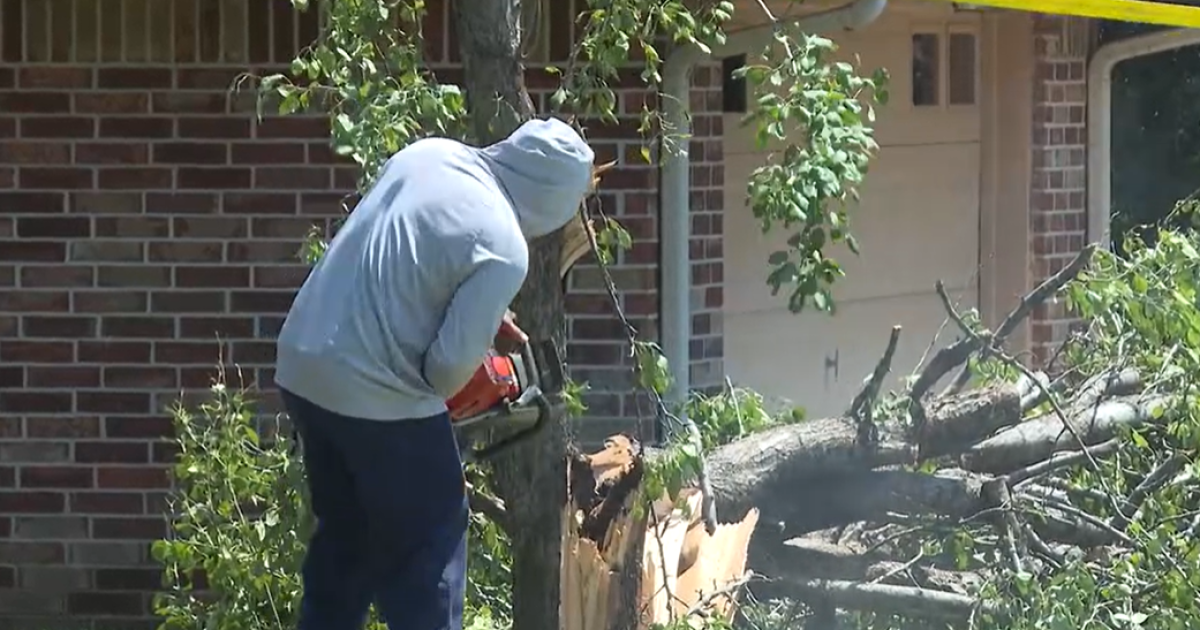
Governor Stitt declares disaster emergency for Cleveland and Washington Counties

