West
Nevada judge frees convicted MS-13 killer despite government warnings about public safety

NEWYou can now listen to Fox News articles!
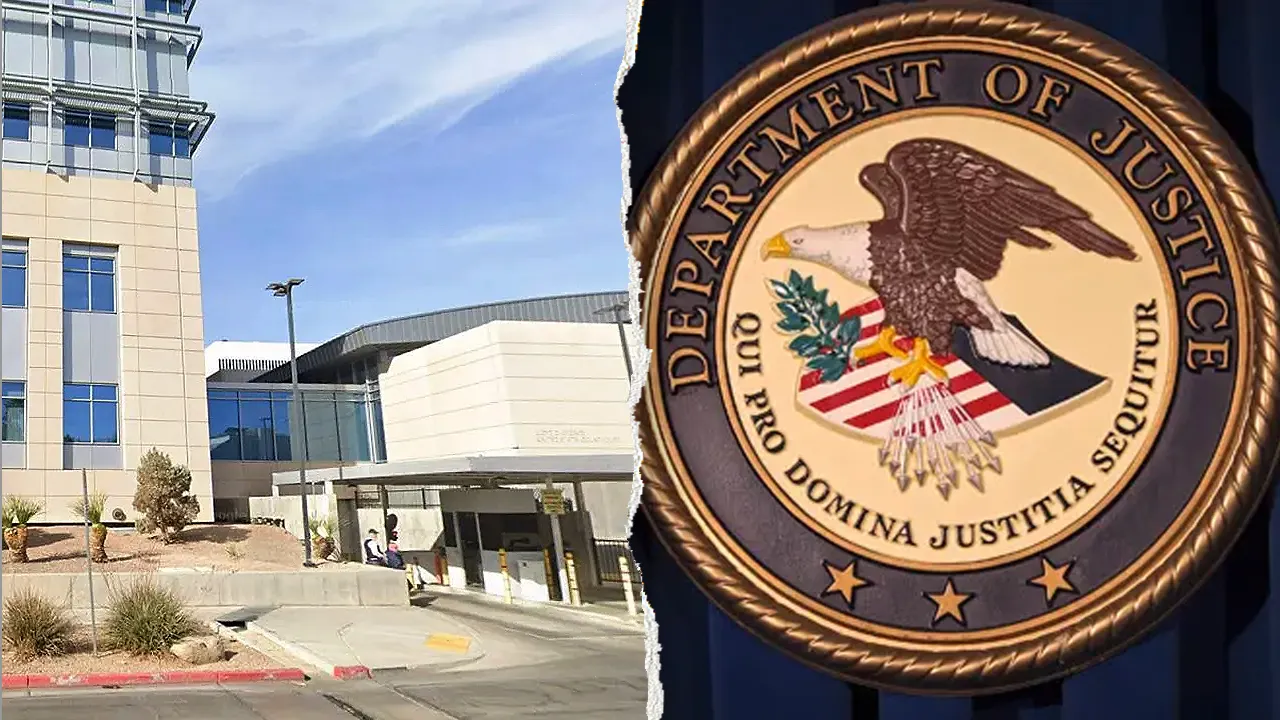
Despite a Justice Department warning, a Nevada judge recently ordered the immediate release of an illegal immigrant and MS-13 gang member convicted of murder back into the community.
U.S. District Judge Richard F. Boulware II, nominated by former President Barack Obama in 2014, ordered the Jan. 21 release of El Salvador national Harvey Laureano-Rosales, a 54-year-old who illegally entered the U.S. in 1987.
Court documents allege the government was attempting to deport Laureano-Rosales to Mexico without due process, and in violation of the Administrative Procedure Act, prompting his release.
The Nevada U.S. attorney’s office said it will seek further legal action, noting Laureano-Rosales’ release poses a risk to public safety.
FEDERAL JUDGE RULES ICE IN IOWA ILLEGALLY DETAINED MAN, TRIED TO ‘COVER ITS TRACKS’
Laureano-Rosales allegedly has tattoos identifying him as an MS-13 gang member. (John Alle/Santa Monica Coalition)
“Our office remains committed to protecting public safety and enforcing the law remain top priorities,” First Assistant U.S. Attorney for the District of Nevada Sigal Chattah wrote in a statement. “In this matter, however, the outcome results in the release of a convicted murderer and known MS-13 gang member into the community, raising serious public-safety concerns.”
“We are deeply troubled by the risks posed to the public and will continue to pursue all lawful avenues to address those concerns and safeguard the community,” she added.
The U.S. attorney’s office said Laureano-Rosales has a final order of removal from the U.S., meaning he is required by federal law to remain in immigration custody, and releasing him conflicts with that law.
KILMAR ABREGO GARCIA SEEN FOR FIRST TIME SINCE RELEASE, PLEDGES TO ‘CONTINUE TO FIGHT’ TRUMP ADMIN
Officials said Laureano-Rosales crossed the southern border into the U.S. illegally when he was 16 years old. (Christian Torres/Anadolu via Getty Images)
While Laureano-Rosales’ immigration case was ongoing, the U.S. Court of Appeals for the Ninth Circuit ordered removal should proceed, triggering the mandatory detention period required by federal immigration law.
Court documents allege when Laureano-Rosales entered the U.S. nearly 40 years ago at age 16, he became a member of MS-13, kick-starting a violent criminal career.
He was convicted of a number of gang-related crimes, including first-degree murder, and granted parole in November 2022.
U.S. Customs and Border Protection (CBP) officers stand outside the Bishop Henry Whipple Federal Building during a protest, Jan. 17, in Minneapolis. (AP Photo/Yuki Iwamura)
Days after being paroled, Laureano-Rosales was taken into custody by ICE, where he has remained for the last two-and-a-half years.
CLICK HERE TO DOWNLOAD THE FOX NEWS APP
Attorneys claim Laureano-Rosales is no longer a part of MS-13 or the Mexican Mafia, and was not deported under the Biden administration due to fears he would be tortured or killed if sent back to El Salvador or Mexico.
Read the full article from Here



San Francisco, CA
San Francisco hotels see steady World Cup business, but fall short of Super Bowl surge

Bay Area bars and restaurants are packed for World Cup watch parties this week, but San Francisco hotels are not seeing the same sell-out crowds experienced during the Super Bowl earlier this year.
While the Super Bowl brought a concentrated week of events that sent hotel prices soaring into the thousands, the World Cup spans more than a month. The extended timeline has resulted in a slower, steadier trickle of out-of-town soccer fans booking rooms.
The Bay Area has several exciting matches on the schedule at Levi’s Stadium, but none feature top-seeded teams or the mega-star power seen when “Messi mania” previously swept the region.
“We knew we weren’t going to get any of the first-place teams. We weren’t going to get Brazil, or Germany, or any of the teams carrying big fan bases — Messi, Ronaldo,” said Alex Bastian, CEO of the Hotel Council of San Francisco. “But that being said, this is still such a great thing, because people are coming here from around the world.”
Bastian noted that the city’s hospitality industry is still in a strong position for the summer.
“We have a great convention calendar for the month of June, and because we were prepared, we’re doing much better compared to our colleagues across the country,” he said.
A significant surge in hotel bookings could still happen if Levi’s Stadium secures a match featuring Team USA. That possibility grew stronger following the U.S. team’s 2-0 win over Australia on Friday.
“I’m really excited about Team USA. I’m USA all the way,” Bastian added. “I’m hopeful that when that game is played here, the world will come check out San Francisco as well.”

The night belonged to Kyle Freeland, who joined the 1,000 K Club. The moment belonged to Braxton Fulford. The ninth inning — and a big sigh of relief — belonged to closer Antonio Senzatela.
Fulford hit a two-run, two-out, pinch-hit double in the eighth inning off Mason Montgomery to lead the Rockies to a 4-3 win over the Pirates at Coors Field in front of a Friday night crowd of 33,596.
Fulford drove in Tyler Freeman and Cole Carrigg, who scratched out back-to-back two-out singles off Montgomery.
“I had been warming up in the cage for that at-bat for a couple of innings, so I felt pretty prepared,” Fulford said. “I got an advantage count (3-1) and I knew he was going to come with the heater and I was all over it.”
Fulford caught Montgomery for three seasons at Texas Tech, so he knew the left-hander’s tendencies.
“It’s kind of unfortunate for pitchers that you catch, because you kind of get to see their stuff,” Fulford said. “You kind of understand more of who they are. So I do feel like I had the advantage there.”
In the ninth, the Pirates loaded the bases against Senzatela with no outs on a single by Marcell Ozuna and an error on a groundball by shortstop Ezequiel Tovar. But Senzatela struck out pinch-hitter Tyler Callihan and induced Jared Triolo to ground to Tovar, who started the game-ending double play.
“It was kind of a crazy ending to the game — bases loaded and no outs,” Freeland said. ” ‘Senza’ got a big punchout in that situation, picks up Tovar. Then Tovar gets another opportunity to turn a double play, and he gets it done.”
Before all of the late-game drama, Freeland pitched his best game of the season: 7 1/3 innings, two runs allowed on four hits, no walks, and eight strikeouts. It marked the fourth time in his career that he pitched 7 1/3 or more innings.
“Tonight, I thought he was absolutely exceptional,” manager Warren Schaeffer said. “I thought his body language was impressive. He attacked the strike zone — relentlessly. His heater had good ‘vert’ tonight. The breaker was good. It seemed like he was in control all night.”
“Gritty” is the word often used to describe Freeland. Dominant was a more apt description on Friday night. History-making works, too. Freeland’s eight Ks gave him 1,001 for his career, joining right-hander German Marquez (1,069) as the only two pitchers in franchise history to eclipse 1,000. Freeland struck out Marcell Ozuna in the seventh for No. 1,000, and then promptly fanned Brandon Lowe for 1,001.
The hard-core Rockies fans behind the dugout gave Freeland a standing ovation.
“I’m very grateful for the fans always supporting me, and for making it this long in my career to reach some of these milestones, especially with one ballclub,” said Freeland, who struck out eight and walked none for the second time in his career. “I definitely hear those fans when I pop out of the dugout after every inning.”
The 33-year-old Denver native blanked the Pirates for the first seven innings, giving up just two hits. Pittsburgh finally got to Freeland in the eighth, putting up back-to-back doubles by Esmerlyn Valdez and Triolo to cut Colorado’s lead to 2-1. Up to that point, it looked as if Freeland had the juice to throw a complete game, especially since he threw just 81 pitches.
Freeland was pulled in the eighth for right-hander Jaden Hill, who gave up an RBI single up the middle to pinch-hitter Bryan Reynolds, tying the game, 2-2. Then Hill hit leadoff hitter Spencer Horowitz, and Nick Gonzalez scorched a triple off the right-field wall, scoring Horowitz and giving the Pirates a 3-2 lead.
Colorado staked a 1-0 lead in the third against hard-throwing right-hander Bubba Chandler. Willi Castro’s single scored Ezequiel Tovar, who reached on a bunt single.
The Rockies extended their lead to 2-0 in the fourth on rookie first baseman TJ Rumfield’s leadoff homer. He sent Chandler’s first-pitch slider 427 feet into the right-field seats. It was Rumfield’s 11th homer and his 38th RBI.
Pitching probables
Saturday: Pirates RHP Paul Skenes (6-6, 2.85 ERA) at Rockies RHP Tomoyuki Sugano (7-4, 4.54), 7:10 p.m.
Sunday: Pirates RHP Jared Jones (1-1, 6.23) at Rockies RHP Michael Lorenzen (2-8, 7.13), 1:10 p.m.
TV: Rockies.TV
Radio: KOA 850 AM/94.1 FM
Want more Rockies news? Sign up for the Rockies Insider to get all our MLB analysis.

Ranger Suarez carried a no-hitter into the seventh inning, and the Boston Red Sox beat the Seattle Mariners 6-2 on Friday night.
Suarez (3-3) struck out five and walked three in 6 2/3 innings. His no-hit bid ended with Josh Naylor’s one-out double in the seventh.
The 30-year-old lefty earned his first win since April 27 against Toronto.
Caleb Durbin put the Red Sox ahead with a second-inning solo homer, his fifth of the year. Durbin had his second three-hit game this season, with his first coming against Tampa Bay on June 10.
Ceddanne Rafaela scored on a wild pitch in the seventh, and Marcelo Mayer drove in two more runs with a bases-loaded single.
Carlos Narváez added a sacrifice fly before Seattle finally escaped the inning on a diving catch by Dominic Canzone in right field.
Suarez issued a two-out walk that loaded the bases in the seventh on his final pitch of the night, but Justin Slaten ended the threat by striking out pinch-hitter J.P. Crawford to preserve a 5-0 lead.
Mayer added one more insurance run with a ninth-inning RBI double. The Mariners got on the board thanks to Julio Rodríguez’s two-run homer in the ninth.
Seattle starter Bryce Miller (3-1) struck out seven in five innings. He allowed three hits and one run.
Luis Castillo, who has started in all but three of his 258 career appearances, gave up five runs in four innings of relief as the Mariners revived their “piggyback” rotation.
Up next
Red Sox LHP Connelly Early (5-5, 3.81 ERA) starts opposite Mariners RHP Emerson Hancock (5-3, 3.28) on Saturday night.
-

 Los Angeles, Ca45 minutes ago
Woman, man found shot to death in Pomona, suspect leads officers on erratic chase
-

 Detroit, MI1 hour ago
Today in History: June 20, race-related rioting erupts in Detroit
-

 San Francisco, CA1 hour ago
San Francisco hotels see steady World Cup business, but fall short of Super Bowl surge
-

 Dallas, TX1 hour ago
Dallas International Piano Competition brings finalists June 23
-

 Miami, FL1 hour ago
Where to watch San Francisco Giants vs Miami Marlins: TV channel, start time, streaming for June 20
-

 Boston, MA1 hour ago
Duck parades, outdoor drinking, and Gronk in a kilt. Here’s how Friday’s World Cup festivities unfolded. – The Boston Globe
-

 Denver, CO2 hours ago
Rockies ride Kyle Freeland’s gem, Braxton Fulford’s double to 4-3 win over Pirates
-

 Seattle, WA2 hours ago
Suarez’s no-hit try ends on Naylor double in seventh, but Boston still tops Seattle

