Entertainment
Bob Dylan is absolutely cooking on the road right now


SANTA BARBARA — Sixty-one years and a day after he laid down the epochal “Like a Rolling Stone” in a recording studio on Seventh Avenue in New York City, Bob Dylan shuffled onstage on the other side of the country dressed so fine in a dark jacket with the hood pulled over his head.
The hood, which Dylan has been wearing even for shows without the cool coastal breeze that blew through the Santa Barbara Bowl on Wednesday night, has lately become an object of online fascination; one guy on X last year wrote that he was obsessed with the rock legend’s “new dripped out look,” and I have to agree: Though there are great hooded-Dylan photos going back decades, his current wardrobe — as seen nightly against a velvety curtain lighted from below — is a vibe through and through. (His Bobness forbade photographers from shooting Wednesday’s show, which means you’ll have to consult social media for a glimpse.)
Dylan’s drip isn’t the only thing putting him into the viral bloodstream of the internet. In March, he launched a Patreon, where he’s posting short stories and apparently AI-assisted installments in an audio series called “Lectures From the Grave”; this week, he contributed his thoughts on aging to a widely shared New York Times op-ed pegged to President Trump’s 80th birthday. In my social feeds, at least, quotes from Dylan’s piece — “You’re an old king from some vanished country,” he wrote — kept turning up next to clips of Timothée Chalamet celebrating the New York Knicks’ NBA Finals win — an oddly poetic interleaving given their history.
All this stuff is cool; I admire veteran culture-shapers who figure out how to adapt to a new information environment. Yet one of the reasons it’s fun to encounter Dylan on Instagram is because you can still encounter him in the flesh. And at 85, he’s absolutely cooking on the road right now.
Wednesday’s show was the first in a handful he’s playing around Southern California this week, including a gig scheduled for Saturday night at Palm Desert’s Acrisure Arena. For years after the release of 2020’s pulpy “Rough and Rowdy Ways,” Dylan said he was on the Rough and Rowdy Ways tour; this month, though, he started selling T-shirts that describe his latest run of dates as the Long Hot Summer tour — precisely the sort of taxonomical quirk to get Bobheads going in the comments.
The concert, which ran about 80 minutes, mixed four cuts from “Rough and Rowdy Ways” with older Dylan songs like “All Along the Watchtower” and “To Be Alone With You” and covers such as Bo Diddley’s “I Can Tell” and Eddie Cochran’s “Nervous Breakdown.” But the whole thing felt like one continuous dream state, as Dylan — accompanied by a four-piece band dressed in dark colors to match the boss — croaked, gasped and crooned from behind an electric piano he played like somebody knocking the keys with his arm as he reaches for a drink.
“False Prophet” was a raunchy blues while “When I Paint My Masterpiece” rode a luscious rumba groove; “Crossing the Rubicon” and “I’ve Made Up My Mind to Give Myself to You,” both from “Rough and Rowdy Ways,” got arrangements completely different from those on the album.
To the astonishment of many a Bobhead, Dylan’s guitarist Doug Lancio was replaced in Santa Barbara by Julian Lage, the youngish jazz star known for his work with Gary Burton and John Zorn. (Dylan said nothing about the change, nor about anything else, from the stage; a spokesman for the singer said he had no word on whether Lage was a permanent addition to the band.) Lage’s playing was tender and spooky, not least in “Tryin’ to Get to Heaven,” where every 30 seconds or so the chords would go in some direction I could never have predicted.
The result was a spectacle of emotion — you’d have to have tried not to get swept away by “I Shall Be Released,” which closed the show — but also of belief in one’s craft. Onstage as on your phone, Dylan was searching for new limits Wednesday — a lifer grinding toward the sublime.


Exploiting racism has been a profitable strategy in Hollywood since the dawn of filmmaking: 111 years ago, D.W. Griffith’s film “The Birth of a Nation” was incredibly popular and influential, while also being so racist that it was considered controversial even in its own day.
The industry saw immediately just how lucrative fear could be. More than a century later, there is always someone in the entertainment media willing to trade in racist tropes for money, as well as an audience ready to receive them.
Two new films, “Citizen Vigilante” and “Run, Fight, Hide: Infidels,” demonstrate that streaming platforms and social media no longer simply distribute controversial content but in fact thrive on content that provokes, polarizes and sustains attention, regardless of the social cost.
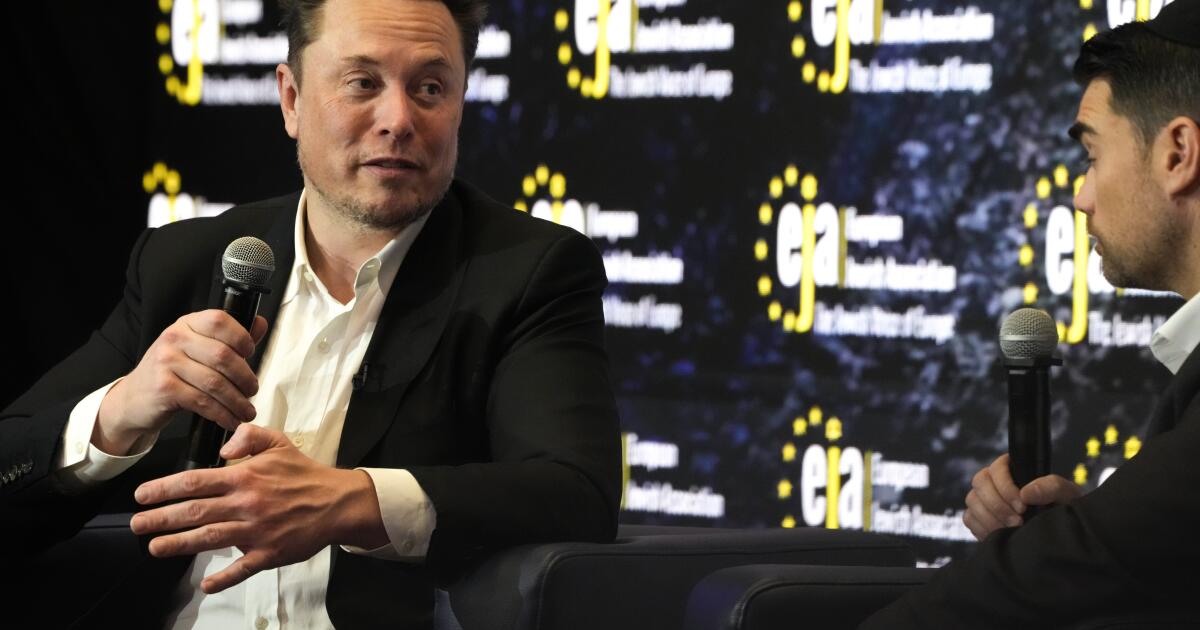
Both of these xenophobic and Islamophobic films are being pushed as “anti-woke” vehicles, deliberately engineered to bypass traditional critical reception and capitalize on a fractured media ecosystem. “Citizen Vigilante,” which features an American protagonist killing dark-skinned immigrants and Muslims in an unnamed European setting, was denied a rating certificate by the German government for inciting violence. Yet despite that determination, the film secured global reach through decentralized digital distribution and high-profile promotion from Elon Musk.
Similarly, “Run, Fight, Hide: Infidels” — a campus siege narrative evoking 1980s action film nostalgia that leans heavily into outdated, post-9/11 anxieties — relies on a built-in conservative media apparatus to guarantee financial returns. The film is produced by the conservative media figure Ben Shapiro and the Daily Wire, which he co-founded. It is a sequel to a 2020 film that was their film company’s premiere.
But while promoters of such films frame their work as a brave rebellion, the reality is much more sinister: rehashing 40-year-old tropes while invoking conspiracy theories of Muslims bringing sharia law to America, because outrage is cheap to produce and easy to monetize.
Stories matter. Stories shape how we see one another. They influence what we love, what we celebrate, whom we trust, whom we understand and whom we fear.
Since January, the Muslim Public Affairs Council has documented a sharp escalation in threats and attacks targeting Muslims and Islamic institutions across the United States, including vandalism, shootings, bomb threats, attempted assassinations and physical assaults. These are not isolated incidents. They reflect a broader climate in which dehumanizing representation increasingly manifests as real-world violence.
Entertainment and politics increasingly employ the same tactic as one another, recycling narratives of fear and “otherness” to mobilize audiences, voters and consumers. When political leaders encourage those narratives, as President Trump recently did by amplifying and commenting on a photo of young Muslim American students in hijab, they further normalize the same stereotypes that entertainment companies have learned to monetize.
Yet while the social costs continue to mount, the economic incentives remain firmly intact. “Citizen Vigilante” earned a 93% audience score on Rotten Tomatoes despite receiving just a 6% critics’ score. More tellingly, it quickly climbed to the top of Amazon’s and Apple TV’s paid video-on-demand charts.
And this isn’t just a Muslim and immigrant issue — and it’s not only about who is portrayed on screens, but also who is not. Representation has been backsliding, and audiences are left with fewer opportunities to see the reality and humanity of diverse communities, making them more vulnerable to fear-based narratives.
According to a 2026 report from the nonprofit Define American, which tracks representation across television and film, Latinos account for only 23% of immigrant characters represented on screen, even though they make up more than 40% of the immigrant population in the United States. In 2020, 50% of immigrants on screen were Latino.
The industry’s defense is that whitewashed and xenophobic films reflect audience demand. But the recent research by Define American challenges this assumption. Data show that nuanced, multidimensional storytelling, in which immigrants and minority characters are woven into the fabric of everyday narratives rather than tokenized or villainized, actually leads to greater audience engagement and deeper systemic understanding.
Entertainment doesn’t simply reflect culture; it teaches us who belongs within it. Studios, distributors, streaming platforms and filmmakers all have a responsibility to reject narratives that portray immigrants as enemies and instead embrace stories that reflect the diversity and complexity of our world. At the same time — as with voters — the power ultimately rests with consumers. The choice to demand storytelling that challenges prejudice rather than profits from it belongs to all of us.
Sue Obeidi is the senior vice president of the Muslim Public Affairs Council Hollywood Bureau. Jose Antonio Vargas is the founder of Define American.

By and large, the zombie subgenre has bitten off more than it can chew in modern times. Between George Romero survival films and camp comedies, the well has become pretty infected. But once in a while, along comes a movie like This Is Not A Test.
Let’s sink our teeth into this new release and see how it stacks up against the classics.
The tone and tenor of this film represent the classic survival movies like Night Of The Living Dead. But the thing that grabs the audience about This Is Not A Test is the trauma of the characters. Holt shines as a withdrawn survivor of an abusive home, trying to cut through the wreckage to reunite with her sister. Each of the main characters have standout traits, and they bathe in strongly acted moments as the stress of the situation changes who they are.
The gore in This Is Not A Test is pretty strong. The attacks spring quickly and when they do, the special effects team does a good job showcasing the battle scars. The camera work is also frenetic in a good way, because the chaos of the chase scenes puts the viewers in a first-person perspective. This film lets you feel like a part of the survivors, so their journeys are interactive.

Longtime fans may say that there’s nothing new in This Is Not A Test, and maybe they’re right. There’s no fresh take on the monsters here, no crazy origin, nothing that we haven’t seen in the past fifty-eight years. But the pacing nails a great balance between getting to know the characters and getting the zombie splatter fest. The mental meltdowns of the characters feel well earned, and the arc of Sloane and her sister brings a lot of heart and investment to the story. Even the most jaded zombie horror fans will find something to appreciate here, even as a background movie.
Adam MacDonald has made another intense hit here, and This Is Not A Test is currently available to stream on Shudder.
Entertainment
‘You’re scaring my people.’ Shia LaBeouf’s alleged stalker arrested after posting viral video
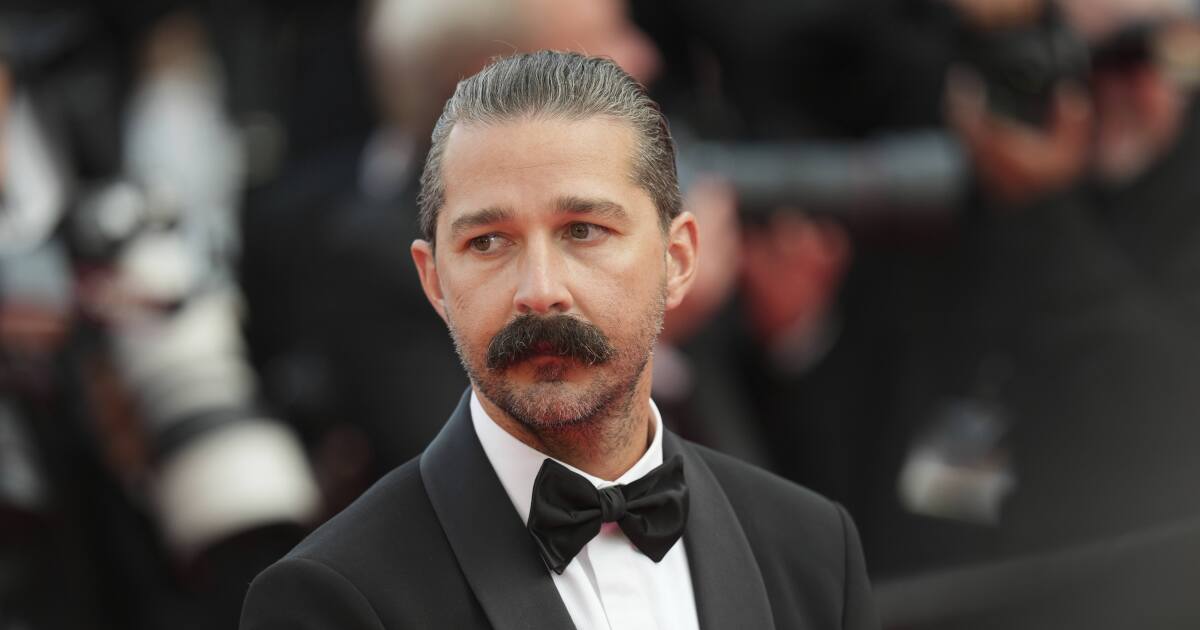
Shia LaBeouf’s alleged stalker has been arrested after posting a video of the actor asking to be left alone.
According to Orleans Parish Sheriff’s Office booking records, Alyssa Lee Couture, 40, was arrested Monday night and booked on a misdemeanor charge of stalking. Hours earlier, Couture had posted a video of a confrontation with LaBeouf in what appeared to be a grocery store parking lot. The “Honey Boy” actor is shown speaking to Couture through the window of a car.
“Leave me alone. God bless you. Leave me alone,” LaBeouf says calmly in the video. “You’re scaring my dad. You’re scaring my people. Leave me alone.”
Couture has posted more than 5,000 videos on her Instagram, most of which feature the woman addressing the embattled actor, whom she appears to believe is her husband. In a GoFundMe launched in May, Couture wrote that she was hoping to raise $70,000 to find permanent housing and that she had been living in her car and staying with family members. She also wrote that she had schizophrenia, among other disabilities.
Although the New Orleans Police Department does not identify Couture’s stalking victim as LaBeouf due to privacy policies, the timeline of her booking appears to line up with the confrontation with LaBeouf.
According to People, LaBeouf left Los Angeles after his split from actor Mia Goth last year and relocated to Louisiana to be closer to family.
In June, he pleaded guilty to three counts of simple battery, months after he went viral for his involvement in a Mardi Gras altercation in New Orleans. The actor, 39, was arrested in New Orleans on Feb. 17. At the time, New Orleans police confirmed LaBeouf was charged with two counts of simple battery for allegedly assaulting two men near a bar in the French Quarter. TMZ published bystander video of the incident and footage of LaBeouf walking through the French Quarter hours before the brawl.
The actor was released from jail shortly after his arrest and posted $100,000 in bond. More than a week after LaBeouf’s initial arrest, the New Orleans Police Department issued a second warrant for the actor’s arrest in connection with the same incident, and he racked up an additional simple battery charge. Prior to the second arrest, a New Orleans judge ordered LaBeouf to begin substance abuse treatment and undergo weekly drug testing.
Times staff reporter Alexandra Del Rosario contributed to this report.
-

 Politics6 minutes ago
Inside Trump’s Swift Construction of a White House Helipad
-

 Science18 minutes ago
The Wildfire Researchers Who Burn Houses Down on Purpose
-
Lifestyle42 minutes ago
Apache chef Nephi Craig says cooking Native food saved his life
-

 Technology54 minutes ago
Google is better at playing the AI regulations game
-

 World1 hour ago
Iran calls on Houthis to prepare to cut off Red Sea gateway — can the terror group do it?
-

 Politics1 hour ago
Todd Blanche roasts Adam Schiff in heated hearing: ‘You’re a lawyer, you know the rules’
-

 Health1 hour ago
Game-changing cholesterol pill wins FDA approval after cutting LDL nearly 60%
-

 Sports1 hour ago
2026 AL, NL MVP Odds: Ohtani Favored; Alvarez Holding Off Challengers

