West
Nevada judge frees convicted MS-13 killer despite government warnings about public safety

NEWYou can now listen to Fox News articles!
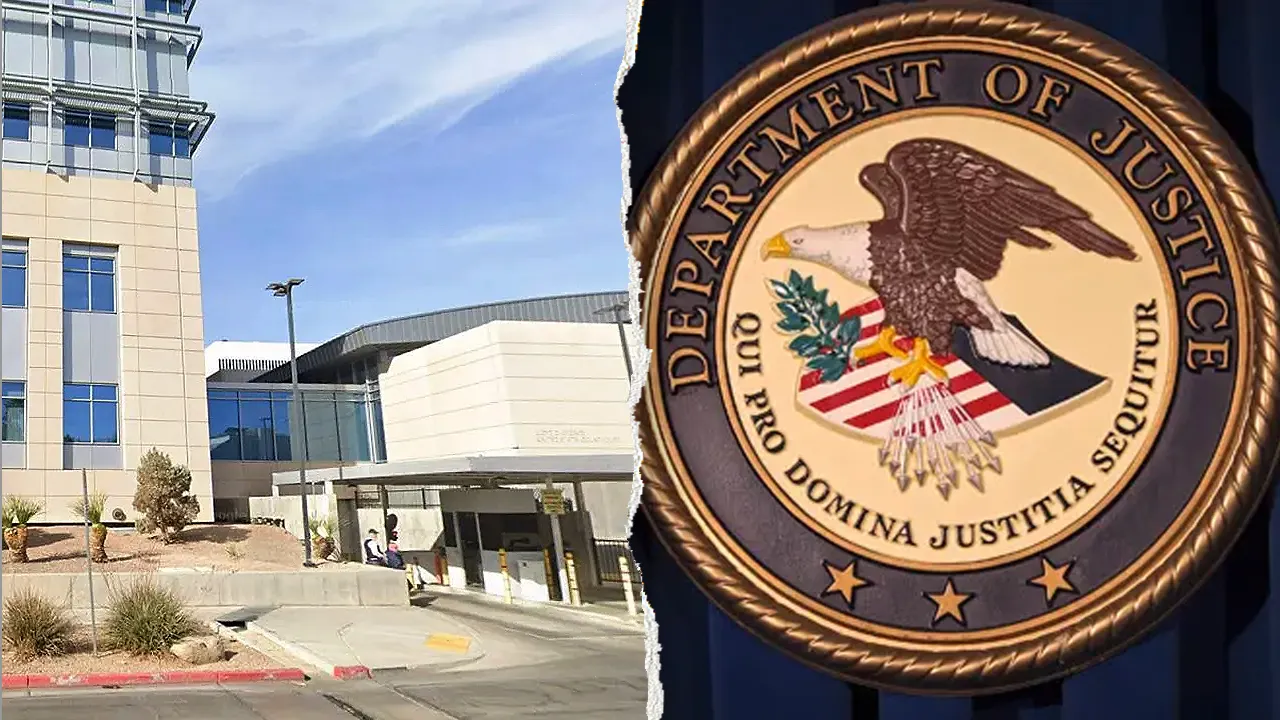
Despite a Justice Department warning, a Nevada judge recently ordered the immediate release of an illegal immigrant and MS-13 gang member convicted of murder back into the community.
U.S. District Judge Richard F. Boulware II, nominated by former President Barack Obama in 2014, ordered the Jan. 21 release of El Salvador national Harvey Laureano-Rosales, a 54-year-old who illegally entered the U.S. in 1987.
Court documents allege the government was attempting to deport Laureano-Rosales to Mexico without due process, and in violation of the Administrative Procedure Act, prompting his release.
The Nevada U.S. attorney’s office said it will seek further legal action, noting Laureano-Rosales’ release poses a risk to public safety.
FEDERAL JUDGE RULES ICE IN IOWA ILLEGALLY DETAINED MAN, TRIED TO ‘COVER ITS TRACKS’
Laureano-Rosales allegedly has tattoos identifying him as an MS-13 gang member. (John Alle/Santa Monica Coalition)
“Our office remains committed to protecting public safety and enforcing the law remain top priorities,” First Assistant U.S. Attorney for the District of Nevada Sigal Chattah wrote in a statement. “In this matter, however, the outcome results in the release of a convicted murderer and known MS-13 gang member into the community, raising serious public-safety concerns.”
“We are deeply troubled by the risks posed to the public and will continue to pursue all lawful avenues to address those concerns and safeguard the community,” she added.
The U.S. attorney’s office said Laureano-Rosales has a final order of removal from the U.S., meaning he is required by federal law to remain in immigration custody, and releasing him conflicts with that law.
KILMAR ABREGO GARCIA SEEN FOR FIRST TIME SINCE RELEASE, PLEDGES TO ‘CONTINUE TO FIGHT’ TRUMP ADMIN
Officials said Laureano-Rosales crossed the southern border into the U.S. illegally when he was 16 years old. (Christian Torres/Anadolu via Getty Images)
While Laureano-Rosales’ immigration case was ongoing, the U.S. Court of Appeals for the Ninth Circuit ordered removal should proceed, triggering the mandatory detention period required by federal immigration law.
Court documents allege when Laureano-Rosales entered the U.S. nearly 40 years ago at age 16, he became a member of MS-13, kick-starting a violent criminal career.
He was convicted of a number of gang-related crimes, including first-degree murder, and granted parole in November 2022.
U.S. Customs and Border Protection (CBP) officers stand outside the Bishop Henry Whipple Federal Building during a protest, Jan. 17, in Minneapolis. (AP Photo/Yuki Iwamura)
Days after being paroled, Laureano-Rosales was taken into custody by ICE, where he has remained for the last two-and-a-half years.
CLICK HERE TO DOWNLOAD THE FOX NEWS APP
Attorneys claim Laureano-Rosales is no longer a part of MS-13 or the Mexican Mafia, and was not deported under the Biden administration due to fears he would be tortured or killed if sent back to El Salvador or Mexico.
Read the full article from Here



Mojave (Nev.) head football coach Wes Pacheco announced on Sunday morning that he’s stepping down from his position, according to a social media post.
Pacheco announced his resignation after six seasons at the helm of the Rattlers, putting together a 29-22 overall record from 2020-2025.
“I have officially stepped down as Head Coach of the Mojave Football Program,” Pacheco said in his social media post. “Thank you to Principal Cole for giving me the opoortunity make an impact on the lives of Mojave Student-Athletes. I am grateful and blessed to have labored through a 6-year journey of successes, failures, life lessons, character building and growth with the student-athletes myself and my coaching staff have served. I will forever love my Mojave Family, the Mojave Community and believe in the notion that SUCCESS can be attained by showcasing character, treating everyone with respect, and always have the courage to dream big and trust that “ATTACKING THE HARD WORK” & “HIGH MOTORING EVERYTHING” can yield SUCCESS that you want to achieve in life!”
During Pacheco’s half dozen seasons leading Mojave, his best record came in the 2024 season when the Rattlers finished with a 12-1 record. Located out of North Las Vegas, Mojave had to compete against the likes of national high school football powerhouse Bishop Gorman during the regular season.
Mojave ended the last season with a 4-6 record and as the state’s No. 23rd ranked team, according to the final 2025 Nevada High School Football Massey Rankings.
More about Mojave High School
Mojave High School, located in North Las Vegas, NV, is a dynamic public high school that fosters academic excellence, personal growth, and community involvement. Home of the Rattlers, MHS offers a wide range of academic programs, athletics, and extracurricular activities. With a strong commitment to student success, Mojave emphasizes leadership, college and career readiness, and a supportive school culture that prepares students for life beyond graduation.
For Nevada high school football fans looking to keep up with scores around the nation, staying updated on the action is now easier than ever with the Rivals High School Scoreboard. This comprehensive resource provides real-time updates and final scores from across the Silver State, ensuring you never miss a moment of the Friday night frenzy. From nail-biting finishes to dominant performances, the Rivals High School Scoreboard is your one-stop destination for tracking all the high school football excitement across Nevada.

Arizona State baseball will host a four-game homestand, beginning with New Mexico State on Wednesday, April 22.
The Sun Devils and Aggies faced each other in late March, with ASU winning 10-4. The two teams will meet for the final time at 6:35 p.m. at Phoenix Municipal Stadium.
ASU will then welcome Baylor on Friday, April 24, for a three-game series. The Sun Devils have yet to face the Bears this season, but ASU has been doing well so far and has been in the top 25 for four weeks.
Sophomore center fielder Landon Hairston earned Big 12 player of the week honors on April 13, after delivering five home runs in five games. His 10 runs in that stretch were tied for the second-most nationally and his 14 runs batted in were tied for third-most nationally. All nine of his hits went for extra bases, three more than any other player.
ASU’s series against Baylor will start at 6:35 p.m. for the first two games, followed by a 1:05 p.m. start on Sunday, April 26.
April 19
Softball at Houston, Cougar Softball Stadium, noon.
April 22
Baseball vs New Mexico State, Phoenix Municipal Stadium, 6:35 p.m.
April 23
Women’s golf at Big 12 Championship, Dallas Athletic Club, TBA.
Track and field at Penn Relays, Franklin Field, 1:22 p.m.
Beach volleyball at Big 12 Championship, Bear Down Beach, all day.
April 24
Baseball vs Baylor, Phoenix Municipal Stadium, 6:35 p.m.
Softball vs Texas Tech, Farrington Stadium, 7 p.m.
April 25
Lacrosse at Colorado, Prentup Field, 11 a.m.
Softball vs Texas Tech, Farrington Stadium, 3 p.m.
Baseball vs Baylor, Phoenix Municipal Stadium, 6:35 p.m.
Reach the reporter or send tips for stories at jenna.ortiz@arizonarepublic.com, as well as @jennarortiz on X.
Catch the best high school sports coverage in the state. Sign up for Azcentral Preps Now. And be sure to subscribe to our daily sports newsletters so you don’t miss a thing.

The Oregon Ducks have been progressing through the class of 2027 with hopes of landing some of their top target’s commitment on both the offense and the defense.
With many names left on the board, the Ducks have started to receive some great news, including some news from someone they have been targeting since they offered back in January of 2025.
Darius Johnson Releases His Top Four Schools
One of the Ducks top targets’ in the 2027 class at the cornerback position is Darius Johnson. Johnson recently released his top schools with Hayes Fawcett, as he is entering a crucial part of his recruitment. The four schools he has listed at the top include the California Golden Bears, Michigan Wolverines, UCLA Bruins, and the Oregon Ducks.
Johnson is one of the better cornerbacks in the country. He currently ranks as the nation’s No. 178 prospect in the country, No. 20 player at the position, and the No. 14 player in the state of California, according to Rivals. Landing his commitment would be major for any of the schools, as he is someone who could see the field early due to his size, and his growing ability to lockdown a side of the field all by himself.
More About Darius Johnson
Johnson currently measures in at 6-1 and 155 pounds, and will be someone who continues to add weight through his high school program, and will eventually have the chance to really improve his frame when he gets to college. As of now, each of the four schools has a solid chance to win its recruiting battle, but there seems to be a clear leader at this moment.
The leader for the Ducks target seems to be the Michigan Wolverines, who have the only scheduled official visit at this moment. It seems likely that the talented prospect will schedule his other official visits sooner rather than later now that he has officially cut down his list. If the Ducks want to land his commitment, they will need to get him on an official visit because they are likely trailing at this point.
What If He Committed to Oregon Today?
If he were to commit to the Ducks today, he would be the ninth commitment for the Ducks in the class of 2027. He would also be the third cornerback commit for the Ducks in the class of 2027, which is a position they have been recruiting heavily. The cornerbacks the Ducks have at this moment are four-star Ai’King Hall from the state of Alabama and four-star Josiah Molden from the state of Oregon.
Some of their other commits at this moment include four-star EDGE Rashad Streets, four-star defensive linemen Zane Rowe, and four-star EDGE Cameron Pritchett. This class is shaping up to be another top-five class if the pieces continue to fall into place for Oregon coach Dan Lanning and his staff.
Sign up to our free newsletter and follow us on Facebook, X and Instagram for the latest news.
 Add us as a preferred source on Google
Follow
-

 Nebraska1 minute ago
Scouting Future Saints: Nebraska Cornhuskers RB Emmett Johnson
-

 Nevada7 minutes ago
Nevada high school football head coach steps down
-
 New Hampshire13 minutes ago
‘Not cosmetic’: NH lawmaker wants state to cover GLP-1 drugs for weight loss – Concord Monitor
-

 New Jersey19 minutes ago
The Maple House Is Planning To Open In Two Locations In New Jersey This Year
-

 New Mexico25 minutes ago
ASU baseball to host New Mexico State, Baylor
-

 North Carolina31 minutes ago
Three Underrated UNC Football Seniors To Watch in 2026
-

 North Dakota37 minutes ago
Finley, North Dakota without water after watermain leak.
-

 Ohio43 minutes ago
Bonnie Sue Reed-Tilton-Hetzel, East Liverpool, Ohio