Montana
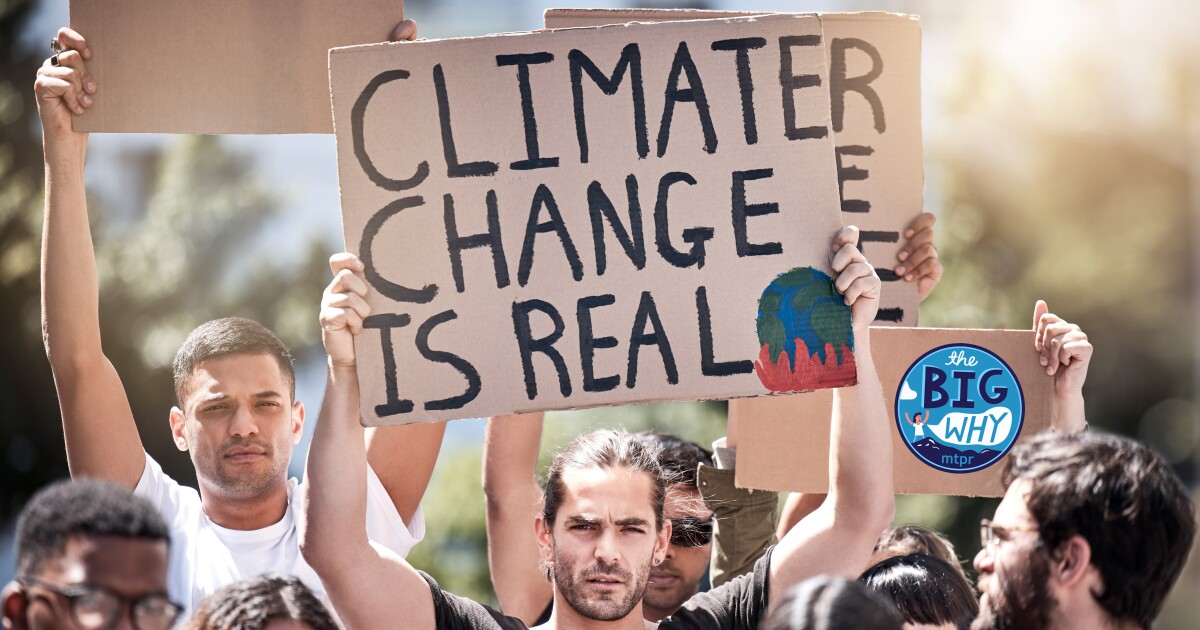
What are individual Montanans doing to combat climate change?

Austin Amestoy: Welcome to the Big Why, a series from Montana Public Radio where we find out what we can discover together. I’m your host, Austin Amestoy. This is a show about listener-powered reporting. We’ll answer questions — large or small — about anything under the Big Sky. By Montanans for Montana, this is The Big Why.
Today, we’re returning to the question about state and local efforts on climate change. And, joining me with more is MTPR reporter Ellis Juhlin. Hey Ellis!
Ellis Juhlin: Hey, Austin. I’m glad to be back. This is part three of our Big Why series fueled by a question from Huson-based listener Cassandra Rideg–
Cassandra Rideg: I heard a lot of hype, but I haven’t seen a lot of action.
Ellis Juhlin: –about climate change in Montana. Rideg told me she wants to know what’s being done to address climate change. So, we set out to answer that over the course of three Big Why episodes. The first discussed what the state is doing, and the second asked that same question of tribal nations and cities.
Austin Amestoy: And the third?
Ellis Juhlin: Now we’re tackling our final part of this question: What are individuals across Montana doing about climate change?
Austin Amestoy: You know, I’ve got a feeling we could spend a whole season of the Big Why answering that question.
Ellis Juhlin: I’ve been thinking the same thing. So, for this episode, imagine that we’re going to take an audio road trip. We’ll go to three parts of the state and hear three stories about people looking for solutions to climate change in their own lives, but approaching it pretty differently.
Austin Amestoy: The car’s gassed up, I’ve got the snacks — Ellis, where’s the first stop?
Ellis Juhlin: We’re headed to Red Lodge to meet two doctors who spent their careers on the Crow Reservation.
Lori Byron: Hi, I’m Lori Byron.
Rob Byron: I’m Rob Byron.
Ellis Juhlin: Rob and Lori are husband and wife. The Byrons told me they realized what they were doing to treat people in the exam room didn’t matter if they didn’t address the source of some of those health issues — things like more exposure to heat and poor air quality.
Rob Byron: When I started practice in the late 80s in Montana, we would talk to people with heart disease or lung disease about if there was a big forest fire. But as time went on, I had to start doing that sooner and much more often and involving a lot more people.
Austin Amestoy: So, the Byron’s noticed a problem. How’d they decide to act on it?
Ellis Juhlin: They started by working on education, drawing on their scientific backgrounds to teach politicians, environmental regulators and other health care workers about how climate change affects people’s health. And five years ago, they created Montana Health Professionals for a Healthy Climate.
Lori Byron: We have about 1,200 people that are signed on with us. Most of them are health care providers or health care researchers. We work to motivate them to speak out on climate, to sign petitions, sometimes to educate in the Legislature.
Ellis Juhlin: Through organizing bike rides, conferences, flying different colored flags to let people know what the air quality is in a given area, they’ve been all about raising awareness.
Austin Amestoy: So the organization started in 2019. How’s that work going five years on?
Ellis Juhlin: Well, the Byrons told me that creating their organization and expanding their network has made them and others feel a lot more hopeful about making a difference.
Lori Byron: It does give a sense of camaraderie, and it does give a sense of hope that that there are things that are happening.
Austin Amestoy: Okay, so that’s climate action through the lens of public health education. Ellis, where to next on the road trip?
Ellis Juhlin: Now we’re heading west to Missoula to meet Winona Bateman.
Winona Bateman: I have a 10-year old daughter, and I became concerned about climate change in a deep way when my daughter was 4.
Ellis Juhlin: Bateman realized there were lots of parents and caregivers looking for help just like her.
Winona Bateman: And I think a lot of parents are a little bit paralyzed about the issue because it’s not like your kid running into the street, and you run and like, move them out of the way of a speeding car, which is really clear, like what to do. It’s literally millions of things you could do to work on the issue and get involved. And that can feel hard that you can’t solve it by yourself.
Austin Amestoy: That’s interesting. It sounds like Bateman viewed climate change as this slow-moving disaster. How did she decide to take action.
Ellis Juhlin: She figured there had to be other people that were feeling the way that she was. So she decided to create an organization focused on them, looking at parents and caretakers. And she founded Families for a Livable Climate in 2019. Bateman’s group builds coalitions among nonprofits and citizen groups working to address climate change. For example, families worked with other environmental groups this spring on a project proposal to fund energy-efficient upgrades in schools that would also reduce greenhouse gas emissions.
Winona Bateman: The more we can work together, the better shot we have at making a difference.
Ellis Juhlin: Bateman’s organization is among those asking state utility regulators to consider climate change in their decisions, which some lawmakers have said should be left to the Legislature. She says her mission is creating a community to drive systemic change.
Winona Bateman: The climate crisis is a community crisis, and it’s a communications crisis. Those are the divides that we have to bridge. But what’s amazing is human beings are hard-coded to for community.
Austin Amestoy: It really sounds like a common thread we’ve heard from these folks so far is the idea of coming together.
Ellis Juhlin: That’s exactly it, Austin. That idea carries into our last story and our last stop on the trip in Livingston, where we’ll hear from a former teacher at Park High School.
Alecia Jongeward: My name is Alecia Jongeward. And when we got to what I turned into a climate change unit, the students started being like, “Ms. J, why don’t we have recycling at this school?”
Ellis Juhlin: So the kids started a recycling program that led to the creation of the Park High Green Initiative, a student environmental club. Over several years, the students fundraised to put solar panels on the school. They got federal grants for electric school busses. And this past fall they organized, funded and hosted the first ever Montana Youth Climate Summit.
Remi Sexton: And I loved meeting people from around the state that felt the same kind of anxiety that I do about climate.
Ellis Juhlin: That’s Remi Sexton. She Just graduated from Park High, where she did all kinds of climate work as part of the green initiative. But I want to zoom in to that youth climate conference. Students came together from all over the state.
Student 1: But I am more connected now than ever to my community.
Student 2: I am no longer holding the future at bay because we are building a better one.
Remi Sexton: I think that the climate movement has felt very isolated for me, especially just living in a state where things are very spread out. And I think that having that kind of introduction and feeling that unity was a big impact that the climate summit had on me.
Ellis Juhlin: Sexton told me seeing this bigger picture in Montana — that she’s not alone — has made her feel a lot more hopeful. She was also included in a group created by state environmental regulators to suggest changes to how Montana’s Environmental Policy Act includes climate change.
Remi Sexton: Inaction is the easiest way to feel overwhelmed. Since I have been starting to feel like I’m actually making a difference and feel like I am working towards something, it has felt a lot less anxiety-inducing.
Austin Amestoy: I keep hearing this sense of community and collective action.
Ellis Juhlin: Yeah, that is really something that came up time and time again through this reporting. Everyone I spoke with on this story found or worked with others to create change. And there are people all over the state that are calling for this kind of action. You’ve probably heard about one group of them that also deserves a mention here — 16 kids challenging the state’s fossil fuel-friendly policies. And their case is now before the state Supreme Court.
Austin Amestoy: Right, the Held v. Montana case.
Ellis Juhlin: Exactly. Hearings on that are beginning next month, so stay tuned for future coverage.
Austin Amestoy: Ellis, this series of climate “Big Whys” has truly been a joy to unpack with you. Thank you so much for all your reporting over these three episodes.
Ellis Juhlin: Thank you too, Austin. It’s been fun to dive into it.
Austin Amestoy: Now we want to know what makes you curious about Montana. Submit your questions below. Find us wherever you listen to podcasts and help others find the show by sharing it and leaving a review. Let’s see what we can discover together!



KALISPELL, Mont. — A new Montana license plate is now available at the Kalispell DMV to help support pee wee baseball.
Each plate can be purchased for $30 and will help to boost off season revenue.
The baseball plate was designed by Alexandra Sheneman who helped pitch design ideas to the board.
Proceeds will benefit the youth baseball program by funding new equipment and maintenance upgrades at the Kidsports Complex.
That includes bats, baseballs, nets, and new concrete.
Leftover funding will help families afford the baseball program.
“Once that number starts going up, it will generate some sponsorship funding so that we can help families that need support that can’t afford it,” said Kalispell pee wee baseball president Andy Wilson.
This is a great way to step up to the plate and help keep the youth baseball program strong for future seasons.


Miley Cyrus recalls ‘Hannah Montana’ casting journey
Miley Cyrus thanks Disney for taking a “chance” on her in “Hannah Montana” as the show celebrates its 20th anniversary with a new special.
Hannah Montana once sang that “Nobody’s Perfect,” a sentiment fans are echoing regarding Starbucks’ new drink honoring the fictional pop star ahead of her iconic Disney TV show’s 20th anniversary special.
Thought to be a drink that Hannah Montana would order at Starbucks, the coffee chain launched the Secret Popstar Refresher on March 23 as a celebration ahead of the “Hannah Montana 20th Anniversary Special”, set to be released on Disney+ on March 24. The drink consists of a grande Strawberry Acai Refresher with raspberry cold foam, two pumps of raspberry syrup and no strawberry inclusions – the dried strawberries typically in the refresher, according to the Starbucks app.
However, fans were quick to point out that the beloved TV show’s main character, Miley Stewart (Miley Cyrus), who lives a double life as teen pop star Hannah Montana, notoriously hates raspberries. Her disdain for raspberries was established in Season 1 of the show.
Stewart’s disgust is rooted in a childhood experience, during which she got sick after eating too much raspberry pie. Her hate for the fruit is exacerbated when Hannah Montana has to advertise a raspberry-scented perfume.
Now, fans of the show have taken to social media to speculate on Starbucks’ inclusion of raspberry.
Fans react to the raspberry Hannah Montana drink
Fans on social media quickly caught the raspberry reference after the drink’s launch on March 23, which many felt was an oversight by Starbucks, as they seemingly did not take Hannah Montana’s past into account.
Multiple comments on Starbucks’ Instagram post announcing the drink question the product’s flavor, including messages like “Why raspberry tho…didn’t Miley/Hannah hate raspberry,” “but she hates raspberry,” and “brooo there’s an episode in Hannah Montana (the perfume ad) where she doesn’t like raspberry!!!!”
The post’s caption appears to poke fun at the episode, reading: “For the fans who remember the raspberry saga, this one’s for you.”
Other comments under the post from Disney accounts also seem to acknowledge the raspberry inclusion as intentional, with the official Disney+ account commenting, “This completes the circle,” and the official Disney Channel account commenting, “the raspberry lore lives on!”
How to order a Hannah Montana drink at Starbucks
The Secret Popstar Refresher will be available for order through the Starbucks mobile app until April 5, according to a Starbucks statement obtained by USA TODAY.
The drink is a “secret menu exclusive,” meaning it is not on the official Starbucks menu in stores or drive-thru. Customers who know the recipe or use the Starbucks mobile app can order the refresher variation.
However, like any drink variation at the coffee chain, the refresher can be ordered at any time, as long as Starbucks has the required ingredients.
How to watch ‘Hannah Montana 20th Anniversary Special’?
The “Hannah Montana 20th Anniversary Special” became available to stream on Disney+ on March 24.
Reflecting on the past two decades, the special is an intimate sit-down interview with Miley Cyrus and “Call Her Daddy” podcast host Alex Cooper. The interview was filmed in front of a live audience in a recreation of the iconic Stewart ranch-style home.
Contributing: Greta Cross, USA TODAY

Prep baseball roundup: Anthony Murphy vs. Striker Pence matchup produces excitement

Escalation in the Middle East – Not Europe’s war? MEPs in the Ring

War with Iran disrupts fertilizer exports as U.S. farmers prepare for planting season

Detroit Pistons and A Kid Again team up to give children with illnesses a special night at the arena

Yankees top Giants 7-0 as robot umpire debuts

Florida High School Football Rankings: Top 25 teams – Oct. 21

How old is Bo Nix? What to know about Oregon quarterback ahead of 2024 NFL Draft

Cleary's 21 help Le Moyne down Central Connecticut State 69-64 in OT

99th annual Pony Swim held in Virginia

Indiana Members Credit Union announced as new anchor tenant at Bottleworks District
Escalation in the Middle East – Not Europe’s war? MEPs in the Ring
War with Iran disrupts fertilizer exports as U.S. farmers prepare for planting season

White House unleashes on Raskin for clinging to ‘deranged’ Jack Smith ‘lies’ in latest Trump docs flare-up

‘Keffiyehs seized, left to die’: Inside the Palestine Action hunger strike

LaGuardia Crash Timeline: Moments Before Air Canada Plane Collided With Fire Truck
-

 Detroit, MI1 week ago
Drummer Brian Pastoria, longtime Detroit music advocate, dies at 68
-

 Georgia1 week ago
How ICE plans for a detention warehouse pushed a Georgia town to fight back | CNN Politics
-

 Movie Reviews7 days ago
‘Youth’ Twitter review: Ken Karunaas impresses audiences; Suraj Venjaramoodu adds charm; music wins praise | – The Times of India
-
 Science1 week ago
Industrial chemicals have reached the middle of the oceans, new study shows
-

 Science1 week ago
How a Melting Glacier in Antarctica Could Affect Tens of Millions Around the Globe
-

 Culture1 week ago
Test Your Memory of Great Lines From Classic Irish Poems
-

 Sports5 days ago
IOC addresses execution of 19-year-old Iranian wrestler Saleh Mohammadi
-

 New Mexico3 days ago
Clovis shooting leaves one dead, four injured