Montana
Warren Buffett-owned BNSF Railway contributed to 2 deaths in Montana town where asbestos sickened thousands, jury finds


A federal jury on Monday said BNSF Railway contributed to the deaths of two people who were exposed to asbestos decades ago when tainted mining material was shipped through a Montana town where thousands have been sickened.
The jury awarded $4 million each in compensatory damages to the estates of the two plaintiffs, who died in 2020. Jurors said asbestos-contaminated vermiculite that spilled in the rail yard in the town of Libby, Montana was a substantial factor in the plaintiffs’ illnesses and deaths.
Family members of the two victims hugged their attorneys after the verdict was announced. An attorney for the plaintiffs said the ruling brought some accountability, but one family member told The Associated Press that no amount of money would replace her lost sister.
“I’d rather have her than all the money in the world,” Judith Hemphill said of her sister, Joyce Walder.
The vermiculite from Libby has high concentrations of naturally-occurring asbestos and was used in insulation and for other commercial purposes in homes and businesses across the U.S.
After being mined from a mountaintop outside town, it was loaded onto rail cars that sometimes spilled the material in the Libby rail yard. Residents have described piles of vermiculite being stored in the yard and dust from the facility blowing through downtown Libby.
The jury did not find that BNSF acted intentionally or with indifference so no punitive damages were awarded. Warren Buffett’s Berkshire Hathaway Inc. acquired BNSF in 2010, two decades after the W.R. Grace & Co. vermiculite mine near Libby shut down and stopped shipping the contaminated mineral.
The estates of the two victims argued that the railroad knew the asbestos-tainted vermiculite was dangerous and failed to clean it up. Both lived near the rail yard decades ago and died from mesothelioma, a rare lung cancer linked to asbestos exposure.
The pollution in Libby has been cleaned up, largely at public expense. W.R. Grace, which played a central role in the town’s tragedy, filed for bankruptcy in 2001 and paid $1.8 billion into an asbestos trust fund to settle future cases.
Yet the long timeframe over which asbestos-related diseases develop means people previously exposed are likely to continue getting sick for years to come, health officials say.
The case in federal civil court over the two deaths was the first of numerous lawsuits against the Texas-based railroad corporation to reach trial over its past operations in Libby. Current and former residents of the small town near the U.S.-Canada border want BNSF held accountable, accusing it of playing a role in asbestos exposure that health officials say has killed several hundred people and sickened thousands.
“This is good news. This is the first community exposure case that will hold the railroad accountable for what they’ve done,” said Mark Lanier, an attorney for Walder and Hemphill’s estates.
The railroad was considering whether to appeal, said a BNSF spokesperson, who referred to it as a “very sad case.”
“They (the jury) had the difficult task of evaluating conduct that occurred more than 50 years ago, before BNSF ever existed,” said Kendall Sloan, the railroad’s director of external communications.
BNSF attorney Chad Knight told jurors last week the railroad’s employees didn’t know the vermiculite was filled with hazardous microscopic asbestos fibers.
“In the ‘50s, ’60s and ’70s no one in the public suspected there might be health concerns,” Knight said Friday.
The railroad’s experts also suggested during the trial that the plaintiffs could have been exposed to asbestos elsewhere.
The railroad said it was obliged under law to ship the vermiculite, which was used in insulation and for other commercial purposes, and that W.R. Grace employees had concealed the health hazards from the railroad.
U.S. District Judge Brian Morris had instructed the jury it could only find the railroad negligent based on its actions in the Libby Railyard, not for hauling the vermiculite.
Former Libby resident Bill Johnston, who followed the trial, said he was glad the victims’ estates got a substantial award.
Johnston, 67, recalled playing in piles of vermiculite at the rail yard as a child and helping his father add piles of the material to their home garden, where it was used as a soil amendment. He, his two siblings and their parents have all been diagnosed with asbestos-related diseases, Johnston said Monday.
“They didn’t do anything intentionally to cause this harm to their body. Other people knew about it and didn’t care,” he said of Libby asbestos victims. “What’s that worth? It’s hard to put a value on that. But when you say you’re going to die prematurely or the life you have left is going to be tethered to an oxygen bottle, there should be some value that makes their life easier in the end.”
BNSF was formed in 1995 from the merger of Burlington Northern railroad, which operated in Libby for decades, and the Santa Fe Pacific Corporation.
Looming over the proceedings was W.R. Grace, which operated the mountaintop vermiculite mine 7 miles (11 kilometers) outside of Libby until it closed in 1990. Morris referred to the chemical company as “the elephant in the room” during the BNSF trial and reminded jurors repeatedly that the case was about the railroad’s conduct, not W.R. Grace’s separate liability.
Federal prosecutors in 2005 indicted W. R. Grace and executives from the company on criminal charges over the contamination in Libby. A jury acquitted them following a 2009 trial.
The Environmental Protection Agency descended on Libby after 1999 news reports of illnesses and deaths among mine workers and their families. In 2009 the agency declared in Libby the nation’s first ever public health emergency under the federal Superfund cleanup program.
A second trial against the railroad over the death of a Libby resident is scheduled for May in federal court in Missoula.




GREAT FALLS — REAL Montana, short for Resource Education & Agriculture Leadership, is a two-year leadership development program through Montana State University Extension designed to strengthen the future of the state’s natural resource industries. The program combines in-state seminars, national travel, and an international study tour to expose participants to a wide range of perspectives.
Madison Collier reports – watch the video here:
Montana Ag Network: REAL group highlights international industry
The mission is simple: build a network of informed leaders who can help advance Montana agriculture and natural resource industries in a rapidly changing world.
A global classroom
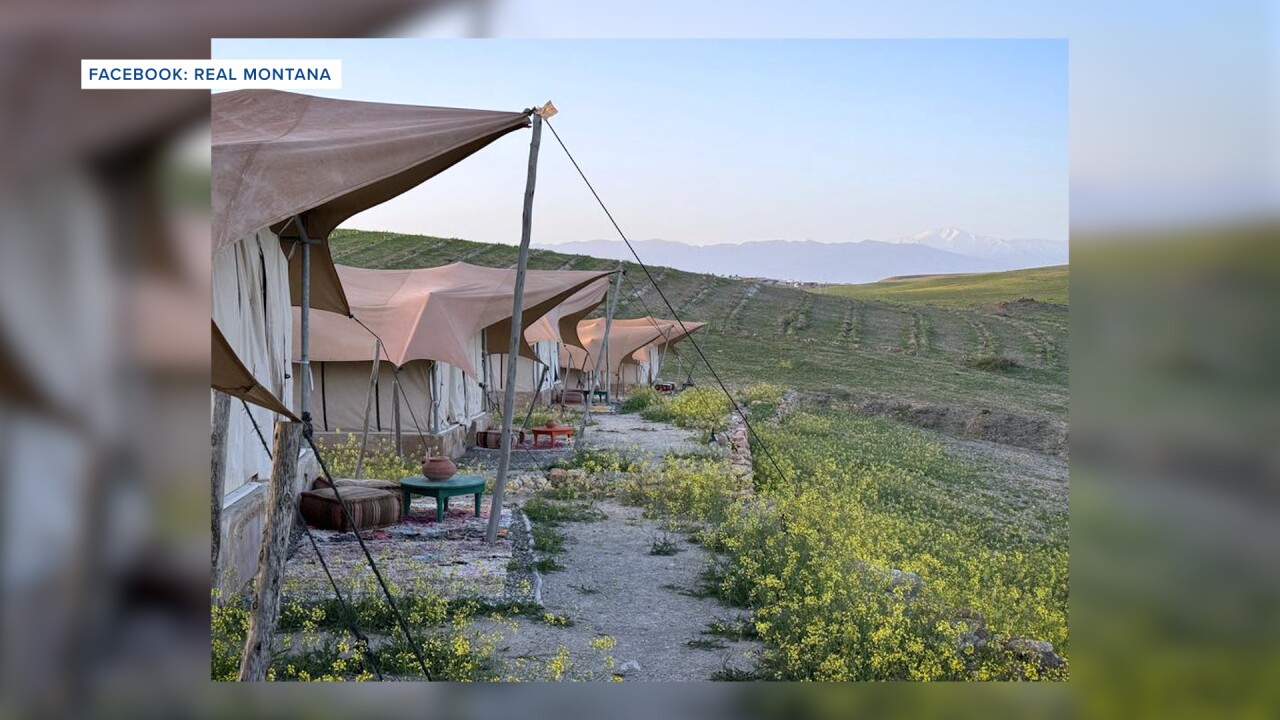
This year, participants traveled across Morocco, visiting farms, research centers, and food production facilities to better understand how agriculture operates on a global scale.
According to REAL Montana Co-Director Tara Becken, the trip is about more than just travel, it’s about perspective.
“We were able to see how Montana commodities fit into the global picture,” said Becken, who also attended the trip. “Wheat from Montana’s Golden Triangle ends up on a plate on the other side of the world.”
Participants explored everything from citrus production to international trade, gaining firsthand insight into how food systems connect across continents.
Similar challenges, different landscapes
While Morocco’s environment and crops differ from those in Montana, participants said the challenges facing producers still felt familiar.
“Even though we’re worlds away, our challenges are very, very similar,” Becken said, pointing to issues like drought, labor shortages, and market pressures.
For Alice Miller, a participant in the program, those similarities stood out immediately.
“They’ve been dealing with drought. They’re working through input costs and labor… those are the same conversations we’re having here,” Miller said.
From farm to global table
One of the most impactful moments for participants came from seeing food production up close and realizing how connected it is to back home.
“Eating oranges right off the trees and then thinking about how that food ends up on our grocery store shelves… it just hits different when you’re there,” Miller said.
The experience reinforced a broader takeaway: Montana agriculture plays a role far beyond state lines.
“Montana really is feeding the world. That’s not just a phrase, that’s a reality,” Miller said.
Building the next generation of leaders
The international trip is just one part of the REAL Montana program, which includes eight in-state seminars and a national policy-focused trip to Washington, D.C.
Participants are selected from across Montana’s natural resource industries, including agriculture, energy, and forestry, with the goal of building a diverse network of future leaders.
Program leaders say those experiences are critical as the industry faces ongoing challenges, from global trade to shifting consumer demands.
“Unless we can understand the world around us, it’s really hard to tackle our own problems,” Becken said.
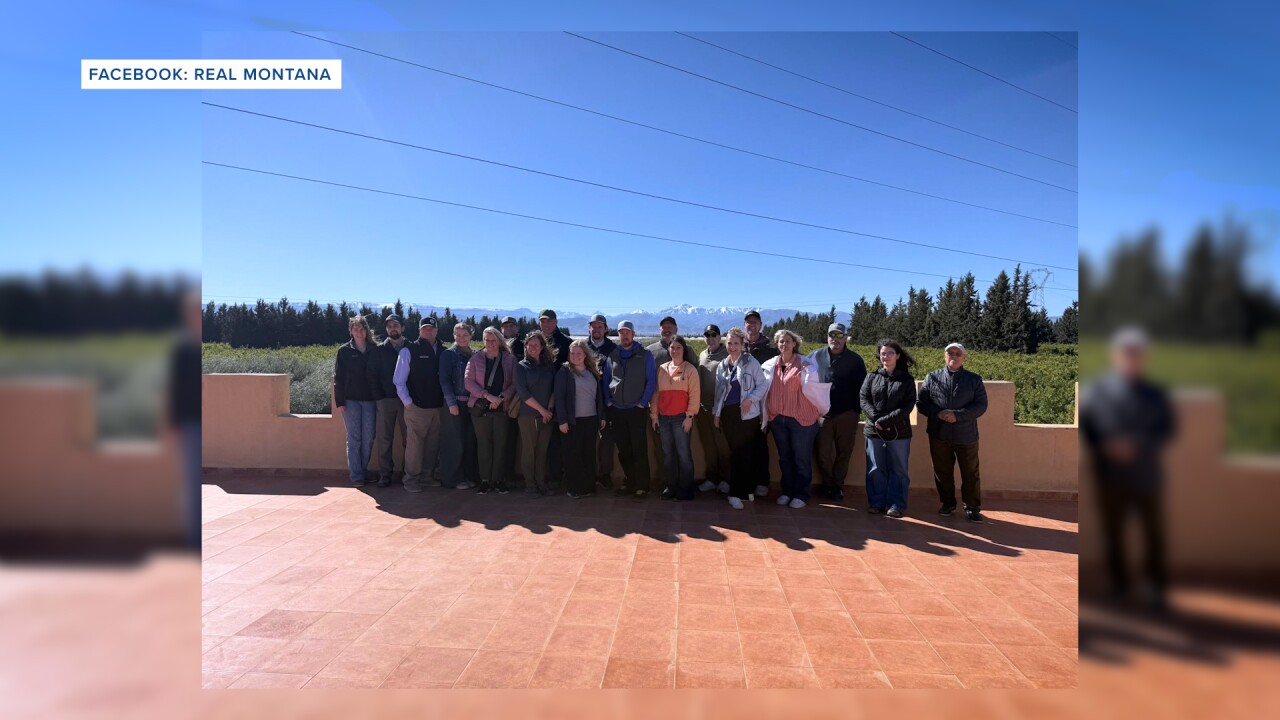
As the current class prepares to graduate, the focus now shifts to applying those lessons back home.
“We hope they go out and make a difference for the state of Montana and their communities,” Becken said.
Looking ahead
Applications for the next REAL Montana class are open through March 31. The program targets individuals working in Montana’s natural resource industries who are interested in growing as leaders and making an impact in their communities.
For Miller, the experience is one she encourages others to pursue.
“It’s an investment you won’t regret making, in yourself and in your industry,” she said.
The Montana Farmers Union is now offering a scholarship to help offset the cost of participation for eligible members accepted into the program. The support is designed to make leadership development more accessible to those working in agriculture and natural resource industries.
More information on scholarship opportunities and the application process can be found on the REAL Montana website.

State House considers reforms that allowed greater variety of construction in Big Sky State
Michigan could follow Montana’s lead after state House members introduced a bipartisan package of bills aimed at making housing less costly.
“The bipartisan Housing Readiness Package modernizes our development processes to reduce unnecessary costs and delays, making housing more affordable and available across the state,” according to a press release from the House Republican caucus. “This is about ensuring Michigan is prepared for growth and that more residents have access to safe, stable homes.”
The package draws on ideas Montana successfully enacted in 2023 and 2025 to ease the state’s housing shortage. It includes Michigan House bills 5529, 5530, 5531, 5532, 5581, 5582, 5583, 5584 and 5585. The package is intended to restrain cities and counties from restricting accessory dwelling units, duplexes, and other non-single-family units; to limit protests and impact studies on developments; and to reduce local red tape.
Housing costs in Michigan have almost doubled in recent years, according to the Federal Reserve Bank of St. Louis. Michigan has exceeded the pace of housing inflation found in other states.
The average price of homes in the state was about 75% of the national average in 2012, but it is roughly 82% of the average today, according to Jarrett Skorup, vice president of marketing and communications at the Mackinac Center for Public Policy.
Inflation, interest rates, and rising construction costs have increased housing prices, Skorup told Michigan Capitol Confidential, but local government red tape is still making things worse.
“A lot of this is because of dumb, unnecessary, big-government policies at the local level,” Skorup told CapCon in an email. “This bill package protects the private property rights of citizens in a way similar to what Montana and many other states have done. It is good policy that will help people afford to live where they want.”
Montana made changes to legalize duplexes, allow accessory dwelling units, open commercial zones to housing, and permit taller buildings that can accommodate more housing units.
The laws faced a legal challenge, but the Montana Supreme Court unanimously upheld the bipartisan legislation.
“There are a lot of similarities between what is being proposed in Michigan and what we accomplished in Montana,” Forrest Mandeville, a Republican state senator from Stillwater County, told Michigan Capitol Confidential in an email.
Montana enacted laws that call for freedom to build duplexes and accessory dwelling units by right (with no need for extra approvals) in many cities. The Big Sky State also streamlined review processes and simplified public participation.
“These reforms were necessitated by a housing market that was seeing prices skyrocket and existing zoning that created a lot of single-family-only development in large areas,” Mandeville said.
A broad coalition supported the changes: builders, real estate agents, free-market advocates and some local government groups, Mandeville told CapCon. Housing prices and rents have stabilized since the legislation was enacted.
“We tried to get government out of the way to encourage building without red tape,” Sen. Jeremy Trebas, a Cascade County Republican, told CapCon in an email about the housing situation in Bozeman. With a population of 60,000 and slow growth, the city faced a housing crunch, with a large inventory of aging and obsolete buildings. Expensive housing and taxes, Trebas said, were driving people to move to Washington, California and other states.
“If we could change land-use policy, encourage development of higher density like duplexes as infill, allow for housing in commercial zones (as it was a 100 years ago), reduce minimum lot sizes, and allow by-right accessory dwelling units and such, we could let the market work to produce density and supply without spending government dollars to incentivize it,” Trebas said.
Opponents of Montana’s reforms expressed concerns about more people moving in from out-of-state, said Trebas. He countered that Montana natives were hurt by high costs that price upcoming generations out of the housing market.

The buzz over the Miley Cyrus special has also led to a surge of renewed interest in the show’s popular soundtracks
If you purchase an independently reviewed product or service through a link on our website, Rolling Stone may receive an affiliate commission.
Hannah Montana celebrated its 20th anniversary this week with a brand new special on Disney+ that reunited Miley Cyrus and company for a look back at the nostalgic Disney Channel series. While the special unveiled plenty of surprises (including a new song and celebrity cameos), the buzz over Hannah‘s anniversary has also led to a surge of new interest in the show’s popular soundtrack.
Hannah Montana spawned five studio albums, including a soundtrack for Hannah Montana: The Movie. It also led to Best of Both Worlds Concert, a live album that featured Cyrus performing both in character as Hannah and under her own name. All of the albums were originally released on CD, though vinyl pressings of each release came later as well. Three of the albums debuted at number one on the Billboard charts and all of them were later certified gold or higher by the RIAA.
Now, a number of the albums have returned to the bestsellers list, with four Hannah LPs currently sitting in the Top Ten of Amazon’s soundtracks chart. Here’s a look at the trending releases and how to buy them online.
Hannah Montana [Green Splatter LP]
This Hannah Montana vinyl has returned to the top ten of Amazon’s overall soundtracks chart. This is the soundtrack to season one of the Disney Channel show in an Amazon-exclusive “green splatter” colorway. While the original soundtrack was released in October 2006, this vinyl edition was released this past January ahead of the show’s 20th anniversary.
![Best Of Hannah Montana [Clear LP]](https://www.rollingstone.com/wp-content/uploads/2026/03/best-of-hannah-montana-lp.jpg?w=1024)
Best Of Hannah Montana [Clear LP]
Amazon’s bestseller is this “Best Of” LP, which comes in an exclusive limited-edition purple vinyl colorway. First released in 2011, the album was later made available on vinyl in 2019. Hot off the 20th anniversary special, the LP has returned to number one on Amazon’s Disney soundtracks chart.

Hannah Montana: The Movie, Original Motion Picture Soundtrack [Lavender Eco-Mix 2 LP]
This two-LP set features all the songs from Hannah Montana: The Movie, which hit theaters in 2009. The track list includes hit songs from the original film like “The Climb,” “Butterfly Fly Away” and “Hoedown Throwdown.” It also includes the 2009 “movie mix” of “The Best of Both Worlds.” The discs come in a lavender colorway inspired by the colors in the show logo.
![Hannah Montana 2 (Original Soundtrack)[Color Splatter LP]](https://www.rollingstone.com/wp-content/uploads/2026/03/hannah-montana-2.jpg?w=1024)
Hannah Montana 2 [Color Splatter LP]
This LP features songs from season two of the Disney Channel series, including hits like “We Got the Party,” “Nobody’s Perfect” and “Life’s What You Make It.” Amazon has this available on a special “color splatter” vinyl.
All of the above vinyl releases are part of limited-edition drops that are exclusive to Amazon.

Hannah Montana – Hannah Montana 3 LP
Urban Outfitters, meantime, has this tie-dye edition of the Hannah Montana season three soundtrack on vinyl. From Walt Disney Records, the LP gets you 14 songs on a groovy, 70s-inspired disc.
Need somewhere to play your new Hannah Montana vinyl? Amazon has this light pink record player on sale for under $60 right now as part of the site’s Big Spring Sale event.

Victrola Journey II Bluetooth Suitcase Record Player
From popular turntable makers Victrola, the Victrola Journey II is the latest version of the brand’s bestselling suitcase record player, which offers a portable way to take your records on the go. This unit features a three-speed turntable, built-in speakers (with “enhanced bass”) and both Bluetooth capabilities and headphone outputs.
A star-making vehicle for Miley Cyrus, Hannah Montana ran for four seasons from 2006 to 2011. You can stream every Hannah Montana episode and Hannah Montana: The Movie online through Disney+.

Georgia Senate passes bill for hand-marked paper ballots

Hawaii police investigate alleged gun threat at Kealakehe Intermediate

Idaho Senate introduces new bill to give local municipalities authority to control rat populations

Illinois vs Iowa prediction, analysis, Elite Eight expert picks for men’s March Madness

Police arrest suspect in Westfield homicide

Florida High School Football Rankings: Top 25 teams – Oct. 21

How old is Bo Nix? What to know about Oregon quarterback ahead of 2024 NFL Draft

Cleary's 21 help Le Moyne down Central Connecticut State 69-64 in OT

99th annual Pony Swim held in Virginia

Indiana Members Credit Union announced as new anchor tenant at Bottleworks District

WATCH: Senate hearing goes silent after Angel Father confronts top Dem over daughter’s death

US diplomat Marco Rubio denounces settler violence, tolls in Hormuz strait

Iran-linked hackers have breached FBI Director Kash Patel’s personal emails | CNN Politics

Live: CPAC 2026 Day 2

Video: Will ICE Change Under Its New Leader?
-

 Detroit, MI1 week ago
Drummer Brian Pastoria, longtime Detroit music advocate, dies at 68
-

 Movie Reviews1 week ago
‘Youth’ Twitter review: Ken Karunaas impresses audiences; Suraj Venjaramoodu adds charm; music wins praise | – The Times of India
-

 Sports6 days ago
IOC addresses execution of 19-year-old Iranian wrestler Saleh Mohammadi
-

 New Mexico5 days ago
Clovis shooting leaves one dead, four injured
-
 Business1 week ago
Disney’s new CEO says his focus is on storytelling and creativity
-

 Technology5 days ago
YouTube job scam text: How to spot it fast
-

 Tennessee4 days ago
Tennessee Police Investigating Alleged Assault Involving ‘Reacher’ Star Alan Ritchson
-

 Texas1 week ago
How to buy Houston vs. Texas A&M 2026 March Madness tickets