Montana
Q&A: Jon Tester, Democratic Candidate for U.S. Senate

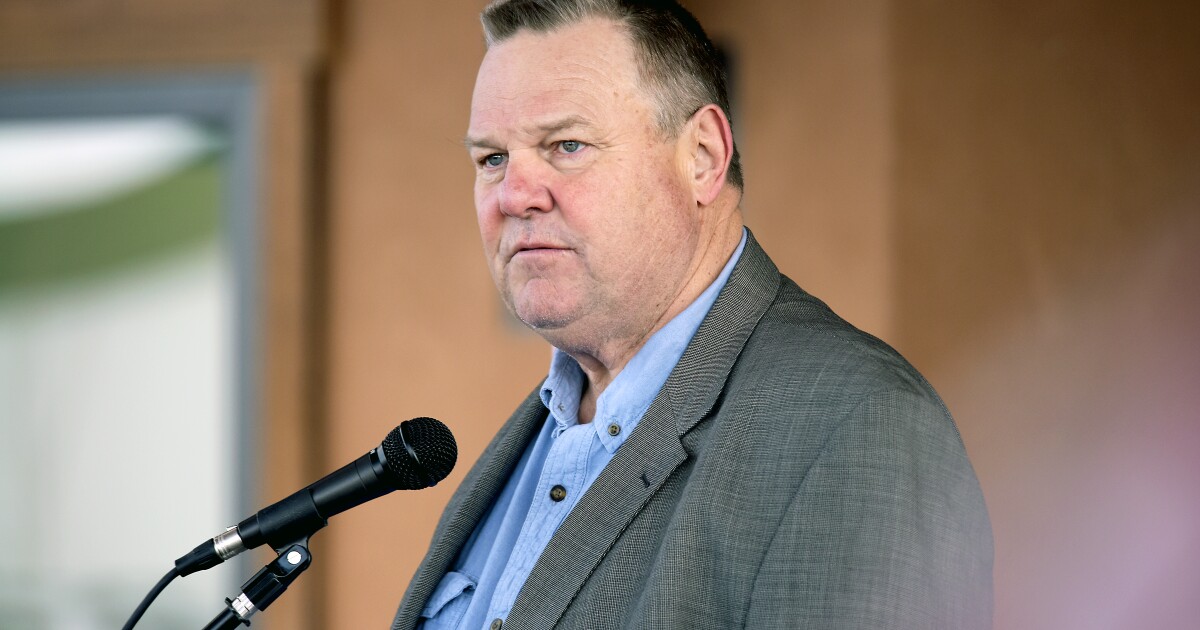
We are gathering information from all statewide candidates as a resource for the 2024 Primary Elections. Responses were limited to 200 words per question. Political attacks may have been removed, but otherwise, the responses are published unedited.
What is your full name as it will appear on ballots?
Jon Tester
What is your age?
67
Where do you live?
Big Sandy, MT
What is your education background?
College of Great Falls, Bachelor of Science in Music
Please list your current and previous occupations.
U.S. Senator, dirt farmer, music teacher for Big Sandy public schools
What motivated you to seek a seat in the U.S Senate?
Simply put, the Montana we know and love is changing. Everything from housing to groceries is more expensive as out-of-state multimillionaires move here and buy up our land, using Montana as their personal playground.
It’s putting a strain on everything – on prices, on our local infrastructure, on our towns and our parks and our public lands. With so much changing, we’ve got to have somebody in the Senate who’s willing to fight for our Montana way of life.
I still farm the land just outside of Big Sandy that my grandparents homesteaded more than 100 years ago. I feel those changes that are going on in Montana right now, every day.
Montana needs somebody back in Washington, DC who understands rural America. Someone who fights for our freedoms and goes to bat for our veterans, our family farms and ranches, our working families, our health care workers and our teachers. I’m running to keep up the fight for those folks, and to make sure our kids and grandkids can grow up in the same Montana we know and love. Montana is the greatest state in the greatest country in the world and it’s damn sure not for sale.
What, if anything, should the Senate do to address the federal deficit?
The deficit is out of control and both parties are to blame. In Montana, we know how to balance a budget and live within our means. That is why I authored a balanced budget proposal. It would protect Social Security and Medicare benefits that our seniors have earned while still forcing the federal government to stop racking up the debt and passing it along to our kids and grandkids. We also need to hold massive corporations accountable and make them pay their fair share.
Yes or no, do you support a federal ban on abortion?
NO.
Montanans of all stripes don’t want the federal government telling them what to do, and they don’t want politicians or judges stripping away their personal freedoms. Just last year, politicians in Montana ignored the voices of the voters and passed abortion bans. I opposed these bans and will always fight to protect Montana women’s freedom to make their own health care decisions.
What, if anything, should the Senate do to address climate change?
There is no question about it, climate change is impacting our economy and our way of life. Sharla and I see these impacts firsthand on our farm, where significant droughts have led to some of the toughest harvests in recent years. Wildfire seasons burn longer and more intensely, and taxpayers are stuck with the bill, paying untold billions of dollars to rebuild after extreme weather events.
We should be developing clean energy technologies to tackle climate change, create good-paying American jobs, and secure our energy independence, and Montana has the opportunity to lead the way. China is actively working to beat America in the clean energy sector in hope of taking over as the world’s strongest economy. We can’t afford to lose this competition. That’s why we should invest directly in Montana companies researching next-generation energy technologies that are affordable and lower costs for consumers. And my Bipartisan Infrastructure Bill secured investments to update our energy grids to prevent and protect against wildfire. Traditional energy sources like oil and gas remain a critical part of how we power our country, so we need to continue to invest in development of technologies like carbon capture and storage to reduce carbon emissions.
What changes, if any, should be made to the way elections and campaigns are funded?
Elected leaders should work for the people, not those who can cut the biggest check. It’s way past time to kick dark money out of politics. We should have done it yesterday.
The Supreme Court’s Citizens United v. FEC decision was disastrous. It flooded our elections with mind-boggling amounts of money and made a mess of our democracy. Since then, I’ve fought to overturn that decision with my “Corporations Are Not People” constitutional amendment, and I urge my colleagues in the Senate to join me in making sure hardworking Montanans, not massive corporations and out-of-state billionaires, get to pick their elected officials.
I will also continue fighting for better transparency in campaign finance, like my Sunlight for Unaccountable Non-profits (SUN) Act, which would take huge strides towards eliminating dark money by requiring the IRS to publicly disclose donors who give over $5,000 to certain tax-exempt groups engaging in political activity.
Hardworking Montanans should be the ones deciding their elections, not out-of-state special interest groups. I will always defend the voices of Montanans and put them first.
What, if anything, should the Senate do to improve the nation’s immigration laws and security at the southern border?
What’s happening on the southern border is unacceptable, and dedicating more manpower and resources is crucial to keeping Montanans safe.
That’s why I’ve called on President Biden to step up and do everything in his power to secure the border, and it’s why I supported a strong bipartisan deal to get our border under control earlier this year. This bipartisan bill would have hired more border patrol agents, cracked down on the fentanyl crisis, and tightened asylum standards – that’s why it received the strong endorsement of the National Border Patrol Council. Unfortunately, many of my colleagues decided to play politics and voted to keep the border open for another year so they could campaign on the issue.
I have been talking with Montanans, sheriffs, and mayors across the state, they all are feeling the consequences of the situation at the southern border, from stretched law enforcement budgets to fentanyl in the communities. I was proud that my bipartisan FEND Off Fentanyl Act passed to place sanctions on countries engaged in international trafficking of illegal fentanyl and give law enforcement the resources they need to battle the fentanyl crisis.
What, if anything, should the Senate do to ensure Social Security and Medicare benefits meet the needs of older adults?
I will never cut Social Security and Medicare. Full stop. For many older Montanans, Social Security is their only source of retirement income, and Medicare is their only way to access affordable life-saving health care. These are essential benefits that Montanans have spent their entire lives paying into, and I will always fight to ensure these benefits are protected – not just for today’s seniors but for all of Montana’s future generations.
There are some politicians who want to end Social Security or cut those benefits. I oppose any plan to do so. I will also stand tough against any plan to privatize Medicare, because our seniors have paid into that their whole lives and should be able to rely on it. I was also proud to pass legislation that allowed Medicare to negotiate prescription drug prices – including capping the price of insulin for seniors at $35/month – and I will fight to ensure that Montana’s nursing homes stay open and fully-staffed. Montana’s seniors can count on me to defend their hard-earned health care benefits.
What should be the top priority when managing public land?
As a lifelong Montanan, I know our public lands are foundational to our way of life and to our state’s economy. You don’t need to be a millionaire to hunt, fish, or hike in these treasured landscapes, because they belong to all of us. Our public lands play a key role for ranchers looking to graze their cattle, or local sawmills in need of timber to harvest. That is why I oppose the call from some politicians who have said they want to transfer our public lands, which would make it easier to sell our wide open spaces off to the highest bidder.
Montana has a long history of local collaboratives working together to improve management of our public lands. I worked with Montanans to protect special places like the Rocky Mountain Front, Glacier National Park, and the Gateway to Yellowstone National Park. I am also incredibly proud to have secured full funding for the Land and Water Conservation Fund, and it’s because of that work that conservation and recreation priorities for Montana’s public lands will be funded for generations to come. And I will continue to fight for bills like the Blackfoot Clearwater Stewardship Act to protect thousands of acres of public lands for future generations.
What, if anything, would you do if elected to build trust in the Senate?
When I first ran for U.S. Senate, I made a promise to Montanans that I would go above and beyond on ethics and transparency and work for them – not special interest groups.
Every day since, I’ve worked tirelessly to uphold that promise. The first thing I did was post my Senate schedule online for all Montanans to see. I was the first Senator to do this and still do it to this day – unfortunately, I’m one of the only U.S. senators who does. So I’ve introduced a bill to make that mandatory for all of my colleagues, because the American people deserve to know who their elected officials are meeting with.
I’m also fighting to crack down on lobbyist influence. I’m working to shut the revolving door by banning members of Congress from becoming lobbyists – ever. And I routinely invite retired Montana judges to conduct a voluntary ethics audits of my office, to ensure my office and I meet the high standards we set for ourselves. I think all of my colleagues should join me.
Like most Montanans, I believe a handshake means something and our word is our bond. That’s how trust in the Senate should be built – by earning it.


MISSOULA — Sam Forstag edged out Ryan Busse to secure the Democratic nomination in Montana’s 1st Congressional District.
Busse conceded the race to Forstag on Wednesday morning. Forstag had trailed behind Busse Tuesday evening, but he made up ground as the votes were counted into the early hours of Wednesday morning. The other two candidates in the race, Russl Cleveland and Matt Rains, are sitting at third and fourth, respectively.
Forstag leads in close race for Montana’s 1st Congressional District
Forstag spent eight years as a wildland firefighter, including four as a smokejumper, and he’s been vice president of the local National Federation of Federal Employees union. Last week, U.S. House of Representative Alexandria Ocasio-Cortez, D-New York, held a rally in Missoula to support Forstag’s campaign.
He told MTN on Tuesday that his campaign has been for the working class.
“We got a whole lot of people here that have been working their tail off to finally get some working-class representation in Washington,” Forstag noted. “So proud of everything we’ve done and so grateful.”
Forstag further noted he wants Montanans to be able to afford groceries, have universal free childcare and restore and expand Affordable Health Care Act subsidies.
“Hearing people’s stories and struggles and commonalities in the ways that we’re all fighting in the system that does not serve us so often, and the government serves corporations and the richest people in this country more than working people. It has been frustrating and saddening, but it has also inspired so much hope in me, like the fixes we can actually make,” he told MTN.
The 1st Congressional District covers much of western Montana, including Kalispell, Missoula, Butte and Bozeman. It is currently held by Rep. Ryan Zinke, R-Montana, who chose not to seek reelection.
By securing the nomination, Forstag is slated tol face off against Libertarian candidate Nick Sheedy and Republican candidate Aaron Flint in November.

Brian Miller won the Democratic primary Tuesday for the U.S. House seat in Montana’s eastern district.
The Associated Press called the race for Miller, an attorney in Helena, who fended off a challenge from state Sen. Jonathan Windy Boy, a longtime legislator from Box Elder, and Sam Lux, a farrier from Great Falls.
In the Republican and rural eastern district, any Democrat will be an underdog, and Miller will face off against incumbent Republican U.S. Rep. Troy Downing, who was unopposed Tuesday.
Libertarian Patrick McCracken is also running.
In the primary, Miller took 58% of the vote. Lux took 27% and Windy Boy took 16%, according to the Montana Secretary of State’s website.
In April, Windy Boy paused his campaign amid “serious sexual abuse” allegations raised by the Montana Democratic Party — but Windy Boy restarted his campaign and later called the allegations “political attacks.”
Miller is representing the victim of the alleged abuse and her mother, although he said he didn’t take on the role until after Windy Boy initially suspended his campaign.

The Western Montana Food and Farm Trail, a new agritourism initiative led by Farm Connect Montana, launches May 30, offering locals and visitors a new kind of food and farm adventure across Western Montana.
Running June 1 through October 31, the self-guided Trail spans more than 200 miles and features more than 100 farms, ranches, farmers markets, restaurants, breweries and food businesses across the Missoula, Bitterroot, Flathead and Mission Valleys. Along the way, participants are invited to meet growers and makers, taste what’s in season and experience the culture and care behind Western Montana’s local food community.
At the center of the experience is the passport-style Trail Field Guide, illustrated by Missoula-based artist Courtney Blazon. The guide features illustrated maps, curated itineraries, seasonal highlights and more than 100 local food destinations throughout the region. The guide also includes more than $130 in special offers from participating farms and businesses.
Participants can collect stamps at Trail stops along the way to qualify for prizes, giveaways, or simply as a way to document their journey. End-of-season prizes include raffles for three CSA memberships valued at over $600 each, as well as local food and farm gift certificates, product bundles and Courtney Blazon-designed market totes.
The Trail is a regional collaboration led by Farm Connect Montana in partnership with Land to Hand Montana, The O’Hara Commons and Sustainability Center and Abundant Montana, organizations working to strengthen local food systems across Western Montana. The project aims to support local farms and food businesses through expanded visibility and agritourism opportunities while reconnecting locals and visitors with the people, places and stories behind their food.
“In creating the Western Montana Food & Farm Trail, we hope to inspire both residents and travelers to discover the stories behind their food and connect with the people cultivating a more vibrant, resilient and locally rooted food community,” said Bonnie Buckingham, Executive Director of Farm Connect Montana. “Participation in the Trail is a win for everyone. It creates new opportunities for farms and local food businesses to reach wider audiences while encouraging participants to explore new places, support local producers and experience Western Montana in a more meaningful way.”
“Land to Hand is thrilled to partner with Farm Connect on the Food and Farm Trail to highlight the robust agricultural heritage of Western Montana,” said Gretchen Boyer, Executive Director of Land to Hand Montana. “This initiative is more than just a guide – it’s an invitation to celebrate and support the local farmers who nourish our communities every day. By connecting residents and visitors directly to the source, we’re strengthening our local food system and honoring the people and landscapes that sustain the Flathead Valley.”
To celebrate the launch, regional Trail launch parties will take place in Missoula, the Bitterroot Valley and the Flathead Valley throughout early June, featuring Field Guide distribution, local food vendors, giveaways and opportunities to learn more about the Trail.
Trail Field Guides ($10) will be available for purchase beginning May 30 both online and at participating businesses, farmers markets and community locations throughout the region. A full list of Field Guide purchase locations and details, as well as a digital map and Trail listings, special events and more information is available at farmconnectmontana.org/trail.
Funding for this project was made possible through the U.S. Department of Agriculture’s Agricultural Marketing Service.
Regional launch events
• Missoula Launch Party — LaLonde Ranch, Sun., June 7, 1-4 p.m.
• Bitterroot Launch Party — O’Hara Commons Market, Wed., June 10, 4-6 p.m.
• Flathead Launch Party — Backslope Brewing, Tue., June 16, 4-7:30 p.m.
-

 Seattle, WA6 minutes ago
New Ben & Jerry’s location opening at Seattle waterfront’s Pier 54
-

 San Diego, CA9 minutes ago
Padres designate Nick Castellanos for assignment
-

 Milwaukee, WI14 minutes ago
21 Things to Do During Pride Month in Milwaukee
-

 Atlanta, GA21 minutes ago
Miguel Almirón: World Cup profile | Paraguay & Atlanta United midfielder | MLSSoccer.com
-

 Minneapolis, MN24 minutes ago
Cantus vocal ensemble takes on Dolly Parton hits
-

 Indianapolis, IN29 minutes ago
That trail you walk downtown? It’s generated $3 billion for Indianapolis, study finds
-

 Pittsburg, PA36 minutes ago
About 5 pounds of bees removed from Acrisure Stadium scaffolding ahead of Morgan Wallen concerts
-

 Augusta, GA39 minutes ago
Former Augusta State Medical Prison guards acquitted in inmate death

