Montana
MTN profiles candidates for Montana Supreme Court associate justice

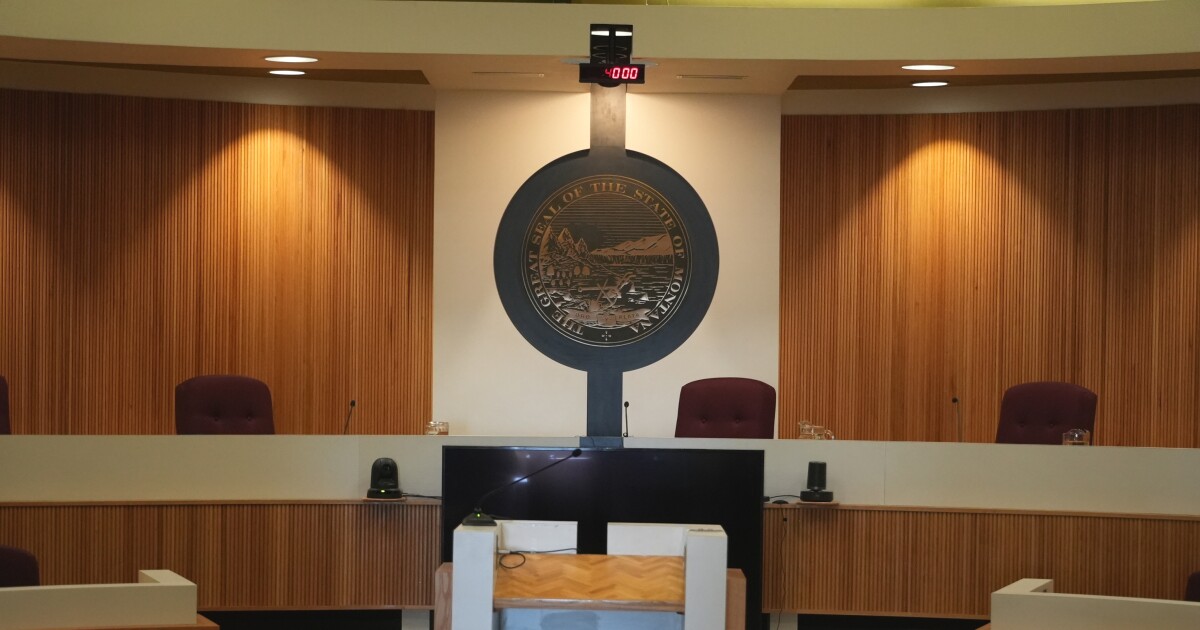
HELENA — MTN is continuing our look at the closely watched races for two open seats on Montana’s Supreme Court.
Justice Dirk Sandefur was elected to the court in 2016, and he decided not to seek another eight-year term in 2024. That led to three people filing for a chance to win one of the six associate justice positions. The two candidates with the most votes in the June primary will move on to the general election in November.
The first two people to announce they were running for associate justice are both state district court judges.
Jonathon Ambarian
Dan Wilson, of Kalispell, is one of five judges of the 11th Judicial District, which covers Flathead County. He was elected to the position in 2016 and reelected in 2022. Wilson previously worked as a deputy county attorney, then spent about a decade in private practice, doing a variety of work – including family law and criminal defense. In 2010, he was elected as a justice of the peace for Flathead County. He says he wants to center his campaign on his experience and record.
“I’m not running to carry water for any sort of political issue or any political group,” Wilson said. “I’m merely offering up again my candidacy to Montanans as a judge with a proven record for following the law and the Constitution, and one who doesn’t insert his own views or the views of stakeholders or interested parties or special interests to determine whether something passes a legal test or not.”
Wilson says recent political tensions around the court are an inevitable when branches of government are in conflict over their roles. He said it’s important for justices to hold to legal standards when making their decisions, and that he doesn’t believe Montanans want justices to advocate for particular interests.
“The Supreme Court functions best, I believe, when it is the quiet branch, when it’s simply there resolving disputes in a fair and constitutional way – that it does its level best to avoid making unsolicited or unnecessary comments attacking any other branch of government, but simply issues opinions that are well supported by the Constitution, the rule of law, logic and good reason,” he said.
Jonathon Ambarian
Katherine Bidegaray, of Sidney, has been a district judge since 2003 – one of two serving the 7th Judicial District, which covers Richland, Dawson, McCone, Prairie and Wibaux Counties on Montana’s eastern edge. She said her rural and eastern Montana background would bring a different perspective to the court.
Bidegaray says the current Supreme Court justices are doing a good job, citing a state survey of judges and attorneys that showed 80% of respondents agreed the court’s decisions were based on facts and applicable law. She said accusations that the court has overstepped its role are misplaced.
“I think it is especially important during these times that we have a judiciary that remains fair and impartial, that remains independent of the other two branches of government, and that is prepared to fulfill its function of correcting an abuse of power if, in fact, one of the other two branches of government, including the legislature, overreaches the constitutionally provided powers it has,” she said.
Bidegaray says it’s important to stand up against what she sees as political attacks on the judiciary.
“I just want to be able to do my part so we can maintain our democracy and the rule of law and protect the beautiful rights that our Montana Constitution provides us, which include some really unique rights: the right to privacy, the right to equality of education, the right to access to public lands and water, and the right to a clean and healthful environment,” she said. “Those are unique in our Constitution, and those rights have been under attack.”

Jonathon Ambarian
The third candidate is in an unusual position: admitting his eligibility for the court is likely to be questioned. Jerry O’Neil is a former Republican state lawmaker from Columbia Falls who spent eight years in the state Senate and four years in the House. He describes himself as a mediator and independent paralegal, but he’s not a licensed attorney under the State Bar of Montana.
The Montana Constitution says candidates for Supreme Court must have been “admitted to the practice of law in Montana for five years.” O’Neil says the court and the bar are acting as a “monopoly” by preventing someone from getting licensed as an attorney or practicing law in state courts without having attended an accredited law school.
In December, he filed a federal lawsuit, asking the court to rule that he was eligible to run for Montana Supreme Court because he has been admitted to practice law in Blackfeet tribal court. However, after he filed his candidacy, he dropped the case, telling MTN he thought the judge would likely rule against him “to protect his monopoly.”
O’Neil said, if he wins, he believes his election would not be challenged.
“They might do it, but I don’t think they’re going to go against the public like that,” he said.
O’Neil said he was running for the Supreme Court because he believed justices had been overstepping their role on issues like abortion and election regulations, and because he wanted to further challenge the court and the bar.
“The voters I’ve talked to are up in arms over the Supreme Court legislating from the bench, and the majority of them, virtually all of them, are not appreciative of the attorney monopoly,” he said.
Montana voters will also select a new chief justice this year. Three candidates are also running for that position.



Montana
Montana State doctoral student awarded national research service grant for gut microbiome, arsenic research


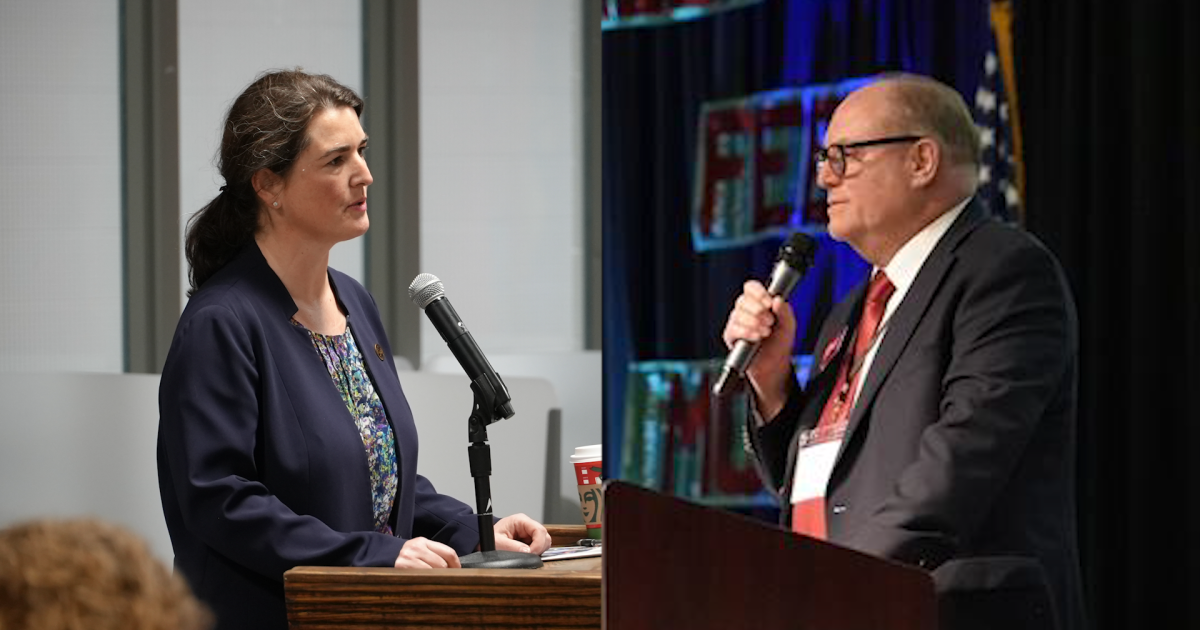
MISSOULA — Four out of five members of Montana’s Public Service Commission were in a federal courtroom in Missoula Thursday morning, as the PSC’s former president challenges the disciplinary action taken against him earlier this year. Now, newly released documents are shedding more light on to what led up to this point.
(Watch the video for a closer look at the case.)
New documents shed light Montana PSC dispute
Commissioner Brad Molnar has sued President Jeff Welborn, Vice President Jennifer Fielder and Commissioner Annie Bukacek – the three PSC members who voted in May to require him to work remotely, after an investigation into complaints about his workplace conduct. Molnar has claimed he is being unfairly punished for constitutionally protected speech, and he asked Senior U.S District Judge Donald Molloy to allow him to return to the PSC offices.
Matthew Monforton, Molnar’s attorney, told the judge that barring Molnar from the building was limiting his ability to do his job.
“He has not been officially kicked out of office, but his voice has clearly been diminished,” said Monforton.
But Natasha Jones, an attorney representing the other three commissioners, said the findings were about behavior, not just speech, and that the PSC’s action was a reasonable response.
“These are serious concerns about a pattern of conduct that has made employees quit,” she said.
Jonathon Ambarian
On Tuesday, Molloy ordered the release of redacted versions of two full investigative reports into Molnar’s conduct – more than 100 pages of documents. Monforton had moved for the full reports to be made public, and Molloy ruled attorneys for the other PSC members hadn’t shown a compelling reason to keep the documents under seal as long as the names of people involved in the investigation were obscured.
While the names remained redacted in the investigation reports, the attorneys for Welborn, Fielder and Bukacek also filed additional documents – including a public declaration from Bukacek and from former PSC executive director Alana Lake, providing information about their allegations against Molnar.
The two reports, from an outside investigator, cover Molnar’s alleged actions over two periods: the first from February to August 2025, and the second from August to October 2025. The investigation began after the first formal complaint, filed by Bukacek in May 2025 – though the reports say employees had been bringing up concerns about Molnar’s behavior informally for several months prior.
Bukacek’s complaint claimed Molnar had repeatedly made what she called “sexualized and demeaning comments.” The examples she cited included saying the PSC should replace “Taco Tuesdays” with “Topless Tuesdays,” reminiscing about watching girls in bikinis as a teenager, and commenting about the beauty of women in areas of China who didn’t get “old and wrinkly.”
In her declaration, Bukacek also claimed Molnar had “maliciously disseminated false information” about her and “engaged in behavior that was dismissive, derisive and otherwise abusive.”
“My primary concern now is not for my safety nor my feelings, but for the rest of the staff who may not have the temperament to speak up or may feel too intimidated to speak up given concerns over job security,” Bukacek said in her declaration.
MTN News

The investigators determined Molnar had violated the PSC’s code of conduct by making comments of a sexual nature, and that it appeared his behavior had continued for some time after he was warned about it. They also found he had behaved unprofessionally and in a belittling manner toward Bukacek, though they said Bukacek herself had at times used “language that could be considered inappropriate” in emails to staff or other commissioners. Bukacek told MTN she “readily self corrected” any behaviors that were brought to her attention.
The investigation also found a violation in connection with a complaint from a PSC staff member, who said he “felt bullied” by Molnar when the commissioner sent an email complaining about his team not being “people with competence.”
However, much of the first report and the entire second report was focused on conduct after the initial complaints, when Molnar was accused of retaliating against people who participated in the investigation. Lake said in her declaration that she saw “an immediate and significant change in his behavior toward staff involved in the process.” She claimed he said he would use an attorney and private investigator to go after people who filed complaints, and she accused him of publicly criticizing her in interviews and removing her job responsibilities because of her handling of the investigation.
Lake said Molnar’s actions led to “declining morale within the agency,” undermined staff members’ ability to do their jobs and damaged her reputation. She said that led her to resign as executive director.
“I believe no employee should be forced to choose between reporting misconduct and protecting their career, reputation, or personal well-being,” she said in her declaration.
Lake has since become Helena city manager.

Jonathon Ambarian
The report said there was evidence to show Molnar had retaliated, including by “making disparaging statements about investigation participants” including Lake, by sending an email warning he could file complaints of his own against people involved, and by taking other actions investigators said could dissuade employees from reporting behavior in the future.
Monforton said during Thursday’s hearing that the initial comments Bukacek complained about were jokes Molnar had admitted were inappropriate, that he regretted saying them, and that he hasn’t made any similar comments in about a year. But he argued the vast majority of the findings against Molnar were about retaliation – and that those were primarily based on speech that the other commissioners don’t have the right to interfere with.
Monforton said it’s unreasonable to punish Molnar for what he said in the July news conference where he announced he was under investigation, in interviews with the media or in commission meetings. He said Molnar’s conduct doesn’t rise to the level of actual retaliation.
“This is an elected official, engaging in speech in his forum,” Monforton said.
He said Molnar may have made harsh comments toward staff, but that he had the right to raise objections about the way the agency does business.
Jonathon Ambarian

Monforton also argued the retaliation claims no longer justify keeping Molnar out of the office, since Welborn, Fielder and Bukacek voted to remove him as president in October and he no longer has the authority he’s accused of misusing. He said there haven’t been further complaints about his behavior since that time.
“We’re not asking for the moon and stars, we’re asking for the status quo as it existed for the last seven months,” he said.
Jones said there is enough evidence to show Molnar would have been punished regardless of whether any protected speech was excluded.
“This is not about a couple of jokes,” she said.
Jones said Molnar made maliciously false statements about people like Lake, and that type of statement isn’t covered by free speech protections.
She also said Molnar’s exclusion from the PSC offices is temporary, and that the PSC will reconsider whether to let him return if he apologizes for his actions, accepts the agency’s code of conduct and undergoes training.
Molloy indicated he saw indications that there was “acrimony” on both sides of the situation, and said he was skeptical it would be resolved easily.
“It would be nice if instead of juvenile behavior, there was professional behavior,” he said.
However, the judge said there was an avenue for Molnar to pursue if he wanted to reach a resolution.
Molloy took no immediate action Thursday. He told the parties he would rule as quickly as he could.
-

 Illinois6 minutes ago
Illinois has already broken the record for number of tornadoes in a year — and it’s only June
-

 Indiana8 minutes ago
Hamilton County teen is youngest delegate at Indiana Republican convention
-

 Iowa14 minutes ago
Reynolds orders flags lowered for funeral of Iowa Sen. Julian Garrett
-
Kentucky24 minutes ago
Louisville celebrates Juneteenth with parade honoring history and culture
-

 Louisiana29 minutes ago
From ‘not pageant people’ to Miss Louisiana stage: Addison J…
-

 Maine36 minutes ago
Maine gubernatorial candidates trade barbs on first day of general campaign
-

 Maryland39 minutes ago
Maryland governor celebrates Juneteenth in historically-Black Montgomery County community – WTOP News
-

 Michigan44 minutes ago
West Michigan celebrates Juneteenth


