Montana
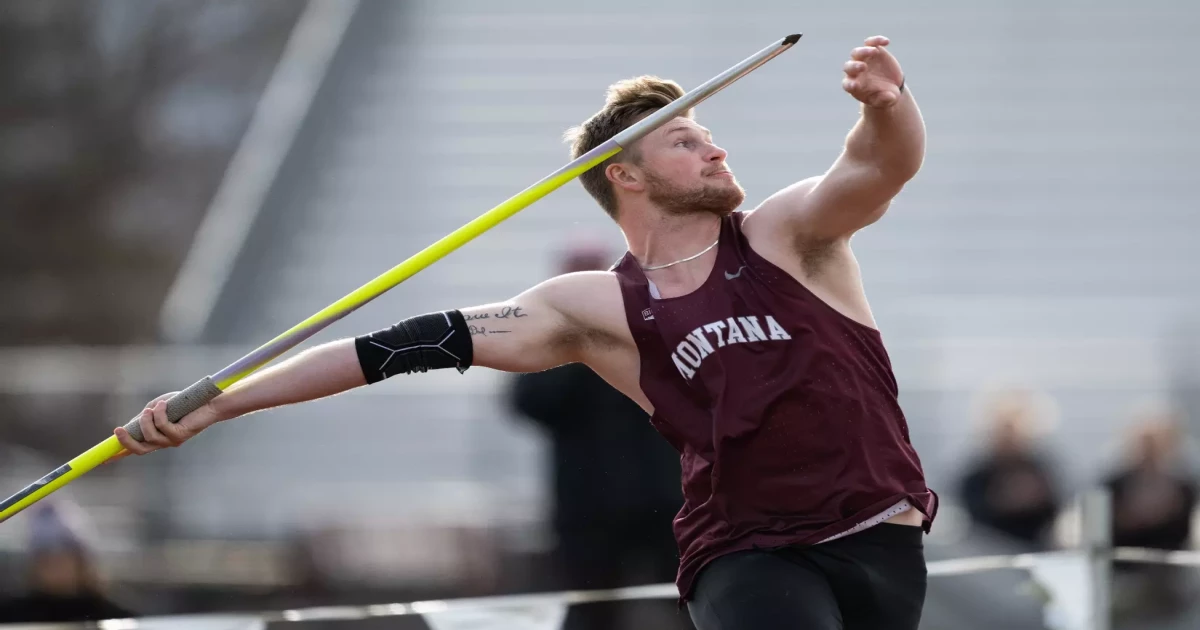
Montana Grizzlies' Evan Todd breaks program javelin record

(Editor’s note: University of Montana news release)
MISSOULA — There has been a sense for a few years now that the Montana men’s javelin school record was not safe. Evan Todd, the two-time defending Big Sky Conference champion in the event, has had it in his sights since arriving on campus.
Last week, Todd hit 70 meters for the first time in his career, but came up inches short of Jensen Lillquist’s 2019 record of 232-6. On Friday afternoon, in what may be his final event at his home venue and in blistering winds, Todd made history.
His second throw of the day carried 71.45 meters, or 234 feet and 5 inches, to set a new program record.
“It felt great. It was a long time coming, I’ve been waiting on that throw for a while,” Todd said.
The crowd at Dornblaser provided him with a clap as he made his approach. The first throw of the day had power, but was turned a bit sideways in the wind and came down quickly. He had no such problems with the second attempt.
He dove to the ground on release. When he looked up and saw the flight, he shouted “get out there,” and his javelin listened. When the distance was announced, Todd, his teammates and coaches, and all those watching erupted into cheers.
There were hugs all around, including to Todd’s family who had traveled down from Kalispell to watch him compete at home one final time.
“It was awesome. I’m so glad they were able to make it,” Todd said. “During the week, I was talking with my coach and thinking whether it was smart for me to throw or not. I knew I wasn’t going to be able to throw at my last home meet so I wanted to give it one last hurrah. It’s super fulfilling to finally get that, and crazy to do it in my last meet here.”
He had a sense that it would be a new record when he saw it land, but still had to wait for the official word. He stood off to the side and waited for the official measurement. 71.45 meters.
“Once I heard 71, I knew it was a record,” Todd said. “I threw it, looked up, and could see that it was still fishtailing up there so I knew it had some serious power. I knew it was a big one.”
The senior has been a leader on Montana’s team for several years now and had checked off nearly every box possible in his javelin career. Now, he gets to add yet another accolade to his impressive resume.
“Great things happen to great guys, and he’s one of the great guys,” head coach Doug Fraley said. “He’s a tremendous leader on our team and I’m just really proud of him for breaking that school record here in what will likely be his last meet at Dornblaser. To see his parents come up and give him a hug as soon as the distance came up on the board, that’s a really special thing for a family.”
Todd was one of three Grizzlies to win an event on the first day of competition of the Montana Open. The men’s and women’s hammer and javelin events were contested on a cool, windy afternoon in Missoula.
Ariel Clark opened up the day with a dominant win in the women’s hammer. Clark threw 184-10 to win, and freshman Morgan Thomas finished fourth with a PR throw of 152-8. Freshmen Scout Nadeau and Mary Mickelson also had season-best throws in the hammer.
In the women’s javelin, Lea Moose topped a 15-athlete field with a throw of 142-7. In the same stiff headwind that Todd faced, Moose missed out on her personal record by just two inches. It’s a season best for Moose and moves her into the top 80 in the West qualifying region.
Ashley Carroll had a PR in the event with a throw of 131-5.
Walker McDonald had a big throw in the men’s hammer to finish second in the field. McDonald set a new PR with a mark of 184-11, and had two throws that beat his previous career best mark.
Todd provided the big highlight of the day in the final competition, but Everett Fred also finished fourth with a throw of 189-1. Porter Coffield, who is training for the decathlon at the Big Sky Championships, set a new PR with a throw of 163-1.
“It was really a fine day for our throws crew in both the hammer and javelin. Coach Kolb is doing a really good job bringing that crew along and we got off to a really good start to our Montana open today.”
The bulk of the meet will be on Saturday with field events starting at 11:00 a.m. and track events beginning at 11:20 a.m.
Men’s Javelin- Evan Todd (234-5^, 1st), Everett Fred (189-1, 4th), Porter Coffield (163-1, 8th)
Men’s Hammer- Walker McDonald (184-11*, 2nd), Wade Rykal (151-11, 5th), Alex Shields (139-6, 9th)
Women’s Hammer- Ariel Clark (184-10, 1st), Morgan Thomas (152-8*, 4th), Scout Nadeau (147-6*, 6th), Mary Mickelson (145-4*, 7th), Molly O’Dell (139-0, 9th)
Women’s Javelin- Lea Moose (142-7, 1st), Ashley Carroll (131-5*, 5th), Tatum McNamara (108-2, 11th), Brooke Stayner (79-9, 15th)
^School Record



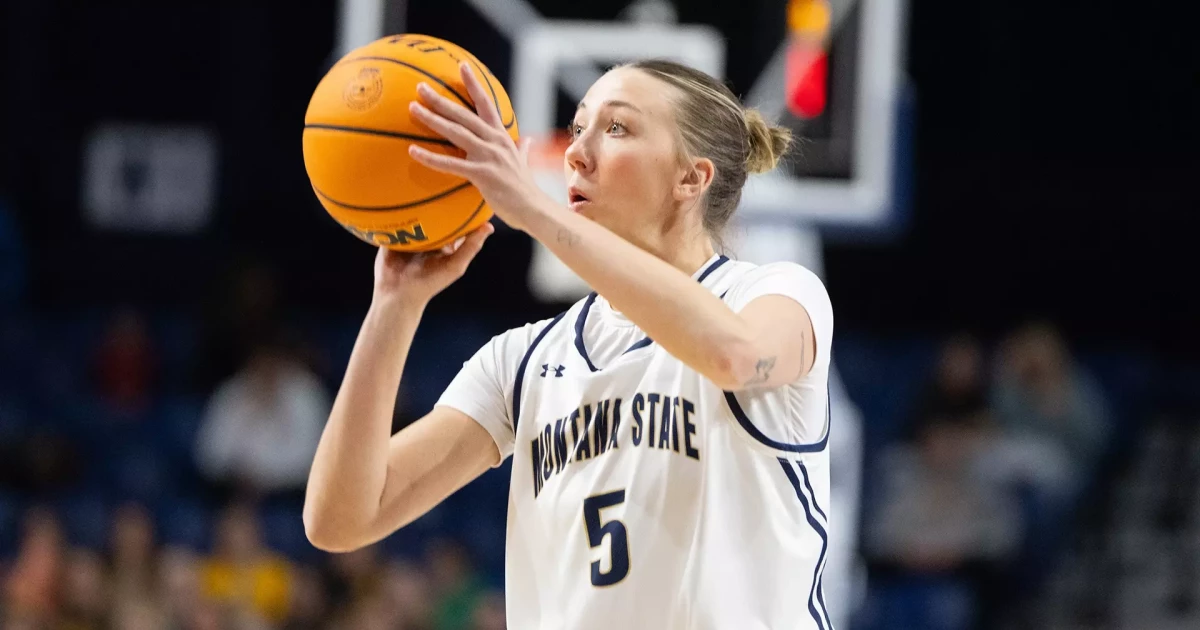


The Montana Lottery offers multiple draw games for those aiming to win big.
Here’s a look at June 27, 2026, results for each game:
Winning Powerball numbers from June 27 drawing
03-16-28-30-59, Powerball: 11, Power Play: 2
Check Powerball payouts and previous drawings here.
Winning Lotto America numbers from June 27 drawing
03-08-18-22-39, Star Ball: 06, ASB: 02
Check Lotto America payouts and previous drawings here.
Winning Big Sky Bonus numbers from June 27 drawing
05-16-19-27, Bonus: 08
Check Big Sky Bonus payouts and previous drawings here.
Winning Powerball Double Play numbers from June 27 drawing
02-26-34-43-45, Powerball: 15
Check Powerball Double Play payouts and previous drawings here.
Winning Montana Cash numbers from June 27 drawing
05-09-10-15-35
Check Montana Cash payouts and previous drawings here.
Winning Millionaire for Life numbers from June 27 drawing
26-32-38-51-52, Bonus: 05
Check Millionaire for Life payouts and previous drawings here.
Feeling lucky? Explore the latest lottery news & results
When are the Montana Lottery drawings held?
- Powerball: 8:59 p.m. MT on Monday, Wednesday, and Saturday.
- Mega Millions: 9 p.m. MT on Tuesday and Friday.
- Lucky For Life: 8:38 p.m. MT daily.
- Lotto America: 9 p.m. MT on Monday, Wednesday and Saturday.
- Big Sky Bonus: 7:30 p.m. MT daily.
- Powerball Double Play: 8:59 p.m. MT on Monday, Wednesday, and Saturday.
- Montana Cash: 8 p.m. MT on Wednesday and Saturday.
- Millionaire for Life: 9:15 p.m. MT daily.
Missed a draw? Peek at the past week’s winning numbers.
This results page was generated automatically using information from TinBu and a template written and reviewed by a Great Falls Tribune editor. You can send feedback using this form.

Iron (MN) Cherry High School athlete Isaiah Asuma announced his commitment to Montana State on Monday, adding to an already impressive recruiting class for the reigning FCS national champions.
“I committed to Montana State because I love what the football program has been and has to offer,” Asuma said. “I love Bozeman, and I really fell in love with the coaching staff and what they had for future plans for me. I really think they can develop me for the next level.”
The 5-foot-11, 180-pounder, who is also a standout basketball player for the Tigers, received an offer from the Bobcats on April 17, after speaking with head coach Brent Vigen when he was in Bozeman for a Junior Day.
“My family and I had a conversation with Coach Vigen in his office, and he was just telling me that he really liked my game and really thought I could make an impact for them! That was when he offered me. Being around him a couple of times now, we have developed a good relationship, and I love who he is as a person and a coach. He’s always gonna shoot you straight, and he’s never gonna lie to you.”
Let’s do it, Cat Nation. 💙💛🤍#AGTG #COMMITTED pic.twitter.com/20f54Xvmrz
— isaiahasuma (@AsumaIsaiah) June 22, 2026
Asuma has yet to take his official visit with the Bobcats, but even after just a few visits to Bozeman, he saw enough and decided to announce his commitment.
“I have not taken my official visit yet, but I have been out there two times, and I love Bozeman. The first time I went out there, I fell in love with it. I come from a small town in Minnesota, so that’s like nothing I’ve ever seen before out there. It is pretty amazing!”
Last season, the Tigers finished 4-5, but Asuma had a great season, finishing with 1,233 passing yards, 13 touchdowns, 1,044 rushing yards, and 12 rushing touchdowns, while adding 58 tackles and four interceptions.
“Last season was solid, but we were a .500 team. I had a good individual year, and since I go to a smaller school, I played both quarterback and free safety.”
This season, he is hoping to lead the Tigers to a winning record, as well as have another big season, which could be a challenge as they will have a young squad.
“The offseason has been good. I just started summer practice and weights again with the team, in addition to training with my trainer, Dre Sherril, with explosive agility stuff and weightlifting. My goals for this upcoming season are to try to rush for 1,000 yards again and be a .500 team. Our team is super young this year, so I’m just hoping to have a solid year again.”
Asuma adds to a Bobcats recruiting class that includes three-star wide receiver Kase Betz, defensive lineman Dax Yeager, offensive lineman Kade Leibrand, EDGE Dominick Webb, defensive back Kei’Dryn Edmond, offensive lineman Maciah Keene, tight end Carter Zollar, running back DaKari Releford, among others.
‼️College coaches‼️ https://t.co/stoR6ZJROU
— isaiahasuma (@AsumaIsaiah) April 28, 2026
Follow FCS Football Central on social media for ongoing coverage of FCS football, including on X, Facebook, and YouTube.
Follow

-

 Lifestyle8 minutes ago
Sunday Puzzle: That’s HOT!
-

 Technology18 minutes ago
The Cube is Jim Henson’s little-known proto-Black Mirror masterpiece
-

 World23 minutes ago
33 rescued from Venezuelan rubble: Survival window desperately fading with nearly 50,000 missing
-

 Politics25 minutes ago
WATCH: Biden appears confused about where to exit stage after Democratic gala remarks
-

 Health30 minutes ago
Could ‘humanmaxxing’ actually help you live longer? Here’s what experts say
-

 Sports33 minutes ago
WWE NXT The Great American Bash 2026 preview, predictions and more
-

 Technology38 minutes ago
FBI warns Microsoft users about passwordless scam
-
 Business45 minutes ago
Swipeless online dating? How AI is reshaping the search for love

