Montana
Indian Education for more


The MT Lowdown is a weekly digest that showcases a more personal side of Montana Free Press’ high-quality reporting while keeping you up to speed on the biggest news impacting Montanans. Want to see the MT Lowdown in your inbox every Friday? Sign up here.
Montana’s K-12 public schools are constitutionally required to recognize the “distinct and unique cultural heritage of American Indians,” and districts receive annual funding from the state to enact that mandate. But plaintiffs in an ongoing lawsuit allege a majority of Montana school districts don’t properly implement the pedagogy known as Indian Education for All.
In the class action lawsuit, brought by a group of Montana students, families and tribes against the state Office of Public Instruction and Montana Board of Public Education, plaintiffs argue that school districts have improperly used funds meant to support Indian Education for All efforts.
In a victory for tribes and other advocates, the Montana Board of Public Education recently reached a settlement agreement, promising to improve how the state teaches Native American history and culture. Despite the settlement, however, the lawsuit continues against the Office of Public Instruction — the agency generally responsible for providing state funding, including for Indian Education for All.
When Joseph Hammar, manager of the new media arts program at Poplar Middle School, heard news of the settlement, his first thought was, “It’s about time.”
“It’s pretty obvious that there’s not a whole lot of schools that are implementing this,” he told Montana Free Press in a recent interview.
Located on the Fort Peck Reservation in northeast Montana, Poplar Middle School serves about 243 students, ranging from fifth to eighth grade.
Hammar and his colleague Jacob Turcotte, an English teacher at the middle school, say incorporating Indian Education for All into curricula is vital not just for student success, but for instilling a sense of pride and belonging.
Turcotte manages the school’s Buffalo Unity Project, a two-week curriculum each fall where students learn from knowledge-keepers about Assiniboine and Sioux culture and participate in a buffalo harvest. Turcotte says the students use geometry to set up tipis. In science class, they learn about genetics. In Hammar’s media arts program, students produce short films on topics like the significance of long hair in Native cultures or the importance of smudging.
During the project, Turcotte said attendance is at its highest and behavioral issues decrease. Last fall, the school invited students from Culbertson, a majority-white community, to participate, too.
Prior to launching the project, Turcotte said he could tell students struggled with identity.
“A lot of our students here, they’re from Fort Peck, the home of the Assinibione and Sioux people, but we would ask students what kind of Indian they were and they couldn’t answer that question,” he said. “That was very alarming. These kids know they’re Indian but don’t know what tribe they come from. … By reconnecting our people to who they are and where they come from, it gives them something to be proud of.”
It’s not just majority-Native schools that stand to benefit from Indian Education for All, Turcotte said, adding that Montana is home to seven reservations and 12 tribes.
“It’s important that non-Native students understand how things were, how things played out with the Native Americans and to teach the truth,” he said. “Don’t teach the whitewashed version. … When we teach truth, I think we’re less likely to repeat it.”
Turcotte and Hammar know it can be difficult for non-Native teachers, in particular, to teach others about Indigenous history and culture.
“My advice to them is reach out, ask questions,” Turcotte said. “I know it’s kind of scary and intimidating for a non-Native to ask certain questions, but honestly, if you ask with your heart in the right place, nobody will be offended because what people are trying to do is educate. … Just reach out. Reach out to the tribal cultural department. Reach out to the Office of Public Instruction. There are resources out there, just don’t be afraid to ask.”
READ MORE: Under settlement, Montana Board of Public Ed vows to improve how state teaches Native American history and culture.
—Nora Mabie
Wildlife Watch 🐻
Gov. Greg Gianforte and Montana Fish, Wildlife and Parks this week traveled to south-central Montana’s Ruby Valley to highlight the state’s work to mitigate conflicts with grizzly bears.
Heart of the Rockies, a Missoula-based conservation nonprofit, plans to work alongside 12 landowner-led groups, two tribes and about 10 communities to deploy conflict prevention tools, including electric fencing, range riders, carcass disposal programs and bear-resistant garbage cans. The work is supported by a $2.25 million grant from the U.S. Interior Department and the National Fish and Wildlife Foundation.
Six formal agreements with landowner-led groups are in place, according to a press release the governor’s office issued Tuesday highlighting Gianforte’s trip to the Barnosky Ranch in Madison County to talk about the state’s partnership with Heart of the Rockies.
“Montana ranchers are on the front lines of wildlife conflict, and they need the resources to safely prevent contact before it happens,” Gianforte said in the release. “With grizzly bears on the move again this spring, Montana landowners and local partners are utilizing investments to prepare and protect livestock across 1.2 million acres.”
If all goes according to plan, the program will allow for the installation and maintenance of approximately 40,000 feet of electric fencing and the deployment of about 3,000 bear-resistant garbage cans.
Next year, the livestock loss board administered by the Montana Board of Livestock will distribute approximately $525,000 to make mitigation measures such as livestock guard dogs and carcass compost programs available to agricultural producers. The board’s hope is that preventing conflicts on the front end will reduce the need for payments made for cattle or sheep losses attributed to grizzly predation.
For now, grizzlies remain federally protected under the Endangered Species Act, though the Trump administration’s interest in maintaining the bruins’ protected status remains unclear.
—Amanda Eggert
Tough Nut to Crack 🌰
The committee tasked with overseeing the transfer of patients with Alzheimer’s disease, dementia and traumatic brain injuries out of the Montana State Hospital met this week to assess just how improbable achieving that mandate is before a July deadline.
The Transition Review Committee — which includes state lawmakers, health care experts and patient representatives — launched after a bipartisan group of legislators passed House Bill 29 in 2023. The bill, sponsored by then-Rep. Jennifer Carlson, R-Manhattan, directed the state health department to move this difficult-to-care-for group of patients out of the adult psychiatric facility and into settings that can provide more appropriate care for people with severe memory and cognitive conditions.
Gov. Greg Gianforte originally vetoed the bill, calling its 2025 deadline for transferring patients “unworkable.” The 2023 Legislature later overrode that veto, a maneuver that requires a two-thirds majority from the combined House and Senate chambers.
This week, after nearly two years of work, state hospital and health department representatives from Gianforte’s administration indicated that the bill’s mission is still inherently Sisyphean.
“There are some [people] that you’re just not going to be able to place,” said Dr. Kevin Flanigan, the Montana State Hospital CEO, during a Wednesday presentation to the committee. “I can’t just turn them out. They’re not ready to be out in the community … We’ll have to figure out: How do we help these patients? Where are they best served?”
The puzzle, as described by Flanigan and other Montana health care experts who testified to the committee Wednesday, is akin to solving a Rubik’s cube with one hand. Typically, state hospital staff appeal to a nursing home or assisted living facility with the memory or behavioral health expertise necessary to care for a particular patient. Those facilities, in turn, often ask the state to give them additional Medicaid reimbursements to cover a higher level of care. The add-on payments sometimes get denied, leading local facilities to turn down new patients.
Flanigan said his team was still striving to achieve the metrics laid out in HB 29. In January, the hospital had roughly 15 patients who fell under the legislation’s definitions. As of Wednesday, Flanigan said the number had decreased to eight.
He had only general suggestions of where the remaining patients might go, not to mention any new patients who might fall under HB 29’s directive. Perhaps private nursing homes at the community level. Perhaps the Montana Mental Health Nursing Care Center in Lewistown. Perhaps, even, other parts of the state hospital.
In that scenario, Flanigan said, some patients who continue to stay at the hospital may be regularly monitored by two dedicated staffers, a setup he described as an “enormous cost.” As to what unit the patients would live on? Flanigan said he wasn’t sure.
“We’d have to design that operational plan to be sure that we still fall within the intent of HB 29 and not just become a long-term placement facility for patients with dementia. That’s a slippery slope. You could slip back to that, and that is something we absolutely have to design intentionally not to regress to that,” Flanigan said.
Other dysfunctional parts of the state hospital make patient discharge more complicated. Ongoing construction means patients are already being moved around various units, including a leased facility in Helena that the health department has christened Grasslands. Staffing continues to be inadequate, with temporary contract staff cycling through open positions.
Committee members on Wednesday also asked about the ongoing efforts to secure a vendor to create an electronic health records system for Warm Springs. The hospital’s medical records and note system is largely paper-based, a fact that has long hampered continuity of care for newly admitted and recently discharged patients.
“Electronic records are at the center of a modern communicating set of agencies and a coordinating plan … I would consider that one of the highest priority bullets coming out of this,” said Sen. Chris Pope, D-Bozeman during the meeting. “They’re still using computers that are from 1980.”
The committee added that topic to its agenda for its next and last meeting, which is scheduled for July.
—Mara Silvers
Follow Up ⤴️
Gov. Greg Gianforte found success this year in shepherding most of the provisions of his November budget proposal through the state Legislature — with prison expansion funding, teacher pay boosts, a hefty income tax cut and a landmark property tax relief package making it to his desk.
One item that didn’t pass muster with lawmakers, though? A further cut to the state’s business equipment tax, a property tax that applies to high-value equipment like tractors and industrial machinery.
Historically, the business equipment tax was a hearty slice of Montana’s property tax pie, about 13% of the state’s property tax base in 1996, according to archival figures from the state Department of Revenue. However, that share has since shrunk by about two-thirds, both as the state has shifted from equipment-heavy natural resource industries toward backpack-heavy scenery ones and as Democratic and Republican governors alike have cut the equipment tax, arguing it poses a drag on small businesses.
Under current law, the first $1 million of equipment owned by each business is exempt from the tax, something that keeps many smaller businesses from paying it entirely. Gianforte had proposed pushing that exemption threshold up to $3 million.
A bill implementing that increase, sponsored by Sen. Josh Kassmier, R-Fort Benton, was scaled back to a $1.5 million exemption threshold before passing the Senate with bipartisan support. It then stalled at the House Appropriations Committee.
The committee’s senior Democrat, Rep. Mary Caferro of Helena, criticized the cut’s $2.5-million-a-year price tag shortly before the April 23 vote where the bill was voted down.
“If we’re looking for a place to save General Fund [money], I would say this would be the place to do it,” Caferro said. “They don’t need it and they’re doing business anyway — and at a certain point we might as well eliminate the whole business equipment tax.”
In a Thursday email to MTFP, Gianforte spokesperson Kaitlin Price credited the governor for successfully advocating for prior business equipment cuts in 2021 and 2023, raising the exemption threshold up from $100,000 when he took office.
“The governor is disappointed some legislators didn’t share his commitment to help small business owners and family farmers and ranchers by further reforming the burdensome business equipment tax,” Price wrote, “though he is grateful to those who did support that pro-jobs, pro-business, pro-investment policy.”
—Eric Dietrich
Closeup 📸

Gov. Greg Gianforte posted a video May 7 theatrically announcing his veto of a bill that would have required Montana restaurants to phase out single-use polystyrene — aka Styrofoam — food containers. The governor called the bill “costly government overreach.”
“Like many Montanans, I enjoy hot coffee in a Styrofoam cup because it keeps it hot. And this bill is a hot mess,” Gianforte said in the video before sipping from a Styrofoam cup emblazoned with the word “VETO” in bold red letters.
As of May 8, Gianforte, a Republican, has vetoed five of the 805 bills passed by the Legislature this year. In 2023, Gianforte successfully vetoed 22 bills, roughly 3% of the 804 transmitted to his desk. Four of the governor’s vetoes two years ago were overridden by a two-thirds majority of the Legislature, which retains its ability to overrule vetoes by mail polls even after the session concludes.
It’s not uncommon for governors to use vetoes as occasions for political theater. In 2011, for example, then-Gov. Brian Schweitzer, a Democrat, used a branding iron to veto bills in front of the Capitol.
Bill signings offer governors a similar opportunity to make public statements. On April 24 Gianforte signed an education investment bill in a classroom at Prickly Pear Elementary in East Helena. Some bill vetoes and signings, though, are conducted without fanfare. In late March, for example, Gianforte signed a bill continuing Medicaid expansion without a ceremony or press release.
—Zeke Lloyd
Highlights ☀️
In other news this week —
School levy votes delivered mixed outcomes for Montana’s largest school districts. Kalispell voters passed a high school general fund levy for the first time in nearly two decades.
President Trump’s budget proposal would cut federal spending on public land management, shifting some responsibilities to states. The proposal, which is subject to congressional approval, would also consolidate federal wildland firefighting efforts under the Department of the Interior.
State and federal efforts have for years sought to address the disproportionate rate at which Native Americans in Montana are reported missing or killed by violent crime. As May 5, the National Day of Awareness for Missing and Murdered Indigenous People, came this year, groups led marches, panels, protests and other events in Montana and across the nation.
On Our Radar
Alex — With my eyes no longer fixed on the Legislature’s MPAN feed every day, I’ve gotten absolutely hooked on Seth Rogen’s new Hollywood satire “The Studio.” An old-fashioned sitcom at heart, the AppleTV show throws slapstick humor and a barrage of cameos in a blender in its relentless quest to poke fun at the franchise-obsessed nature of modern filmmaking.
Brad — It was a happenstance of a recent room rearrangement that led me to read a Kurt Vonnegut novel for the first time in 20 years, an unread copy of “Mother Night” that’s been following me around in cardboard moving boxes for ages. So I finally read it, and whadddya know, its deceptively offhand and easy-reading moralism feels as contemporary as anything on the New Releases shelf — or in the national news, for that matter. I don’t have the same hope for the 1996 film based on the book, but now I feel duty-bound to find out.
Jacob — I’ve been on quite a journey with my great-grandmother’s century-old cast-iron pans. After inheriting these family heirlooms recently — the same ones that cooked every meal for my grandfather as a kid — I decided they needed a full restoration. This guide convinced me that soaking them in oven cleaner inside garbage bags was the way to go, but I wildly underestimated the timeline. After nearly a month of countless disappointing checks and scrubbing sessions, the faint factory polishing marks absent from today’s mass-produced cast iron are finally emerging, leaving these treasures ready for their next century of service just in time for Mother’s Day.
Holly — My mom told me to read this book years ago. I should have listened (and read) sooner.
Zeke — Alongside beer-drinkers across the country, I’ve been saving my last can of Busch Light Apple, also known as Bapple, since the promotional product was discontinued after the summer of 2022. (Busch Peach, introduced in the interim, served as a delicious reminder of what we were missing.) But the wait for a resupply is over. Bapple is back.
Mara — I’ve been celebrating the end of the Legislature by listening to Jonathan Haidt’s book, “The Anxious Generation,” on Audible (shamelessly acquired with a family member’s book credit, which I’m sure they had other plans for). It’s been revelatory for me — and now I can’t stop telling anyone and everyone about the power of “discover mode” and unstructured play for children.
Eric — Spring is in the air. Here’s a cat romping through a field of flowers.
*Some stories may require a subscription. Subscribe!



MISSOULA — Sam Forstag edged out Ryan Busse to secure the Democratic nomination in Montana’s 1st Congressional District.
Busse conceded the race to Forstag on Wednesday morning. Forstag had trailed behind Busse Tuesday evening, but he made up ground as the votes were counted into the early hours of Wednesday morning. The other two candidates in the race, Russl Cleveland and Matt Rains, are sitting at third and fourth, respectively.
Forstag leads in close race for Montana’s 1st Congressional District
Forstag spent eight years as a wildland firefighter, including four as a smokejumper, and he’s been vice president of the local National Federation of Federal Employees union. Last week, U.S. House of Representative Alexandria Ocasio-Cortez, D-New York, held a rally in Missoula to support Forstag’s campaign.
He told MTN on Tuesday that his campaign has been for the working class.
“We got a whole lot of people here that have been working their tail off to finally get some working-class representation in Washington,” Forstag noted. “So proud of everything we’ve done and so grateful.”
Forstag further noted he wants Montanans to be able to afford groceries, have universal free childcare and restore and expand Affordable Health Care Act subsidies.
“Hearing people’s stories and struggles and commonalities in the ways that we’re all fighting in the system that does not serve us so often, and the government serves corporations and the richest people in this country more than working people. It has been frustrating and saddening, but it has also inspired so much hope in me, like the fixes we can actually make,” he told MTN.
The 1st Congressional District covers much of western Montana, including Kalispell, Missoula, Butte and Bozeman. It is currently held by Rep. Ryan Zinke, R-Montana, who chose not to seek reelection.
By securing the nomination, Forstag is slated tol face off against Libertarian candidate Nick Sheedy and Republican candidate Aaron Flint in November.

Brian Miller won the Democratic primary Tuesday for the U.S. House seat in Montana’s eastern district.
The Associated Press called the race for Miller, an attorney in Helena, who fended off a challenge from state Sen. Jonathan Windy Boy, a longtime legislator from Box Elder, and Sam Lux, a farrier from Great Falls.
In the Republican and rural eastern district, any Democrat will be an underdog, and Miller will face off against incumbent Republican U.S. Rep. Troy Downing, who was unopposed Tuesday.
Libertarian Patrick McCracken is also running.
In the primary, Miller took 58% of the vote. Lux took 27% and Windy Boy took 16%, according to the Montana Secretary of State’s website.
In April, Windy Boy paused his campaign amid “serious sexual abuse” allegations raised by the Montana Democratic Party — but Windy Boy restarted his campaign and later called the allegations “political attacks.”
Miller is representing the victim of the alleged abuse and her mother, although he said he didn’t take on the role until after Windy Boy initially suspended his campaign.

The Western Montana Food and Farm Trail, a new agritourism initiative led by Farm Connect Montana, launches May 30, offering locals and visitors a new kind of food and farm adventure across Western Montana.
Running June 1 through October 31, the self-guided Trail spans more than 200 miles and features more than 100 farms, ranches, farmers markets, restaurants, breweries and food businesses across the Missoula, Bitterroot, Flathead and Mission Valleys. Along the way, participants are invited to meet growers and makers, taste what’s in season and experience the culture and care behind Western Montana’s local food community.
At the center of the experience is the passport-style Trail Field Guide, illustrated by Missoula-based artist Courtney Blazon. The guide features illustrated maps, curated itineraries, seasonal highlights and more than 100 local food destinations throughout the region. The guide also includes more than $130 in special offers from participating farms and businesses.
Participants can collect stamps at Trail stops along the way to qualify for prizes, giveaways, or simply as a way to document their journey. End-of-season prizes include raffles for three CSA memberships valued at over $600 each, as well as local food and farm gift certificates, product bundles and Courtney Blazon-designed market totes.
The Trail is a regional collaboration led by Farm Connect Montana in partnership with Land to Hand Montana, The O’Hara Commons and Sustainability Center and Abundant Montana, organizations working to strengthen local food systems across Western Montana. The project aims to support local farms and food businesses through expanded visibility and agritourism opportunities while reconnecting locals and visitors with the people, places and stories behind their food.
“In creating the Western Montana Food & Farm Trail, we hope to inspire both residents and travelers to discover the stories behind their food and connect with the people cultivating a more vibrant, resilient and locally rooted food community,” said Bonnie Buckingham, Executive Director of Farm Connect Montana. “Participation in the Trail is a win for everyone. It creates new opportunities for farms and local food businesses to reach wider audiences while encouraging participants to explore new places, support local producers and experience Western Montana in a more meaningful way.”
“Land to Hand is thrilled to partner with Farm Connect on the Food and Farm Trail to highlight the robust agricultural heritage of Western Montana,” said Gretchen Boyer, Executive Director of Land to Hand Montana. “This initiative is more than just a guide – it’s an invitation to celebrate and support the local farmers who nourish our communities every day. By connecting residents and visitors directly to the source, we’re strengthening our local food system and honoring the people and landscapes that sustain the Flathead Valley.”
To celebrate the launch, regional Trail launch parties will take place in Missoula, the Bitterroot Valley and the Flathead Valley throughout early June, featuring Field Guide distribution, local food vendors, giveaways and opportunities to learn more about the Trail.
Trail Field Guides ($10) will be available for purchase beginning May 30 both online and at participating businesses, farmers markets and community locations throughout the region. A full list of Field Guide purchase locations and details, as well as a digital map and Trail listings, special events and more information is available at farmconnectmontana.org/trail.
Funding for this project was made possible through the U.S. Department of Agriculture’s Agricultural Marketing Service.
Regional launch events
• Missoula Launch Party — LaLonde Ranch, Sun., June 7, 1-4 p.m.
• Bitterroot Launch Party — O’Hara Commons Market, Wed., June 10, 4-6 p.m.
• Flathead Launch Party — Backslope Brewing, Tue., June 16, 4-7:30 p.m.
-

 Technology57 seconds ago
Microsoft Is Pulling the Plug on Publisher This Fall. These 8 Alternatives Prove You Don't Need It
-

 World8 minutes ago
Trump expands Cuba sanctions beyond US companies in major crackdown on foreign enablers
-

 Politics11 minutes ago
Bessent flips script on Dem senator with reminder about his son’s past ties to Epstein
-

 Health23 minutes ago
New ways to prevent flu revealed in ‘accidental’ lab breakthrough, study finds
-

 Sports26 minutes ago
Russell Wilson announces retirement from NFL after 14 seasons
-

 Technology31 minutes ago
Dark web monitoring: does it put your data at risk?
-
 Business38 minutes ago
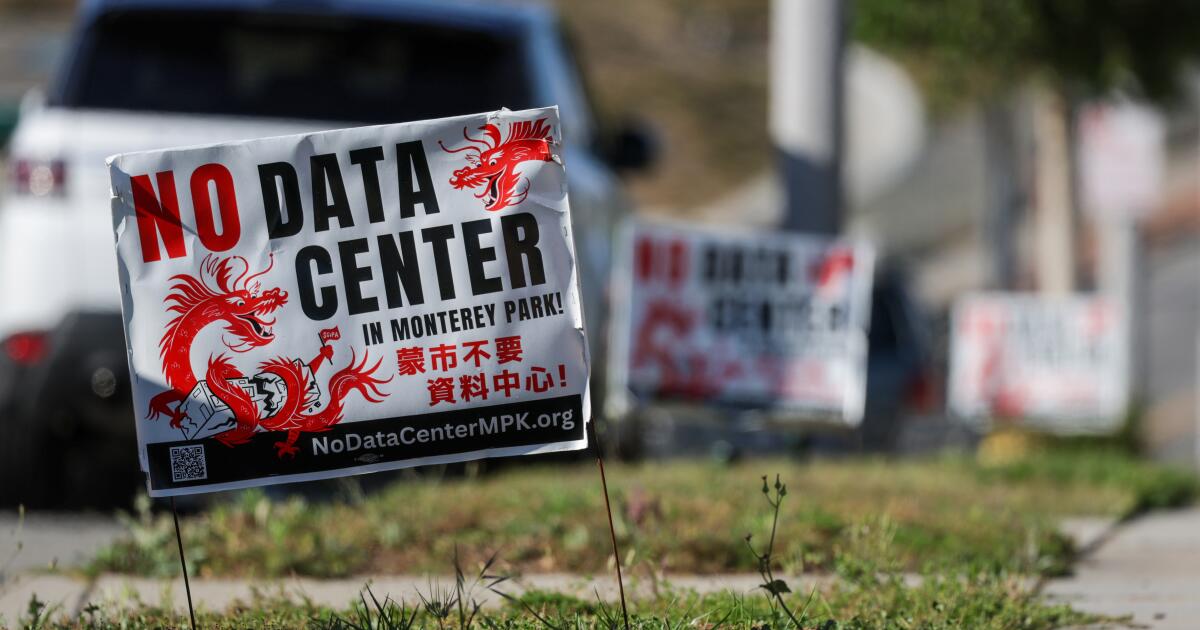
In a first for the country, voters in Monterey Park ban data centers
-
 Entertainment41 minutes ago
Review: Muscling past a flat script, a big-screen ‘Masters of the Universe’ embraces its own silliness

