Connect with us

West

Lifeguard sues LA County, alleges he was punished for refusing to fly Progress Pride flag

Published

on

Lifeguard sues LA County, alleges he was punished for refusing to fly Progress Pride flag
Join Fox News for access to this content

Plus special access to select articles and other premium content with your account – free of charge.

By entering your email and pushing continue, you are agreeing to Fox News’ Terms of Use and Privacy Policy, which includes our Notice of Financial Incentive.

Please enter a valid email address.

Having trouble? Click here.

A devout Christian lifeguard filed a lawsuit against Los Angeles County Fire Department, claiming the government’s requirement to fly the rainbow Progress Pride flag forced him to choose between his job and his faith.

“I felt like I was being targeted or entrapped by [Section] Chief [Arthur] Lester and my religious beliefs were not being taken seriously,” Captain Jeffrey Little wrote in a complaint to the county, which was included in the suit. “He did not notify me of this change and gave me no heads up that the flags would be flying.”

Advertisement

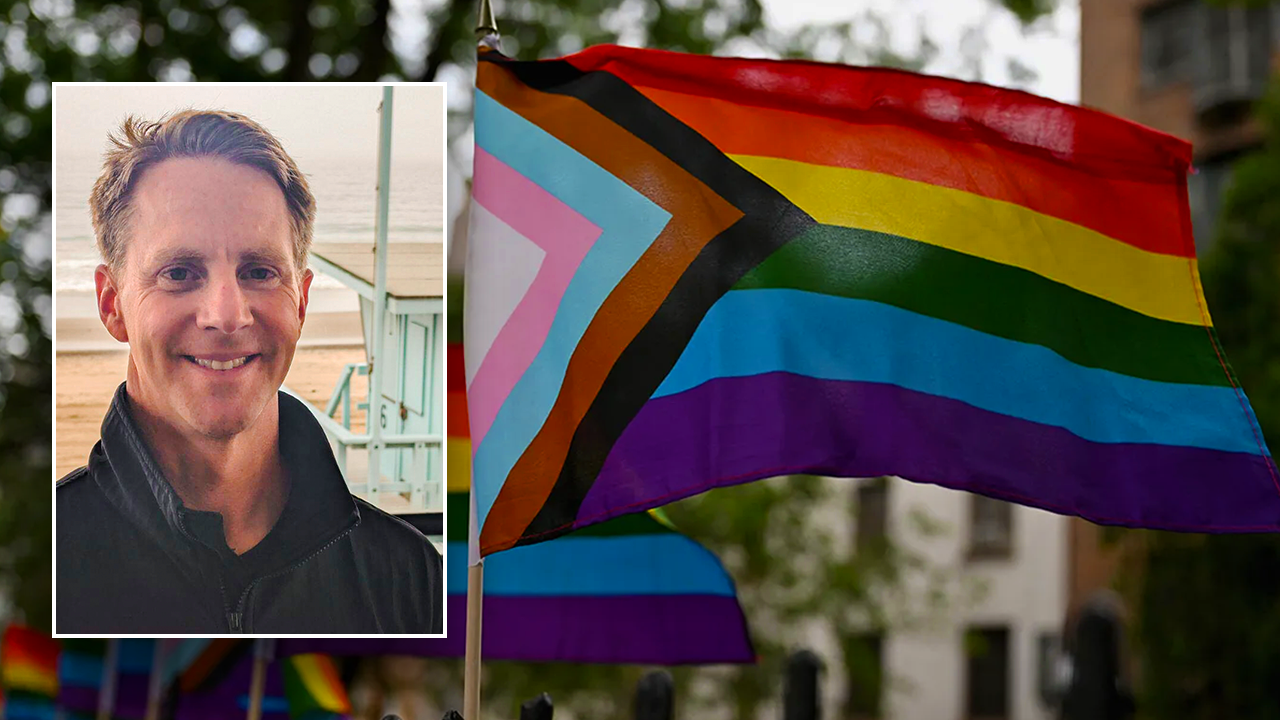
In March 2023, the LA County Board of Supervisors passed a motion requiring the Progress Pride flag — a rainbow flag that has additional colors to represent transgender people and people of color — to be flown at county facilities throughout June, known as LGBTQ “Pride” month. Little requested a religious accommodation that would exempt him from personally raising the Pride flag at his station, according to the suit.

The request was granted the same day, and Little, who has served the Los Angeles County Fire Department for over 22 years, was promised he wouldn’t have to raise the flag himself or ensure that it was raised at his station. 

However, when he arrived at work two days later, one of his supervisors left three Pride flags near his station and lifeguards were ordered to fly the flags, according to the lawsuit.

CHRISTIAN POLITICIAN TAKES LEGAL ACTION AFTER ANTI-LGBT PRIDE TWEET SEES HIS ‘LIFE TORN APART’

Capt. Jeffrey Little, a longtime Los Angeles County Fire Department lifeguard, sued the county for religious discrimination after being forced to fly a Progress Pride flag. (Getty Images/Thomas More Society)

Advertisement

Little said he took down the flags and, later that day, followed up with human resources, which told him his religious accomodation request was now denied. Lester, his supervising officer, ordered Little to put up the flag at his tower, according to the suit.

Little cited his religious beliefs and refused, but was told his religious beliefs “do not matter,” the complaint said. The chief then hoisted the flag himself and informed Little it must fly there the entire month.

Afterward, Little was removed from his role on a background investigation unit despite his “exemplary record” and there “never being any concerns with his work or reputation,” his lawyer, Paul Jonna of the Thomas More Society, told Fox News Digital. 

“He courageously stood on principle and asked for a simple religious accommodation, which he is rightfully and legally due, only to be first denied, then threatened, harassed, discriminated and retaliated against for his widely shared Christian religious beliefs,” Jonna said in a statement.

Little also allegedly received a death threat against him and his daughters at his family home, according to the suit. For the remainder of the month, Little was forced to use up his vacation time to avoid flying the Pride flag at his work station, Jonna said.

Advertisement

NATIONAL PARK SERVICE REVERSES BAN ON EMPLOYEES WEARING UNIFORMS AT PRIDE EVENTS FOLLOWING LGBTQ BACKLASH

The newly painted “Venice Pride Flag Lifeguard Tower,” after its dedication ceremony at Venice Beach, California on June 01, 2017. – The tower was painted by local artists to celebrate the start of LGBT Pride Month. (Photo by Mark RALSTON / AFP) (Photo by MARK RALSTON/AFP via Getty Images) (Getty Images)

As Pride month approached this year, Little once again sought a religious accomodation so he wouldn’t be forced to fly the flag. However, Jonna told Fox News Digital his requests were “essentially ignored,” leading him to seek legal counsel.

In addition to the fire department, Little’s suit names three lifeguard chiefs as plaintiffs and claims religious discrimination, retaliation and harassment and violations of the First Amendment.

Jonna argued his client’s accomodation request should be granted because it is “so narrow” and puts no burden on his employer.

Advertisement

“In this case it’s so easy,” the attorney told Fox News Digital. “There are situations where accommodating a religious observer would be difficult. This is not one of them. This is the most straightforward possible accommodation request. And yet they’re just ignoring him.”

The suit seeks “damages and injunctive relief—a temporary restraining order and permanent injunction—to protect Captain Little’s religious rights during Pride Month,” the Thomas More Society said.

The LA County Fire Department told Fox News Digital it does not comment on personnel issues or ongoing litigation.

Read the full article from Here

Advertisement
Continue Reading
Click to comment

Leave a Reply

Your email address will not be published. Required fields are marked *

This site uses Akismet to reduce spam. Learn how your comment data is processed.

Colorado

Warm storm delivers modest totals to Colorado’s northern mountains

Published

on

Warm storm delivers modest totals to Colorado’s northern mountains


Arapahoe Basin Ski Area recorded 8.5 inches of snow through Friday morning.
Lucas Herbert/Arapahoe Basin Ski Area

Friday morning wrapped up a warm storm across Colorado’s northern and central mountains, bringing totals of up to 10 inches of snowfall for several resorts.

Higher elevation areas of the northern mountains — particularly those in and near Summit County and closer to the Continental Divide — received the most amount of snow, with Copper, Winter Park and Breckenridge mountains seeing among the highest totals.

Meanwhile, lower base areas and valleys received rain and cloudy skies, thanks to a warmer storm with a snow line of roughly 9,000 feet.


Earlier this week, OpenSnow meteorologists predicted the storm’s snow totals would be around 5-10 inches, closely matching actual totals for the northern mountains. The central mountains all saw less than 5 inches of snow.

Advertisement

Here’s how much snow fell between Wednesday through Friday morning for some Western Slope mountains, according to a Friday report from OpenSnow:


Aspen Mountain: 0.5 inches

Snowmass: 0.5 inches

Copper Mountain: 10 inches

Winter Park: 9 inches

Advertisement

Breckenridge Ski Resort: 9 inches

Arapahoe Basin Ski Area: 8.5 inches

Keystone Resort: 8 inches

Loveland Ski Area: 7 inches

Vail Mountain: 7 inches

Advertisement

Steamboat Resort: 6 inches

Beaver Creek: 6 inches

Irwin: 4.5 inches

Cooper Mountain: 4 inches

Sunlight: 0.5 inches

Advertisement

Friday and Saturday will be dry, while Sunday will bring northern showers. The next storms are forecast to be around March 3-4 and March 6-7, both favoring the northern mountains.


Source link

Continue Reading

Hawaii

Travelers Sue: Promises Were Broken. They Want Hawaiian Airlines Back.

Published

on

Travelers Sue: Promises Were Broken. They Want Hawaiian Airlines Back.


Hawaiian Airlines’ passengers are back in federal court trying to stop something most people assumed was already finished. They are no longer arguing about whether they are allowed to sue. They are now asking a judge to intervene and preserve Hawaiian as a standalone airline before integration advances to a point this spring where it cannot realistically be reversed.

That approach is far more aggressive than what we covered in Can Travelers Really Undo Alaska’s Hawaiian Airlines Takeover?. The earlier round focused on whether passengers had standing and could amend their complaint. This court round focuses on whether harm is already occurring and whether the court should act immediately rather than later. The shift is moving from procedural survival to emergency relief, which makes this filing different for Hawaii travelers.

The post-merger record is now the focus.

When the $1.9 billion acquisition closed in September 2024, the narrative was straightforward. Hawaiian would gain financial stability. Alaska would impose what it described early as “discipline” across routes and costs. Travelers were told they would benefit from broader connectivity, stronger loyalty alignment, and long-term fleet investments that Hawaiian could no longer fund independently.

Eighteen months later, the plaintiffs argue that the outcome has not matched the pitch. They cite reduced nonstop options on some Hawaii mainland routes, redeye-heavy return schedules that many readers openly dislike, and loyalty program changes that longtime Hawaiian flyers say diminished redemption value. They frame these not as routine airline integration but as signs that competitive pressure has weakened in our island state, where airlift determines price and critical access for both visitors and residents.

Advertisement

What is different about this filing compared with earlier debates is that it relies on developments that have already occurred rather than on predictions about what might happen later.

The HA call sign has already been retired. Boston to Honolulu was cut before competitors signaled renewed service. Austin’s nonstop service ended. Multiple mainland departures shifted into overnight red-eyes. And next, the single reservation system transition is targeted for April 2026, a process already well underway.

Atmos replaced both Hawaiian Miles and Alaska’s legacy loyalty programs, and readers immediately reported higher award pricing, fewer cheap seats, no mileage upgrades, and confusion around status alignment and family accounts. Each of those events can be described as aspects of integration mechanics, but together they form the factual record that the plaintiffs are now asking a judge to examine in Yoshimoto v. Alaska Airlines.

The 40% capacity argument.

One of the more interesting claims tied to the court filing is that Alaska now controls more than 40% of Hawaii mainland U.S. capacity. That figure strikes at the core of the entire issue. That percentage does not automatically mean monopoly under antitrust law, but it does raise questions about concentration in a state that depends exclusively on air access for its only industry and its residents.

Hawaii is not a region where travelers have options. Every visitor, every neighbor island resident, and every business traveler depends on our limited air transportation. The plaintiffs contend that consolidation at that scale reduces competitive pressure and gives the dominant carrier far more leverage over pricing and scheduling decisions. Alaska says that competition remains robust from Delta, United, Southwest, and others, and that share shifts seasonally and by route.

Competitors reacted quickly.

While Alaska integrated Hawaiian’s network under its publicly stated discipline strategy, Delta announced its largest Hawaii winter schedule ever, beginning in December 2026. Delta’s Boston to Honolulu is slated to return, Minneapolis to Maui launches, and Detroit and JFK to Honolulu move to daily service. Atlanta also gains additional frequency. Widebodies are appearing where narrowbodies once operated, signaling Delta’s push into higher capacity and premium cabin layouts.

Advertisement

Those moves complicate the monopoly narrative. If Delta is expanding aggressively, one argument is that competition remains active and responsive. At the same time, Delta filling routes Alaska trimmed may reinforce the idea that structural changes created openings competitors believe are profitable, and that markets respond when gaps appear.

What changed since October.

In October, we examined whether the case would survive dismissal and whether passengers could refile. That moment felt more procedural than what’s afoot now. It did not alter flights, fares, or loyalty programs.

This filing is different because it is tied to post-merger developments and seeks emergency relief. The plaintiffs are asking the court to prevent further integration while the merits are evaluated, arguing that each added step toward full consolidation this spring makes reversal less feasible as systems merge, crew scheduling aligns, fleet plans shift, and branding converges.

Airline mergers are designed to become embedded quickly, and once those pieces are fully intertwined, unwinding them becomes exponentially more difficult, which is why the plaintiffs are pressing forward now rather than waiting any longer.

The DOT conditions and the defense.

When the purchase of Hawaiian closed, the Department of Transportation imposed conditions that run for six years. Those conditions addressed maintaining capacity on overlapping routes, preserving certain interline agreements, protecting aspects of loyalty commitments, and safeguarding interisland service levels.

Advertisement

Alaska will point to those commitments as evidence that consumer protections were built into the core approval. The plaintiffs, however, are essentially claiming that those conditions are either insufficient or that subsequent real-world changes undermine the spirit of what travelers were told would remain. That tension between formal commitments and actual experience is at the core of this dispute.

Hawaiian had not produced consistent profits for years.

That is the actual financial situation, without sentiment. Alaska did not spend $1.9 billion to preserve Hawaii nostalgia. It purchased aircraft, an international and trans-Pacific network reach, and a platform it thinks can return to profitability under tighter cost control.

What this means for travelers today.

Nothing about your Hawaiian Airlines ticket changes because of this filing. Flights remain scheduled. Atmos remains the reward program. Integration continues unless a judge intervenes.

However, Alaska now faces a renewed court challenge that points to concrete post-merger developments rather than speculative harm. That scrutiny alone can bring things to light and influence how aggressively future route decisions and loyalty adjustments occur.

Hawaiian Airlines’ travelers have been vocal since the start about pricing, redeyes, lost nonstops, and loyalty devaluation. Others have said very clearly that without Alaska, Hawaiian might not exist in any form at all. Both perspectives exist as background while a federal judge evaluates whether the integration should be impacted.

Advertisement

You tell us: Eighteen months after Alaska took over Hawaiian, are your Hawaii flights better or worse than before, and what changed first for you: price, schedule, routes, interisland flights, or loyalty programs?

Lead Photo Credit: © Beat of Hawaii at SALT At Our Kaka’ako in Honolulu.

Get Breaking Hawaii Travel News

Advertisement


Source link

Continue Reading

Idaho

Idaho CBD retailers navigating uncertainty under new hemp rules

Published

on

Idaho CBD retailers navigating uncertainty under new hemp rules


Idaho takes pride in being a no-THC zone. Unlike our neighbors on all sides, the Gem State has taken a firm stance not to legalize marijuana for medicinal or recreational use for years. This opposition long extended to the legalization of hemp, a plant relative of marijuana with far lower levels of the intoxicating chemical […]


Source link

Continue Reading

Trending
