West
Iranian refugee builds world-ranked American winery rooted in heritage and health


NEWYou can now listen to Fox News articles!
One American winemaking family believes exceptional wine doesn’t require shortcuts.
After decades of quiet persistence in their trade, global recognition recently arrived for Maysara Winery, located in the rolling hills of Oregon wine country. It currently ranks as the No. 23 vineyard worldwide.
“We were informed we were chosen [to be among] the top 50 vineyards in the world,” founder Moe Momtazi told Fox News Digital in an interview.
NASHVILLE’S HIDDEN ‘WINE COUNTRY’ PROVIDES TASTE OF TENNESSEE IN WHISKEY BARRELS
His middle daughter, Naseem Momtazi, president of sales, said, “You can have beautiful American-made, quality-made wines coming from an actual family, an actual farm and an actual story.”
The winery has partnered with the Fox News Wine Shop on a 2017 pinot noir.
Moe Momtazi started out as a chemical engineer, but his longtime passion was farming. Today, he and his family run a winery in Oregon. (Direct Wines Inc.)
Even so, when Moe Momtazi talks about his life, he starts not in Oregon — but in the turmoil of post-revolution Iran. His story of escape, new life in America and, ultimately, a winemaking philosophy rooted in heritage and health, became the foundation for Maysara Winery.
Though he came to the U.S. in 1971 to study engineering, his life took a dramatic spin after he returned to Iran in the late 1970s. “Things got pretty ugly” amid the 1979 revolution, he said.
TEXAS WINERY BEATS NAPA ELITES WITH SMALL-TOWN SAVVY AND TOP-NOTCH TASTE
“So, in 1982, myself, with my wife — she was eight months pregnant — we escaped from Iran,” Momtazi continued, recalling his “difficult journey” to the U.S. by way of Pakistan, Spain, Italy and Mexico.
The new parents finally arrived in 1983 and initially settled in Texas, where Momtazi applied for political asylum and returned to civil engineering. But farming was his long-term dream.
Middle daughter Naseem recalled her father’s interest in farming.
Momtazi moved to Oregon with his wife, center, and established a winery — where all three daughters work. They’re all pictured here. (Karissa Williams Photography)
“I remember as a kid, he would just buy small parcels when he could, because they didn’t have much when they came to the United States,” she told Fox News Digital. “With whatever he could save, he would buy land.”
In 1990, Momtazi left engineering and moved his family to Oregon. Seven years later, the family purchased an abandoned wheat farm that would become their winery’s home.
“It was my mission to farm holistically.”
Today, the property spans roughly 563 acres of “amazing elevation,” daughter Naseem said.
Momtazi’s wife and all three daughters work at the winery.
‘Need to produce better’
From the beginning, Momtazi envisioned a farm built on biodynamic agriculture.
NAVY VET-TURNED-WINEMAKER INFUSES MILITARY GRIT INTO POWERHOUSE POURS
“It was my mission to farm holistically and just not to use any kind of material from outside,” he said.
The method, grounded in the early 20th-century teachings of Rudolf Steiner, emphasizes natural cycles and soil vitality.
The Momtazi family’s winery spans roughly 563 acres of “amazing elevation” in Oregon, the family said. (Direct Wines Inc.)
One such unconventional method involves filling cow horns with manure and burying them in the ground.
Naseem Momtazi summed it up as “the most natural, holistic way to produce wine.”
‘MY WHOLE LIFE WAS A LIE’: FORMER VEGAN CHEF SINKS HER TEETH INTO CATTLE RANCHING
She added, “We do need to produce and consume better as people,” tying the winery’s methods to broader concerns about modern food production.
Moe Momtazi is even more uncompromising about how wine should be made.
Momtazi founded Maysara Winery in 1997. The entire family helps in the effort. (Direct Wines Inc.)
“We absolutely do not manipulate our wine… no use of commercial yeast or enzymes or adjusting acidity or adding sugar,” he said.
TEST YOURSELF WITH OUR LATEST LIFESTYLE QUIZ
Some customers have told them that their “wine is medicine,” Naseem said, reflecting the differences between Maysara wines and heavily processed wines.
“If you drink too much, you’re going to get drunk,” she added. “But if you consume a moderate amount of our wine, I truly do say that you’re not going to get the same effects.… So much wine is manipulated.”
Momtazi’s Maysara Winery has partnered with the Fox News Wine Shop on a 2017 pinot noir. (Direct Wines Inc.)
American-made wine
A defining trait of Maysara wines is that they’re aged far longer than most American wines, the family said.
CLICK HERE FOR MORE LIFESTYLE STORIES
“We truly believe in holding back the wines and releasing [them] when ready,” Naseem Momtazi said — noting that Maysara wines aren’t released chronologically.
“That is not a natural concept for American wine,” she said.
Learn more about the Fox News Wine Shop here.
Read the full article from Here



MANLEY HOT SPRINGS — It’s so quiet in these spruce hills and tamarack swamps that 27 hours and 50 miles passed between when Forest Wagner and I said goodbye to one human being at Old Minto and hello to the next near Baker.
Space is in ample supply here on these pressed-in snow trails between towns and villages of Interior Alaska.
Forest and I are out here riding these ephemeral ribbons of blue-white moving westward, with a goal of reaching Nome.
Last Saturday, when it warmed to minus 12 degrees Fahrenheit, I lurched my loaded fat bike out of my home in Fairbanks. Saying goodbye to my wife and dogs, I rumbled eastward on a boot-packed trail that after a mile led to a plowed bike path. I then rolled through the familiar University of Alaska Fairbanks campus and onward 8 miles to Forest’s cabin.
He handed me a mug of coffee and an egg sandwich. Then we started pedaling our fat bikes down Chena Pump Road until we reached the Tanana River.

We found a trail groomed for a multi-sport winter race, turned right, and headed downstream on our home river, there half a mile wide. It was a day when the weather finally nodded toward spring. Fair-a-dise showed up with bluebird skies as the day warmed to 8 degrees Fahrenheit.
After a month of pillowy snows and crazy cold temperatures and re-telling people our new takeoff days to semi-suppressed eye rolls, we were finally unstuck from the glue of town.
If an object wasn’t hanging off our bikes, we didn’t need it. No more fiddling with the load or obsessing on the 7-day weather forecast. Just big ol’ tires humming on dry snow.
Now, five days and 145 miles later, Forest and I are digesting French toast and bacon our friend Steve O’Brien cooked for us as we wait on the dryer in the Manley washeteria. When we get a few dollar bills we will take showers.

It’s a good life here on the trail, just-add-water living at its finest. Eat everything in front of you, apply some sunblock and keep mashing on the pedals.
Steve O’Brien is one of the many people helping us move westward. In one of the most clutch moments, my wife Kristen and our friend Jen Wenrick appeared wearing headlamps on the packed snow ramp off the Tanana River in Nenana. They handed us burgers and fries from the Monderosa.
After a surprise tough day due to soft trail that had us working real hard, those burgers and Cokes were like oxygen.
There have been many other acts of kindness from Jenna and David Jonas, Steve Ketzler, Forest’s dad Joe Wagner and others. Tonic for the body and soul.

We will meet more excellent people, including some old friends, as we ratchet toward Nome.
When my satellite tracker is on, you can see our arrow creeping across the landscape here: https://share.garmin.com/NedRozell.

LOS ANGELES — After tests on his sore elbow revealed no structural damage, Pavin Smith took batting practice and was declared ready to return to the Diamondbacks’ lineup.
Smith, who was a late scratch on Opening Day, was a late addition on Day 2. He will bat fifth and serve as the designated hitter, sending Tim Tawa to the bench.
Smith is a relatively important member of the Diamondbacks lineup as a potential impact hitter against right-handed pitching. Last year, he hit .265/.361/.456 with eight homers against righties in 226 at-bats.
Diamondbacks at Dodgers, 7:10 p.m., Cox, Ch. 34
Diamondbacks RHP Ryne Nelson (7-3, 3.39)* vs. Dodgers RHP Emmet Sheehan (6-3, 2.82)*.
At Dodger Stadium: Nelson opened last season in the bullpen but moved into the rotation full time after RHP Corbin Burnes went down with elbow surgery. He was impressive from that point on, putting up a 3.38 ERA across 20 starts from June 1 onward. … Nelson faced the Dodgers three times (two starts) last season, giving up four runs in 13 innings with one walk and 12 strikeouts. … Nelson has solid career numbers against most Dodgers hitters, including 3B Max Muncy, who is 0 for 8 with three walks and five strikeouts. … Sheehan, 26, a sixth-round pick out of Boston College in 2021, returned from Tommy John surgery last year and performed well, logging a 2.82 ERA in 73 1/3 innings. He also logged important innings for the Dodgers out of the bullpen in the postseason. … Sheehan has never faced the Diamondbacks. … Last season, he averaged 95.6 mph with his four-seam fastball. He also threw a slider and change-up with the occasional curveball.
Coming up
Saturday, March 28: At Los Angeles, 6:10 p.m., Diamondbacks LHP Eduardo Rodriguez (9-9, 5.02)* vs. Dodgers RHP Tyler Glasnow (4-3, 3.19)*.
Sunday, March 29: Off.
Monday, March 30: At Chase Field, 7:10 p.m., Diamondbacks RHP Michael Soroka (3-8, 4.52)* vs. Tigers RHP Justin Verlander (4-11, 3.85)*.
Tuesday, March 31: At Chase Field, 6:40 p.m., Diamondbacks RHP Brandon Pfaadt (13-9, 5.25)* vs. Tigers RHP Casey Mize (14-6, 3.87)*.
* — stats from 2025.
(This story will be updated. Check back soon.)
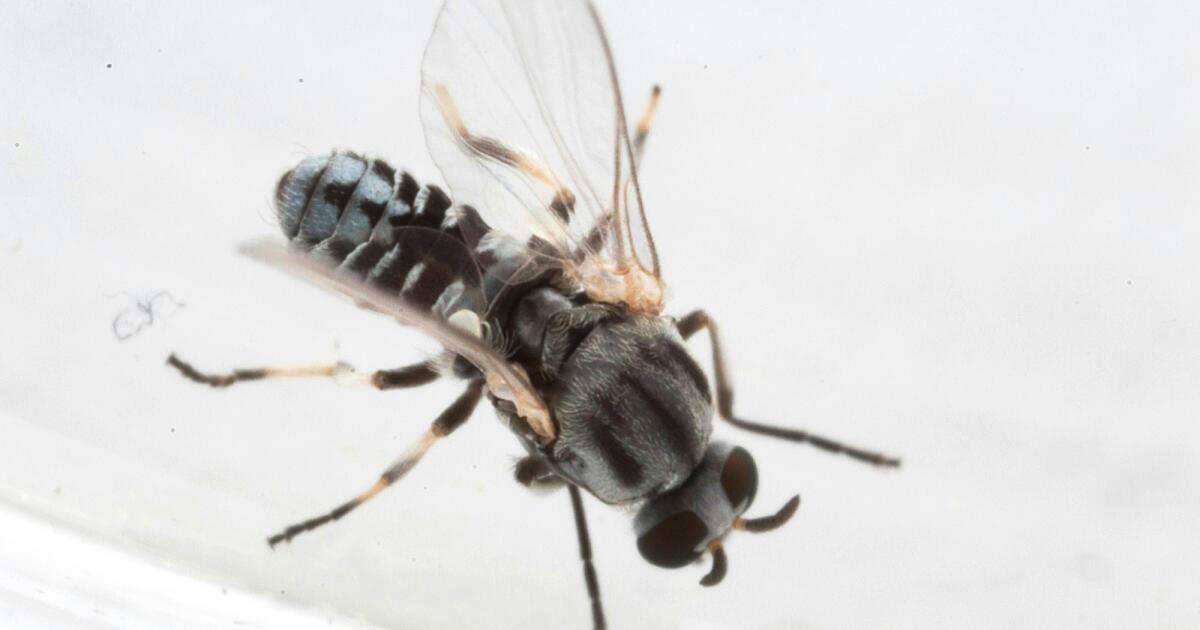
Residents in the San Gabriel Valley are contending with a dramatic surge in black flies, a painful little pest known for biting around the eyes and necks of people and pets.
The San Gabriel Valley Mosquito and Vector Control District issued a warning this week advising residents of a spike in black fly activity in foothill communities including Altadena, Azusa, Bradbury, Duarte, Glendora, Monrovia, San Dimas and Sierra Madre. The flies develop quickly in flowing waters, where females will lay 200 to 500 fertilized eggs at a time.
“Black flies are currently very active in the San Gabriel Valley, and many residents are feeling overwhelmed,” the district said in a statement. “Right now, populations are increasing due to favorable conditions, and black flies can travel up to five miles from where they emerge, which is why they’re being seen throughout the community.”
The district is treating river breeding sites to reduce populations, but warns this might take several weeks to take effect.
In the meantime, residents are advised to take protective measures such as wearing long pants and long sleeves and using protective netting over one’s face. People should also consider using DEET-containing repellent on exposed skin and turning off personal water features such as decorative fountains for 24 hours once a week, according to the district.
The bugs, measuring two to three millimeters, are so small they can be hard to see. Still, their bite can pack a painful punch.
Azusa resident Constance Yu described the persistent bugs as “like little demons but tiny,” while she swatted away the critters during an interview with CBS News this week.
Though the flies cause discomfort, they are not known to transmit diseases in L.A. County, according to the vector control district.
Spikes in black fly activity are often caused by scheduled water releases from upstream dams, which are necessary for the region’s water management but also create ideal breeding conditions for the pests.
The district monitors and sprays pesticides at breeding sites — including local rivers, streams and locations such as Morris Dam — and sets traps in foothill communities to track the population size and minimize the effects on residents.
This time last year, surveillance traps had single-digit counts of black flies. Now they are capturing more than 500 flies at a time, district spokesperson Anais Medina Diaz told LAist.
Diaz also said it is usual to see such so much fly activity this time of year, noting that the uptick is probably connected to the recent record-setting heat wave. Southern California is experiencing the hottest March on record, leading to a surge in snow runoff from the mountains.
“We are experiencing them now because of the warmer temperatures we’ve been having,” Diaz said. “And of course, all the water that’s going down through the river, we have a high flow of water that is not typical for this time of year.”
The black flies are not the only troublesome creature acting up during the unseasonably warm weather.
The Southland has also seen more rattlesnakes, with two recent human fatalities, as the early heat draws more serpents onto hiking trails. Toasty ocean temperatures have been linked to a great white shark sighting in Newport Beach that prompted a temporary beach closure Thursday.

Minnesotans mobilize for third and potentially biggest No Kings Day

Saints open with road victory in Indianapolis

Pittsburgh has rainiest March in nearly 60 years as flooding causes issues across area

Augusta’s Turpin neighborhood to get affordable homes with $1.85M federal grant

‘Strong smell’ shuts down flights at major DC-area airports for the second time this month

Florida High School Football Rankings: Top 25 teams – Oct. 21

How old is Bo Nix? What to know about Oregon quarterback ahead of 2024 NFL Draft

Cleary's 21 help Le Moyne down Central Connecticut State 69-64 in OT

99th annual Pony Swim held in Virginia

Indiana Members Credit Union announced as new anchor tenant at Bottleworks District

WATCH: Senate hearing goes silent after Angel Father confronts top Dem over daughter’s death

US diplomat Marco Rubio denounces settler violence, tolls in Hormuz strait

Iran-linked hackers have breached FBI Director Kash Patel’s personal emails | CNN Politics

Live: CPAC 2026 Day 2

Video: Will ICE Change Under Its New Leader?
-

 Detroit, MI1 week ago
Drummer Brian Pastoria, longtime Detroit music advocate, dies at 68
-

 Movie Reviews1 week ago
‘Youth’ Twitter review: Ken Karunaas impresses audiences; Suraj Venjaramoodu adds charm; music wins praise | – The Times of India
-

 Sports6 days ago
IOC addresses execution of 19-year-old Iranian wrestler Saleh Mohammadi
-

 New Mexico5 days ago
Clovis shooting leaves one dead, four injured
-
 Business1 week ago
Disney’s new CEO says his focus is on storytelling and creativity
-

 Technology5 days ago
YouTube job scam text: How to spot it fast
-

 Tennessee4 days ago
Tennessee Police Investigating Alleged Assault Involving ‘Reacher’ Star Alan Ritchson
-

 Texas1 week ago
How to buy Houston vs. Texas A&M 2026 March Madness tickets