Idaho
No. 1 Montana State pounds eighth-seeded Idaho 52-19, runs into FCS semifinals


BOZEMAN — For the first time all season, Montana State allowed a visiting opponent to score in the first quarter of a game played inside Bobcat Stadium.
It made little difference, as the Bobcats used a flurry of touchdowns to close out the first half en route to a 52-19 win over Idaho on Saturday in the quarterfinal round of the FCS playoffs. Montana State will play a semifinal game next Saturday for the fourth time in six years.
The top-ranked and undefeated Bobcats started the game against the Vandals in typical fashion of this historic season — marching down the field on the opening series to score a touchdown on a 3-yard pass from quarterback Tommy Mellott to tight end Rylan Schlepp.
The game seemed to turn late in the first quarter, though. Idaho quarterback Jack Layne, who missed the Vandals’ regular-season loss at Montana State, aired out a pass to a wide-open Jordan Dwyer.
Dwyer, who was running free behind the MSU secondary, caught the perfectly placed pass and ran in for a 55-yard touchdown. Idaho and Montana State were tied 7-7 going to the second quarter.
The teams traded field goals in the second — Myles Sansted converted from 46 yards for Montana State and Cameron Pope made a 32-yarder for Idaho — but the wheels came off for the Vandals in the waning minutes of the half.
Following Pope’s field goal, Idaho coach Jason Eck opted to go for a surprise onside kick. The ball didn’t travel the required 10 yards, giving the Bobcats the ball at the Idaho 38-yard line. Montana State capitalized, with Mellott scoring this time on the ground from 8 yards out to give the Bobcats a 17-10 led with 3:47 to play in the first half.
On Idaho’s ensuing possession, Mark Hamper fumbled on a wide receiver screen after running into the back of one of his own blockers. MSU defensive end Brody Grebe recovered the fumble, and the Bobcats’ offense came back on the field.
Moments later, running back Adam Jones, who started in the absence of Scottre Humphrey, was in the end zone, and the Bobcats were suddenly up 24-10.
But the first-half disaster wasn’t over for the Vandals. Idaho was forced to punt, and — after a 15-yard return by Taco Dowler — Mellott showed why he’s a finalist for the Walter Payton Award.
The senior from Butte dropped back to pass but didn’t find an open receiver. With pressure closing in, Mellott scrambled through an opening in the line, juked an Idaho defender and sprinted down the left sideline. He was forced out 63 yards later, and the Bobcats were in business inside the Idaho 5-yard line with less than 30 seconds left in the half.
Jones eventually punched in another touchdown on third-and-goal, and Montana State took a 31-10 lead into halftime, having scored 21 unanswered points in less than four minutes of game action.
The second half didn’t start much better for Idaho. Layne threw an interception to Jon Johnson on the Vandals’ first offensive play, and five minutes later Jones scored this third touchdown, this one from 9 yards out. Mellott added a 5-yard TD pass to Dowler later in the third, and Montana State took a 45-10 lead to the fourth quarter.
Less than a minute into the fourth, Jones added another touchdown. After taking a Mellott pass 56 yards to the 2-yard line, Jones scored his fourth TD of the night on the next play.
Layne and Dwyer connected for another Idaho touchdown in the fourth quarter, and Pope added a 43-yard field goal.
Montana State improved to 14-0 for the first time in program history, and the 14-game win streak is also the best in program history. Fourth-year head coach Brent Vigen is now 30-1 during his career at Bobcat Stadium and has guided Montana State to the semifinal round of the postseason in three of his four years.
Idaho, which was the eighth seed for this year’s playoffs and entered Saturday’s game with a six-game winning streak, finishes the season at 10-4.
Turning point: Hamper’s fumble completely changed the complexion of the game. It was just a one-score game when Idaho started the series with an opportunity to close out the half. Instead of driving the field and getting points, the turnover gave the Bobcats a short field and started the avalanche that finished out the first half.
Stat of the game: Montana State dominated in all facets, and perhaps nothing illustrates that more than the teams’ performances on third down. The Bobcats converted on 11 of 15 third-down plays, while Idaho was only 2 of 10, with its first successful third-down conversion coming in the fourth quarter against Montana State’s second-string defense.
Bobcat game balls: RB Adam Jones (Offense). With Humphrey sidelined, Jones, the Big Sky Conference freshman of the year, showed he was more than capable. He handled the bulk of the carries, finishing with 23 totes for 95 yards and four touchdowns. He also had three catches for 66 yards. Jones, a graduate of Missoula Sentinel High School, now has 1,068 rushing yards on the season.
DE Brody Grebe (Defense). Grebe started the game blowing up a fourth-down run on Idaho’s first possession to keep the Vandals off the scoreboard in the early going. And his fumble recovery in the second quarter was one of the pivotal plays of the game. The official stats gave Grebe only one tackle, but his imprint was all over the game.
What’s next: Montana State will have its final home game of the season at 1:30 p.m. on Saturday, Dec. 21, against either UC Davis or South Dakota in the semifinal round. The Coyotes host the Aggies at 1 p.m. on Saturday in a quarterfinal game.






ADRIAN, Oregon — The Friends of the Owyhee organized a clean-up in Malheur County in Oregon, and volunteers came out to pick up trash and get rid of abandoned campers.
“We had two abandoned RV’S and a camper that were abandoned out on public lands,” said Tim Davis, who runs the Friends of the Owyhee. “They were sitting there for upwards of a year, and it is really clear that it is hard to get rid of these.”
WATCH| Check out the video to see volunteers demolish a camper—
Volunteers camp out for the Succor Creek Clean-Up in the Owyhees
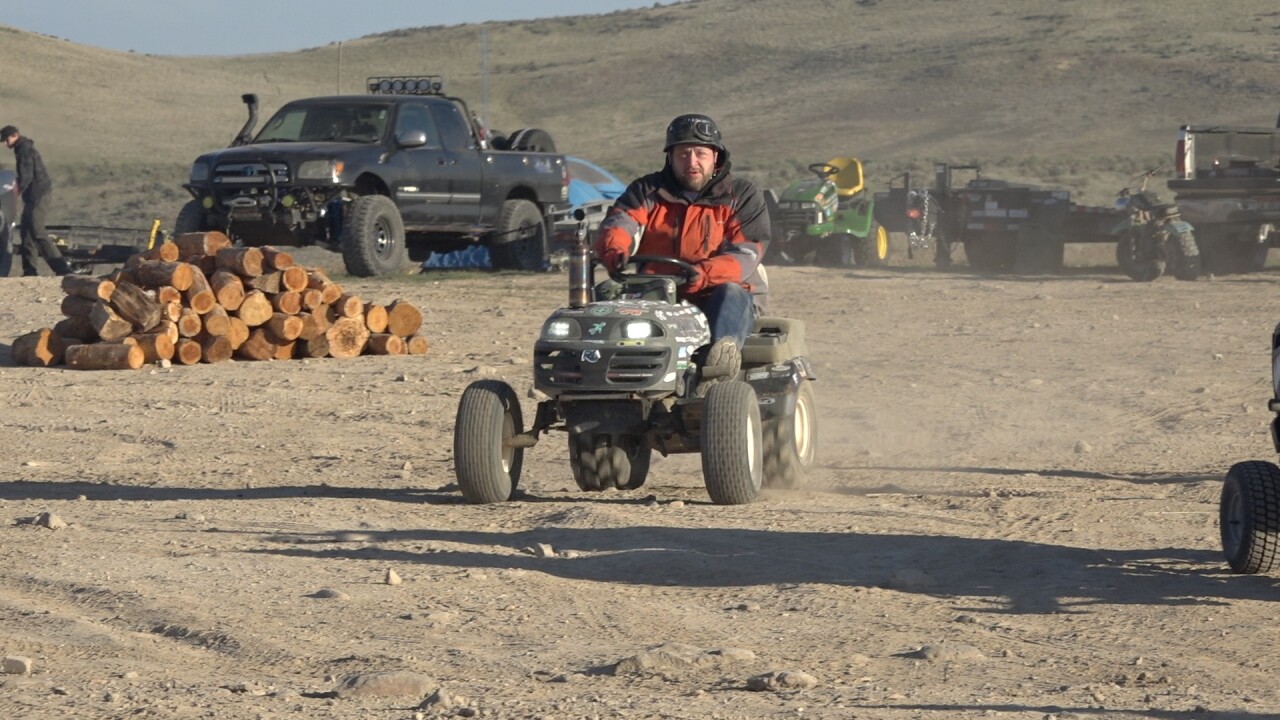
Davis worked with the local sheriff’s office and the BLM to remove the campers, but he found it difficult because there was no place to take these recreational vehicles. The Gambler 500, an off-road group, brought out some people to demolish a camper with an excavator.
“That is awesome to see the turnout with the army of volunteers we have today,” said Brian Arndt of the Gambler 500 group. “We are going to be able to get the camper all in the dumpster, get it cleaned down to the frame, and then everything that can be recycled will be recycled.”
Volunteers camped out on Succor Creek Road on Friday night so they could get an early start on Saturday. Many volunteers will camp out again on Saturday night and finish the clean-up on Sunday.
“Malheur is the 12th largest county in the United States, and it’s 74 percent public land,” said Davis. “We have very few resources with the BLM; they are understaffed, they have one rec planner right now, so us, as public land owners, should be able to step up and keep this place clean.”
Lela Blizzard works as the lone recreational planner for the Vail District of the BLM, who says most sites have signs that say pack it in and pack it out. She says the BLM really needs the cooperation of the public because of how large it is, and she was happy to see how many volunteers showed up.
“I just want to tell them thank you because I know they are taking time out of their weekend to come out here to help us make sure the land continues to look nice for everyone who comes out to enjoy it,” said Blizzard.

Griz Ward is one of the volunteers, and he enjoyed camping out, but he also would like to see people pick up after themselves. When it comes to outdoor recreation, it is so important to be part of the solution and not part of the problem.
“If you come out here and play in the area, be respectful,” said Ward. “Pack it in and pack it out, leave no trace and do the right thing, or frankly, stay home.”
The Succor Creek Clean-Up also received a lot of support from the Treasure Valley, as they got donations from the Ontario Sanitation Service with the dumpsters, Tates Rents with the excavator, and United with porta-potties for the campsite.
Send tips to Idaho Backroads neighborhood reporter Steve Dent
Have an Idaho Backroads story idea? Share it with Steve below —

IDAHO — ‘No Kings 3’ protests will take place throughout Idaho on March 28, including in Boise and Twin Falls.
According to the Idaho 50501 Facebook page, there will be speakers & musicians playing at protests across the Treasure Valley.
Protests will take place in Boise, Caldwell, Nampa, Mountain Home, Twin Falls, and other Idaho cities.
NoKings.org
On March 28, Neighborhood Reporters Allie Triepke & Lorien Nettleton will bring coverage of the Boise & Twin Falls protests on Idaho News 6 at 10.
Idaho
Idaho Senate introduces new bill to give local municipalities authority to control rat populations

BOISE, Idaho — A new bill in the Idaho Senate aims to let local municipalities take action to control rat populations. This, after a previous bill to combat rat infestations across Idaho, died in the House.
Rats have been spreading throughout the Treasure Valley in recent years, but previous attempts at legislation to deal with the problem have failed.
WATCH: Senior Reporter Roland Beres provides an update on the new rat bill
New bill would allow local governments to combat rats
Residents in Eagle and Boise have been tracking an alarming rise in rat populations recently.
Rep. John Gannon (D – District 17) introduced new legislation today that would essentially permit local governments to act in order to control rat populations if they want to, without creating a mandate.
Gannon said some cities complained that they did not have the authority to do the job themselves.
The bill was introduced with a dose of humor.
“I’m going to support this. It’s very late in the session, but I think this might just squeak through,” said Sen. Ben Adams (R – District 12). “Well. Unless it encounters a trap along the way.”
ALSO READ | ‘I’ve never seen something that big’: Boise neighbors finding rats in their backyards
This story was initially reported by a journalist and has been, in part, converted to this platform with the assistance of AI. Our editorial team verifies all reporting on all platforms for fairness and accuracy.
Send tips to neighborhood reporter Riley Shoemaker
Have a story idea from Downtown Boise, the North End or Garden City ? Share it with Riley below —

North Dakota National Guard Being Sent to D.C.

VERICA DRAKSIC Obituary – Cleveland, OH

Austin church to use 3D printing for new campus

ALBBAA launches 2026 Big Gobbler Photo Contest for Alabama Black Belt turkey hunters

JetBlue-Alaska Makes Most Sense, But Does Alaska Want It? – Live and Let’s Fly

Florida High School Football Rankings: Top 25 teams – Oct. 21

How old is Bo Nix? What to know about Oregon quarterback ahead of 2024 NFL Draft

Cleary's 21 help Le Moyne down Central Connecticut State 69-64 in OT

99th annual Pony Swim held in Virginia

Indiana Members Credit Union announced as new anchor tenant at Bottleworks District

JD Vance says he was ‘obsessed’ with UFOs, believes aliens are actually ‘demons’
The EU's recipe for trade deals : easy on beef, tough on wine

Photos: ‘No Kings’ protests across the country

Jeffries declines to break with indicted Democrat after ethics panel’s guilty verdict

Hundreds of thousands march through London in stand against the far right
-

 Sports1 week ago
IOC addresses execution of 19-year-old Iranian wrestler Saleh Mohammadi
-

 New Mexico7 days ago
Clovis shooting leaves one dead, four injured
-

 Tennessee6 days ago
Tennessee Police Investigating Alleged Assault Involving ‘Reacher’ Star Alan Ritchson
-

 Minneapolis, MN3 days ago
Boy who shielded classmate during school shooting receives Medal of Honor
-

 Technology7 days ago
YouTube job scam text: How to spot it fast
-

 Science1 week ago
Record Heat Meets a Major Snow Drought Across the West
-

 Politics1 week ago
Schumer gambit fails as DHS shutdown hits 36 days and airport lines grow
-

 Politics1 week ago
Trump gives Iran 48-hour ultimatum to reopen Strait of Hormuz or face strikes on power plants