Idaho
Idaho's last democratic governor left office 30 years ago. A look at left-wing leadership in a red state – East Idaho News


IDAHO FALLS – Cecil Andrus emerged victorious in a rematch with his political opponent in Idaho’s gubernatorial election.
It was Nov. 3, 1970 and the 39-year-old Orofino man was elected to be Idaho’s 26th governor, the first democrat elected to the position since 1947. He beat his Republican challenger, Don Samuelson, with 52% of the vote (128,004 total votes), according to voting records.
RELATED | How a Rexburg man became the first Latter-day Saint to serve as Idaho’s governor
He ran for governor four years earlier while serving as a state senator. He filed to run after the Democratic nominee, Charles Herndon, was killed in a plane crash near Stanley about six weeks before the election. Andrus was narrowly defeated by Samuelson that year, but had now secured a victory.
Andrus’s inauguration on Jan. 4, 1971 kicked off a 24-year period of Democratic leadership in the Gem State. He was re-elected by a wide margin in 1974. His second term was cut short in 1977 when President Jimmy Carter appointed him U.S. Secretary of the Interior.
RELATED | How a Malad banker became the second Latter-day Saint Democrat to serve as Idaho’s governor
Lt. Governor John Evans, a democrat from Malad, served the rest of Andrus’s term. Evans remained in office for 10 years before Andrus entered the race again in 1986. He won by less than one percentage point against Republican David Leroy. Andrus was re-elected in 1990, making him Idaho’s only four-term governor to date and the second to serve nonconsecutive terms.
RELATED | How a journalist from Arco became the first Idaho governor to serve nonconsecutive terms
Since Andrus left office in 1995, Idaho has consistently been led by a Republican governor and the GOP has been the dominant political party.
Today, Idaho is the fifth most Republican state in the U.S., according to an independent polling organization.
“Generally, people in Idaho are concerned with fiscal issues, such as budget deficits and lower government spending, leading to a conservative way of thinking,” the report says.
Idaho’s history of electing democratic leaders got us wondering why Idahoans voted that way at the time?
Why Andrus appealed to Idaho voters
Andrus passed away in 2017 at age 85, but his granddaughter, Monica Church, who is vying for a seat in the Idaho House, tells EastIdahoNews.com there are several reasons why he was appealing to voters.
“He appealed to Idaho voters because he was Idaho,” Church says. “He was a lumberjack, a union man with three small children living in a rural community who wanted what was best for his family and his neighbors.”
Logging, mining and the railroad were major industries in Idaho at the time, Idaho Secretary of State Phil McGrane says. Unions associated with those industries were popular and that drove a lot of the support for Andrus’s campaign.
Education was a huge focus for Andrus, Church says, and during his first years in office, he brought kindergarten to Idaho and increased school funding.

But what endeared him to voters was his public opposition to a mining claim during his 1970 campaign. A New York-based company wanted to open a mine at the base of Castle Peak in the White Clouds Mountains. Andrus was an avid hunter and fisherman, like many Idahoans, and wanted to protect Idaho’s public lands. In an essay about Andrus, Stephen Shaw says his opposing stance earned him additional votes and a reputation as a “quality of life” politician.
In 2018, seven months after Andrus’s death, Congress renamed the White Clouds wilderness area after him.
Andrus’s efforts to block nuclear waste shipments to Idaho in 1973 further solidified voter support for him and helped him get re-elected in 1986. Congress wanted to make Idaho a longterm repository for nuclear waste. Andrus responded by banning waste shipments and ordered an Idaho State Police trooper to park across the railroad tracks in Blackfoot to prevent a delivery.
In a 2016 interview with the Spokesman-Review, Andrus admitted he didn’t have the authority to do that “but the federal government flinched.”
Idaho filed a lawsuit and won. It resulted in the 1995 settlement agreement requiring all radioactive waste on the desert west of Idaho Falls to be removed by 2035 and taken to a national repository site yet to be identified.
Richard Stallings, a Pocatello democrat who represented Idaho in Congress from 1985-1993, says Andrus’s personality was another reason voters liked him so much.
“He and I worked very closely together. He was a wonderful, empathetic person. Once you met him, you were drawn to him. He had a magnetic personality,” says Stallings.
Andrus remains a beloved political figure in Idaho, Church says, and the fact that people from both parties have fond memories of him is a testament to his leadership.

Other noteworthy Democrat victories in Idaho
Andrus certainly wasn’t the first democrat to get elected in Idaho.
Since becoming a state in 1890, 12 of Idaho’s governors have been democrats, according to the book “Idaho’s Governors.” The first was Frank Steuenberg. The Caldwell man was the state’s fourth governor and was in office from 1897 to 1901. Labor unrest between miners and mine owners during his administration led him to declare martial law, which remained in effect for months. Four years after leaving office, a disgruntled miner assassinated him.
In 1933, Idaho’s first democratic Congressional delegates went into office. Walt Minnick is the last democrat to represent Idaho in Congress. He served in the House of Representatives from 2009-2011.
The last time a democratic presidential candidate carried Idaho was in 1964. Lyndon B. Johnson had 50.92% of the vote that year, according to voting records, compared to 49.08% for Republican Barry Goldwater.
“Idaho was one of 44 states carried by incumbent President Lyndon B. Johnson. However, it was Johnson’s narrowest victory in the election. He carried the state by a margin of 5,363 votes, or 1.83%, making Idaho about 20.75% more Republican than the nation,” one report says.
Since then, no Democrat running for president has been able to get 40% of Idaho’s popular vote.
Stallings remembers that election and he attributes Johnson’s victory in Idaho to Goldwater’s “radical” political views. Civil rights were an issue in that election, which LBJ supported and Goldwater opposed. Pocatello had the largest black community in the state at the time due to the railroad, he says, and racism was a problem in some areas.
Racial hostilities made the 1964 presidential election a close race in Idaho, Stallings says.
“The memory of Kennedy’s assassination was still pretty strong. Idaho didn’t vote for him in 1960, but LBJ (who served as Kennedy’s vice president) benefitted from that and won by association,” says Stallings.
Voting across party lines
In 1986, C.L. “Butch” Otter was elected for the first time as Idaho’s Lt. governor. It’s not entirely clear why Idahoans elected the Caldwell Republican to serve under Andrus, but it wasn’t the first time a republican and a democrat led the state together. Republicans Phil Batt and David Leroy both served as Lt. governor at different times under John Evans. During the 1960s, Democrat W.E. Drevlow was a Lt. governor under a Republican governor.
Church says both Andrus and Otter were “authentic” Idahoans who represented Idaho values, and that resonated with voters.
“Both men represented different parts of the West and the culture Idaho embodies,” says Church. “Cecil was — you saw him out there. He was cutting down trees into his 70s, and Butch as well. He (Otter) was sort of that Robert Redford cowboy and was authentically Idaho.”

Otter could not be reached for comment, but Church says the pair worked well together and had a mutual trust and respect for each other because they didn’t focus on party politics.
“I remember my grandfather saying many times that he never had to worry when he left the state. He trusted (Butch),” Church explains. “We look back at them as being a republican and a democrat but that wasn’t the way they saw it. They were principled men who took an oath to Idaho and they did their jobs.”
WATCH OUR INTERVIEW WITH CHURCH IN THE VIDEO ABOVE.
=htmlentities(get_the_title())?>%0D%0A%0D%0A=get_permalink()?>%0D%0A%0D%0A=htmlentities(‘For more stories like this one, be sure to visit https://www.eastidahonews.com/ for all of the latest news, community events and more.’)?>&subject=Check%20out%20this%20story%20from%20EastIdahoNews” class=”fa-stack jDialog”>



ADRIAN, Oregon — The Friends of the Owyhee organized a clean-up in Malheur County in Oregon, and volunteers came out to pick up trash and get rid of abandoned campers.
“We had two abandoned RV’S and a camper that were abandoned out on public lands,” said Tim Davis, who runs the Friends of the Owyhee. “They were sitting there for upwards of a year, and it is really clear that it is hard to get rid of these.”
WATCH| Check out the video to see volunteers demolish a camper—
Volunteers camp out for the Succor Creek Clean-Up in the Owyhees
Davis worked with the local sheriff’s office and the BLM to remove the campers, but he found it difficult because there was no place to take these recreational vehicles. The Gambler 500, an off-road group, brought out some people to demolish a camper with an excavator.
“That is awesome to see the turnout with the army of volunteers we have today,” said Brian Arndt of the Gambler 500 group. “We are going to be able to get the camper all in the dumpster, get it cleaned down to the frame, and then everything that can be recycled will be recycled.”
Volunteers camped out on Succor Creek Road on Friday night so they could get an early start on Saturday. Many volunteers will camp out again on Saturday night and finish the clean-up on Sunday.
“Malheur is the 12th largest county in the United States, and it’s 74 percent public land,” said Davis. “We have very few resources with the BLM; they are understaffed, they have one rec planner right now, so us, as public land owners, should be able to step up and keep this place clean.”
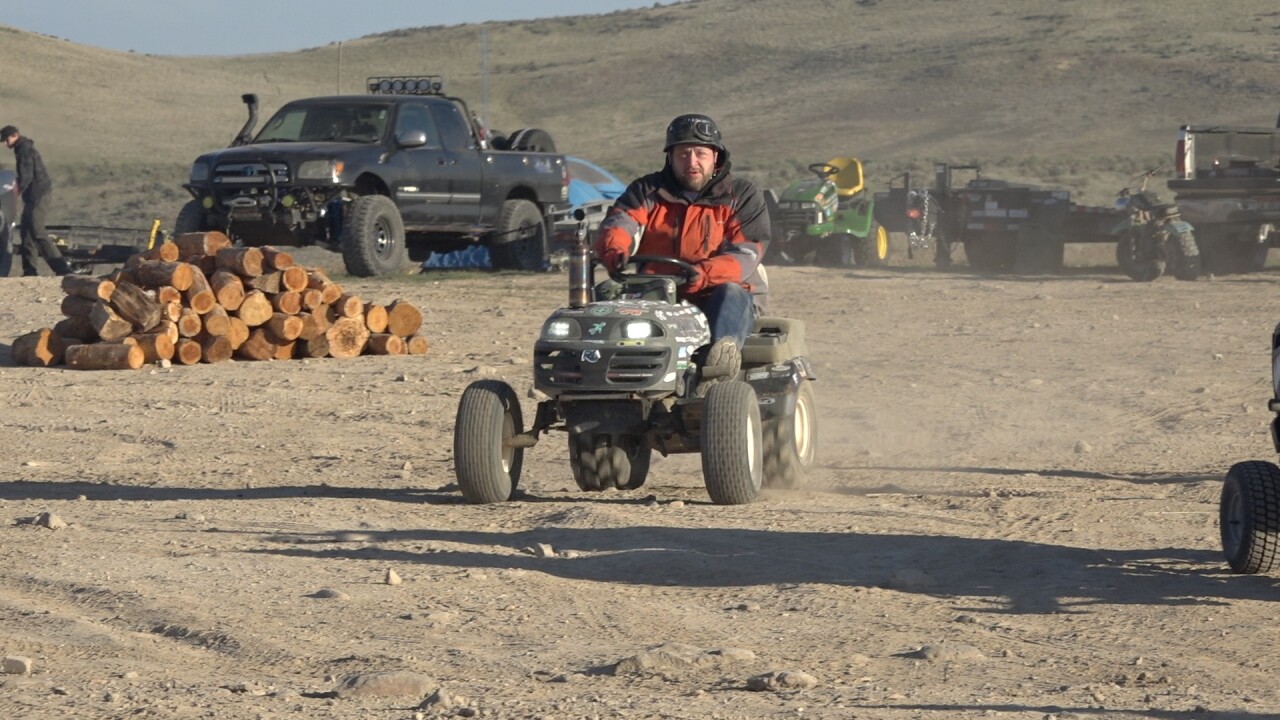
Lela Blizzard works as the lone recreational planner for the Vail District of the BLM, who says most sites have signs that say pack it in and pack it out. She says the BLM really needs the cooperation of the public because of how large it is, and she was happy to see how many volunteers showed up.
“I just want to tell them thank you because I know they are taking time out of their weekend to come out here to help us make sure the land continues to look nice for everyone who comes out to enjoy it,” said Blizzard.

Griz Ward is one of the volunteers, and he enjoyed camping out, but he also would like to see people pick up after themselves. When it comes to outdoor recreation, it is so important to be part of the solution and not part of the problem.
“If you come out here and play in the area, be respectful,” said Ward. “Pack it in and pack it out, leave no trace and do the right thing, or frankly, stay home.”
The Succor Creek Clean-Up also received a lot of support from the Treasure Valley, as they got donations from the Ontario Sanitation Service with the dumpsters, Tates Rents with the excavator, and United with porta-potties for the campsite.
Send tips to Idaho Backroads neighborhood reporter Steve Dent
Have an Idaho Backroads story idea? Share it with Steve below —

IDAHO — ‘No Kings 3’ protests will take place throughout Idaho on March 28, including in Boise and Twin Falls.
According to the Idaho 50501 Facebook page, there will be speakers & musicians playing at protests across the Treasure Valley.
Protests will take place in Boise, Caldwell, Nampa, Mountain Home, Twin Falls, and other Idaho cities.
NoKings.org
On March 28, Neighborhood Reporters Allie Triepke & Lorien Nettleton will bring coverage of the Boise & Twin Falls protests on Idaho News 6 at 10.
Idaho
Idaho Senate introduces new bill to give local municipalities authority to control rat populations

BOISE, Idaho — A new bill in the Idaho Senate aims to let local municipalities take action to control rat populations. This, after a previous bill to combat rat infestations across Idaho, died in the House.
Rats have been spreading throughout the Treasure Valley in recent years, but previous attempts at legislation to deal with the problem have failed.
WATCH: Senior Reporter Roland Beres provides an update on the new rat bill
New bill would allow local governments to combat rats
Residents in Eagle and Boise have been tracking an alarming rise in rat populations recently.
Rep. John Gannon (D – District 17) introduced new legislation today that would essentially permit local governments to act in order to control rat populations if they want to, without creating a mandate.
Gannon said some cities complained that they did not have the authority to do the job themselves.
The bill was introduced with a dose of humor.
“I’m going to support this. It’s very late in the session, but I think this might just squeak through,” said Sen. Ben Adams (R – District 12). “Well. Unless it encounters a trap along the way.”
ALSO READ | ‘I’ve never seen something that big’: Boise neighbors finding rats in their backyards
This story was initially reported by a journalist and has been, in part, converted to this platform with the assistance of AI. Our editorial team verifies all reporting on all platforms for fairness and accuracy.
Send tips to neighborhood reporter Riley Shoemaker
Have a story idea from Downtown Boise, the North End or Garden City ? Share it with Riley below —

Peter Alexander is leaving NBC News to join MS NOW as an anchor

L.A. summons the spirit of glam-surrealist artist Steven Arnold
Trump’s approval ratings just hit a new low. A Latino voter shift could reshape the midterms

Monroe High ace Miguel Gonzalez preparing for future as a father

Republican US lawmaker demands Congress vote on any Iran troop deployment

Florida High School Football Rankings: Top 25 teams – Oct. 21

How old is Bo Nix? What to know about Oregon quarterback ahead of 2024 NFL Draft

Cleary's 21 help Le Moyne down Central Connecticut State 69-64 in OT

99th annual Pony Swim held in Virginia

Indiana Members Credit Union announced as new anchor tenant at Bottleworks District
Republican US lawmaker demands Congress vote on any Iran troop deployment

So you went to a No Kings protest. Now what?

JD Vance says he was ‘obsessed’ with UFOs, believes aliens are actually ‘demons’
The EU's recipe for trade deals : easy on beef, tough on wine

Photos: ‘No Kings’ protests across the country
-

 Sports1 week ago
IOC addresses execution of 19-year-old Iranian wrestler Saleh Mohammadi
-

 New Mexico7 days ago
Clovis shooting leaves one dead, four injured
-

 Miami, FL3 days ago
Jannik Sinner’s Girlfriend Laila Hasanovic Stuns in Ab-Revealing Post Amid Miami Open
-

 Tennessee6 days ago
Tennessee Police Investigating Alleged Assault Involving ‘Reacher’ Star Alan Ritchson
-

 Minneapolis, MN3 days ago
Boy who shielded classmate during school shooting receives Medal of Honor
-

 Technology1 week ago
YouTube job scam text: How to spot it fast
-

 Politics1 week ago
Schumer gambit fails as DHS shutdown hits 36 days and airport lines grow
-

 Science1 week ago
Record Heat Meets a Major Snow Drought Across the West