Idaho
Defense for Bryan Kohberger says 'mob mentality' justifies moving venue of Idaho murders trial


Defense attorneys for Bryan Kohberger, the man accused of killing four University of Idaho students in 2022, argue that a severe “mob mentality” against him within the community is sufficient justification for moving the trial out of Latah County, new court documents show.
In a filing on Monday, the defense countered the state’s objection to their request for a change of venue by presenting a telephone survey conducted by a defense expert, which revealed hostility toward Kohberger from Latah County residents.
When asked what their response would be if Kohberger was not convicted, one person said, “There would likely be a riot and he wouldn’t last long outside because someone would do the good ole’ boy justice.”
Others said that “they’d burn the courthouse down” and “they would probably find him and kill him.”
The defense argued that the “often inaccurate and inflammatory” media coverage in Latah County would condition potential jurors to think Kohberger was guilty. The survey indicated that individuals who were more exposed to media coverage were more likely to prejudge Kohberger as guilty, and Latah County has the most media coverage per person in the state.
Despite the state’s proposal to move the jury pool to the neighboring Nez Perce County, the defense contended that this would not solve the issue, as Nez Perce County residents were exposed to the same media coverage as those in Latah County.
Instead, Kohberger’s attorneys proposed moving the trial to Ada County, home to Idaho’s capital city, Boise. According to the defense’s survey, Ada County residents appeared to have a lower emotional connection to the case. When asked how they would feel if Kohberger were found not guilty, responses included “they would go on with life as always” and “I think they would accept it.”
The defense also rejected the proposed solution of vetting jurors, citing precedent that shows vetting alone is insufficient to ensure impartiality. Sequestering the jury, another proposed solution, would be “unnecessary and untenable.”
“The traumatized town of Moscow is understandably filled with deeply held prejudgment opinions of guilt,” the defense attorneys said in concluding their argument.
The two sides will present their arguments to the judge on August 29.
Kohberger, who was a doctoral student at Washington State University studying criminology, is charged with four counts of first-degree murder and burglary after prosecutors say he broke into an off-campus house near the University of Idaho and fatally stabbed four students. Kohberger was arrested nearly seven weeks later and a possible motive remains unclear.
The state says it has linked Kohberger to the murders through DNA evidence, cellphone signals and security videos, while the defense has submitted an alibi.
The state will pursue the death penalty at Kohberger’s trial, which is set for June 2025.
This article was originally published on NBCNews.com








ONTARIO, Oregon — A fire in a lot near W. Idaho Ave and South Oregon Street in Ontario has visibly damaged sheds and power lines.
Idaho News 6 arrived at the scene Sunday morning at around 12 p.m., finding nearby sheds across a fence line scorched, but standing. Power lines appeared to be damaged in the blaze.
No fire, police, or EMS were still on scene, and there were no surrounding road closures.
Idaho News 6 has reached out to officials and is awaiting additional information.

ADRIAN, Oregon — The Friends of the Owyhee organized a clean-up in Malheur County in Oregon, and volunteers came out to pick up trash and get rid of abandoned campers.
“We had two abandoned RV’S and a camper that were abandoned out on public lands,” said Tim Davis, who runs the Friends of the Owyhee. “They were sitting there for upwards of a year, and it is really clear that it is hard to get rid of these.”
WATCH| Check out the video to see volunteers demolish a camper—
Volunteers camp out for the Succor Creek Clean-Up in the Owyhees
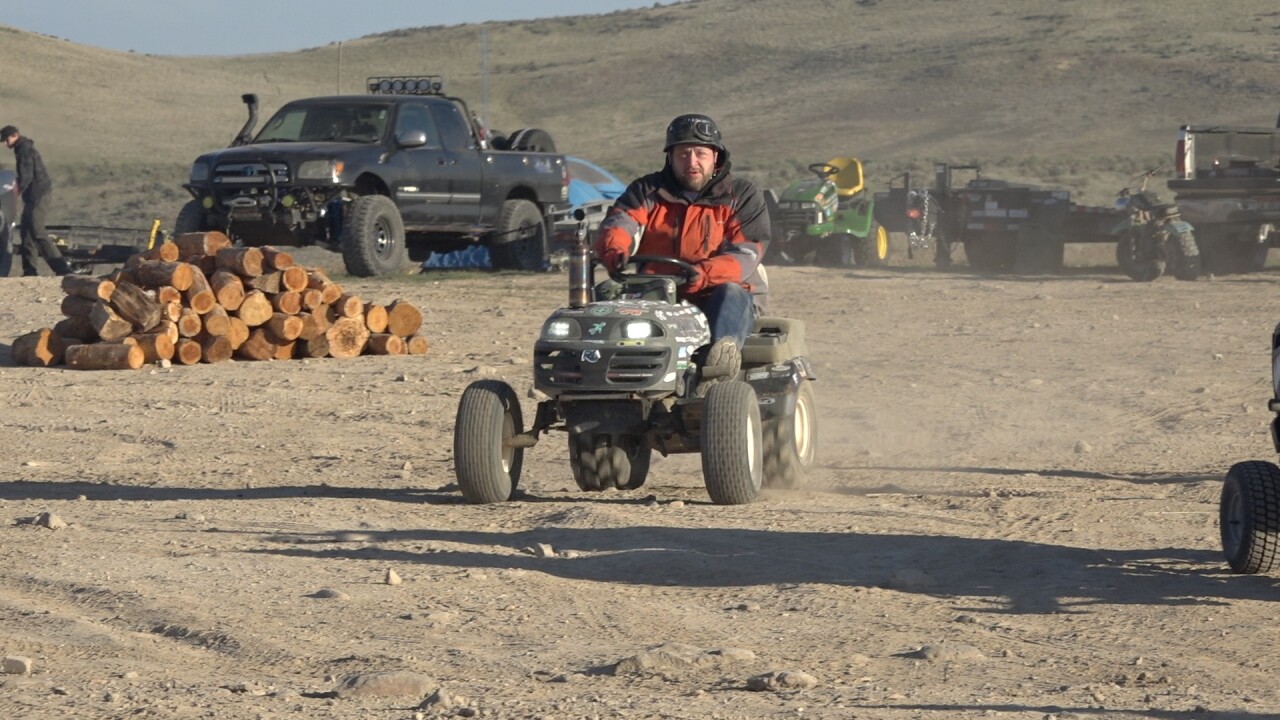
Davis worked with the local sheriff’s office and the BLM to remove the campers, but he found it difficult because there was no place to take these recreational vehicles. The Gambler 500, an off-road group, brought out some people to demolish a camper with an excavator.
“That is awesome to see the turnout with the army of volunteers we have today,” said Brian Arndt of the Gambler 500 group. “We are going to be able to get the camper all in the dumpster, get it cleaned down to the frame, and then everything that can be recycled will be recycled.”
Volunteers camped out on Succor Creek Road on Friday night so they could get an early start on Saturday. Many volunteers will camp out again on Saturday night and finish the clean-up on Sunday.
“Malheur is the 12th largest county in the United States, and it’s 74 percent public land,” said Davis. “We have very few resources with the BLM; they are understaffed, they have one rec planner right now, so us, as public land owners, should be able to step up and keep this place clean.”
Lela Blizzard works as the lone recreational planner for the Vail District of the BLM, who says most sites have signs that say pack it in and pack it out. She says the BLM really needs the cooperation of the public because of how large it is, and she was happy to see how many volunteers showed up.
“I just want to tell them thank you because I know they are taking time out of their weekend to come out here to help us make sure the land continues to look nice for everyone who comes out to enjoy it,” said Blizzard.

Griz Ward is one of the volunteers, and he enjoyed camping out, but he also would like to see people pick up after themselves. When it comes to outdoor recreation, it is so important to be part of the solution and not part of the problem.
“If you come out here and play in the area, be respectful,” said Ward. “Pack it in and pack it out, leave no trace and do the right thing, or frankly, stay home.”
The Succor Creek Clean-Up also received a lot of support from the Treasure Valley, as they got donations from the Ontario Sanitation Service with the dumpsters, Tates Rents with the excavator, and United with porta-potties for the campsite.
Send tips to Idaho Backroads neighborhood reporter Steve Dent
Have an Idaho Backroads story idea? Share it with Steve below —

IDAHO — ‘No Kings 3’ protests will take place throughout Idaho on March 28, including in Boise and Twin Falls.
According to the Idaho 50501 Facebook page, there will be speakers & musicians playing at protests across the Treasure Valley.
Protests will take place in Boise, Caldwell, Nampa, Mountain Home, Twin Falls, and other Idaho cities.
NoKings.org
On March 28, Neighborhood Reporters Allie Triepke & Lorien Nettleton will bring coverage of the Boise & Twin Falls protests on Idaho News 6 at 10.

Wolverines make Frozen Four

Bay Area residents hold rally in SF as war with Iran enters 2nd month

Dallas Jenkins says he is the ‘evangelical mascot of the LDS church’ and talks Easter celebrations

New video shows aftermath of police shooting in Downtown Miami

Boston Celtics Star Jayson Tatum Made History In Hornets Game

Florida High School Football Rankings: Top 25 teams – Oct. 21

How old is Bo Nix? What to know about Oregon quarterback ahead of 2024 NFL Draft

Cleary's 21 help Le Moyne down Central Connecticut State 69-64 in OT

99th annual Pony Swim held in Virginia

Indiana Members Credit Union announced as new anchor tenant at Bottleworks District

Scathing report claims nation’s oldest labor union ‘betrayed’ MAGA members through ‘shocking’ spending

Republican US lawmaker demands Congress vote on any Iran troop deployment

So you went to a No Kings protest. Now what?

JD Vance says he was ‘obsessed’ with UFOs, believes aliens are actually ‘demons’
The EU's recipe for trade deals : easy on beef, tough on wine
-

 Sports1 week ago
IOC addresses execution of 19-year-old Iranian wrestler Saleh Mohammadi
-

 New Mexico1 week ago
Clovis shooting leaves one dead, four injured
-

 Miami, FL4 days ago
Jannik Sinner’s Girlfriend Laila Hasanovic Stuns in Ab-Revealing Post Amid Miami Open
-

 Tennessee6 days ago
Tennessee Police Investigating Alleged Assault Involving ‘Reacher’ Star Alan Ritchson
-

 Minneapolis, MN4 days ago
Boy who shielded classmate during school shooting receives Medal of Honor
-

 Politics1 week ago
Schumer gambit fails as DHS shutdown hits 36 days and airport lines grow
-

 Science1 week ago
Record Heat Meets a Major Snow Drought Across the West
-

 Technology1 week ago
YouTube job scam text: How to spot it fast