West
High school coach fired after pushing to change state trans athlete law: 'Vilified' for standing up for girls

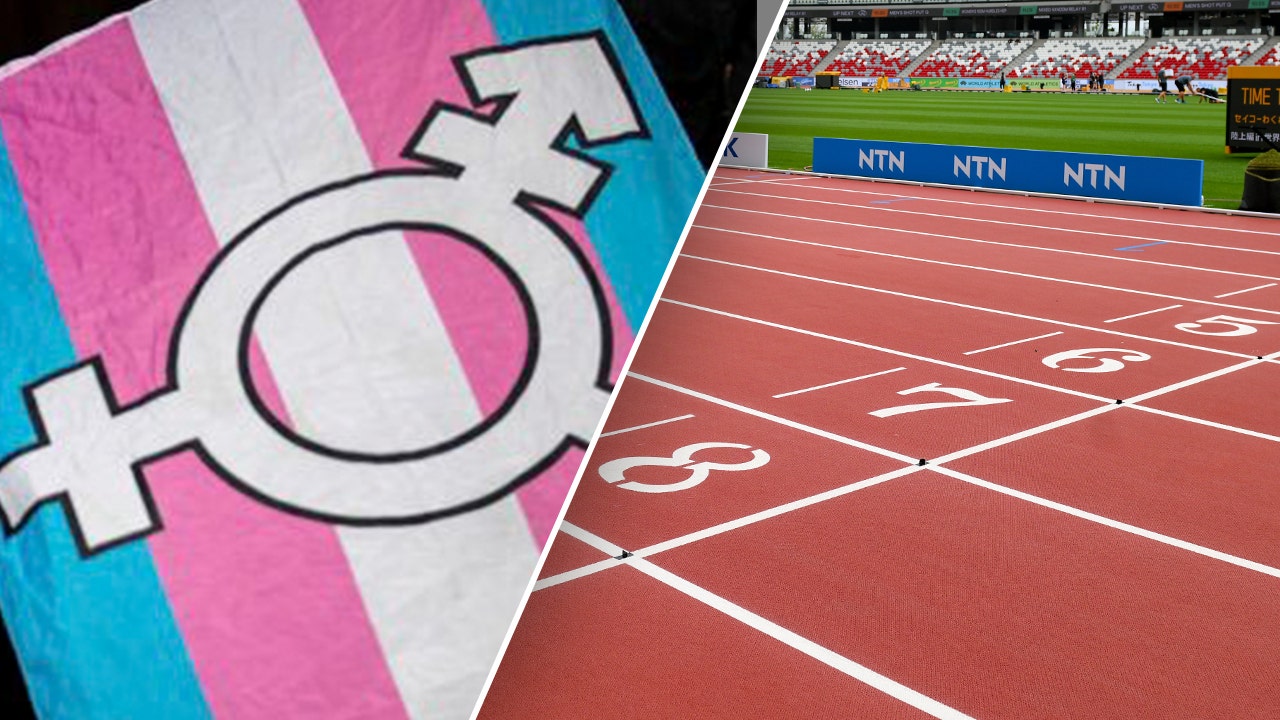
An Oregon high school track and field coach says his First Amendment rights were violated when a local school district terminated his contract for sending letters to state officials, advocating for a change in laws concerning transgender athletes.
John Parks had been the head track and field coach at Lake Oswego High School outside of Portland from Jan. 2023 until backlash ensued after he penned letters to Peter Weber, the Executive Director of the Oregon Student Activities Association (OSAA), and State Sen. Rob Wagner in May, seeking changes to current policies allowing transgender students to compete under the gender they identify as, local outlet KATU reported.
His actions allegedly violated district policy. An investigation began after the district reportedly received a formal complaint alleging Parks had made a transgender student athlete from a different school feel “unwelcome and discriminated against” at events throughout the spring, something Parks denied, The Oregonian reported.
The investigation ended with Parks’ termination.
OREGON TRACK AND FIELD COACH SAYS SCHOOL DISTRICT FIRED HIM AFTER HE ADVOCATED FOR TRANSGENDER LAW CHANGES
Former Lake Oswego High School Coach John Parks is challenging his termination after he was released for pushing for a change to Oregon’s transgender athlete policies. (Getty Images)
Parks told Fox News Digital on Monday he feels he was “vilified” for standing up for girls’ right to compete fairly.
“It’s kind of like a slap in the face to say, ‘I’ve fought for you, I’ve got girls scholarships to some of the best schools in the country – guys as well – and you’re tossing me aside because you’re saying I wrote a letter that you, after the fact, are saying was inappropriate hate and harassment because I was advocating for a change, for an opportunity to protect girls from this,’” he said of the school district.
“Everybody agrees, except for just a few officials and people that just don’t understand the issue,” he added.
According to KATU, Parks wrote to Wagner, calling for competition rules to be “aligned with what the rest of the world competes under,” particularly appearing to reference hormone testing by professional organizations like the International Olympic Committee.
The Oregonian noted that OSAA’s policies are “created through the guidelines that are set by the Oregon Department of Education and the federal government” and are made by its executive board, which consists of representatives from schools across the Beaver State.
FORMER HIGH SCHOOL TRACK AND FIELD COACH JOHN PARKS TALKS FIRING AMID PUSH FOR TRANSGENDER ATHLETE LAW CHANGE
John Parks recently joined Riley Gaines to talk about the termination on OutKick’s “Gaines for Girls Podcast.” (OutKick)
Aside from insisting that he aimed to protect girls’ right to fair sports competitions, he argued that his ability to express his opinions to officials should be protected by the First Amendment. He also emphasized that he wants what’s best for everyone involved – including transgender competitors.
“I’m fully supportive of transgender rights and every other aspect,” he said.
In his letter to the OSAA, he called for creating an open division to be more inclusive, give transgender athletes a space to compete where they feel more welcomed and strive for victory without being met with hostility from spectators.
“We can create an open division for the transgender athletes, and I really think what that’s going to do is actually encourage more transgender kids to participate, because they won’t be feeling like, ‘If I go out, I’m going to face the hostility of being booed if I’m competing to my best of my abilities, and it’s an outlet for me to socialize with the other kids on my team… and get this opportunity to be out there without the hostility of having to face female athletes.’ Many transgender athletes recognize they have an advantage and they don’t want to take part because of that,” he told Fox News Digital.
“I think [establishing an open division would] be a very healthy thing,” he said.
Parks coached transgender athletes on his own team and told The Oregonian that he “support[s] them like all other athletes.”
TRANSGENDER HIGH SCHOOL RUNNER IN OREGON HEARS BOOS FROM CROWD AFTER WINNING GIRLS’ 200-METER STATE TITLE
Transgender students are currently allowed to compete under the gender with which they identify. (Fox News)
He also said he had witnessed transgender athletes being booed for winning, adding that it doesn’t need to happen again.
When reached for comment on the termination, Mary Kay Larson, director of communications at Lake Oswego School District, declined to comment in a previous statement, saying, “We do not discuss personnel matters.”
Parks is appealing his termination and told Fox News Digital that the appeal had to be submitted by Wednesday.
“My attorneys are working with me on that,” he said.
Despite the controversy, Parks said he has been relieved to see so many members of the community coming together to support him.
“It’s been empowering to have all my athletes support me, parents support me, and they don’t even know what’s going on fully, but they know that they didn’t witness anything inappropriate, and I know that it’s an issue that they care deeply about and enough that they even set up a GoFundMe, so that’s been empowering. That kind of support.”
Fox News’ Chantz Martin contributed to this report.
Read the full article from Here


DENVER — Dr. Justina Ford’s name adorns plaques and statues across Denver, where she delivered more than 7,000 babies as the city’s first licensed Black woman physician. Now, an affordable housing building in Five Points, the neighborhood where she lived and worked for 50 years, bears her name.
The newly christened Justina at Five Points, formerly Brunetti Lofts, offers a rare commodity in Denver’s housing market: family-sized affordable housing units.The 23-unit building, built in 2005, has 19 three-bedroom units. Rents range from $840 to $1,893 per month. Residents must make between 30% and 60% of Denver’s area median income, and specific income requirements vary depending on the unit.
“I do believe that in the last, five, ten years, maybe a little longer, housing here in Colorado has just gone crazy. I mean, I have a little two-bedroom townhouse, and I can’t afford to move back in the neighborhood I grew up in because of the pricing. And it’s just crazy,” said Daphne Rice-Allen, chair of the board at the Black American West Museum and Heritage Center, which is housed in Ford’s historic home in Five Points.
Rice-Allen grew up in Clayton, which is northeast of Five Points. This cluster of neighborhoods in north Denver — Five Points, Cole, Whittier and Clayton — were among the areas deemed “hazardous” and “definitely declining” on the city’s 1938 “Residential Security Map,” which redlined neighborhoods with Black, Mexican and lower-income residents.
At that time, Five Points flourished as a cultural and entertainment hub, known as “the Harlem of the West” and serving as “the seat of Denver’s African American community.” Black social clubs, such as the Owl Club, emerged. And Ford, who arrived in Denver in 1902 and was not allowed to work in a hospital, continued to provide medical care out of her house and deliver babies at her patients’ homes.
“This was a family neighborhood, Rice-Allen said about Five Points during that period.
“There were a lot of families that lived in the area and lived in the neighborhood.”
But Five Points’ demographics have changed a lot since Ford died in 1952. About 30% of households in the neighborhood were families in 2020. By 2024, that percentage dropped to about 20%.
The neighborhood experienced a drastic shift in racial demographics as well. In 2000, about 27% of the residents were white, 26% Black and 43% Hispanic. The 2020 census told a different story: 64% white, 10% Black and 17% Hispanic.
What was once a Black cultural hub is now a majority-white neighborhood, which raises concerns about gentrification and displacement of long-time residents. Despite the large supply of affordable housing units in the area — 2,796 in 2024 — about half of renters in Five Points are cost-burdened, meaning they spent more than 30% of their income on housing.


SEATTLE – Wednesday will be another warm day with highs in the mid to upper 80s for parts of western Washington. Eastern and central Washington will reach near 100F with high fire danger. The coast and north interior will be cooler, only in the 60s to 70s.
Wednesday will be another warm day with highs in the mid to upper 80s for parts of western Washington.
Fire Weather Watch
A Fire Weather Watch goes into effect Wednesday evening through Thursday evening for thunderstorms and gusty winds. Lightning strikes could create new fire starts and, with very dry conditions in place, any new fire could spread quickly.
A Fire Weather Watch goes into effect Wednesday evening through Thursday evening for thunderstorms and gusty winds.
What’s next:
An upper level low will move into the Pacific Northwest, bringing scattered showers and a chance of thunderstorms. The heaviest showers will be in the morning hours and will turn more scattered into the evening hours.
An upper level low will move into the Pacific Northwest, bringing scattered showers and chance of thunderstorms.
Looking Ahead:
High pressure will build again Friday and into the weekend, increasing temperatures and sunshine. We will start to see highs reach the upper 80s to low 90s by early next week.
High pressure will build again Friday and into the weekend, increasing temperatures and sunshine.
MORE NEWS FROM FOX 13 SEATTLE
6-year-old Bellingham, WA boy dies from injuries after beach driftwood accident
Grandmother thwarts Pike Place kidnapping, Seattle police make arrest
‘Transfer Fire’ near Lake Chelan, WA hospital prompts evacuation notices
Here’s where WA wildfires are currently burning
Seattle office vacancy crisis shifts tax burden onto homeowners
Thurston County, WA couple desperate to find dog after Rover sitter vanishes
Husband of pregnant wife killed in Seattle sues King County homeless authority
To get the best local news, weather and sports in Seattle for free, sign up for the daily FOX Seattle Newsletter.
Download the free FOX LOCAL app for mobile in the Apple App Store or Google Play Store for live Seattle news, top stories, weather updates and more local and national news.
The Source: Information in this story came from the FOX 13 Seattle Weather Team and the National Weather Service.
San Diego, CA
Gibraltar ushers in a new era as British territory’s border fence with Spain is removed

MADRID (AP) — Thousands of people who travel every day between the southern tip of Spain and the British territory of Gibraltar will no longer have to cross a physical border, beginning on Wednesday.
The official opening at midnight on Tuesday, after a border fence was removed, allows a new freedom of movement under a historic treaty between the European Union and the United Kingdom. It came after years of post-Brexit wrangling.
The contested British Overseas Territory of 38,000 people is perched at the southern end of the Iberian Peninsula, in a strategic location mere miles from Morocco where the Atlantic Ocean meets the Mediterranean Sea.
Soon after midnight, crowds crossed freely between Spain’s La Línea de Concepción and Gibraltar in both directions. Many wore Spanish soccer jerseys after Spain’s victory against France in the World Cup semifinal on Tuesday, adding to the celebratory mood.
“What you feel here is the brotherhood between the two people,” Gibraltar’s Chief Minister Fabian Picardo told Spanish broadcaster RTVE.
A deal that took years to realize
When Britain left the EU in 2020, the relationship between Gibraltar and the bloc had been left unresolved.
Previous talks on a deal to ensure people and goods could keep flowing across the border had made halting progress. In 2025, the EU and U.K. announced an agreement on those issues, with the two sides and Gibraltar’s government signing a treaty Tuesday that eases border crossings.
The U.K.’s Foreign Office Minister Stephen Doughty said Tuesday that the agreement secured Gibraltar’s long-term economic future and interests.
Maroš Šefčovič, the EU’s trade representative, praised the agreement, too.
“It has taken four years of patient, complex negotiation, but the outcome speaks for itself,” Šefčovič said. “It is a very special feeling to see a fence come down.”
Without a deal, Gibraltar could have a faced a hard land border with full passport checks, posing economic risks for the territory deeply dependent on some 15,000 Spaniards — almost half Gibraltar’s workforce — who cross the frontier every day for work.
Mendez Segura, 51, crossed into Gibraltar from Spain on Wednesday for work, unused to the newfound freedom of movement.
“I’ve been crossing over and working in Gibraltar all my life with my identity card,” the home care worker said. “I know you’ll be able to cross without it, but it’s just what I’m used to.”
Leisure visits by people crossing both sides of the border would have been affected, too.
“People who are visiting family in Spain, or whose Spanish family is visiting them in Gibraltar. Children who are going to football matches and extracurricular activities, either in Spain or in Gibraltar. They will be able to do that without having to worry about frontier queues,” Picardo told The Associated Press in an interview.
The deal in effect brings the territory into the EU’s Schengen free travel area. At Gibraltar’s airport and port, entry and exit checks will be conducted by both U.K. and Spanish border officials. The arrangement is similar to what’s in place at Eurostar train stations in London and Paris, where both British and French officials check passports.
Gibraltar was ceded to Britain in 1713, but Spain has maintained its sovereignty claim ever since. Relations between the two countries on the issue of Gibraltar have had their ups and downs over the centuries. The treaty that removed the border fence does not resolve the territory’s contested status.
In Britain’s 2016 Brexit referendum, 96% of voters in the Rock, as the territory is popularly known in English, supported remaining in the EU.
Travelers to Gibraltar from countries outside the Schengen Area, including the U.K., will have to contend with the EU Entry-Exit System, or EES, which was rolled out in Europe in April and replaced passport stamps with biometric data collected through photographs and digital fingerprints.
Facial recognition cameras at the Rock
With the border fence gone, Gibraltar officials have set up live facial recognition cameras at entry points and throughout the territory.
Chief Minister Picardo said the territory will have many more CCTV cameras and that it has increased its police presence as well as resources for customs and Coast Guard agencies.
“The fortress has become a digital fortress now,” Picardo said.
-

 Miami, FL4 minutes ago
Tokyo-style Neapolitan pizza is coming to Miami, led by legendary pizzaiolo chef Bun
-

 Boston, MA10 minutes ago
SEE THE GOOD: Roxbury center reminds young adults ‘You got this’ – Boston News, Weather, Sports | WHDH 7News
-
Denver, CO16 minutes ago
Five Points affordable housing building honors Dr. Justina Ford | Rocky Mountain PBS
-

 Seattle, WA22 minutes ago
Seattle weather: Hot and sunny day Wednesday, highs in the 80s
-

 San Diego, CA28 minutes ago
Gibraltar ushers in a new era as British territory’s border fence with Spain is removed
-

 Milwaukee, WI34 minutes ago
City funding awarded for redevelopment at 2618 N. Milwaukee
-

 Atlanta, GA40 minutes ago
Atlanta hosts its final FIFA World Cup match as tournament’s impact continues to grow
-

 Minneapolis, MN46 minutes ago
Walking All the Streets of Western Northeast Park


