West
Hawaiian lawmakers poised to make 'shaka' the official state gesture

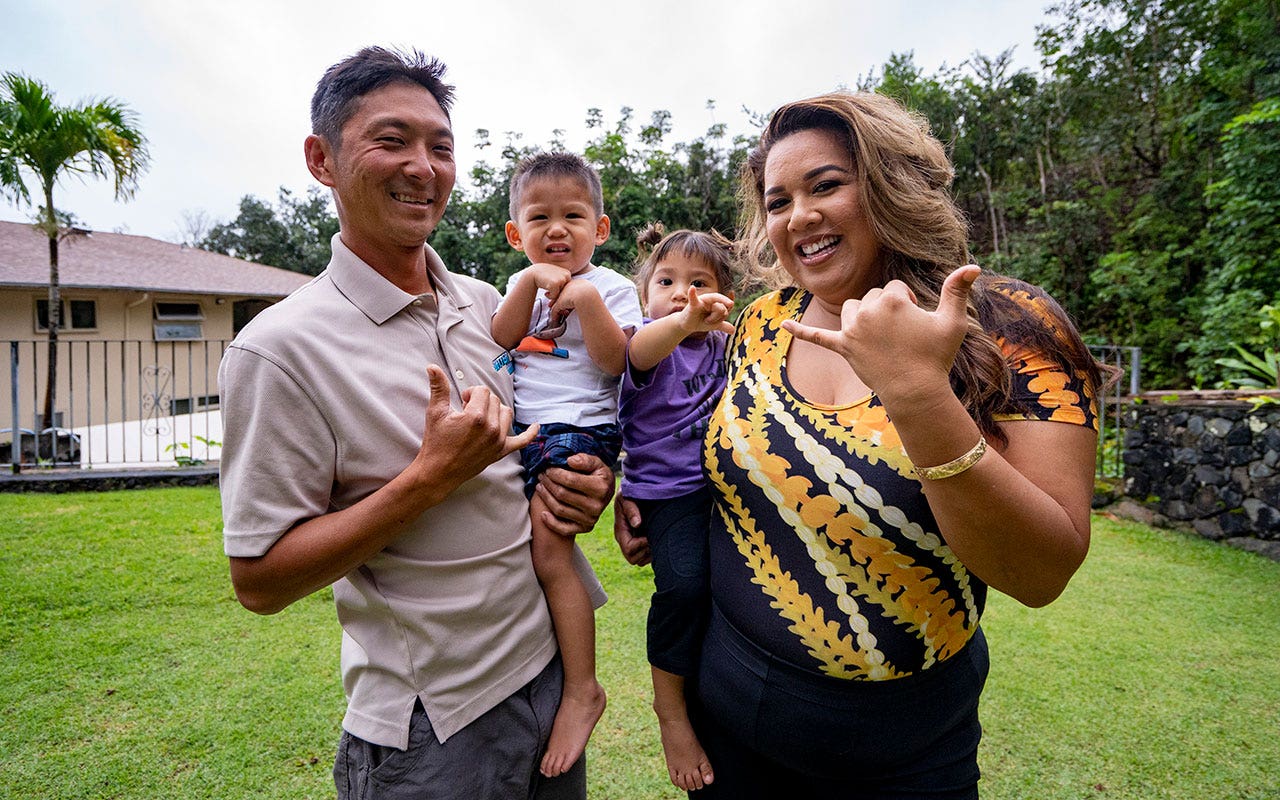
- The shaka gesture, characterized by extending the pinky and thumb with curled fingers, originates from Hawaii and symbolizes various warm sentiments like greetings, gratitude and aloha spirit.
- Proposed bills in the Hawaii State Legislature aim to designate the shaka as the state’s official gesture, acknowledging Hawaii as its birthplace.
- Sen. Glenn Wakai said he anticipates minimal opposition to the measure, expecting it to pass smoothly through legislative channels.
A pinky and thumb extended with the remaining fingers curled down: That’s the “shaka” in Hawaii.
The gesture is sometimes known outside the islands as the “hang loose” sign associated with surf culture, but it was a fixture of daily life in the islands long before it caught on in California, Brazil and beyond. People in Hawaii have a variety of shaka styles and use it to convey a range of warmhearted sentiments, from hi and bye to thanks and aloha, among other meanings.
When captains of the Lahainaluna High School football team, from the Maui community devastated by last summer’s deadly wildfire, were invited to the Super Bowl in Las Vegas last month, they flashed shakas for the cameras.
SMALL FAMILY FARMS MAKE AMERICAN-GROWN ROASTED COFFEE THE WORLD’S BEST BREW
Now, a pair of bills in the state Legislature would make the shaka the state’s official gesture and recognize Hawaii as its birthplace.
Cody Matsuda, KihaaPi’ilani Makainai-Matsuda, Keli’inowelo Makainai-Matsuda and Mailani Makainai flash a shaka on March 6, 2024, in Kaneohe, Hawaii. A pair of bills in the Legislature would make the shaka Hawaii’s official gesture. (AP Photo/Mengshin Lin)
Sen. Glenn Wakai, who introduced the Senate version, said he can’t imagine the measure meeting any opposition and expects it to “sail through.”
Here are some things to know about Hawaii’s shaka — including its purported origin with a seven-fingered fisherman.
WHAT IS THE SHAKA?
On paper, the House bill notes that the “shaka generally consists of extending the thumb and smallest finger while holding the three middle fingers curled, and gesturing in salutation while presenting the front or back of the hand; the wrist may be rotated back and forth for emphasis.”
In practice, the shaka is far more nuanced.
Some say the only requirement is an extended pinky and thumb. Others say shaking the shaka is a no-no.
Those from beach or rural communities tend not to shake their shakas. But in the capital city of Honolulu, it’s common.
“It’s just a strong movement — one movement,” said Chase Lee, who grew up just outside Honolulu. He was taught never to shake the shaka. If you do, “you’re a tourist,” he said.
But Erin Issa, one of his colleagues at Central Pacific Bank, likes to wag hers.
“I’m a very animated person,” she said. “I feel awkward if I’m just standing still.”
She prefers to flash a shaka with the palm facing outwards, as a sign of respect: “It’s shaka-ing to you, not to me.”
“As long as you get your pinky finger and your thumb out, you can wave it or you can just do just a flat shaka,” Dennis Caballes, a Honolulu resident, said while fishing at a beach park.
WHAT DOES IT MEAN?
The shaka carries friendliness and warmth — aloha spirit. Some hold it low when greeting a child, and some like to flash double shakas. It can convey greetings, gratitude or assent, or it can defuse tension. It was particularly useful in the early days of the COVID-19 pandemic, when people were afraid to shake hands.
“It’s such a versatile gesture,” said state Rep. Sean Quinlan, who introduced the House bill at the behest of a documentary filmmaker exploring the sign’s backstory.
Big Island state Rep. Jeanné Kapela, one of the House bill’s co-sponsors, said residents are “so lucky to have a visual signal for sharing aloha with each other.”
Shakas can avert altercations when people are cut off in traffic, said Wakai, the state senator who introduced the Senate version.
“The angst toward that driver kind of just immediately gets reduced,” Wakai said.
WHERE DOES THE SHAKA COME FROM?
The prevailing story of the shaka’s origin traces back to a Native Hawaiian fisherman named Hāmana Kalili, who lived on Oahu’s North Shore in the early 1900s. Mailani Makaʻīnaʻi, Kalili’s great-great-granddaughter, wants the bills amended to include his name — something lawmakers are considering.
Kalili lost three fingers in a sugar mill accident, she said.
After the mishap, Kalili worked as a guard on a train. Kids who jumped the train for a free ride would curl their middle fingers to mimic Kalili’s injured hand, giving other train-jumpers the all-clear, said Steve Sue, who researched shaka for his documentary.
Other residents adopted Kalili’s three-finger-less wave more broadly, according to family lore, and it spread, possibly fueled by the waves of tourists that began arriving after World War II.
“I love the compassion part of it, you know, where, ‘Oh, okay, he doesn’t have all three fingers. So, I’m going to say hi the way he’s saying hi,’” Makaʻīnai said. “It’s the idea that … I’m like you and you’re like me.”
There’s a bronze statue of Kalili, his right arm extended into a shaka, at the Polynesian Cultural Center in Laie.
There are various theories about how the term “shaka” became associated with the gesture. Some have suggested that the name came from Japan’s Shaka Buddha.
HOW IS THE SHAKA USED NOW?
The sign has spread around the world since the surfing boom of the 1950s and ’60s. It’s popular in Brazil, where it’s been used by martial arts aficionados. Brazil soccer greats Ronaldinho and Neymar Jr. incorporated it into their goal celebrations.
The shaka is such an integral part of Hawaii life that it’s easy to miss, said Sen. Chris Lee, chair of the Committee on Transportation and Culture and the Arts.
Some Honolulu city buses are outfitted with a digital shaka light that bus drivers can turn on to thank motorists for letting them merge. Texters have co-opted the “call me” emoji to symbolize the shaka, and local station KHON-TV has ended each evening newscast since the 1970s with clips of people flashing shakas.
HAWAII FACES HOUSING CRISIS AS REGULATORY COSTS DRIVE UP CONDO PRICES, REPORT SAYS
Longtime KHON anchor Howard Dashefsky said throwing a shaka is almost a reflex when people in the community recognize him and call his name.
“There’s a lot of other places where you only get a one-finger gesture,” he said.
Shakas also come out naturally when people from Hawaii are somewhere else in the world and want to display connection to their island roots.
Businesses often use the shaka to project community belonging.
Central Pacific Bank, for example, called their digital checking account Shaka Checking at the suggestion of electronic banking manager Florence Nakamura.
“It makes people feel good when they receive one,” she said.
Read the full article from Here


CARSON CITY, Nev. (KOLO) -Nevada Secretary of State Cisco Aguilar is calling a federal court ruling against the Trump administration a “big victory” after a judge struck down a presidential executive order tied to voter “election requirements.”
The ruling blocks an executive order that would have mandated states require voters to provide proof of citizenship to register.
Aguilar said the decision is a recognition that states have the responsibility to run their elections.
“The constitution is very clear in that states have that duty and obligation,” Aguilar said.
Nevada and 18 other states described the ruling as an overwhelming victory in court.
The court also stopped threats to withhold funding from states that refused to comply with proof-of-citizenship requirements and it throws out a demand for states not to count ballots received after Election Day. However the Supreme Court is expected to make a ruling on the latter of the two in the coming days.
Aguilar said the executive orders were intended for partisan gain.
“I think the fact the president is trying to federalize elections shows he’s trying to influence the election, and again that’s wrong,” Aguilar said. “Voters should decide elections, the president should not choose his voters for our elections.”
Aguilar also said the cost to taxpayers if the executive orders had remained in place would have been an unfair burden.
“To hold states hostage from resources I think is detrimental to the overall responsibility of the federal government,” he said.
Copyright 2026 KOLO. All rights reserved.

SANTA FE, N.M. – Gov. Michelle Lujan Grisham asked Attorney General Raúl Torrez to investigate whether any Drug Enforcement Administration agents broke state law when pills reached New Mexico streets.
In a statement, Lujan Grisham said, “make no mistake: the DEA knew people would die if these pills made it into New Mexico communities.”
The governor also shared a timeline from 2022 to 2025 that she said shows when she asked federal officials for help with New Mexico’s fentanyl crisis and violent crime.
Lujan Grisham said the first request came on June 21, 2022, when she wrote to then-Federal Bureau of Investigation Director Christopher Wray and asked for 50 additional federal agents.
She said she wrote to then-Attorney General Merrick Garland on Sept. 15, 2022, asking for more agents, resources and support for New Mexico law enforcement.
Lujan Grisham said she wrote Garland a second time on Aug. 8, 2023, with the same request.
What came next?
About a month later, Lujan Grisham said she sent Garland a third letter and said New Mexico needed more federal law enforcement to curb violent crime, drug trafficking and human trafficking.
She said her most recent request came on Sept. 4, 2025, when she wrote to former Attorney General Pam Bondi and again asked for additional agents and resources.
The governor’s statement says those requests span several years as she pressed the federal government for more help in New Mexico.
Full statement from Gov. Michelle Lujan Grisham:
“I am appalled by reporting this week by the Associated Press and Albuquerque Journal that revealed federal authorities made a deliberate decision to let hundreds of thousands of fentanyl pills flood into New Mexico communities, despite knowing that fentanyl is so lethal the White House has designated it a weapon of mass destruction.
Let me say that again: the Drug Enforcement Administration watched as 74,000 fentanyl pills were delivered to a mobile home park in Albuquerque, and they did nothing. And that’s just one transaction. Shockingly, the federal government stood by while monitoring shipments, tallying exact pill counts, and watching as these deadly drugs hit the streets.
There are no words to describe how reckless and dangerous these decisions were. Make no mistake: the DEA knew people would die if these pills made it into New Mexico communities, and the agency let it happen anyway. The result: hundreds of New Mexican parents burying their kids. Hundreds of New Mexican kids growing up without stable parents. All while the federal government stood by.
If the justification for letting these pills flood our communities was that it would somehow make New Mexico safer down the road through bigger eventual busts, the results say otherwise. New Mexico now leads the nation in the increase in overdose deaths for the second straight year, despite deaths dropping nationwide.
Today, I wrote to Attorney General Raúl Torrez and asked him to investigate whether any federal agents broke state law when they allowed lethal drugs to remain on our streets, and to prosecute anyone responsible — regardless of whether they are a federal agent or not.
I have spent years working across two administrations — writing letters, traveling to Washington, meeting directly with President Joe Biden and his cabinet, pushing for accountability, asking for more federal agents to be deployed to New Mexico to help fight this crisis.
- On June 21, 2022, I wrote to FBI Director Christopher Wray, imploring the FBI to assign no less than 50 additional agents to New Mexico to stem escalating drug trafficking and violent crime.
- On September 15, 2022, I wrote to Attorney General Merrick Garland, requesting that the Department of Justice provide additional federal agents, resources and support to New Mexico law enforcement. We asked the department to match the level of investigative, analytical, and technical resources the FBI had deployed in its Buffalo, NY surge.
- On August 8, 2023, I wrote again to Attorney General Garland, renewing my request that the DOJ expeditiously assign more federal agents to New Mexico.
- On September 7, 2023, I wrote to Attorney General Garland for a third time, reiterating my request once more federal law enforcement support to curb violent crime, drug and human trafficking.
- On September 4, 2025, I wrote to Attorney General Pam Bondi, once again requesting additional agents and resources.
I have declared the surge of drugs like fentanyl to be a public health emergency. I have deployed the National Guard to both Albuquerque and Española. While my administration was doing everything we could to stem the tide of fentanyl coming into our state, the federal government deliberately allowed it to flood in.
New Mexican lives are not the federal government’s cost of doing business.
I plan to hold the federal government accountable for this disaster and will explore every possible avenue of action against the federal government to right these wrongs.”

In the early months of the COVID-19 pandemic, a group of prison inmates sued the state of Oregon, arguing it was failing to protect them from the surging public health threat.
On Wednesday, more than six years later, representatives of those inmates—and the estates of inmates who died of the disease—announced they have settled with the state for a massive $49 million.
In a separate news release, Gov. Tina Kotek’s office framed the deal as a way to efficiently resolve a complex and weighty legal dispute: State officials, her office said, determined that the settlement “was in the best financial interest of the state and would minimize the continued distress of those impacted to settle rather than continue with the litigation.”
The case, Maney v. Oregon, includes two class action suits filed during the pandemic. According to the Oregon Justice Resource Center, which represented plaintiffs in the case, the suit covers about 5,000 people who were in Oregon Department of Corrections custody between Feb. 1, 2020, and May 31, 2022.
One class, which includes those who tested positive for or were diagnosed with COVID-19, would get $15.9 million under the deal. The other, the estates of 38 incarcerated people who died from COVID-19, would receive $33 million.
The settlement awaits approval by a magistrate judge, and most of the payout requires an appropriation by the Oregon Legislature during the coming 2027 session.
The suit emerged out of the dark early days of a still-mysterious pandemic—which posed clear risks in closed spaces like prisons. The OJRC says inmates in Oregon endured prolonged lockdowns, disruptions to prison operations, and suspension of visitation and programming.
They also died of COVID at far greater rates than Oregonians in general. The UCLA Law COVID Behind Bars Data Project tallied 52 deaths in Oregon prisons tied to COVID. By June 2021, according to the Marshall Project, the state’s prisons had one of the highest rates of COVID-related deaths in the country.
“We initiated this suit to protect the lives of some of our society’s most vulnerable people, packed into aging facilities with no ability to social distance from each other or [prison] officers,” said Juan Chavez, director of the OJRC’s Civil Rights Project, in a written statement. “The horrors that then came to pass during the pandemic shocked and saddened us. But we also saw, and were inspired by, the resilience and solidarity held amongst incarcerated people.”
Kotek’s office noted the mitigation measures the Department of Corrections implemented amid the pandemic, and said the agency incorporated lessons from the era into its operations.
“This historical event placed significant demands on our corrections workforce, and I appreciate the dedication DOC employees demonstrated throughout the COVID-19 pandemic,” Kotek said in her statement, adding that it was important to remember the impact on incarcerated people and their families too, especially those who lost loved ones. This settlement, she said, “is an opportunity for people to heal and find closure after such a challenging chapter in Oregon’s history.”
Willamette Week’s reporting has real-life impact that changes laws, forces action by civic leaders, and drives compromised politicians from public office.
Support WW.
-

 Nebraska4 minutes ago
Scattered severe storms bring large hail, heavy rain to parts of Nebraska
-

 Nevada11 minutes ago
Nevada Secretary of State calls court ruling on Trump election order a ‘big victory’
-

 New Hampshire14 minutes ago
New Hampshire has highest share of adults who identify as atheists
-

 New Jersey19 minutes ago
2 tractor-trailers crash on NJ Turnpike, burst into flames snarling traffic
-

 North Carolina24 minutes ago
Great Horned Owl kills barn owl owlet on North Carolina Wildlife Live Cam
-

 New Mexico26 minutes ago
Governor asks AG to investigate DEA agents over fentanyl in New Mexico
-

 North Dakota34 minutes ago
Fargo woman convicted in North Dakota fraud case now faces charges in Minnesota: A deeper dive
-

 Ohio41 minutes ago
Property transfers in Marion County, sales range from $40K to $415K

