Hawaii
Settlement Aims To Ensure Gender Equality For Student Athletes In Hawaii


Plaintiffs in a landmark lawsuit over the unequal treatment of female athletes at Hawaii’s largest public school welcomed the finalization of a settlement Friday and expressed hope it would lead to fairer accommodations statewide.
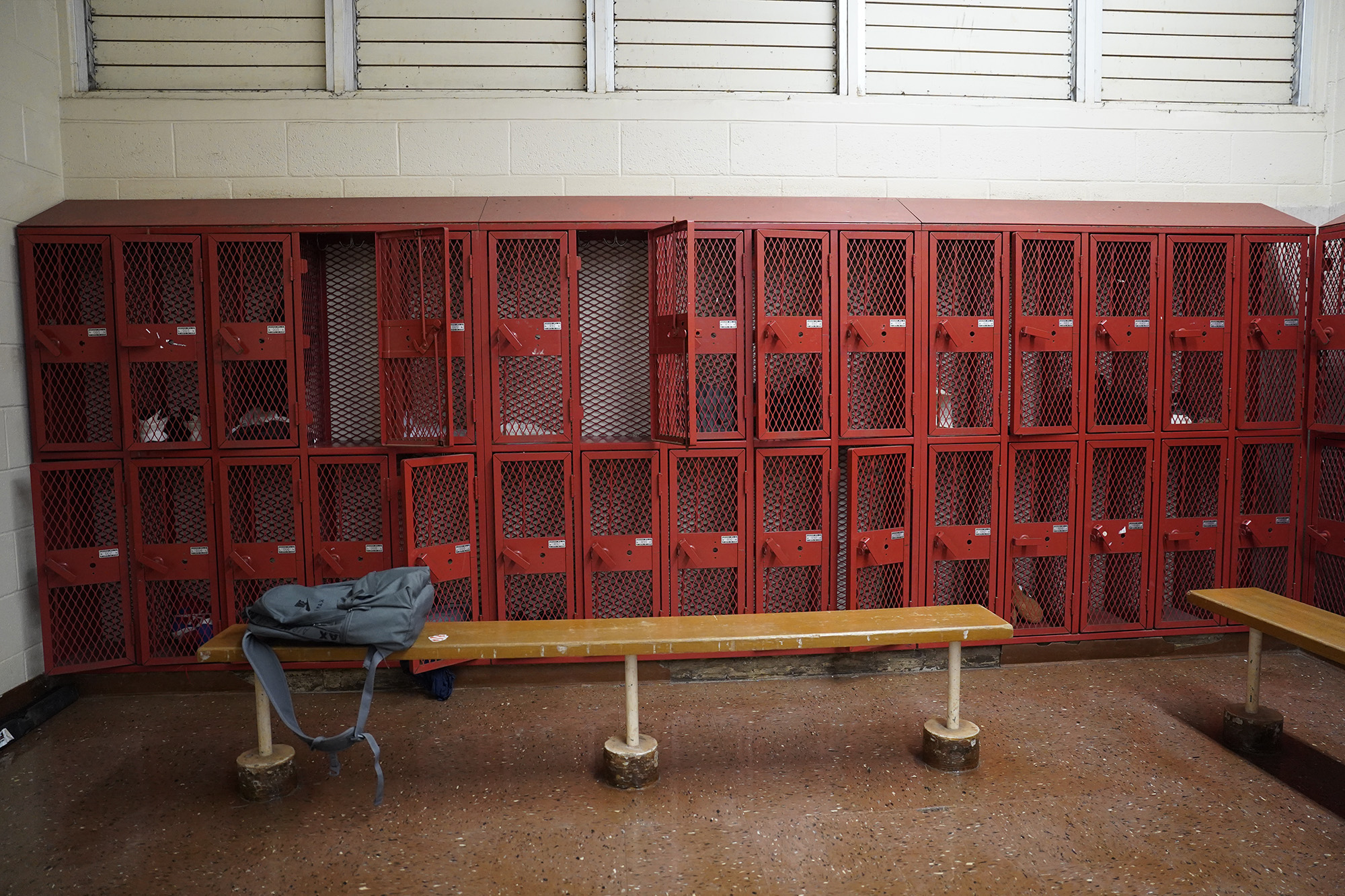
In 2018, the American Civil Liberties Union of Hawaii filed a class-action lawsuit on behalf of female athletes at Campbell High School against the Hawaii Department of Education and the Oahu Interscholastic Association. Female athletes at the school complained of a lack of locker rooms and travel opportunities for their sports teams.
DOE and OIA entered into a preliminary settlement with the plaintiffs in October. The U.S. District Court upheld that agreement on Friday after no objections were raised during a final hearing on Friday.

The settlement did not seek monetary damages but focused on the need to ensure equal treatment for female student athletes. That includes hiring an independent evaluator to assess Campbell High’s athletic facilities as part of a seven-year compliance plan.
The independent evaluator already has started speaking with female athletes at the high school and completed his first on-site visit of the school in December. The next one will be in the spring. DOE and OIA will be required to upload the reports on their website, according to lawyers in the case.
Ashley Badis, one of the plaintiffs who is now a student at the University of Hawaii Manoa, said she’s most excited about the settlement’s requirement that Campbell High teachers, coaches and students receive training on gender equity in sports.
“I personally didn’t even know what Title IX was until this whole process started,” said Badis, a former member of Campbell’s water polo and swim team. “I just knew something was wrong.”
Title IX is a federal law mandating that male and female athletes receive equal opportunities in school sports, including access to training and medical resources, coaches and locker rooms.
Campbell’s stand-alone locker room for female athletes is still in the construction process. Approximately 15 Hawaii schools only have one locker room that is shared between boys’ and girls’ teams depending on the athletic season, according to DOE.
“It’s very easy to say something is the case on paper,” ACLU of Hawaii legal director Jongwook “Wookie” Kim said. “But then when you actually go onto campus and talk to students or talk to coaches, the situation might be completely different.”
Several provisions in the settlement specifically apply to Campbell, but Kim said he’s hopeful the lawsuit will also address larger Title IX concerns in Hawaii.

Notably, all OIA schools must complete an annual Title IX assessment in order to maintain their membership in the association. More than 20 public schools participate in the OIA.
An independent evaluator will then review schools’ assessments and develop recommendations for the OIA.
Lyle Hosoda, who represented OIA in the case, said the association is dedicated to following the lawsuit’s requirements and working with school athletic directors and principals on Title IX compliance moving forward.
“This is a continuing effort,” Hosoda said during Friday’s hearing.
Elizabeth Kristen, the plaintiffs’ counsel in the case, said she’s hopeful about the settlement’s impact on Hawaii schools, adding that Campbell has made some progress toward improving its athletic program.
The school surveyed students at Campbell and its two feeder schools, Ewa Makai and Ilima Intermediate, to determine girls’ interest in different sports. The results of the survey can help Campbell better plan its athletic programs for girls moving forward, said Kristen, who also serves as director of Legal Aid at Work’s gender equity and LGBTQ+ rights program.
“But each school shouldn’t take six years of litigation,” Kristen said. “So it’s really time for the Department of Education to take proactive measures and fix this across the state.”
Civil Beat’s education reporting is supported by a grant from Chamberlin Family Philanthropy.

Sign up for our FREE morning newsletter and face each day more informed.



Gov. Josh Green on Tuesday asked President Donald Trump to declare a major disaster to help Hawaii recover from the back-to-back Kona low storm systems, with the hope that the federal government will provide up to 90% in funding.
The first storm hit on March 10, followed by a second Kona low on Thursday that the governor’s office said brought “catastrophic flooding, landslides, infrastructure damage and emergency evacuations across multiple islands.”
“These storms have impacted every county in our state and stretched our emergency response capabilities,” Green said in a statement Tuesday. “This request is about getting our communities the support they need to recover quickly and safely.”
If approved, Trump’s declaration would trigger the Federal Emergency Management Agency to provide support for residents in the form of housing assistance, disaster unemployment assistance, crisis counseling and legal services.
There would also be federal funding for debris removal, emergency protective measures and permanent repairs to roads, bridges, utilities and public facilities.
Green also hopes for federal assistance to strengthen infrastructure and reduce the risks of future disasters across the state.
The storms knocked down trees, and triggered mudslides and rockfalls that blocked highways, isolated communities and disrupted emergency access statewide.
The first storm caused more than $400 million in damage, followed by the second, which, combined, is expected to exceed more than $1 billion in damage.
Otake Camp in Waialua was hit especially hard, and the Hawaii National Guard continues to help with debris removal and clearance operations, along with National Guard recovery and emergency operations statewide, Green’s office said.
“The scale of damage we are seeing — from washed-out highways to overwhelmed water systems — makes clear that federal partnership is essential,” Green said in his statement. “We are doing everything we can at the state and county level, but this is exactly the type of event where FEMA support is critical.”
On the North Shore, water “buffaloes” have been deployed in Waialua, Haleiwa and at Sunset Elementary to provide drinkable water.
The state and city have also set up a mobile clinic at Haleiwa’s Ali‘i Beach Park, while Kaiser Permanente has also deployed a mobile clinic to Kula on Maui to help patients from Kula Hospital who had to evacuate because of storm damage.
Hawaii
Doctor’s wife testifies he beat her with rock, tried to force her toward cliff edge during hike

NEWYou can now listen to Fox News articles!
A Hawaii doctor’s wife testified Tuesday that he beat her with a rock and tried to push her over a cliff during a birthday hike, telling jurors she feared she would die.
”He’s trying to kill me,” Arielle Konig testified she screamed during the alleged attack, according to ABC News.
Konig testified against her husband, anesthesiologist Gerhardt Konig, who is accused of attempting to kill her during the March 24, 2025, incident on Oahu’s Pali Puka Trail.
He has pleaded not guilty to second-degree attempted murder.
SURGEON IN OHIO DENTIST DOUBLE MURDER ALLEGEDLY USED FAKE ADDRESSES TO DODGE LAWSUITS: ‘HE JUST DISAPPEARED’
A split image shows the Pali Puka hiking trail on Oahu, Hawaii, and Gerhardt Konig, who is accused of attacking his wife during a hike. (iStock; Honolulu Police Department)
Arielle Konig told jurors the couple had traveled from Maui to celebrate her birthday and work on their marriage after what she described as “flirty” messages with a colleague.
She said the hike turned violent when her husband suddenly grabbed her by the arms and began forcing her toward the cliff’s edge.
”I’m so f—ing sick of this s—,” Arielle Konig testified he said as he pushed her, per the outlet.
Arielle Konig testified she threw herself to the ground and held onto nearby vegetation as her husband tried to move her closer to the edge.
She said she then saw him holding a syringe and moving to use it.
”Hold still,” he allegedly told her, she testified, adding that she knocked it away.
She told jurors her husband then picked up a rock and began repeatedly striking her in the head.
”I just started screaming, because in my mind, he’s trying to knock me unconscious, to be able to drag me over the edge,” she told jurors.
Hawaii doctor Gerhardt Konig appears before a judge via video during an arraignment hearing in April 2025 in Honolulu. (AP Photo/Marco Garcia)
She said she continued yelling for help, telling the court she believed she was fighting for her life.
Two hikers eventually came upon the scene and called 911.
”There’s a man trying to kill her,” a caller said, according to audio previously played in court.
Arielle Konig testified that her husband stopped when the hikers appeared, allowing her to crawl to safety before he fled the area.
Gerhardt Konig then fled the scene on foot, sparking a manhunt before police arrested him later that evening, according to the Honolulu Police Department.
HUSBAND CHARGED IN PREGNANT PHYSICAL THERAPIST WIFE’S MURDER AFTER GIVING POLICE A DIFFERENT STORY
She testified her husband struck her as many as 10 times with the rock and said she did not lose consciousness.
She was later hospitalized with severe scalp lacerations and showed jurors scarring on her head.
Defense attorneys pushed back on that account during cross-examination, with defense attorney Thomas Otake questioning Arielle Konig about what both sides described as an “emotional affair,” suggesting the incident stemmed from a confrontation between the couple, according to ABC News.
Gerhardt Konig is charged with attempted second-degree murder after he allegedly tried to kill his wife while hiking in Hawaii. (Gerhardt Konig/Facebook)
Otake argued the encounter was an ”unplanned, unanticipated scuffle,” not an attempted murder, and suggested Arielle Konig hit him with the rock first during an argument over what both sides described as an “emotional affair,” according to ABC News.
Arielle Konig disputed that characterization during her testimony.
”I would call it an attack versus a scuffle,” she told jurors, according to ABC News.
Arielle Konig moved to end the marriage in May 2025, filing for divorce and seeking sole custody of the couple’s two young children.
Her husband has remained in custody since his arrest, and a judge last month rejected his bid to have the indictment thrown out.
CLICK HERE TO DOWNLOAD THE FOX NEWS APP
Konig has been suspended from his work as an independent contractor at Maui Memorial Medical Center, according to a Maui Health representative.
Fox News’ Julia Bonavita and The Associated Press contributed to this report.

Here are 8 Connecticut Easter egg hunts to bring the kids to this year

GGE of Delaware Jumps on the Rally Sponsor Train!

Audubon Florida leader has built reputation for working across party lines | The Invading Sea

Ahead of Atlanta visit, Cory Booker casts Georgia as key political battleground

Video in Hawaii doctor’s trial shows moments after wife alleges husband tried to kill her

Florida High School Football Rankings: Top 25 teams – Oct. 21

How old is Bo Nix? What to know about Oregon quarterback ahead of 2024 NFL Draft

Cleary's 21 help Le Moyne down Central Connecticut State 69-64 in OT

99th annual Pony Swim held in Virginia

Indiana Members Credit Union announced as new anchor tenant at Bottleworks District

Video: Jury Rules Against Meta and YouTube for Addictive Features

New Jersey Gov Sherrill signs law barring ICE agents from wearing face coverings to shield identities

Escalation in the Middle East – Not Europe’s war? MEPs in the Ring

War with Iran disrupts fertilizer exports as U.S. farmers prepare for planting season

White House unleashes on Raskin for clinging to ‘deranged’ Jack Smith ‘lies’ in latest Trump docs flare-up
-

 Detroit, MI1 week ago
Drummer Brian Pastoria, longtime Detroit music advocate, dies at 68
-
 Science1 week ago
Industrial chemicals have reached the middle of the oceans, new study shows
-

 Movie Reviews1 week ago
‘Youth’ Twitter review: Ken Karunaas impresses audiences; Suraj Venjaramoodu adds charm; music wins praise | – The Times of India
-

 Science1 week ago
How a Melting Glacier in Antarctica Could Affect Tens of Millions Around the Globe
-

 Culture1 week ago
Test Your Memory of Great Lines From Classic Irish Poems
-

 Sports5 days ago
IOC addresses execution of 19-year-old Iranian wrestler Saleh Mohammadi
-
 Science1 week ago
I had to man up and get a mammogram
-

 New Mexico4 days ago
Clovis shooting leaves one dead, four injured