A combination of fourth- and fifth-generation fighters will wrap up a large-scale simulated combat exercise around Hawaii in the coming days.
Sentry Aloha, which first began more than 20 years ago, is a fighter-focused exercise hosted by the Hawaii Air National Guard. The latest edition began May 29 and will last through June 12. F-22s from the 199th and 19th Fighter Squadrons at Joint Base Pearl Harbor-Hickam are flying alongside F-16 Fighting Falcons, F-35 Lightning IIs and A-10 Thunderbolt IIs, as well as KC-135 and KC-46 tankers and some C-130s.
The biannual fifth and fourth-gen combat training returned in January this year after a two-year break. Hawaii’s strategic Pacific location makes it an ideal military training ground as Sentry Aloha keeps growing and evolving with each iteration.
And F-22 Raptor, operated by the 199th and 19th Fighting Squadrons, approaches Joint Base Pearl Harbor-Hickam, June 3, 2024, Hawaii, during exercise Sentry Aloha 24-2. This iteration of the exercise involves approximately 1,060 participants and 42 aircraft from nine states. Sentry Aloha has been hosted by the Hawaii Air National Guard’s 154th Wing for more than 20 years to provide tailored, cost-effective and realistic combat training for total-force Airmen and other Department of Defense services. (U.S. Air National Guard photo by Tech. Sgt. John Linzmeier)
An F-35A Lightning II assigned to the 422nd Test and Evaluation Squadron approaches Joint Base Pearl Harbor-Hickam, June 3, 2024, Hawaii. The aircraft relocated to Hawaii to participate in exercise Sentry Aloha 24-2, a training event hosted by the Hawaii Air National Guard’s 154th Wing for more than 20 years. Sentry Aloha is held to provide tailored, cost-effective and realistic combat training for total-force Airmen and other Department of Defense services. (U.S. Air National Guard photo by Tech. Sgt. John Linzmeier)
Advertisement
An F-16 Fighting Falcons from the 177th Fighter Wing approaches Joint Base Pearl Harbor-Hickam June 3, 2024, Hawaii. The 177th Fighter Wing members relocated from Atlantic City Air National Guard Base, New Jersey, to participate in exercise Sentry Aloha 24-2. The Hawaii Air National Guard’s 154th Wing has hosted the exercise for more than 20 years to provide tailored, cost-effective and realistic combat training for total-force Airmen and other Department of Defense services. (U.S. Air National Guard photo by Tech. Sgt. John Linzmeier)
A U.S. Air Force A-10 Warthog assigned to the Air National Guard Air Force Reserve Test Center takes off at Marine Corps Air Station Kaneohe Bay, Hawaii, June 4, 2024. A-10 aircraft and personnel relocated from Davis-Monthan Air Force Base to Hawaii to participate in exercise Sentry Aloha 24-2, the Hawaii Air National Guard’s 154th Wing has hosted the exercise for more than 20 years to provide tailored, cost-effective and realistic combat training for total-force Airmen and other Department of Defense services. (U.S. Marine Corps photo by Cpl. Anabelle Reed-O’Brien)
An F-35A Lightning II, assigned to the 422nd Test and Evaluation Squadron, exits a formation above Joint Base Pearl Harbor-Hickam, June 3, 2024, Hawaii. The aircraft relocated to Hawaii to participate in exercise Sentry Aloha 24-2, a training event hosted by the Hawaii Air National Guard’s 154th Wing for more than 20 years. Sentry Aloha is held to provide tailored, cost-effective and realistic combat training for total-force Airmen and other Department of Defense services. (U.S. Air National Guard photo by Tech. Sgt. John Linzmeier)
An F-16 Fighting Falcons from the 177th Fighter Wing approaches Joint Base Pearl Harbor-Hickam June 3, 2024, Hawaii. The 177th Fighter Wing members relocated from Atlantic City Air National Guard Base, New Jersey, to participate in exercise Sentry Aloha 24-2. The Hawaii Air National Guard’s 154th Wing has hosted the exercise for more than 20 years to provide tailored, cost-effective and realistic combat training for total-force Airmen and other Department of Defense services. (U.S. Air National Guard photo by Tech. Sgt. John Linzmeier)
Senior Airman Marissa Cox, a crew chief assigned to the 119th Aircraft Maintenance Squadron, inspects an F-16 Fighting Falcon June 1, 2024, at Joint Base Pearl Harbor-Hickam, Hawaii. The 177th Fighter Wing members relocated from Atlantic City Air National Guard Base, New Jersey, to participate in exercise Sentry Aloha 24-2. The Hawaii Air National Guard’s 154th Wing has hosted the exercise for more than 20 years to provide tailored, cost-effective and realistic combat training for total-force Airmen and other Department of Defense services. (courtesy photo)
Advertisement
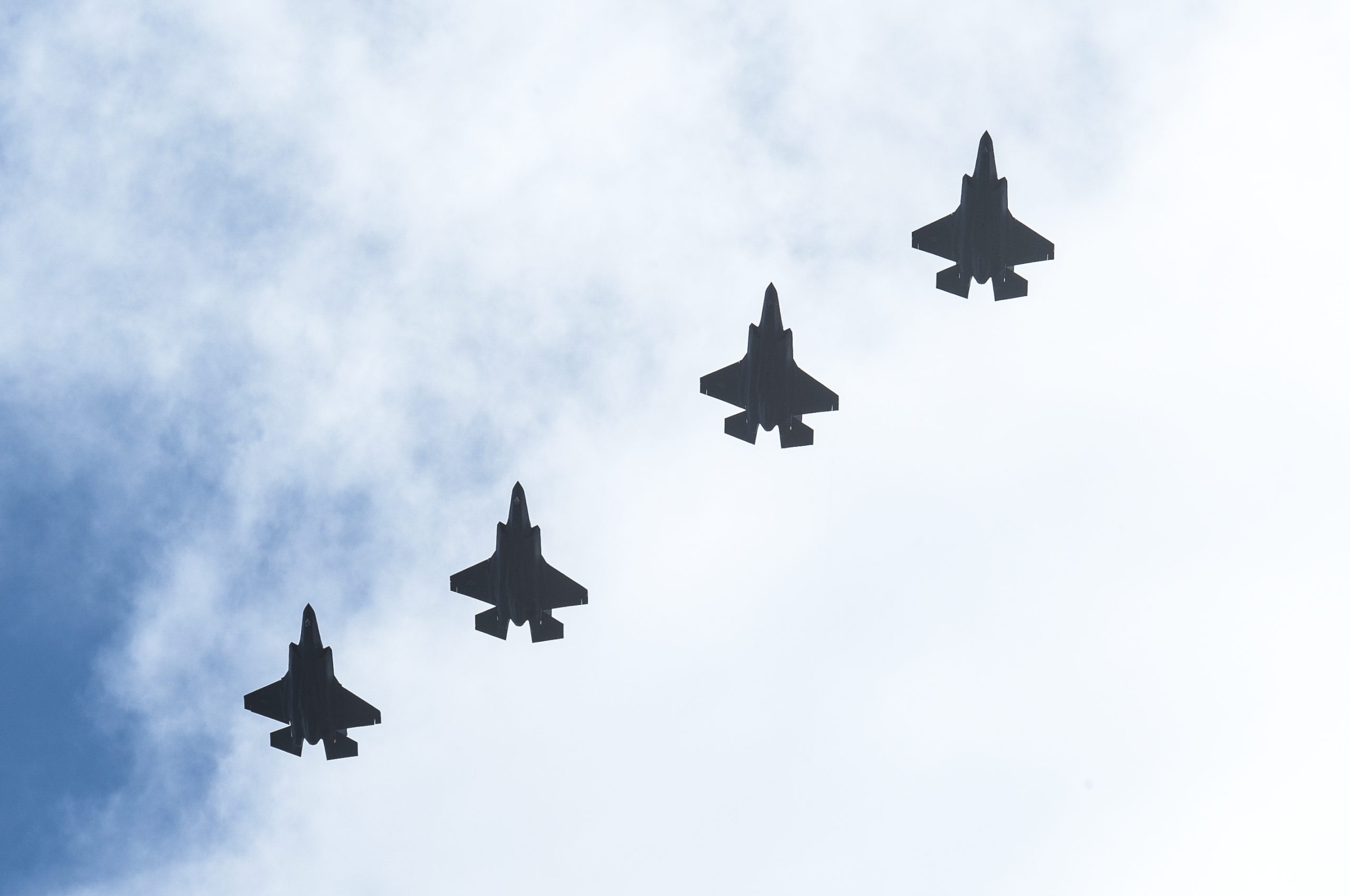
F-35A Lightning IIs, assigned to the 422nd Test and Evaluation Squadron, fly in formation above Joint Base Pearl Harbor-Hickam, June 3, 2024, Hawaii. The aircraft relocated to Hawaii to participate in exercise Sentry Aloha 24-2, a training event hosted by the Hawaii Air National Guard’s 154th Wing for more than 20 years. Sentry Aloha is held to provide tailored, cost-effective and realistic combat training for total-force Airmen and other Department of Defense services. (U.S. Air National Guard photo by Tech. Sgt. John Linzmeier)
This iteration had a total of 42 aircraft from nine states, with 1,060 personnel participating. A spokesperson for the Hawaii Air National Guard’d 154th Wing confirmed the participating aircraft with Air & Space Forces Magazine:
F-22 and KC-135 from Joint Base Pearl Harbor-Hickam, Hawaii.
F-16 from the 177th Fighter Wing, Atlantic City Air National Guard Base, N.J.
F-35 from the 422nd Test and Evaluation Squadron, Nellis Air Force Base, Nev.
F-16 from the 162nd Wing, Tucson Air National Guard Base, Ariz.
F-16, A-10, KC-135, and HC-130J from the Air National Guard Air Force Reserve Test Center, Ariz.
KC-46 from the 157th Air Refueling Wing, Pease Air National Guard Base, N.H.
HC-130 from the 129th Rescue Wing, Moffett Air National Guard Base, Calif.
MQ-9 from Marine Unmanned Aerial Vehicle Squadron 3, Marine Corps Base Hawaii, Hawaii.
C-130H aircraft from the Air National Guard Air Force Reserve Test Center and the 189th Airlift Wing, Little Rock Air Force Base, Ark.
KC-135 from the 186th Air Refueling Wing, Key Field Air National Guard Base, Miss.
The spokesperson declined to say the number of each aircraft type, citing operational security.
The fighters and other aircraft are manuevering through Daniel K. Inouye International Airport in Honolulu, with additional operations occurring around Marine Corps Base Hawaii in Kaneohe Bay and Kona International Airport in Kalaoa, where the aircraft are staged for the training.
“The state offers great airspace and weather to maximize training such as Agile Combat Employment and distributed operations,” Maj. Michael Oliver, the exercise director and a pilot of the 154th Wing, said in a release.
Senior Airman Jean Zambrano, an F-16 Fighting Falcon crew chief assigned to the 119th Aircraft Maintenance Squadron, reviews technical orders June 1, 2024, at Joint Base Pearl Harbor-Hickam, Hawaii. The 177th Fighter Wing members relocated from Atlantic City Air National Guard Base, New Jersey, to participate in exercise Sentry Aloha 24-2. The Hawaii Air National Guard’s 154th Wing has hosted the exercise for more than 20 years to provide tailored, cost-effective and realistic combat training for total-force Airmen and other Department of Defense services. (courtesy photo)
Advertisement
Senior Airman Marissa Cox, a crew chief assigned to the 119th Aircraft Maintenance Squadron, prepares an F-16 Fighting Falcon for a training sortie June 1, 2024, at Joint Base Pearl Harbor-Hickam, Hawaii. The 177th Fighter Wing members relocated from Atlantic City Air National Guard Base, New Jersey, to participate in exercise Sentry Aloha 24-2. The Hawaii Air National Guard’s 154th Wing has hosted the exercise for more than 20 years to provide tailored, cost-effective and realistic combat training for total-force Airmen and other Department of Defense services. (courtesy photo)
Maintenance professionals from the 157th Air Refueling Wing service a KC-46 Pegasus June 4, 2024, at Joint Base Pearl Harbor-Hickam, Hawaii. Tanker aircraft and personnel from Pease Air National Guard Base, New Hampshire, relocated to Oahu to participate in exercise Sentry Aloha 24-2. The Hawaii Air National Guard’s 154th Wing has hosted the exercise for more than 20 years to provide tailored, cost-effective and realistic combat training for total-force Airmen and other Department of Defense services. (U.S. Air National Guard photo by Staff Sgt. Robert Cabuco)
Maintenance professionals from the 157th Air Refueling Wing service a KC-46 Pegasus June 4, 2024, at Joint Base Pearl Harbor-Hickam, Hawaii. Tanker aircraft and personnel from Pease Air National Guard Base, New Hampshire, relocated to Oahu to participate in exercise Sentry Aloha 24-2. The Hawaii Air National Guard’s 154th Wing has hosted the exercise for more than 20 years to provide tailored, cost-effective and realistic combat training for total-force Airmen and other Department of Defense services. (U.S. Air National Guard photo by Staff Sgt. Robert Cabuco)
A U.S. Air Force A-10 Warthog assigned to the Air National Guard Air Force Reserve Test Center is inspected before takeoff at Marine Corps Air Station Kaneohe Bay, Hawaii, June 4, 2024. A-10 aircraft and personnel relocated from Davis-Monthan Air Force Base to Hawaii to participate in exercise Sentry Aloha 24-2, the Hawaii Air National Guard’s 154th Wing has hosted the exercise for more than 20 years to provide tailored, cost-effective and realistic combat training for total-force Airmen and other Department of Defense services. (U.S. Marine Corps photo by Cpl. Anabelle Reed-O’Brien)
A U.S. Air Force A-10 Warthog operational test pilot from the Air National Guard Air Force Reserve Test Center prepares for takeoff at Marine Corps Air Station Kaneohe Bay, Hawaii, June 4, 2024. A-10 aircraft and personnel relocated from Davis-Monthan Air Force Base to Hawaii to participate in exercise Sentry Aloha 24-2, the Hawaii Air National Guard’s 154th Wing has hosted the exercise for more than 20 years to provide tailored, cost-effective and realistic combat training for total-force Airmen and other Department of Defense services. (U.S. Marine Corps photo by Cpl. Anabelle Reed-O’Brien)
A U.S. Air Force A-10 Warthog operational test pilot from the Air National Guard Air Force Reserve Test Center gears up for takeoff at Marine Corps Air Station Kaneohe Bay, Hawaii, June 4, 2024. A-10 aircraft and personnel relocated from Davis-Monthan Air Force Base to Hawaii to participate in exercise Sentry Aloha 24-2, the Hawaii Air National Guard’s 154th Wing has hosted the exercise for more than 20 years to provide tailored, cost-effective and realistic combat training for total-force Airmen and other Department of Defense services. (U.S. Marine Corps photo by Cpl. Anabelle Reed-O’Brien)
Advertisement
The 154th Wing is the largest wing in the Air National Guard, hosting Raptors, Stratotankers, and C-17 Globemasters, backed by some 2,500 personnel. In April, the 199th and 19th Fighter Squadrons of the Wing deployed their F-22s to Kadena Air Base in Japan as part of the rotation to maintain a constant fighter presence at the key location.
At UH Hilo, ʻōlelo Hawaiʻi is not simply a subject taught in classrooms, it is a living language that connects us to this place, to one another, and to the generations who came before us.
This column is by Pelehonuamea Harman, director of Native Hawaiian engagement at the University of Hawaiʻi at Hilo. In her columns, Pele shares Native Hawaiian protocols on the use of ōlelo Hawaiʻi (Hawaiian language), cultural traditions, traditional ways of Indigenous learning, and more. This column is on Mahina ʻOlelo Hawaiʻi (Hawaiian Language Month), celebrated every February to honor the Hawaiian language.Pelehonuamea Harman
Each year, the month of Pepeluali marks Mahina ʻŌlelo Hawaiʻi, a time dedicated to celebrating and uplifting the Hawaiian language. At the University of Hawaiʻi at Hilo, ʻōlelo Hawaiʻi is not simply a subject taught in classrooms, it is a living language that connects us to this place, to one another, and to the generations who came before us.
While Pepeluali gives us a focused moment of celebration, the Hawaiian language should not live only within a single month. ʻŌlelo Hawaiʻi thrives when it is used every day.
Advertisement
One of the simplest and most meaningful ways to begin is by pronouncing the words we already encounter daily with accuracy and care. Hawaiian is an oral language carried through voice and relationship. When we take the time to say words correctly, we demonstrate respect for the language and for the poʻe (people) who have worked tirelessly to ensure its survival.
Across our own campus, we have opportunities to do this every day.
Let us honor the names of our places by using them fully:
An attendee at celebrations on May 6, 2023, takes a photo of the new Edith Kanakaʻole mural by artist Kamea Hadar. The mural is located at Edith Kanakaʻole Hall, named after beloved educator Aunty Edith, on the campus of UH Hilo. (Photo: UH System News)
Kanakaʻole Hall, not “K-Hall.” (Formally Edith Kanakaʻole Hall, named after our beloved kumu.)
Waiʻōlino, not “CoBE,” for our College of Business and Economics. (Formally Hānau ʻO Waiʻōlino; waiʻōlino literally means sparkling waters, alluding here to bringing forth waters of wellbeing and prosperity.)
These names are not merely labels for buildings. They carry ʻike (knowledge), history, and meaning. Speaking them in their entirety acknowledges the stories and values embedded within them.
Advertisement
Using ʻōlelo Hawaiʻi does not require fluency. It simply requires willingness. Each of us already knows words we can begin using more intentionally.
Greet one another with aloha.
Express gratitude with mahalo whenever possible.
Small choices like these help normalize Hawaiian language in our daily interactions and strengthen UH Hilo’s identity as a place grounded in Hawaiʻi.
One of the most common questions I am asked is: How do you respond in ʻōlelo Hawaiʻi when someone says “mahalo” to you?
Advertisement
Here are three simple and appropriate responses:
ʻAʻole pilikia — It’s no problem.
He mea iki — It is just a little thing.
Noʻu ka hauʻoli — The pleasure is mine.
There is no single correct answer. What matters most is participating in the exchange and allowing the language to live through conversation.
Advertisement
Aerial view of the UH Hilo campus with Hilo Bay in the distance. UH Hilo’s commitment to Native Hawaiian success and place-based education calls on all of us to help create an environment where ʻōlelo Hawaiʻi is visible, audible, and welcomed. (Archive photo)
UH Hilo holds a unique and important role as Hawaiʻi Island’s university. Our commitment to Native Hawaiian success and place-based education calls on all of us to help create an environment where ʻōlelo Hawaiʻi is visible, audible, and welcomed.
You do not need to wait until you feel ready. You do not need to know many words. The language grows stronger each time it is spoken.
So during Mahina ʻŌlelo Hawaiʻi and throughout the entire year I encourage the UH Hilo ʻohana to:
Use the Hawaiian words you already know.
Pronounce names and places with intention and care.
Greet others with aloha.
Share mahalo often.
Because when we use ʻōlelo Hawaiʻi, we are doing more than speaking words, we are helping to perpetuate and uplift the native language of our home.
E ola ka ʻōlelo Hawaiʻi. Let the Hawaiian language live.
Hawaii Rainbow Warriors Tread Rosenthal, Trevell Jordan and Louis Sakanoko put up a triple block against BYU Cougars Trevor Herget during Wednesday’s NCAA men’s volleyball match at the Bankoh Arena at Stan Sheriff Center.
Advertisement
Advertisement
Kainoa Wade came on strong to lead another balanced Hawaii attack with 16 kills and the third-ranked Rainbow Warriors responded to a rare set loss in a big way to defeat No. 6 Brigham Young 27-25, 23-25, 25-17, 25-18 tonight.
A Bankoh Arena at Stan Sheriff Center crowd of 4,800, who showed up for a match scheduled just three weeks ago as a late addition to the schedule, saw Hawaii (13-1) drop the second set despite hitting .538.
UH had full command of the rest of the match and finished the night hitting .460 as a team. Louis Sakanoko added 15 kills, six digs and three aces and Adrien Roure had 14 kills in 24 swings.
Middle Travell Jordan posted a season-high seven kills in 11 swings with four blocks and Ofeck Hazan, who came into the match to start the third set, had four kills and two blocks.
Trent Moser had 18 kills to lead the Cougars (13-3), whose previous two losses came in five sets against No. 4 UC Irvine.
Advertisement
UH’s loss in the second set was just its sixth of the season and third in its 13 wins. Hawaii has won 10 matches in a row.
Don’t miss out on what’s happening!
Stay in touch with breaking news, as it happens, conveniently in your email inbox. It’s FREE!
The two teams will play again on Friday night at 7.