Hawaii
New-look Hawaii men's volleyball shows promise in 5-set loss at Long Beach State


The Hawaii men’s volleyball team lost a second match to rival Long Beach State in as many nights. What the Rainbow Warriors gained might’ve been more important: belief.
Unlike Friday night’s sweep at the Walter Pyramid, No. 1 UH put up a stern fight without its injured floor leader Spyros Chakas and battled No. 2 LBSU to the end of a 25-20, 20-25, 25-23, 24-26, 15-13 defeat to the Beach in front of another announced crowd of 4,000-plus on Saturday.
Coach Charlie Wade unleashed hitters Keoni Thiim and Louis Sakanoko, both of whom registered a career high in kills on a chaotic night that saw UH absorb 65 total errors and keep right on coming.
“We got better, there ain’t no doubt,” Wade said. “It’s really amazing that we’re that competitive making that number of errors. I mean, you guys all know how much we talk about (our average errors per set), and we were nearly doubling it in some of those sets, and still right there, still had a chance, even in the fifth to win the match.
“We’re a better team today than when we got on the plane on Wednesday, that’s for sure.”
Wade limited the freshman Sakanoko to a serving specialist role on Friday. The next night, he came on in the second set in Chaz Galloway’s spot. By Set 4, he got rolling and put down 10 of his 19 kills in the frame, and added nine digs, three blocks and an ace for the night.
Thiim had 20 kills, seven digs and two aces in playing until early in the fifth, when he was spelled by Galloway.
The two free swingers had 19 attack errors and 14 service errors between them, but on this night, Wade could look past it.
“It’s just a great investment in the future, for this year and going forward, because they both have more eligibility,” Wade said. “But it was impressive and Louis really kind of settled into his own in that fourth set … . It’s impressive. So yeah, a number of positives came out of the match and certainly those two being out there in prime time was one of them.”
Setter Tread Rosenthal had match highs of 57 assists and 15 digs and opposite Alaka‘i Todd put down 16 kills.
UH (17-3, 0-2 Big West) turned back a match point in the fourth set, scoring the last three points with a kill by Thiim, a block by Rosenthal and Guilherme Voss and a LBSU error.
But UH fell behind quickly in the fifth. It knotted it for the last time at 10, and staved off two more Beach match points, before succumbing on a back-row attack by Sotiris Siapanis. Siapanis, the standout from Cyprus, had 17 kills and 11 digs.
LBSU (18-1, 4-0) beat UH for the 11th straight time at the Pyramid dating back to 2015. But Beach coach Alan Knipe treated the match as far from a certainty, even coming off of Friday’s sweep, and saluted Hawaii for the latest classic match in a series full of them.
“Anyone who’s followed Big West volleyball for the last 10-plus years, this is what happens when these two teams play,” he said in LBSU’s postgame press conference. “The players have changed over the years but the … longstanding pride in the programs, not just recent history, the way they play the game, the passion they bring to the game, the way their fans support them, this has become the norm.
“It’s played at the highest level,” Knipe added. “That (Hawaii) team’s trained really, really well, and I’d like to believe we (have) too. But when you combine that with how hard the teams played, that’s must-see sports right there.”
LBSU won the day thanks largely to its 20.5 team blocks to UH’s eight. Middle Simon Torwie had 10, including three solo, and Moanalua High graduate DiAeris McRaven added eight.
Torwie, a 6-foot-10 native of Spain, said he welcomed the five-set marathon over any three-setter.
“We know those guys fight hard,” Torwie said of Hawaii. “There’s a lot of respect that goes toward the players in that program. I mean, Hawaii showed up with a lot of fans too. You could almost think the Pyramid was split between the teams. That’s an amazing environment to play in. If you look a little bit down the road on the calendar, we’re hoping the beginning of May (for the NCAA championships at the Pyramid) will be the same thing.”
McRaven, the Honolulu native who made his way to LBSU after a stint at Orange Coast College, said he enjoyed the matchups this week. Saturday was the most extensive action of his two-year Beach career and coincided with some familiar faces across the net.
“It was a lot of fun. You know, with the Hawaii fans, they always would travel to anywhere UH was playing, so it’s good to see almost home being here in the Pyramid,” McRaven said. “It’s interesting to see how much better we’ve all gotten, and to play on the big stage now in a close game, it’s just really good to see. It’s almost inspiring to see how far our hard work has been taking all of us, not just our team but even the guys on UH. …I can’t wait to play them again.”
Knipe took a moment to give a shout-out to the LBSU men’s basketball team, which defeated UC Davis to complete an improbable three-game run through the Big West tournament to clinch an NCAA Tournament berth on Saturday. LBSU administration had announced on Monday that Dan Monson will depart as coach after the season’s end after his team had lost the last five regular-season games.
“I am so fired up for those guys,” Knipe said.
UH hosts CSUN (9-10, 0-2) on Friday and Saturday.
Brian McInnis covers the state’s sports scene for Spectrum News Hawaii. He can be reached at brian.mcinnis@charter.com.



Three convicted sex offenders were arrested on Hawaii Island last week for allegedly failing to comply with sex offender registry requirements.
Multiple law-enforcement agencies conducted checks in Kona on registered sex offenders who had been identified as potentially out of compliance with the state’s Sex Offender Registry laws, according the Department of the Attorney General.
As a result of the three-day operation, several individuals were brought back into compliance, and three West Hawaii men were arrested for allegedly failing to comply with the requirements.
The three men who were arrested are Joseph Debus, 56, of Kailua-Kona, Garth Coleman, 53, of Holualoa and Alexsandr Skelcey, 34, of Kailua-Kona.
Debus was convicted of second-degree sex assault in Hawaii in 1993 and sentenced to five years probation with a year in jail. Coleman was sentenced to 20 years in prison for first-degree assault in 2000 after a jury trial in Hawaii. And Skelcey was convicted in Michigan in 2012 of assault with intent to commit sex assault.
“Sex offender registration requirements exist to protect our communities and ensure law enforcement knows where convicted offenders are living,” Tom Alipio, chief of the AG department’s Investigations Division, said in a press release. “Compliance operations like this send a clear message that we will actively monitor the registry, investigate violations and work closely with our law enforcement partners to hold offenders accountable when they fail to meet their legal obligations.”
HPD Chief Reed Mahuna said, “Operations like this allow us to verify that offenders are maintaining strict compliance with registration laws and those who aren’t will be addressed immediately. We will continue to leverage these multi-agency partnerships to keep our island communities safe,”
Members of the public can look up publicly available offender information and subscribe to notifications at sexoffenders.ehawaii.gov/coveredoffender/.
Anyone with information regarding a registered sex offender who may be violating registration requirements is encouraged to contact the Department of the Attorney General’s Investigation Division at (808) 586-1240 or their local law enforcement.

A brush in North Kona, near the Ulu Wini Apartments, has closed a portion of Hina Lani Street, between Route 190 and Ane Keokalole Highway.
According to Hawai‘i Island police, the road is expected to be closed for the next three hours and motorists are advised to avoid the area.
Hawai‘i Fire Assistant Chief Chris Carvalho confirmed at least two engines, two brush trucks, Chopper 2 and a medic vehicle responded to the blaze that started in some bushes.
No evacuations or injuries have been reported at this time.
At 11:09 a.m., an AlertWest camera, installed by Hawaiian Electric in wildfire-prone areas, showed smoke billowing above the Keahuolu Courthouse. As of 12:06 p.m., that smoke appears to have dissipated.
This is a developing story. More information will be provided as it becomes available.
Hawaii
Chinese communist party member arrested in Hawaii on visa fraud charge | Honolulu Star-Advertiser

-

 Texas1 minute ago
Ted Cruz warns Talarico has ‘real chance’ to flip Texas’ U.S. Senate seat
-

 Utah8 minutes ago
Man suspected in 2006 Utah murder left suicide note in Las Vegas jail cell: police
-
 Vermont11 minutes ago
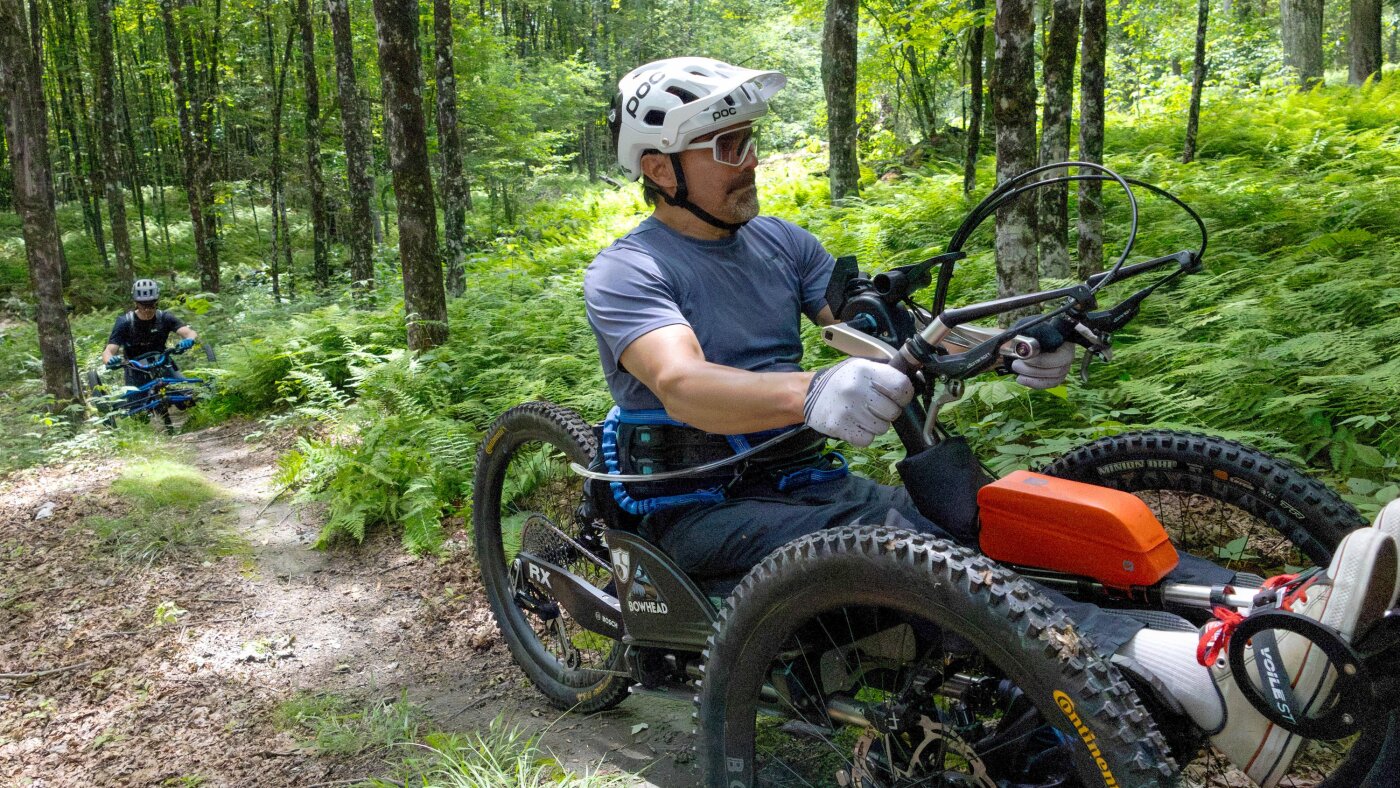
OUTDOOR ACCESS FOR DISABLED IN VERMONT
-
 Virginia16 minutes ago
4 indicted in Virginia double homicide; second victim ID’d as grandmother of 6
-

 Washington23 minutes ago
Washington Commanders are retiring Hall of Famer John Riggins’ No. 44
-

 Wisconsin26 minutes ago
Wisconsin State Patrol rides with truck and bus drivers to spot violations in five areas
-

 West Virginia31 minutes ago
West Virginia town fires entire police force after chief resigns, sergeant alleges evidence room break-in
-

 Wyoming38 minutes ago
WHP: July 5 single-vehicle rollover north of Riverton resulted in one death, one injury

