Hawaii
Hawaii is America's Worst State for Business in 2024, with off-the-charts costs and climate risks rising


An aerial image taken Aug. 10, 2023, shows destroyed homes and buildings burned to the ground in Lahaina in the aftermath of wildfires in western Maui, Hawaii.
Patrick T. Fallon | Afp | Getty Images
First came the Covid-19 pandemic, striking at the very heart of Hawaii’s economy.
Then, just as the state was beginning to recover, came last summer’s deadly Maui wildfires, which killed more than 100 people, destroyed upward of 2,000 structures, did $5.5 billion in damage and paralyzed the state’s tourism industry yet again.
Finishing last in CNBC’s 2024 competitiveness ranking, America’s Top States for Business, seems pretty minor in comparison to all of that. But Hawaii’s economic issues go even deeper than the high-profile tragedies that have befallen the state.
Consider the Honoapiilani Highway.
Hawaii Route 30 hugs the western shore of Maui. Well before the fires, state transportation officials warned in a 2021 report about climate risks that the highway was at risk from rockfalls, landslides, flooding from high waves, storm surges, coastal erosion and even tsunamis. Already, portions of the road frequently close due to flooding.
“Given our understanding of what is changing, we need to make some tough decisions to ensure the long-term viability of the State,” the report said.
A sign is posted warning of earthquake damage to the road from seismic activity at the Kilauea volcano on Hawaii’s Big Island, in Hawaii Volcanoes National Park on May 17, 2018.
Mario Tama | Getty Images
Hawaii was never going to do well in a competitive ranking that emphasizes infrastructure, as this year’s does. The state is remote — 2,400 miles from the mainland — and as an island chain, basic infrastructure features that are important elsewhere, such as freight rail, are irrelevant. But now, even the infrastructure the state does have is under threat, such as the Honoapiilani Highway.
“That’s the only link to the rest of the island from the area where the wildfires were,” said U.S. Secretary of Transportation Pete Buttigieg, who visited Hawaii in February.
The state is set to receive $2.8 billion under the Bipartisan Infrastructure Law, and nearly half of it will go toward rebuilding bridges and roads. Some $160 million of that will go toward relocating portions of the Honoapiilani Highway.
“We’re funding them to raise that highway to higher ground,” Buttigieg told CNBC. “We’re not going to make somebody build a road the exact same way if it’s getting washed out year after year by what used to be a once-in-100-years event.”
In an aerial view, cars back up for miles on the Honoapiilani Highway as residents are allowed back into areas affected by the wildfire, in Wailuku, Hawaii, on Aug. 11, 2023.
Justin Sullivan | Getty Images
It will be at least 2027 before the improvements are complete, transportation planners say. Add the many other roads and bridges needing help, and it begins to explain why Hawaii’s infrastructure ranks No. 47 in this year’s Top States study.
The high cost of paradise
Hawaii is also America’s most expensive state to do business in, with the third-highest cost of living. Residents and businesses pay the nation’s highest utility costs, and corporate and individual taxes are high.
With so many inherent disadvantages, why doesn’t Hawaii finish at the bottom of the rankings every year? The answer, in part, is because it’s Hawaii, with a legendary quality of life. But now, even that is under siege.
Hawaii ranks No. 7 for Quality of Life in 2024, its lowest ranking in the important category since our Top States study began in 2007.
It is not that Hawaii isn’t still a paradise. But even in a paradise, working families need child care.
While licensed child-care facilities are readily available in Hawaii, they are prohibitively expensive. According to Child Care Aware of America, child care in Hawaii costs 18% of the median income for a married couple. That is the most expensive in the country, and nearly twice the national average.
Multiple studies have linked quality child care and preschool to economic competitiveness.
In 2022, the Hawaii legislature approved $200 million in spending for new prekindergarten classrooms, part of a broader goal championed by Lt. Gov. Sylvia Luke to offer universal pre-K for three- and four-year-olds in the state by 2032.
A family walks on the beach together during sunset in Kauai, Hawaii.
Fly View Productions | E+ | Getty Images
“Access to preschool is a social justice issue for Hawaii,” Luke said in a statement at the time. “Children who have attended high-quality preschool or child-care programs are much better prepared for success in kindergarten, but not every family has access to early learning programs.”
The plan was to build 80 new classrooms by this August, with ambitious annual goals after that. But according to a website for the program run by Luke’s office, the program is already falling short of its goals. Two years after the bill was passed, only about half the money has been spent. Just 13 classrooms have been built, with another 50 under construction. The physical facilities are just part of the battle. Hawaii also faces a serious shortage of child-care workers.
An economy struggling to rebound
Put it all together, and it leads to America’s second-worst economy, according to the Top States study, after Mississippi. It is little surprise that no major companies are headquartered there. Economic growth was modest last year as the state struggled to recover from the wildfires, and job growth was meager at best.
In their most recent quarterly economic outlook, published in June, forecasters with the state’s Department of Business, Economic Development and Tourism predicted that tourism will end the year flat following a 4% drop in the first four months of the year, largely due to the wildfires.
They do expect visitor traffic to bounce back next year, and to continue growing — albeit at more modest levels — through 2026.
But in America’s Bottom State for Business, they have learned the hard way that Mother Nature can have other ideas.



Three convicted sex offenders were arrested on Hawaii Island last week for allegedly failing to comply with sex offender registry requirements.
Multiple law-enforcement agencies conducted checks in Kona on registered sex offenders who had been identified as potentially out of compliance with the state’s Sex Offender Registry laws, according the Department of the Attorney General.
As a result of the three-day operation, several individuals were brought back into compliance, and three West Hawaii men were arrested for allegedly failing to comply with the requirements.
The three men who were arrested are Joseph Debus, 56, of Kailua-Kona, Garth Coleman, 53, of Holualoa and Alexsandr Skelcey, 34, of Kailua-Kona.
Debus was convicted of second-degree sex assault in Hawaii in 1993 and sentenced to five years probation with a year in jail. Coleman was sentenced to 20 years in prison for first-degree assault in 2000 after a jury trial in Hawaii. And Skelcey was convicted in Michigan in 2012 of assault with intent to commit sex assault.
“Sex offender registration requirements exist to protect our communities and ensure law enforcement knows where convicted offenders are living,” Tom Alipio, chief of the AG department’s Investigations Division, said in a press release. “Compliance operations like this send a clear message that we will actively monitor the registry, investigate violations and work closely with our law enforcement partners to hold offenders accountable when they fail to meet their legal obligations.”
HPD Chief Reed Mahuna said, “Operations like this allow us to verify that offenders are maintaining strict compliance with registration laws and those who aren’t will be addressed immediately. We will continue to leverage these multi-agency partnerships to keep our island communities safe,”
Members of the public can look up publicly available offender information and subscribe to notifications at sexoffenders.ehawaii.gov/coveredoffender/.
Anyone with information regarding a registered sex offender who may be violating registration requirements is encouraged to contact the Department of the Attorney General’s Investigation Division at (808) 586-1240 or their local law enforcement.

A brush in North Kona, near the Ulu Wini Apartments, has closed a portion of Hina Lani Street, between Route 190 and Ane Keokalole Highway.
According to Hawai‘i Island police, the road is expected to be closed for the next three hours and motorists are advised to avoid the area.
Hawai‘i Fire Assistant Chief Chris Carvalho confirmed at least two engines, two brush trucks, Chopper 2 and a medic vehicle responded to the blaze that started in some bushes.
No evacuations or injuries have been reported at this time.
At 11:09 a.m., an AlertWest camera, installed by Hawaiian Electric in wildfire-prone areas, showed smoke billowing above the Keahuolu Courthouse. As of 12:06 p.m., that smoke appears to have dissipated.
This is a developing story. More information will be provided as it becomes available.
Hawaii
Chinese communist party member arrested in Hawaii on visa fraud charge | Honolulu Star-Advertiser

-

 Texas33 seconds ago
Ted Cruz warns Talarico has ‘real chance’ to flip Texas’ U.S. Senate seat
-

 Utah8 minutes ago
Man suspected in 2006 Utah murder left suicide note in Las Vegas jail cell: police
-
 Vermont11 minutes ago
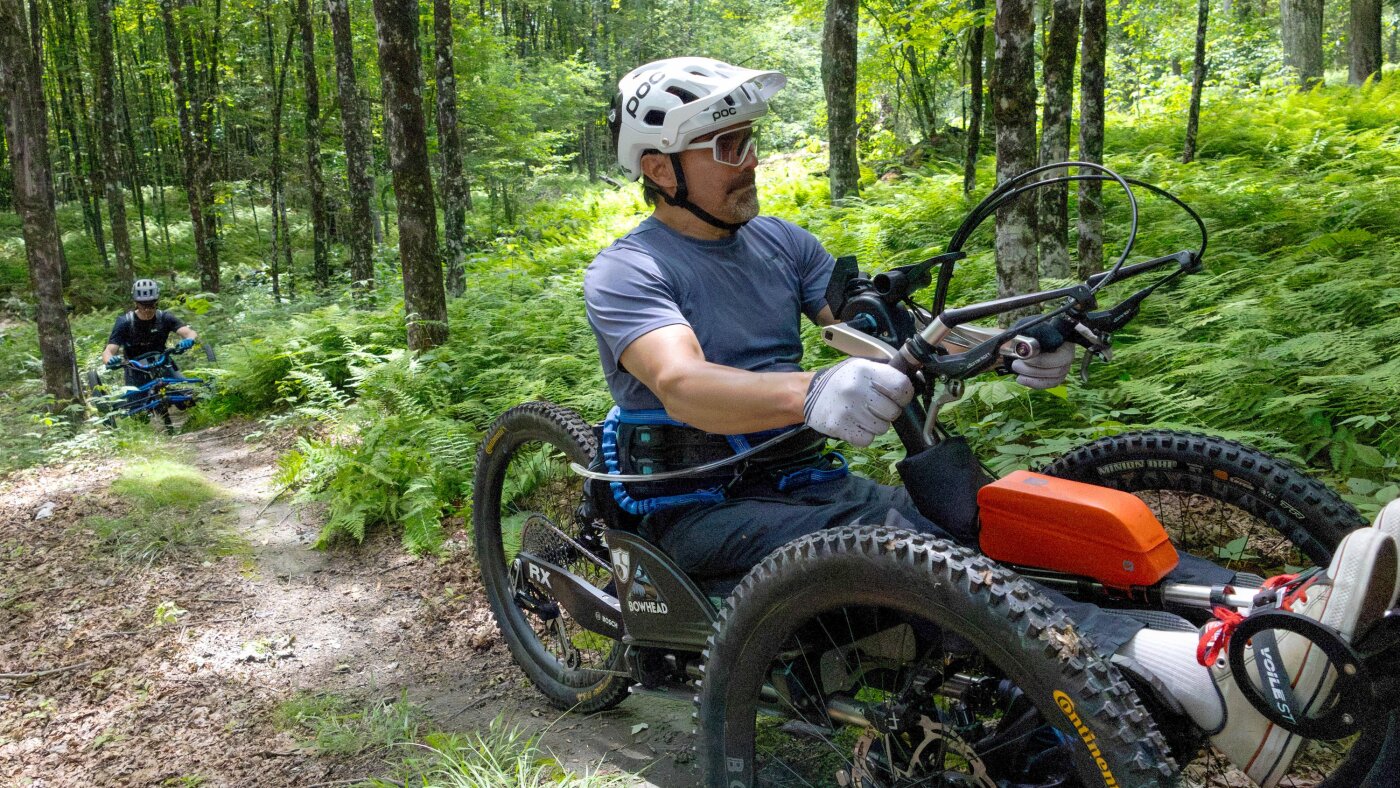
OUTDOOR ACCESS FOR DISABLED IN VERMONT
-
 Virginia16 minutes ago
4 indicted in Virginia double homicide; second victim ID’d as grandmother of 6
-

 Washington23 minutes ago
Washington Commanders are retiring Hall of Famer John Riggins’ No. 44
-

 Wisconsin26 minutes ago
Wisconsin State Patrol rides with truck and bus drivers to spot violations in five areas
-

 West Virginia31 minutes ago
West Virginia town fires entire police force after chief resigns, sergeant alleges evidence room break-in
-

 Wyoming38 minutes ago
WHP: July 5 single-vehicle rollover north of Riverton resulted in one death, one injury

