The University of Hawaii has announced the addition of Ashley Dyer to its men’s and women’s swimming and diving coaching staff. Dyer will serve as an assistant coach under head coach Steve Allnutt.
“Our program is honored to bring Coach Ashley Dyer to the Duke Kahanamoku Aquatic Complex,” Allnutt said in the university’s press release. “She will assist our team while pursuing her graduate studies in Kinesiology and Rehabilitation Sciences at UH-Manoa. Though Ashley just finished her competitive career last season, she has already put together varied and extensive coaching experience at the club and college level, in addition to working across the country at various elite swim camps. Her initiative and drive for excellence will make an immediate impact on our student-athletes.”
Dyer competed for four years at the University of Mary Washington, serving as team captain during the 2023–24 and 2024–25 seasons. At the 2022 Metropolitan Conference Championships, she won the 1650 freestyle and earned second-place finishes in both the 200 and 500 free. Her performance earned her high-point swimmer honors at the meet.
In 2024, she graduated with a bachelor’s in psychology and a minor in sports management, then completed her master’s in business administration.
Advertisement
Her coaching journey began in 2021 as an assistant with the Stingrays USA Swim Team, where she was instrumental in the team’s progression and played a part in earning USA Swimming’s Bronze Medal Club status in 2024. She also gained experience as an intern with Mary Washington’s varsity swim program, and contributed to NCAA Division I summer camps at top programs, including the University of Virginia, Texas A&M, and the University of Texas.
In 2022, she took over as head coach of the Woodlake Hurricanes, the summer league team she once competed for. Dyer had been a member of the Hurricanes from 2011 to 2021 and also swam for Clover Hill High School from 2017 to 2021.
Dyer joins a staff that includes diving coach Brandon Blaisdell and assistant coaches Chris Grimmett-Norris, Lauren Sale, Tim Gallagher, and Christel Simms.
A 35-year-old man was taken to a hospital in serious condition early this morning after an apparent stabbing on Waterhouse Street in Kalihi, according to Honolulu Emergency Medical Services.
At about 2 a.m. today, EMS crews co-responded to the incident and treated the man for multiple injuries, including at least one to his upper body. He was transported to an emergency room for further care.
Hawaii’s most active and popular volcano, Kilauea, is preparing to put on a show as geologists forecast the volcano’s 44th eruption in the coming days.
The United States Geological Survey said that precursory eruption activity is occurring as the active volcano prepares to erupt – one of Earth’s most captivating natural spectacles.
According to the USGS, the forecast for the start of episode 44 is between April 6 to April 14.
On Saturday morning, the south vent overflowed at 6:11 a.m. HST, with lava flowing from the south vent at least 10 times through small dome fountains.
Advertisement
One of the most active volcanoes in the world, Kilauea has been erupting episodically within its summit caldera since December 23, 2024 – and is preparing to do so for the 44th time in the coming days.
Eruption episodes at Kilauea typically last from a few hours to one day, with some lasting up to 8 ½ days of lava flow.
When the volcano comes alive, it is a sight to behold.
According to the USGS, the forecast for the start of episode 44 is between April 6 to April 14. USGS
Fountains of red to yellow lava shoot more than 1,000 feet in the air out of boiling lakes of lava – a scene that annually attracts crowds of tourists to Hawaiʻi Volcanoes National Park to witness the phenomenon.
For those fortunate enough to witness a Kilauea eruption, the natural spectacle is as dangerous as it is mesmerizing.
Advertisement
According to the USGS, the volcano lets off threatening hazardous gases, especially to those with heart or respiratory issues, infants, children and pregnant women.
On Saturday morning, the south vent overflowed at 6:11 a.m. HST, with lava flowing from the south vent at least 10 times through small dome fountains. USGS
When the volcano is erupting, unsafe ash is abrasive and can irritate eyes, skin and the respiratory system.
Can’t make the trip to Hawaii to witness the 44th episode? Don’t worry.
The USGS operates several live webcams at Kilauea, streaming continuously on their website—stay tuned for any signs of eruption. You won’t want to miss it.
VOLCANO, Hawaii – Hawaii’s most active and popular volcano, Kilauea, is preparing to put on a show as geologists forecast the volcano’s 44th eruption in the coming days.
The United States Geological Survey said that precursory eruption activity is occurring as the active volcano prepares to erupt – one of Earth’s most captivating natural spectacles.
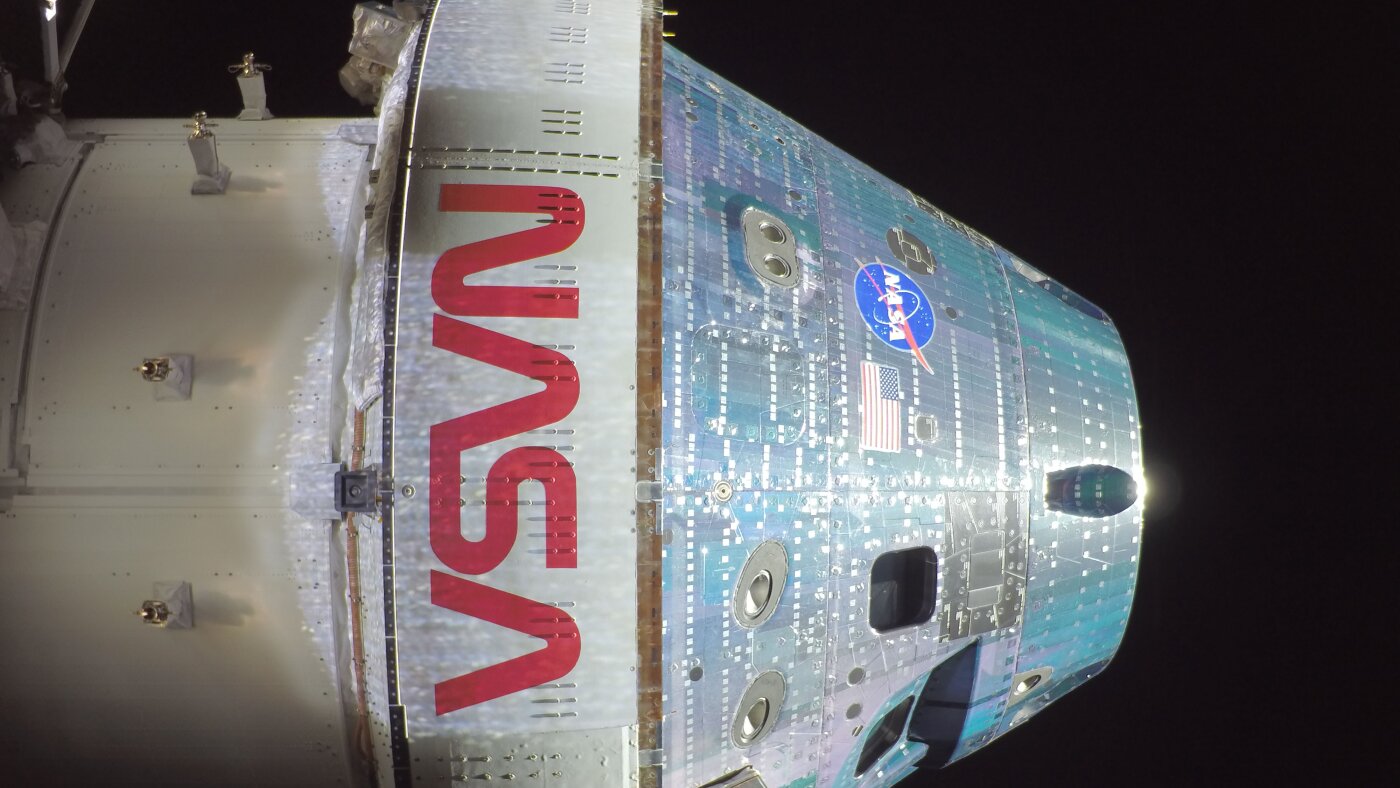
Artemis Ii Mission: Orion Spacecraft To Line Up For Moon Flyby Over Holiday Weekend
According to the USGS, the forecast for the start of episode 44 is between April 6 to April 14.
Advertisement
On Saturday morning, the south vent overflowed at 6:11 a.m. HST, with lava flowing from the south vent at least 10 times through small dome fountains.
One of the most active volcanoes in the world, Kilauea has been erupting episodically within its summit caldera since December 23, 2024 – and is preparing to do so for the 44th time in the coming days.
Eruption episodes at Kilauea typically last from a few hours to one day, with some lasting up to 8 ½ days of lava flow.
April Skywatching Guide: See The First Full Moon Of Spring, Spot Mercury, Marvel At A Meteor Shower And More
When the volcano comes alive, it is a sight to behold. Fountains of red to yellow lava shoot more than 1,000 feet in the air out of boiling lakes of lava – a scene that annually attracts crowds of tourists to Hawaiʻi Volcanoes National Park to witness the phenomenon.
Advertisement
For those fortunate enough to witness a Kilauea eruption, the natural spectacle is as dangerous as it is mesmerizing. According to the USGS, the volcano lets off threatening hazardous gases, especially to those with heart or respiratory issues, infants, children and pregnant women. When the volcano is erupting, unsafe ash is abrasive and can irritate eyes, skin and the respiratory system.
Can’t make the trip to Hawaii to witness the 44th episode? Don’t worry. The USGS operates several live webcams at Kilauea, streaming continuously on their website—stay tuned for any signs of eruption. You won’t want to miss it.
Original article source: Hawaii’s Kilauea volcano is brewing yet again, preparing to put on a show for it’s 44th episode