Hawaii
A few midwives seek to uphold Native Hawaiian birth traditions. Would a state law jeopardize them?


HONOLULU — Ki‘inaniokalani Kahoʻohanohano longed for a deeper connection to her Native Hawaiian ancestors and culture as she prepared to give birth to her first child at home on the north shore of Maui in 2003.
But generations of colonialist suppression had eroded many Hawaiian traditions, and it was hard to find information on how the islands’ Indigenous people honored pregnancy or childbirth. Nor could she find a Native Hawaiian midwife.
That experience led Kahoʻohanohano — now a mother of five — to become a Native Hawaiian midwife herself, a role in which she spent years helping to deliver as many as three babies a month, receiving them in a traditional cloth made of woven bark and uttering sacred, tremorous chants as she welcomed them into the world.
Her quest to preserve tradition also led her into a downtown Honolulu courtroom this week, where she and others are seeking to block a state law that they say endangers their ability to continue serving pregnant women who hope for such customary Native Hawaiian births.
“To be able to have our babies in the places and in the ways of our kupuna, our ancestors, is very vital,” she testified. “To me, the point of what we do is to be able to return birth home to these places.”
Lawmakers enacted a midwife licensure law in 2019, finding that the “improper practice of midwifery poses a significant risk of harm to the mother or newborn, and may result in death.” Violations are punishable by up to a year in jail, plus thousands of dollars in criminal and civil fines.
The measure requires anyone who provides “assessment, monitoring, and care” during pregnancy, labor, childbirth and during the postpartum period to be licensed. The women’s lawsuit says that would include a wide range of people, including midwives, doulas, lactation consultants, and even family and friends of the new mother.
Ki’inaniokalani Kaho’ohanohano poses on Wednesday, June 12, 2024, in Honolulu. She is a Native Hawaiian cultural practitioner who is among those suing over a Hawaii law they say penalizes anyone who provides advice, information, or care, during pregnancy, birth, and postpartum who does not have a specific state license. Credit: AP/Jennifer Sinco Kelleher
Until last summer, the law provided an exception for “birth attendants,” which allowed Kahoʻohanohano to continue practicing Native Hawaiian birth customs. With that exception now expired, however, she and others face the licensing requirements — which, they say, include costly programs only available out of state or online that don’t align with Hawaiian culture and beliefs.
In 2022, the average cost of an accredited midwifery program was $6,200 to $6,900 a year, according to court documents filed by the state.
Attorneys for the state argued in a court filing that the law “undoubtedly serves a compelling interest in protecting pregnant persons from receiving ill-advice from untrained individuals.”
State Deputy Attorney General Isaac Ickes told Judge Shirley Kawamura that the law doesn’t outlaw Native Hawaiian midwifery or homebirths, but that requiring a license reduces the risks of harm or death.
Supporters of a lawsuit challenging a Hawaii midwife licensure law gather outside a courthouse in Honolulu on Monday, June 10, 2024. Credit: AP/Jennifer Sinco Kelleher

The dispute is the latest in a long history of debate about how and whether Hawaii should regulate the practice of traditional healing arts that dates to well before the islands became the 50th state in 1959. Those arts were banished or severely restricted for much of the 20th century, but the Hawaiian Indigenous rights movement of the 1970s renewed interest in the customary ways.
Hawaii eventually adopted a system where councils versed in Native Hawaiian healing certify traditional practitioners, though those suing say their efforts to form such a council for midwifery have failed.
Practicing midwifery without a license, meanwhile, was banned until 1998 — when, lawmakers say, they inadvertently decriminalized it when they altered the regulation of nurse-midwives, something the 2019 law sought to remedy.
Among the nine plaintiffs are women who seek traditional births and argue that the new licensing requirement violates their right of privacy and reproductive autonomy under Hawaii’s Constitution. They are represented by the Center for Reproductive Rights and the Native Hawaiian Legal Corporation.
“For pregnant people whose own family may no longer hold the knowledge of the ceremonial and sacred aspects of birth, a midwife trained in Native Hawaiian traditional and customary birthing practices can be an invaluable, culturally informed health care provider,” the lawsuit states.
When Kahoʻohanohano was unable to find a Native Hawaiian midwife to attend the birth of her first child, she turned instead to a Native American one, who was open to incorporating traditional Hawaiian aspects that Kahoʻohanohano gleaned from her elders.
She surrounded herself with Hawaiian cultural practitioners focusing on pule, or prayer, and lomilomi, a traditional massage with physical and spiritual elements. It all helped ease her three days of labor, she said. And then, “two pushes and pau” — done — the boy was born.
The births of her five children in various Maui communities, Kahoʻohanohano said, were her “greatest teachers” in herself becoming one of the very few midwives who know about Native Hawaiian birthing practices.
She is believed to be the first person in a century to give birth on her husband’s ancestral lands in Kahakuloa, a remote west Maui valley of mostly Native Hawaiians, where her daughter was born in 2015. The community is at least 40 minutes along winding roads to the island’s only hospital.
Kahoʻohanohano testified about helping low-risk pregnant women and identifying instances where she transferred someone to receive care at the hospital but said she’s never experienced any emergency situations.
Among the other plaintiffs are midwives she has helped train and women she has aided through birth. Makalani Franco-Francis testified that she learned about customary birth practices from Kahoʻohanohano, including how to receive a newborn in kapa, or traditional cloth, and cultural protocols for a placenta, including taking it to the ocean or burying it to connect a newborn to its ancestral lands.
The law has halted her education, Franco-Francis said. She testified that she’s not interested in resuming her midwifery education through out-of-state or online programs.
“It’s not in alignment with our cultural practices, and it’s also a financial obligation,” she said.
The judge heard testimony through the week. It’s not clear how soon a ruling might come.



HONOLULU (HawaiiNewsNow) – The new Honolulu Police Department chief said he’s launching a new initiative to send drones to potential crime scenes before police arrive.
Honolulu Police Chief David Lazar said the Department of Law Enforcement is helping the department get the required equipment and personnel.
Officers would deploy a drone to a location to let them know what to expect.
Officials said this could tell them whether a suspect is still there or if evidence is recoverable.
HPD Chief Lazar said, “Our officers need the tools that they need to do the work and to make their work efficient and to capture those that are involved in crime.”
Lazar says HPD will start using the drones in August throughout Honolulu.
The Honolulu Police Department has used drones in the past to combat against illegl fireworks on the island.
PREVIOUS COVERAGE:
Copyright 2026 Hawaii News Now. All rights reserved.


The 51st episode of lava fountaining in Halemaumau at the summit of Kilauea volcano began at 8:30 a.m. Monday.
In its 10:30 a.m. Volcano Update, HVO stated that the fountains were reaching heights of about 950 feet above ground level from the north vent. No flows or lava fountaining are erupting from the south vent. Effusion rates reached a peak of 400 cubic yards per second.
All lava flows are confined to the Halemaumau crater within Hawaii Volcanoes National Park.
Sensors indicated that winds are blowing at 5-10 mph from the east-northeast direction. HVO notes that this suggests that volcanic gas emissions and volcanic material may be distributed in the west-southwest direction from Halemaumau. This means that it’s possible that wind may carry tephra toward the Kau District, including the communities of Pahala and Naalehu, as well as onto Highway 11 southwest of Volcano. Tephra fall is greatest within three miles of the vents, and lighter ash and Pele’s Hair may stay suspended for large distances from the vents.
As of HVO’s 10:30 a.m. update, very light fall of Pele’s Hair was reported from the Kau Desert trailhead along Highway 11. There were no reports of tephra falling in Pahala or anywhere outside of Hawaii Volcanoes National Park.
The National Weather Service issued a Special Weather Statement regarding the potential impacts from Episode 51’s wind-blown tephra. NWS reported that the plume from this eruption is reaching 18,000 feet above sea level and the low-level winds from the east-northeast would move the plume southwest, towards Pahala. High-level winds from the south would move the higher plume over communities adjacent to Hawaii Volcanoes National Park.
This story will be udpated.
-
 Business3 minutes ago
Netflix reports higher profits as investors worry about growth
-
 Entertainment9 minutes ago
Kris Jenner’s mom, beloved matriarch Mary Jo ‘MJ’ Shannon, dies at 91
-
 Politics21 minutes ago
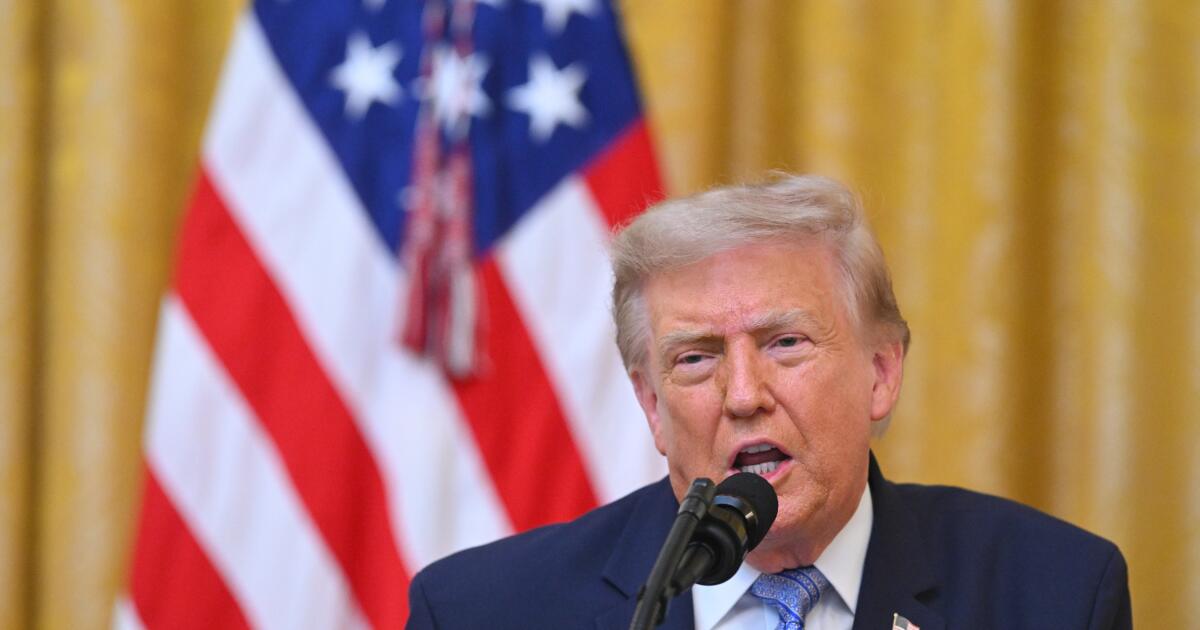
Trump repeats debunked claims about voting vulnerabilities in prime-time speech
-
 Science27 minutes ago
Bass administration quietly replaced chief heat officer a month ago
-
 Sports33 minutes ago
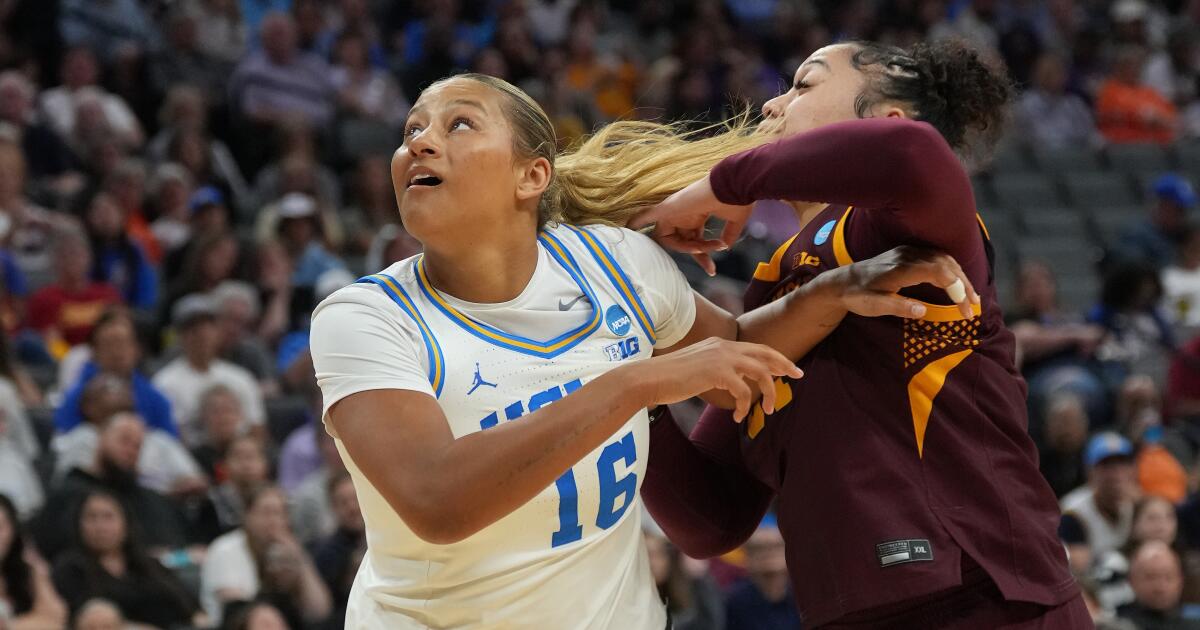
UCLA women embrace new players, tougher standards in bid to repeat as champs
-

 World45 minutes ago
China rebukes UK over nationalisation of British Steel
-
 News1 hour ago
Flood sirens blare in South Central Texas as rivers reach perilous heights
-

 Los Angeles, Ca3 hours ago
Arrest made in deadly shooting at 4th of July gathering in Compton; search for 2nd suspect continues

