Connect with us

West

Hawaii bill that could boot Trump from ballot narrowly advances

Published

on

Hawaii bill that could boot Trump from ballot narrowly advances
Join Fox News for access to this content

Plus get unlimited access to thousands of articles, videos and more with your free account!

Please enter a valid email address.

By entering your email, you are agreeing to Fox News Terms of Service and Privacy Policy, which includes our Notice of Financial Incentive. To access the content, check your email and follow the instructions provided.

A bill in Hawaii’s state legislature that could potentially keep former President Donald Trump off of the 2024 presidential ballot narrowly survived a procedural vote on Tuesday.

The Hawaii State Senate Judiciary Committee approved Senate Bill 2392 by a single vote, moving the bill to the full floor, HawaiiNewsNow reported. The proposal would place the decision to potentially disqualify Trump under the chief elections officer.

Advertisement

Advocates for the bill claimed Trump’s involvement in the riot at the Capitol on Jan. 6, 2021, amounted to an insurrection that should bar him from running for — or winning — the presidency.

The bill comes as several other states have initiated efforts to prevent Trump, the current Republican front-runner, from appearing on the ballot in November.

TRUMP WASN’T ON THE BALLOT, BUT HALEY LOSES NEVADA’S REPUBLICAN PRESIDENTIAL PRIMARY

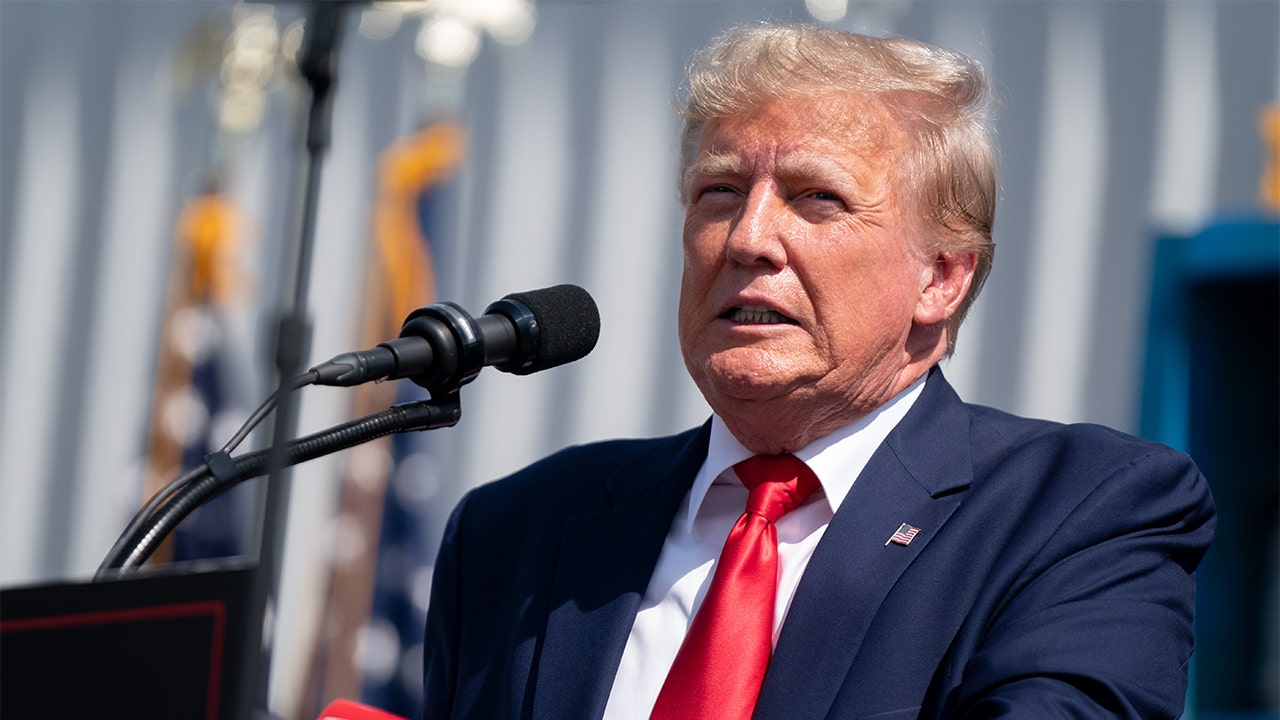
Advocates for the bill claimed former President Donald Trump’s involvement in the riot at the Capitol on Jan. 6, 2021, amounted to an insurrection. (Sean Rayford/Getty Images)

Despite the bill clearing the procedural hurdle, the bill’s critics have been more outspoken than its supporters.

Advertisement

“This is tyrannical, to say the least,” said Jamie Detwiler, a resident who testified ahead of the vote, per the report. “He has not been convicted nor has he been charged with insurrection (cheers) there is no evidence of committing insurrection so please don’t waste our time on this poorly written piece of legislation.”

According to HawaiiNewsNow, the bill drew over 300 complaints or negative testimonies, with only about 20 favoring it.

Senate Bill 2392 cleared the Hawaii State Senate committee by a 3-2 vote. (Rolf Schulten/ullstein bild via Getty Images)

Sen. Karl Rhoads, a Democrat, introduced the legislation as Hawaii does not have a legal process to exempt candidates from the ballot or disqualify them from appearing.

TRUMP NOT IMMUNE FROM PROSECUTION IN 2020 ELECTION CASE, FEDERAL APPEALS COURT RULES

Advertisement

Senate Bill 2392, which cleared the committee by a 3-2 vote, would establish such a process.

A description of the bill says it “specifies that election ballots issued by the chief election officer or county clerk shall exclude any candidate who is disqualified by a constitutional or statutory provision.”

It also “provides for a process for challenging an inclusion or exclusion of a candidate from a ballot. Includes a candidate’s disqualification as grounds for an election contest complaint. Specifies that electors of presidential and vice presidential candidates shall not be individuals who are disqualified by a constitutional or statutory provision. Prohibits electors from voting for any presidential or vice presidential nominee who has been disqualified pursuant to Section 3 of the Fourteenth Amendment to the Constitution of the United States.”

Senate Bill 2392 “specifies that election ballots issued by the chief election officer or county clerk shall exclude any candidate who is disqualified by a constitutional or statutory provision,” a description of the bill says. (AP Photo/Rogelio V. Solis)

Advertisement

The bill is supported by the state’s Democratic Party.

Rhoads is a member of the Judiciary Committee, the Agriculture and Environment and the Public Safety Committee and the Intergovernmental and Military Affairs Committee.

Read the full article from Here

Continue Reading
Click to comment

Leave a Reply

Your email address will not be published. Required fields are marked *

This site uses Akismet to reduce spam. Learn how your comment data is processed.

West

Exclusive: Illegal immigrant released under Biden ‘catch and release’ allegedly kills driver in police chase

Published

on

Exclusive: Illegal immigrant released under Biden ‘catch and release’ allegedly kills driver in police chase

NEWYou can now listen to Fox News articles!

EXCLUSIVE: An illegal immigrant from Colombia killed a motorist in Southern California last month during a police chase, authorities said. 

Darwin Felipe Bahamon Martinez, 21, was caught entering the United States near San Diego in 2023 and released by the Biden administration, U.S. Immigration and Customs Enforcement (ICE) said. 

“Bahamon Martinez illegally entered the U.S. near Chula Vista, California, in August 2023,” a statement from ICE Los Angeles field office leadership said. 

“He was released into the U.S. under the Biden administration’s so-called ‘catch-and-release’ policies, but if that hadn’t happened, the innocent 59-year-old driver he allegedly killed may still be alive today.”

Advertisement

DHS HONORS ILLINOIS WOMAN WHOSE CORPSE WAS ALLEGEDLY ABUSED BY ILLEGAL IMMIGRANT FREED UNDER SANCTUARY LAWS

Martinez was driving a Jeep Gladiator in Anaheim Jan. 21 when police officers initiated a traffic stop for reckless driving. When the officers approached the Jeep on foot, Martinez sped away, authorities said. 

A brief chase ensued before the Jeep collided with a Honda driven by a 59-year-old man in the neighboring city of Placentia. 

The driver was pronounced dead at the crash site. 

Another driver, an 83-year-old woman, was taken to a hospital and treated for minor injuries. 

Advertisement

MAJOR COUNTY SHERIFF REJECTS ICE DETAINER ON ILLEGAL IMMIGRANT WHO KILLED YOUNG BOY IN HIT-AND-RUN

The Anaheim Police Department’s police vehicle.  ( Jeff Gritchen/MediaNews Group/Orange County Register via Getty Images)

Bahamon Martinez is being held in the Orange County Jail while awaiting criminal proceedings on his homicide charge. ICE lodged an immigration detainer against him Jan. 22.

However, because of California’s sanctuary state laws, local authorities are not compelled to cooperate with ICE to transfer illegal immigrants charged or convicted of crimes into federal custody. 

California school board members believe there is a lot of “fearmongering” happening over immigration enforcement as teachers unions and major city school districts are scolding U.S. Immigration and Customs Enforcement. (Getty Images)

Advertisement

“If local officials in Gavin Newsom’s sanctuary California choose to release Bahamon Martinez into the community, they will put ALL Californians at risk,” ICE said in a news release. “California must honor our immigration detainer. Otherwise, ICE will be forced to re-arrest this criminal illegal alien at-large.”

In jurisdictions with sanctuary laws, ICE officers typically have to go into communities to look for illegal immigrants targeted for deportation. The agency has called for greater cooperation with local authorities amid confrontations between federal officers and agitators in Minnesota, where local officials have accused ICE of terrorizing neighborhoods. 

CLICK HERE TO DOWNLOAD THE FOX NEWS APP

Critics of sanctuary laws say such laws are responsible for releasing dangerous criminals back onto the street.

Read the full article from Here

Advertisement
Continue Reading

San Francisco, CA

Super Bowl live updates: Block parties, concerts happening all week long in Bay Area

Published

on

Super Bowl live updates: Block parties, concerts happening all week long in Bay Area


FILE – Puerto Rico artist Bad Bunny performs during his “DeBÍ TiRAR MáS FOToS” tour in Mexico City on Dec. 10, 2025.

Bad Bunny is expected to perform the Super Bowl halftime show on Sunday entirely in Spanish — which has inspired fans to quickly learn the language.

In October, the Puerto Rican singer — born Benito Antonio Martínez Ocasio — kicked off the 51st season of “Saturday Night Live” expressing pride over the achievement in Spanish, after which he said in English, “If you didn’t understand what I just said, you have four months to learn!”

That declaration further stoked the anger of some conservatives who have vilified Bad Bunny for speaking out against President Donald Trump’s anti-immigrant policies. The singer canceled the U.S. portion of his tour last year out of fear that Immigration and Customs Enforcement agents would target his fans.

Advertisement

There’s been a frenzy online of people posting about Bad Bunny lyrics, including Puerto Ricans explaining slang used by the singer and non-Spanish speakers documenting their journey to learn Spanish.

Anticipation for his halftime performance has only intensified since last weekend, when his album, ” Debí Tirar Más Fotos,” became the first Spanish-language album to win the Grammy for album of the year. He did not shy away from addressing targeted federal immigration operations at the awards.

“Before I say thanks to God, I’m going to say ICE out,” he said in English after winning his first Grammy for música urbana album. “We’re not savage, we’re not animals, we’re not aliens. We are humans and we are Americans.”

Fans are learning Spanish before the Super Bowl

Niklaus Miller, 29, has been buckling down on learning Bad Bunny lyrics since the singer’s SNL appearance months ago.

“I am delusional enough to be like ‘this would be easy. I could pick it up pretty quickly,’” Miller said.

Advertisement

The fervor to learn a new language within a short time span highlights the powerful impact of Latino culture in the U.S. despite the president’s anti-immigrant rhetoric and actions.

“It felt like a form of protest,” Miller said. “What can I do right now besides what everyone is doing that is trying to help? It just feels good.”

Miller said he has gotten messages from people who watch his videos with their parents since he started posting about the process of learning Spanish. They say they feel seen and appreciated.

While Miller hasn’t learned Bad Bunny’s entire discography, he has learned portions of six songs that he feels will be part of the halftime show, including “Tití Me Preguntó,” “DtMF” and “Baile Inolvidable.”

The day after Bad Bunny was announced as the halftime act, O’Neil Thomas, 28, a New York City actor and content creator, started learning the singer’s catalog.

Advertisement

“I was just so excited because he wasn’t an artist that I expected,” Thomas said. “And given how we are right now with the state of the country I think he is the perfect person to headline such a humongous stage.”

The response to his TikTok videos – showing Thomas learning “NUEVAYoL” and other tracks — have been really positive, Thomas added. Many Puerto Rican people have reached out, saying they’re proud that someone outside the community is attempting to learn about their culture.

Latin music and culture intensify interest in language

“People were already starting to make the effort with learning Spanish as a result of their interest in Latin music,” said Vanessa Díaz, associate professor of Chicano and Latino studies at Loyola Marymount University. “The Super Bowl itself is an additional push for a trend that was already happening.”

Díaz, who is the co-author of “P FKN R: How Bad Bunny Became the Global Voice of Puerto Rican Resistance,” says the rise of Latin music over the past decade has pushed non-Spanish speakers to learn the language. Bad Bunny’s clear messaging in his lyrics, videos and performances amplifies that interest, Díaz said.

Spanish is the most spoken language at home behind English in the U.S. — except in three states, according to U.S. Census data. Over 13% of residents age 5 and older speak it.

Advertisement

For Thomas, Bad Bunny’s music offered the perfect opportunity to take on the challenge of learning a new language.

“I love Spanish and I always wanted to learn it,” Thomas said. “So, this has been a fun introduction for me to finally hone in.”

Both Miller and Thomas said that learning Spanish, specifically Puerto Rican Spanish, in a short period of time has been a unique challenge.

Thomas said listening to Bad Bunny’s music casually is a different experience than learning the lyrics.

“Listening to his music is really fun,” Thomas said. “The amount of times I’ve pressed rewind just to get a phrase, I can’t even count.”

Advertisement

Miller said the hard part about learning the songs is that the Puerto Rican dialect tends to chop some words and it is very fast. Miller said if he hasn’t worked on understanding a song for days, he might forget the pronunciation and it’s hard to come back to it.

“It’s fun but then stressful because I am a Type-A person, so that’s been hard, honestly,” Miller said. “I’m firing on all cylinders.”

A landmark for Latino culture is also politically divisive

Bad Bunny’s booking at the Super Bowl has been divisive from the start. Trump called the selection “ridiculous.” Conservatives have called it anti-American — even though native-born Puerto Ricans are also U.S. citizens. Turning Point USA is putting on an alternative “All-American Halftime Show” with a lineup led by Kid Rock.

This all comes against the backdrop of Latinos and Spanish-speaking communities being targeted in Trump’s immigration crackdowns. His executive actions have vastly expanded who is eligible for deportation and routine hearings have turned into deportation traps for migrants.

For Bad Bunny, the halftime show is the ultimate stage to showcase his music, heritage and global influence. For the NFL and Apple Music, it’s a balancing act: deliver a spectacle that celebrates diversity without igniting controversy that scares off advertisers.

Advertisement

NFL Commissioner Roger Goodell has stood by the choice, citing Bad Bunny’s immense popularity.

Petra Rivera-Rideau, associate professor of American studies at Wellesley College and co-author of “P FKN R,” said there’s a long history in the U.S. of Spanish being criminalized.

Bad Bunny is making it cool to know the language and changing the narrative around it, Diaz said. Now Spanish is something that people are aspiring to learn.

Díaz doesn’t think his performance will necessarily shift how Latinos are perceived in the U.S. but she says it will create an interesting conversation depending on “how people are going to grapple with the magnitude of having someone like Bad Bunny on the stage.”

At a time when “the U.S. is targeting Latinos and migrants and Spanish speakers or even those who are just perceived to be any of those things in a way that we haven’t seen in our lifetimes,” his visibility is powerful, Diaz said.

Advertisement


Source link

Continue Reading

Denver, CO

Colorado homes acquired by inheritance reach record 12% of home transfers

Published

on

Colorado homes acquired by inheritance reach record 12% of home transfers


In “The Game of Life,” landing on the “Inherit a House”  square is one of the most coveted on the board. In real life, a home or condo is also one of the greatest financial gifts that can be passed on, especially in a housing-strapped state like Colorado.

More Coloradans are seeing the big wheel spin in their favor each year. But the pace won’t be enough to make up for a housing shortfall estimated at more than 106,000 units in 2023, according to a report from the Colorado Department of Local Affairs.

About one in eight homes that traded hands in Colorado last year represented an inheritance, which is a little below the share that new home sales represented, according to data from the real estate research firm Cotality.

“Inheritance in the 12 months ending in 2025 totaled nearly 12,000 homes, which happened to be almost 12% of all total property transfers. This is higher, both in terms of the number and the share, than previous years — in line with the national trend,” said Matt Delventhal, a principal economist at Cotality.

Advertisement

Cotality measured the 12-month pace of home sales, new and existing, and inheritance transfers in Colorado through October for the odd-numbered years from 2019 to 2025. Existing home sales were down sharply between 2021 and 2025, falling from 128,899 in 2021 to 75,833 in 2025.

Likewise, new home sales fell from 22,064 in 2021 to 15,610 in 2023 to 12,755 in 2025, according to Cotality.

Inheritances, by contrast, continued to chug along, going from 10,052 in 2021 to 10,243 in 2023 to 11,945 in 2025. The gap between new home sales and inheritances was only 810. Inheritances are contributing almost as much to inventory as new home construction.

A lack of enough new construction, especially for first-time buyers, has pushed up existing home prices. High prices, when combined with higher mortgage rates, have resulted in fewer sales. Because home sales have fallen so much, the “inheritance” share of all home transfers has nearly doubled in Colorado, from 6.2% in 2021 to 9.9% in 2023 to a record 11.9% in 2025.

“The increase in the share is a bit sharper than the national trend, mostly because Colorado resales drop off a bit more sharply in 2023-25 than the national average,” Delventhal said.

Advertisement

Nationally, the market share of inherited homes went from just under 5% in 2021 to 6.8% in 2023 to 8.7% in 2025, which translated into 412,174 homes and condos passed down. Those percentages also reflect the 12-month tally through October.

“The behavior around inherited homes does feel different from what it did pre-2022. Historically, most estate transfers functioned as pass-through transactions. Heirs would inherit the property, do some light clean-up or updates, and put it on the market fairly quickly. That still happens, but I am seeing more cases where families pause and evaluate other options first,” said Cooper Thayer, a Realtor with the Thayer Group in Castle Rock.

Because inherited homes have little or no debt and strong rent potential, and because selling has become more difficult, heirs are increasingly looking at keeping the homes as rentals or to move into, he said.

While Colorado’s share of inherited homes is above average, it lags behind California, a more expensive market where 18% of home transfers involved an inheritance, according to Cotality.

In California, favorable tax laws locked in lower property tax rates and provided beneficiaries with an incentive to use an inherited home as a primary residence. For the first time this year, passed-down homes ran more than double the number of new homes sold in the state, according to Cotality.

Advertisement

Prop 19, passed in 2020, limited the transfer of a lower tax base only to homes that a child or heir actually occupied, and excluded rental homes. It also excluded only the first $1 million in added value beyond the original value used to determine property taxes. The state, however, could see a ballot measure this year that would restore some of the more generous property tax breaks to heirs.

At first glance, the increase in home inheritances seems to validate the “Silver Tsunami” hypothesis. Baby Boomers, those born between 1946 and 1964, were not only huge in numbers, but also more likely to own homes than earlier generations. By the time they turned 65, individuals born in 1948 owned 50% more homes than those who were born in 1938 did at the same age.

Compared to prior generations, baby boomers have also shown a greater propensity to hold onto their homes more tightly, adding a different meaning to “until death do us part.” About six in 10 say they don’t plan to ever sell their homes, and three in 10 are holding on so they can pass the properties down, according to HousingWire.

“They are going to have to take me out of there in a box, even though it is a two-story home,” said Jennifer Antonio, an agent with Sotheby’s International Realty in Denver.

Antonio, who puts herself in the never-sell boomer group, said she and her husband purchased their first home when she was 23. They did so on two minimum wage salaries, proof of just how much better the market did in matching options to incomes. Now the average age of a first-time homebuyer is 38, she said.

Advertisement

Her four millennial children still don’t own, despite being college-educated. With her parents too old to host big events, her home has become a stable gathering place for the family, where adult children can flow in and out, and where everyone gathers for Thanksgiving and Christmas.

“I need to stay in that home,” she said. Antonio said her older clients complain about a lack of good options if they do sell, which can keep them locked into homes that have become burdensome. Builders, seeking to get as much square footage as they can on a lot, aren’t building enough products like ranch homes that would appeal to older buyers.

That baby boomer hesitancy, Cotality says, is “effectively freezing the anticipated flow of supply.”  Boomers can’t hold on forever, but it could be well into the 2030s before a substantial amount of older housing stock better-suited for young families emerges. Younger generations could find themselves stuck renting for longer than they would like.


Source link

Continue Reading
Advertisement

Trending
