West
First Asian-American chief appointed to head LAPD

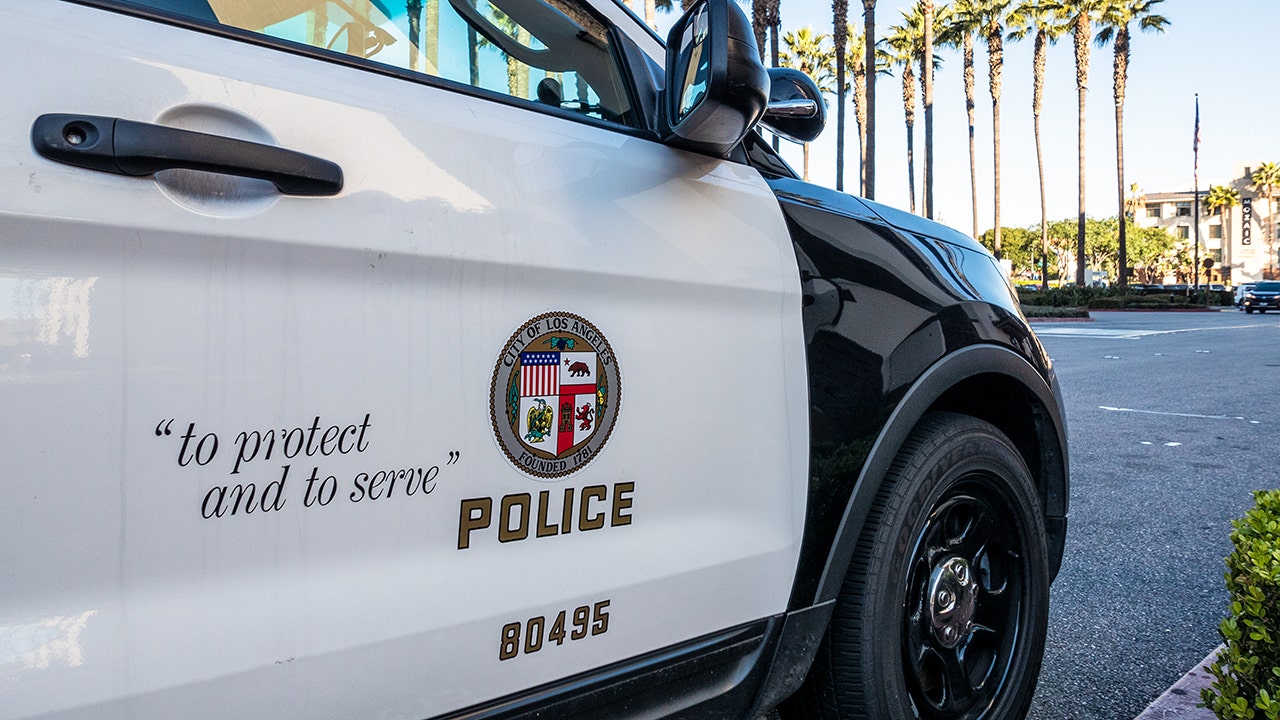
An Asian American assistant chief was named interim chief of the Los Angeles Police Department on Wednesday, taking charge of a force that mostly has been led by white men.
Assistant Chief Dominic H. Choi was unanimously appointed by the civilian Board of Police Commissioners. Choi, the son of Korean immigrants, will be the first Asian American to head the agency when he begins his role on March 1.
“I’m very happy to be the first Korean American interim chief of the Los Angeles Police Department,” he said, “and I proudly represent that community. But just to be absolutely clear, my role is to represent all communities within this city.”
LOS ANGELES FIRE DEPARTMENT USES HELICOPTER TO RESCUE MAN, DOG FROM LOS ANGELES RIVER
The appointment follows the surprise retirement of Chief Michel Moore, whose tenure was marked by greater scrutiny into excessive force and police killings of civilians in the nation’s second-largest city. Choi said he has never used deadly force during his 28 years as an officer.
Close-up on the insignia and slogan of an LAPD vehicle. (iStock)
Choi will be the interim chief as the mayor and police commission spend the next six to nine months searching for a permanent replacement — among the LAPD’s ranks and nationwide — to head up the department of nearly 9,000 officers during the 2026 World Cup and the 2028 Olympics.
Moore will stay on as a consultant for an unspecified period of time.
In taking this role, Choi is not allowed to apply for the permanent chief position. He pledged to set the stage for a smooth transition for the next person.
“My philosophy as interim chief is not to go in there and turn the place upside-down and make significant change,” he said during Wednesday’s news conference announcing his appointment.
Choi started his policing career in 1995 and was promoted in 2021 to assistant chief, which is the rank just below chief. His roles in the department have included serving as the agency’s homeless coordinator.
The Los Angeles Police Protective League, the union that represents rank-and-file officers, applauded Choi’s promotion.
“The appointment of Assistant Chief Dominic Choi to lead the LAPD is an excellent choice that will instill confidence amongst the rank and file during this interim period while the search for a permanent Chief takes place,” the league’s board of directors wrote in a statement.
Read the full article from Here


Well, it turns out that the answer to the question we posed in Thursday’s preview – “Can anyone beat Hayden Wilde at T100 San Francisco?” – is a resounding “yes.” After having to pull out of the World Triathlon Championship Series (WTCS) Alghero event last weekend when he spent five days in bed fighting a vicious bug, it’s reported that Wilde was a questionable start for today’s race in San Francisco even after he arrived in California a few days ago. So, it shouldn’t have been much of a surprise that the Kiwi wasn’t ever really in the mix for the win.
Wilde being sick doesn’t take anything away from the performance of the man who did take the win – Rico Bogen. The German successfully defended his T100 San Francisco title using the same tactics he did a year ago – blasting clear on the bike and then putting together a solid run for a comfortable win.
The German was so dominant that Wilde was quick to point out that he would have been hard to beat – regardless of everyone else’s fitness.
“It was a tough day out there,” Wilde said after the race. “(I was) just battling all day, but honestly, to be fair, full respect to Rico — I think even on a good day it would have been damn hard to beat him today. He was pushing it up there on the front and there was not much I could do out there. The only thing I could really do is just be smart and get as super aero as possible, because I just wasn’t pushing the power I wanted to. I actually turned around and had a good run, but the whole day was … a little bit rough.”
It was anything but rough for Bogen, who came out of the frigid water just a couple of seconds behind swim leader Morgan Pearson. The down-current swim from just off of Alcatraz island to the swim finish was as quick as ever and, as usual, didn’t provide a lot of separation between the athletes. Jason West was ninth out of the water, just 16 seconds down, and there were only two minutes separating Pearson from the last man out of the water, Marcel Bolbat.
It was apparent that Wilde wasn’t on his game from the start – he would begin the long run to T1 44 seconds down.
Once on the bike it quickly became the Rico Bogen show. After finishing third here at the inaugural race, then winning last year, the 25-year-old considers this “his” course, and wasted no time to let the rest of the field know he wasn’t playing around.
“I had to push really deep on the bike,” Bogen said after the race. “I thought, maybe I’m destroying myself — I pushed even harder than last year.”
It might have been a risky move, but the dominant bike leg put Bogen in a seemingly unsurmountable position for the win. Fellow German Lasse Nygaard Priester, making his T100 debut, was the only athlete even close coming in to T2, and that gap was still 2:24. (And, in reality, the gap was closer to three minutes as Priester would be given a 30-second equipment penalty – reportedly for leaving his socks in transition when he decided not to pull them on.) Wilde was next in to T2, sitting 5:35 down and just ahead of France’s Leo Bergere, who had also had to serve a one-minute penalty, but still managed to ride himself back up to the chase group. A few more seconds back came a group that included Estonian Henry Räppo, Aussies Kurt McDonald and Jake Birtwhistle, followed by Brit Will Draper another minute behind.
Out on the run course there really was no touching Bogen, who, as he put it, “had good run legs.” The German felt good through the first two of the four laps of the 18 km run course, and admitted after the race that the last lap “was quite tough – my legs were completely destroyed, but I could hold it.”
While Nygaard Priester was putting together an impressive run, Bogen took solace in the news that his countryman had a penalty.
“I heard on the third lap that he had a penalty, and I thought — I have a one minute thirty gap and he has a thirty second penalty, so I think the gap is big enough,” Bogen said.
Bogen would cross the line in 3:17:25 after posting the day’s fastest bike split (1:55:34). Nygaard Priester was thrilled to finish in second.

“I had the penalty in T2 for not putting my socks back in the box — I realized it about 200 meters later,” Nygaard Priester said. “But, in general, I’m very happy with the race, especially the bike. I did everything I wanted. I really tried not to hide and just go for it. It’s almost a little unreal — two Olympic medalists (Wilde and Bergere were silver and bronze medalist at the Paris Games) behind me. At one point I was looking back and realising the gap was getting bigger, so starting the run I felt quite in control of second place … I’ve never biked that hard — it was a new experience. I felt like my run isn’t where it’s been this year, but the whole race from start to finish was quite on.”

Wilde would hold things together enough to take a solid third-place finish, while Pearson would take the top US spot in fourth, with West just 20 seconds back in fifth.
Here are a few more notes from the day’s racing:
- Sam Appleton also had an equipment penalty which he served on the run.
- As mentioned, Bogen had the days fastest bike split, Pearson would have the day’s fastest run (58:15), which was a couple of seconds ahead of West.
- West gained nine places on the run on his way to fifth.
- Leo Bergere struggled on the run, losing six places. The Frenchman appears to still be dealing with the injury issues that plagued him through much of 2025 – a benign tumour on his sciatic nerve and Achilles tendon problems.
- As if his bike dominance wasn’t enough, Bogen also had the day’s fastest T2 time of just 30 seconds.
- Pearson led the swim and also had the day’s fastest T1 time – 2:48. (There’s a long run from the swim exit to the bikes.)
| POS | ATHLETE | COUNTRY | SWIM | BIKE | RUN | OVERALL |
|---|---|---|---|---|---|---|
| 1 | Rico Bogen | Germany | 17:54 | 1:55:34 | 1:00:35 | 3:17:25 |
| 2 | Lasse Nygaard Priester | Germany | 17:53 | 1:57:58 | 0:59:09 | 3:18:30 |
| 3 | Hayden Wilde | New Zealand | 18:27 | 2:00:25 | 0:58:44 | 3:21:13 |
| 4 | Morgan Pearson | USA | 17:42 | 2:03:22 | 0:58:15 | 3:22:42 |
| 5 | Jason West | USA | 17:59 | 2:03:13 | 0:58:17 | 3:23:02 |
| 6 | Jake Birtwhistle | Australia | 17:57 | 2:01:30 | 1:00:13 | 3:23:23 |
| 7 | Kurt McDonald | Australia | 18:32 | 2:00:46 | 1:00:48 | 3:23:44 |
| 8 | Henry Räppo | Estonia | 17:50 | 2:01:30 | 1:01:17 | 3:24:16 |
| 9 | Gregor Payet | Luxembourg | 19:35 | 2:01:08 | 1:00:39 | 3:25:06 |
| 10 | Léo Bergère | France | 17:43 | 2:01:01 | 1:03:13 | 3:25:47 |
| 11 | Will Draper | Isle of Man | 19:41 | 2:00:53 | 1:02:30 | 3:26:41 |
| 12 | Jannik Schaufler | Germany | 17:47 | 2:03:21 | 1:02:10 | 3:26:50 |
| 13 | Blake Harris | Canada | 19:42 | 2:05:31 | 0:58:24 | 3:27:28 |
| 14 | Sam Appleton | Australia | 18:31 | 2:02:29 | 1:03:58 | 3:28:39 |
| 15 | Marcel Bolbat | Germany | 19:42 | 2:04:39 | 1:02:31 | 3:30:31 |
| 16 | Justin Riele | USA | 18:32 | 2:02:03 | 1:06:17 | 3:30:47 |
| 17 | Thomas Davis | Great Britain | 18:31 | 2:06:18 | 1:03:10 | 3:31:49 |
| 18 | Benjamin Zorgnotti | French Polynesia | 19:41 | 2:05:40 | 1:05:03 | 3:34:05 |
| 19 | Henri Schoeman | South Africa | 17:48 | 2:09:39 | 1:04:40 | 3:36:08 |
Tags:
T100 Triathlon World Tour
Denver, CO
My Morning Jacket, Death Cab For Cutie, Tash Sultana Elevate Denver’s Outside Days Festival

Sometimes, music can be an awesome addendum to other activities without being the whole raison d’etre for a festival.
In 2019, Amazon put together a spectacular lineup for Intersect—with Foo Fighters, Beck, and Kacey Musgraves among the biggest names—which was essentially an extension of the e-commerce giant’s company conference in Las Vegas. In Arizona, Innings Festival and Extra Innings Festival have emerged as tentpole events in the desert by using live music to draw in baseball fans visiting the area for spring training. In Las Vegas, SEMA Fest has treated motorsports lovers to large-scale rock concerts, in between thrilling scenes of car and bike stunts.
Over the last three years, Outside Days has begun to make its mark in the category of not-just-a-music-festival festivals. In this case, the three-day event is built on top of Outside Magazine’s professional conference, which brings together brands and companies from the outdoors industry with active-lifestyle enthusiasts and those either working therein or looking to break into the field.
This year, all of those same brands—from REI and The North Face to Capital One, Jeep and many more—got additional exposure via marketing activations and booths spread across Auraria Campus in downtown Denver, while the previous location (Civic Center Park) underwent renovations.
Though film screenings and panel discussions were also part of the proceedings, the vast majority of the 30,000 attendees seemed rightly focused on the acts performing on the stage that dominated the Tivoli Quad at Metropolitan State University of Denver. From one day to the next, there were no misses; only superb sets played (nearly) perfectly for a citizenry that’s turned Denver into one of America’s great hubs for live music.
Friday’s lineup brought more of an indie bent to the air, thanks in no small part to Death Cab For Cutie. Ben Gibbard and company leaned into their new album, I Built You A Tower, with an opener of “Riptide” and the live debut of “Trap Door.” Those songs, as well as “Punching The Flowers,” “Stone Over Water,” and the title track from their latest release, fit seamlessly alongside tried-and-true Death Cab classics like “The New Year,” “I Will Follow You Into The Dark,” “Crooked Teeth” and “Soul Meets Body.”
Japanese Breakfast and Goth Babe both did their part to warm up the crowd for DCFC. The former peppered the populace with indie pop favorites like “Paprika,” “Picture Window,” “Everybody Wants To Love You” and “Be Sweet.” The latter followed that up with feel-good songs like “Mexico,” “Encinitas” and “Weekend Friend,” as well as a cover of Weezer’s “Undone – The Sweater Song.” That is, when they weren’t busy encouraging fans to crowd surf on camping mattresses or doling out household appliances as prizes for cheering.
Saturday took a decisive turn toward jams—a prime pivot, given the Mile High City’s proclivities for musical improv. My Morning Jacket certainly seemed to understand that assignment. The outfit’s sprawling, two-hour set incorporated seemingly every highlight from their discography, starting with “Wordless Chorus” and ending with “Touch Me I’m Going to Scream Pt. 2.” In between, the Louisville-based group broke into “Off The Record,” “Anytime,” “Gideon,” “One Big Holiday,” “Circuital”, “Victory Dance,” and a version of “Spring (Among The Living)” that included a sprinkling of The Beatles’ “Dear Prudence.” Even with a setlist so jam-packed, lead singer and guitarist Jim James managed to squeeze in not one, but two callouts of the full moon that was on brilliant display in the Denver sky.
That all came as a thrilling finale to a day that saw Karina Rykman take her bass out for much more than a walk in the park, Eggy egg on the jams with “Laurel,” “Waiting Game” and “Through The Mist;” and Dawes put an L.A.-style spin on jam rock with “Time Spent in Los Angeles,” “When My Time Comes,” “Most People” and “All Your Favorite Bands.”
The only fly in the ointment on Saturday showed up at the start of The Flaming Lips’ allotted time. Lead singer Wayne Coyne announced that a piece of the band’s equipment had blown out, prompting a 15-minute delay. That didn’t stop them from pulling out most of their usual theatrical stops, from the towering inflatable robots for both parts of “Yoshimi Battles the Pink Robots” and giant eyes and lips for “The Yeah Yeah Yeah Song (With All Your Power)” to an American flag cape for a cover of Black Sabbath’s “War Pigs,” a blowup rainbow during “Do You Realize??”, a bubble for Wayne on “A Spoonful Weighs a Ton,” and various other stage toys along the way.
(Perhaps, though, the technical difficulties were a bad omen for The Flaming Lips’ hometown team, the Oklahoma City Thunder, whose NBA title defense came to an end that night, while most of the band wore the team’s jerseys onstage.)
Sunday at Outside Days was tailor-made for those seeking an edgier approach to rock music. Girl Tones gave the audience an early taste of Bowling Green, Kentucky’s punk spirit, courtesy of sisters Kenzie and Laila Crowe. GROUPLOVE infused the day with a bit of pop sensibility by way of a well-tested combination of “Tongue Tied” into a Beatles-esque cover of The Top Notes’ “Twist and Shout.”
Tash Sultana stepped up as, arguably, the single most talented musician to take the stage at Outside Days. The Australian multi-instrumentalist emerged with a full band for a cover of The Wailers’ “I Shot The Sheriff” before eventually shifting toward their usual solo show, with loops of drums, keys, bass and synths laid behind vocals, guitar riffs, bits of trumpet and saxophone to form songs like “Milk & Honey,” “Notion,” and “Jungle.” At one point, Tash took a moment to acknowledge a rainbow in the distance, speaking about it as a sign of her recently departed dog looking out from the heavens.
As much as Outside Days knocked it out of the proverbial park with marquee acts, the festival and its organizers also did well to create time and space for local artists and bands. On Friday, that slot fell to Wildermiss, a Phantogram-esque indie rock band led by Emma Cole on vocals and synth bass, Joshua Hester on guitar, and Caleb Thoemke on drums. Saturday saw The Brothers of Brass—who bill themselves as Denver’s only New Orleans-style brass band—add to the ambiance with brassy covers of Michael Jackson’s “Rock With You,” Bill Withers’ “Just The Two of Us,” Aaliyah’s “Try Again” and Destiny Child’s “Survivor,” both onstage during their main set and during some interstitial busking on the festival grounds. Come Sunday, the lineup included spots for both the indie rock of The Mañanas and the edgy pop provisioned by N3ptune.
Those acts, in particular, lent additional heart and soul to an event that, while very much corporate in nature, didn’t leave attendees drowning in a sea of brand marketing. If anything, the music of it all made it more than held its own as the strongest gravitational force on the grounds. (Save for, perhaps, the Cotopaxi booth and the Capital One lounge, both of which had perpetual lines that seemingly extended into infinity.)
Still, in the grand scheme, it was impressive to see Outside Days not only put together a top-flight event in just its third year, but also draw such a substantial crowd given the competition in town—between Morgan Wallen at Empower Field and FAN EXPO Denver at the Colorado Convention Center.
With any luck, Outside Days will continue to grow in both scope and lineup strength in the years to come. And even if it doesn’t, it’s always worthy of being a staple on anyone’s live music calendar, especially for those who call the Rocky Mountains home.
Below, check out a selection of photos from the 2026 edition of Outside Days via Josh Martin.
Outside Days Festival | Various Artists | Denver, CO | 5/29/26–5/31/26 | Photos: Josh Martin

A third-round pick out of Wisconsin in 2012, Russell Wilson proved to be a steal for the Seattle Seahawks.
He surprisingly won the starting job as a rookie, leading Seattle to an 11-5 campaign. They followed that up with a 13-win season in 2013, with Wilson helping them win the first Super Bowl in franchise history. They returned to the Super Bowl in 2014, which they lost in painful fashion.
Wilson continued to lead Seattle to wins, but they eventually decided to move on. That happened in 2022 when Wilson was traded to the Denver Broncos, along with a fourth-round pick in 2022, for the Broncos’ first, second, and fifth-round picks in 2022 and their first and second-round picks in 2023. Seattle also received quarterback Drew Lock, tight end Noah Fant, and defensive tackle Shelby Harris.
Russell Wilson trade among the biggest in NFL history
That trade didn’t work out for Denver, but the Seahawks were more than happy with the results. As Bleacher Report’s Kristopher Knox says, it helped them rebuild their roster, ultimately leading to their latest title. That’s why he ranked this as the fourth-biggest trade in league history.
“Seattle had won the Super Bowl in 2013 with Wilson at the helm, and it reached the big game again in 2014. However, while Wilson had earned his ninth Pro Bowl nod in 2021, the Seahawks hadn’t advanced past the divisional round since 2014 and were clearly looking for a fresh start,” Knox wrote.
“They got it by dealing Wilson and a 2022 fourth-round pick to the Denver Broncos for a massive haul. The Seahawks’ return netted key contributors to their 2026 run, including outside linebacker Derick Hall, edge rusher Boye Mafe, offensive tackle Charles Cross, and cornerback Devon Witherspoon.”
All of those players were vital to their recent Super Bowl win. Mafe, who signed with the Cincinnati Bengals this offseason, is the only one who is no longer with the Seahawks, whereas Witherspoon, Hall, and Cross remain as key pieces.
Russell Wilson was never the same after leaving Seattle
As happy as Seattle was with the trade, the Broncos weren’t thrilled with the results. Wilson wasn’t the same player in Denver and they went 11-19 in two seasons with Wilson as the starter.
He then spent one season with the Pittsburgh Steelers before signing with the New York Giants in 2026. Following an 0-3 start with the Giants, Wilson was benched in favor of rookie Jaxson Dart and recently announced his retirement from the NFL.
— Enjoy free coverage of the Super Bowl champions from Seattle Seahawks On SI —
Sign Up For the Seahawks Daily Digest – OnSI’s Free Seattle Seahawks Newsletter
 Add us as a preferred source on Google
Follow
-

 San Francisco, CA8 minutes ago
Bogen Untouchable at T100 San Francisco as Wilde Takes Third – Slowtwitch News
-

 Dallas, TX11 minutes ago
1 dead, 1 critically injured in multi-vehicle Dallas crash; suspect arrested
-

 Miami, FL16 minutes ago
‘Won’t tolerate it’: Officials warn of trafficking risks as World Cup crowds head to Miami
-

 Boston, MA23 minutes ago
Red Sox Reject Trade Offers for Three Key Pitchers
-

 Denver, CO26 minutes ago
My Morning Jacket, Death Cab For Cutie, Tash Sultana Elevate Denver’s Outside Days Festival
-

 Seattle, WA31 minutes ago
Seahawks’ Russell Wilson Trade Recognized Among NFL’s Biggest Ever
-

 San Diego, CA38 minutes ago
OMWD celebrates fourth grade poster contest winners
-

 Milwaukee, WI41 minutes ago
Here’s how much rain fell in Milwaukee area on June 5?

