


In case you missed it, the Denver Summit — the Mile High City’s new NWSL team — made quite a debut today:
Denver, CO
Keeler: Betting on Deion Sanders, CU Buffs to win Big 12? These five things have to happen first.


BOULDER — To me, betting on Pat Shurmur to win the Big 12 sounds an awful lot like betting on Mr. Toad to win the Brickyard 400.
But America sure loves an impulse buy, so as of last week, per BetMGM, the school getting the most action in terms of winning the league wasn’t favorites such as Kansas State (+350) or Utah (+350). Oh, no. It was Deion Sanders and the Buffs (+3,000), with 30% of the bets on CU winning it all.
Have y’all lost your darn minds?
“We’re not waiting for Year 3 to win,” assistant head coach/running backs coach Gary “Flea” Harrell said Monday as the Buffs opened preseason camp. “We’re not waiting for midseason … it has to happen now. So (Sanders) has that ‘now’ approach. So every day he comes into work, his mentality, his thought process, his message, his philosophy is the same. He (doesn’t) deviate from it. That’s why he’s Deion Sanders.”
Hey, it’s your scratch. Just know that when it comes to Coach Prime, it feels as if only the computers can be neutral — and even your favorite AI is hedging its digital bets.
ESPN’s Football Power Index has the Buffs finishing 6-6. CU reaches six wins, usually the minimum for bowl eligibility, on 53.2% of the FPI’s simulations. TeamRanking.com’s CPUs are almost in complete agreement on the record (6-6) and odds of a bowl (53.5%).
Can the Buffs win nine or 10 games this fall with Shurmur, who crashed and burned as Broncos offensive coordinator, calling plays? Probably not. Unless these five things happen first.
1. Shedeur Sanders stays upright. (Duh.) And in one piece.
Can you order an entirely new offensive line the way you’d order a replacement air filter on Amazon? We’re about to find out.
For context, the top 12 teams in the final College Football Playoff rankings last fall gave up, on average, 1.61 sacks per game. CU surrendered 4.7. Cutting that number by even half — 2.5-ish, 2.4-ish sacks per game — would feel like a major victory in and of itself.
Heck, if the Buffs can manage that, forget giving Phil Loadholt a raise. Give that man a Nobel Prize.
2. Shedeur Sanders is the best QB in America. Hands down.
Deion says he is. Deion says a lot of things. Talk to Deion long enough, you’ll think that tailback Charlie Offerdahl — and we love Charlie, don’t get us wrong — is the next Christian McCaffrey.
What impressed the skeptics and scouts last fall was Shedeur’s actions on the field. Not his dad’s words.
We know the younger Sanders can win a one-possession game by himself, as long as there’s a sliver of time left on the clock. The next confidence test Shedeur fails will be his first. He’s got that Elway Quality already — the ability to drive the length of the field pretty much by himself in the clutch.
But can he stay healthy? Can he get rid of balls and give up on a play rather than hang on too long and get lit up? Can he sacrifice “hero ball” moments for the sake of the offense? Or for his well-being?
3. Travis Hunter plays in double-digit games.
The book on Hunter coming out of Jackson State was that he was coming to Boulder with almost the whole package, all neatly wrapped in a bow: NFL closing speed, NFL wheels, NFL instincts, NFL hands, NFL hops, NFL vision … and problems staying on the field. If you hit him hard enough, they whispered, he might be out weeks.
That’s pretty much what happened.
The nation’s former No. 1 recruit played in eight games in 2022 and nine last fall with the Buffs. Now conventional wisdom would say to limit his snaps the way you cap a star pitcher’s innings in order to try and keep Hunter fresh for November and December.
Couple of problems with that. One is that we already know what Deion thinks of “conventional wisdom,” unless he’s hearing said wisdom from a friend, mentor or former coach. Two, Hunter’s not playing in any bowl game that isn’t a playoff tilt anyway, given his NFL draft stock. So why stick a snap count on a player who’s shifting into draft mode after the first week of December? Because he’s your best player, that’s why.
4. Buffs are at least 3-1 after four weeks.
September is sneaky. A little birdie told me North Dakota State — with 27 seniors and 10 sixth-year returnees — has the heart, but not the horses to run with a Prime roster. Although when has that ever stopped the Bison before?
That said, the last time CU had a major talent advantage over an opponent was the Stanford game last October. We all know how that one ended up.
Assuming CU comes out blazing the way it did at TCU last fall, you’ve got to nail at least a split from two of the toughest, and certainly most emotionally raw, road games of the season: At Nebraska on Sept. 7; at CSU on Sept. 14. Sweep those and you’re ranked again. (Hiya, Nick Saban!) Split them and you’re still probably in pretty good shape — assuming No. 2 and No. 12 are as well.
The four roadies after Sept. 22 — at UCF, at Arizona, at Texas Tech and at Kansas in Kansas City — are all coin flips, so long as the stars are healthy (and aligned). While K-State (Oct. 12), Utah (Nov. 16) and Oklahoma State (Nov. 29) won’t be picnics, at least they’re at Folsom.
5. Pencil Pat has to open it up.
Memo to Shurmur: This ain’t Iowa ball, brother. The Buffs went 4-3 last season when throwing it at least 40 times; 0-5 when they didn’t. They were 3-2 with a 300-yard passer, 1-6 without one. Could Pencil Pat screw this wild ride up, even with two top 10 draft picks to play with? Don’t bet against it.
Originally Published:


The game ended on a 0-0 draw, but what a great day for Denver sports.
And that raises an interesting question: Is Denver the best sports town in the United States?
The sooner the Mile High City gets a WNBA team, the better.
Me, I think you can’t beat Denver for sports. But I’m willing to entertain other perspectives. Let us know in the comments!
- Fewer ads
- Create community posts
- Comment on articles, community posts
- Rec comments, community posts
- New, improved notifications system!

Paperboy has opened its first location outside of Texas.
Paperboy
Denver is a city that loves to brunch and now, one of Austin’s top daytime spots has opened a location in the West Highland neighborhood. Paperboy’s third outpost is its first outside of its home state of Texas. The concept, which founder Rynan Harms started in a food trailer, has taken over the former home of Rooted Craft American Kitchen (and FNG before that).
“We love this neighborhood because it’s still close to downtown but has its own unique and relaxed vibe,” says Robert Brown, Harms’ longtime business partner, who has lived in Denver for nearly a decade. “People know their neighbors, they show up to community events, they’re invested in this place in a way that feels increasingly rare. That sense of connection is something Paperboy has always tried to foster, and we’re honored to be a part of it here in Denver.”
The menu includes staples such as the chicken and biscuit drizzled with spicy honey; Texas Hash with roasted pork, sweet potato, onion, kale, poached egg and pecan mole; and the Paperboy Pancake, described as “a cake-forward cornmeal pancake that still manages to be impossibly fluffy.”
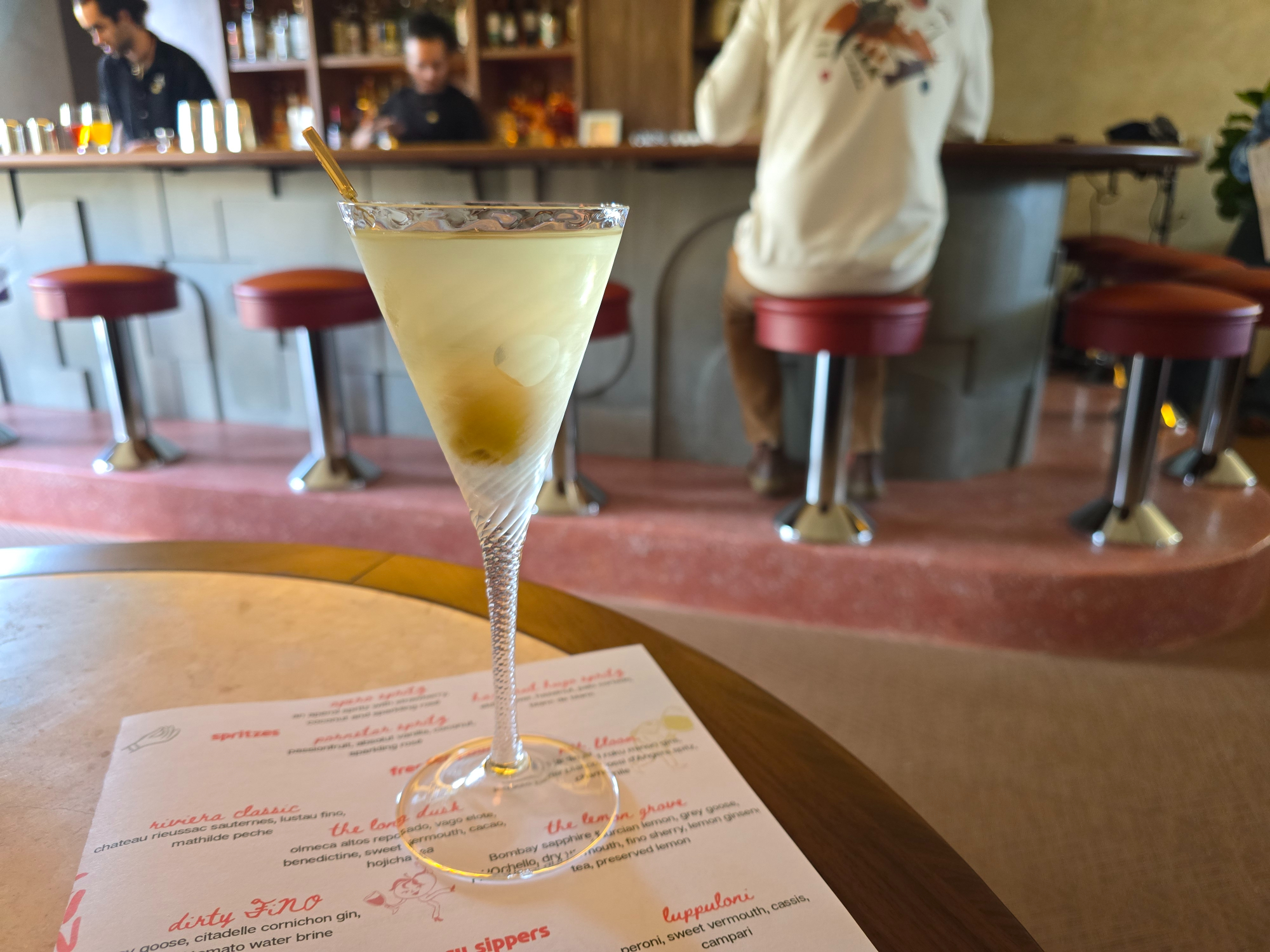
Also now open is FiNO, the restaurant inside the revamped All Inn Hotel on East Colfax. We enjoyed our first meal there; if you’re planning to visit, don’t miss the signature martini, the Medi Nachos and the caper-studded charred cabbage.
On East Sixth Avenue, the powerhouse duo behind the city’s best new barbecue restaurant, Riot BBQ, has debuted Chicken Riot in the former Truffle Cheese Shop space. Meanwhile, the former Whiskey Biscuit in Englewood is now the Barn, a neighborhood eatery from a pair of longtime hospitality pros, including former Brider chef Chase Devitt.
Taqueria Los Gallitos has expanded once again, adding an eighth location in the former Taco John’s near the shuttered Denver Merchandise Mart.
And just in time for the Rockies home opener on Friday, April 3, McGregor Square has opened its revamped food hall. The former Milepost Zero moniker is out. Now, the space is dubbed McGregor Square Food & Drink and includes six food stalls from local eateries: Anthony’s Pizza & Pasta, C Burger, G-Que BBQ, High Point Creamery, TaCo! and Tora Ramen.
There’s just one closure to report this week: Ballyhoo Table & Stage, which actually shuttered last month after an eviction notice was posted.
In other openings and closings news:
Here’s the complete list of restaurants and bars that opened and closed this week*:
Openings
The Barn South Broadway, 3299 South Broadway, Englewood
Chicken Riot, 2906 East Sixth Avenue
FiNO, 3015 East Colfax Avenue
McGregor Square Food & Drink, 1601 19th Street
Paperboy, 3940 West 32nd Avenue
Taqueria Los Gallitos, 5810 Logan Street
Closures
Ballyhoo Table & Stage, 3300 Tejon Street
*Or earlier and not previously reported.
Know of something we missed? Email cafe@westword.com.

Denver, Colo. (03/27/2026) – In front of another expected record-breaking crowd, the Washington Spirit is set to take on Denver Summit FC in the side’s inaugural home match at Empower Field at Mile High. With over 60,000 tickets already distributed, the match is poised to break the NWSL attendance record of 40,091 set last summer when the Spirit visited Bay FC at San Francisco’s Oracle Park. Kicking off at 2 p.m. EDT, the match will broadcast nationally on CBS.
The Spirit
Washington comes into this weekend’s fixture off a difficult 1-1 home draw with Utah Royals FC earlier this week. After scoring in the 18th minute, the Spirit nearly earned its first victory of 2026 but conceded an equalizer late and had to settle for a single point on the table. Washington’s goal was scored by midfielder Rebeca Bernal, the Mexican star’s first since transferring to the NWSL last year.
Saturday afternoon’s match will mark the first-ever meeting between the Spirit, one of the NWSL’s original clubs, and 2026 expansion side Denver Summit FC. Denver will be the 17th different opponent for Washington across its regular season history: the Spirit has played against 13 active clubs (all except expansion sides Denver and Boston) as well as defunct clubs the Boston Breakers, FC Kansas City and the Western New York Flash.
The Spirit has had success against expansion sides as of late, tallying 11 wins in 15 matches against NWSL clubs in their first season of competition since the start of the 2021 campaign. In 2024, the Spirit went a perfect 5-0-0 against Bay FC and Utah Royals FC, outscoring the teams 10-3 with a playoff win to boot. In 2022, Washington earned a 1-3-0 record against Angel City FC and San Diego Wave FC and, in 2021, the eventual NWSL champions went an impressive 5-1-0 against Kansas City and Racing Louisville FC.
This weekend’s matchup at Empower Field at Mile High, home of the NFL’s Denver Broncos, is set to shatter the NWSL’s single match attendance record with over 60,000 tickets already distributed. The Spirit has also been the visiting team for two of the league’s previous three record-setting attendances: 34,130 fans at Seattle’s Lumen Field when the Spirit took on the Reign and 40,091 in the stands at San Francisco’s historic Oracle Park to watch Washington play Bay FC.
Washington is in good standing in several attacking categories through three matches despite two draws and a loss. The Spirit remains first in the league in rate of possession at nearly 62% and top three in both shots and shots on target with 49 and 17, respectively. With just three goals through three matches, look for the Spirit attack to continue getting attempts on frame this weekend.
Following Saturday’s match, the Spirit will hit the road again next weekend for an away match against Bay FC in San Jose on Sunday, April 5. Washington’s next home match will be on Friday, April 24 at 8 p.m. EDT when the side hosts the defending Shield winner Kansas City Current at Audi Field. Information on tickets can be found HERE.
The Opponent
Denver Summit FC opened its inaugural season with three straight away matches, collecting a win, a loss and a draw to carry four points into its home opener this weekend. Summit FC dropped its first match to Bay FC 1-2 before drawing Orlando 1-1 and beating Gotham 2-0.
Summit FC is led in scoring by star German forward Melissa Kössler who has three goals in three matches, scoring once in each contest. With a goal tomorrow, the forward would join Alex Morgan as just the second player in league history to score in each of her first four matches with a club. Look for the Spirit defending third to place an emphasis on limiting chances to Kössler on Saturday afternoon.
Denver has only allowed one goal across its last 240 minutes of action after giving up two in the first 30 minutes of the side’s opener. The strong recent form of Summit FC’s defending third against the Spirit attacking third’s ability to generate chance after chance will be a point to watch this weekend.
Three former Spirit players are currently on the Summit FC roster as midfielders Meg Boade and Jordan Baggett and defender Camryn Biegalski signed with the side ahead of this season. Baggett spent four years with the Spirit after being drafted by the side in 2019 while Biegalski signed with Washington in 2021 and played three seasons, both winning the 2021 NWSL Championship with the team. Boade spent the first half of the 2025 season in DC as a short-term injury replacement, even scoring a goal for the Spirit.
Following tomorrow’s match, Denver will travel to Seattle to face Reign FC on Saturday, April 4.
All-Time Series History
This weekend’s match will be the first-ever meeting between the Spirit and Denver Summit FC.
About The Washington Spirit
The Washington Spirit is the premier professional women’s soccer team based in Washington, D.C. and plays at Audi Field in Buzzard Point. The Spirit was founded on November 21, 2012 and is an inaugural member of the National Women’s Soccer League (NWSL) the fastest growing sports league in the US. The club is home to some of the best players in the world who have won championships for both club and country. For more information about the Spirit, visit WashingtonSpirit.com and follow the club on Twitter, Instagram and Facebook.

Lifestyle35 minutes ago
‘The Comeback’ is back. That’s something to Cherish

Technology47 minutes ago
The best deals we’ve found from Amazon’s Big Spring Sale (so far)

World53 minutes ago
Zelenskyy offers cutting-edge drone defense to Gulf allies as Ukraine seeks missile support

Politics59 minutes ago
JD Vance says he was ‘obsessed’ with UFOs, believes aliens are actually ‘demons’

Health1 hour ago
Hormone therapy boosts weight loss drug results by 35% in women, study finds

Florida1 year ago
Florida High School Football Rankings: Top 25 teams – Oct. 21

Oregon2 years ago
How old is Bo Nix? What to know about Oregon quarterback ahead of 2024 NFL Draft

Connecticut2 years ago
Cleary's 21 help Le Moyne down Central Connecticut State 69-64 in OT

Virginia2 years ago
99th annual Pony Swim held in Virginia

Indiana2 years ago
Indiana Members Credit Union announced as new anchor tenant at Bottleworks District
Politics59 minutes ago
JD Vance says he was ‘obsessed’ with UFOs, believes aliens are actually ‘demons’
World2 hours ago
The EU's recipe for trade deals : easy on beef, tough on wine

News3 hours ago
Photos: ‘No Kings’ protests across the country

Politics13 hours ago
Jeffries declines to break with indicted Democrat after ethics panel’s guilty verdict

World14 hours ago
Hundreds of thousands march through London in stand against the far right
-

 Sports1 week ago
IOC addresses execution of 19-year-old Iranian wrestler Saleh Mohammadi
-

 New Mexico6 days ago
Clovis shooting leaves one dead, four injured
-

 Tennessee5 days ago
Tennessee Police Investigating Alleged Assault Involving ‘Reacher’ Star Alan Ritchson
-

 Technology7 days ago
YouTube job scam text: How to spot it fast
-

 Minneapolis, MN3 days ago
Boy who shielded classmate during school shooting receives Medal of Honor
-

 Texas1 week ago
How to buy Houston vs. Texas A&M 2026 March Madness tickets
-

 Science1 week ago
Record Heat Meets a Major Snow Drought Across the West
-

 Politics1 week ago
Schumer gambit fails as DHS shutdown hits 36 days and airport lines grow