Denver, CO
Devon Toews completes wild Avalanche comeback in 6-5 overtime win


They did it again.
For the second time this season, the Colorado Avalanche completed a remarkable comeback against the Buffalo Sabres. Devon Toews scored 48 seconds into overtime Thursday night to give the Avs a wild 6-5 victory at Ball Arena that was not without controversy or a cost.
“It felt great because our guys dug in and they got the win,” Avs coach Jared Bednar said. “We needed that win and we wanted that win. I think that play … everyone on the team is pissed off so they dig in extra hard. I’m glad to see them get rewarded. I thought it was an unbelievable effort down the stretch.”
The play Bednar referenced was when this game took a wild turn early in the third period. Just 22 seconds after Ross Colton had brought Colorado to within a goal, Zach Benson scored to put Buffalo ahead 4-2.
Benson had been checked into the crease behind Wedgewood. After Wedgewood fell backwards onto him and was clearly injured, Benson got up and scored a wraparound goal while the Avs netminder was still writhing in pain.
Bednar went off on the officiating after the game, a move that will likely come with a fine from the NHL.
“Listen, this isn’t against the two refs that called the game tonight,” Bednar said. “It’s the inconsistency in that call. It seems pretty common sense to me, right? He’s hurt. The puck goes to the corner. He’s not getting up. Just blow it dead. … When you’re doing it for every other player on the ice, but you’re not going to do it for the goalie, that makes no sense to me.”
The Avalanche challenged for goaltender interference, but it was upheld. Wedgewood left the game and could not put any weight on his right leg.
Colorado’s new backup goaltender has been excellent since arriving in a trade from Nashville on Nov. 30. He was 4-2 with a .932 save percentage in six appearances since the deal.
“We need everyone,” Toews said. “We’re a family in here. We pick each other up. When one guy goes down, when (Wedgewood) went down, we were able to pick him up. It takes everyone.”
Colorado rallied after allowing the first three goals, then trailing 4-2 and 5-3. Jason Zucker scored his third goal of the night to give the Sabres a two-goal lead with 3:51 remaining, but the Avs stormed back yet again.
They also rallied for a 5-4 win at Buffalo last month after yielding the first four goals of the contest. This one might have been even more improbable.
Cale Makar had his second of the evening with 2:28 left and Jonathan Drouin sent it to overtime with eight seconds remaining on Nathan MacKinnon’s third assist of the contest. It was the latest game-tying goal for the Avs since a MacKinnon tally with seven seconds left at Tampa Bay on Jan. 17, 2015.
Buffalo took a pair of penalties shortly after the Benson tally, and Mikko Rantanen made it a one-goal game again on a one-timer from MacKinnon at 4:17 of the third. It was Rantanen’s team-leading 22nd goal, and one of three MacKinnon points to push his league-leading total to 64.
Zucker helped the Sabres build a 3-0 lead with a pair of power-play goals. Colorado’s penalty kill had been red hot coming into this game. The Avs had erased 23 of the past 25 opposing power plays during the past 11 games.
In between the first two Zucker goals, an old friend burned the Avs. Bo Bryam, playing in his first game at Ball Arena with the Sabres since he was traded to Buffalo before the deadline last season, got behind the Avalanche defensemen on a rush and tucked a pretty backhanded goal past Wedgewood.
The Avs traded Byram to Buffalo for Casey Mittelstadt in a swap of recent top-10 draft picks on March 6, shortly after sending Ryan Johansen and a first-round pick to Philadelphia for Sean Walker. It was Byram’s fifth goal of the season. He’s also averaging more than 23 minutes per contest while playing next to Sabres captain Rasmus Dahlin on the top pairing.
Colorado had a MacKinnon goal waived off after an offsides review earlier in the second period. The Avalanche did get one back with 5:02 remaining in the second.
Makar took a drop pass from Drouin near the right point, then juked past Zucker before snapping a shot under the crossbar. His two-goal night gives him 13, which leads all NHL defensemen.
The second one began the late-game fireworks and kicked off another incredible comeback.
“I don’t even know what to say, to be honest,” Avs goalie Mackenzie Blackwood. “(I had) the best seat in the house. Obviously, it sucks for (Wedgewood). I feel bad for him. You never want to see anyone get hurt. That was tough. But the way we rallied back was fun to watch.”
Want more Avalanche news? Sign up for the Avalanche Insider to get all our NHL analysis.
Originally Published:



Denver, CO
Married couple stars on stage at Denver Center for the Performing Arts’ “Dracula, a Comedy of Terrors”

The Denver Center for the Performing Arts is celebrating more than 100 performances of its hit comedy “Dracula, a Comedy of Terrors.” The show, which puts a funny twist on the classic tale of Dracula, is filled with comedy and romance, and that romance can be seen both onstage and off.
“It is a great date night. It is fast, it is fun,” said Marco Alberto Robinson, the actor who portrays Dracula on stage.
“People leave with a smile on their face, it is a good time,” said Adriane Leigh Robinson, an actress who plays multiple characters during the show.
The duo not only finds romance on stage in the production, but off stage, they are already in love.
“We are just best buddies,” Marco Robinson said.
“We are married,” Adriane Robinson said as she laughed.
The duo has lived in Denver for years and has enjoyed helping bring Dracula to life at the Garner Galleria.

“Dracula is a cult classic about a blood thirsty monster. But this is different, because he is not only blood thirsty, he is spicy,” Adriane Robinson said.
The other cast members of the production told CBS News Colorado they are confident both Robinsons are capable of starring on Broadway in New York. However, both said they have found a purpose and belonging in Denver and at the DCPA.
“We have found a super tight and loving community that we don’t ever want to leave,” Adriane Robinson said.
Both have been in many productions at the DCPA, but added Dracula has given them an opportunity to explore a side of their relationship that they’ve never had before.
“It’s the easiest (to be romantic interests on and off stage),” Adriane Robinson said.
“It is super easy. We can come up with something at home and bring it in. It is nice to not be passing ships,” Marco Robinson said.

Both said they have an appreciation for the surrounding arts community in Colorado, and have loved being on the same funny production in Dracula, a Comedy of Terrors.
“We are putting roots down here, and regional theatre is super important. And, the Denver Center is doing some of the best of it,” Marco Robinson said.
Dracula, a Comedy of Terrors, plays at the DCPA through May 10. For more information on tickets, visit their website.
Denver, CO
Traffic, parking and transportation at Burnham Yard are focal points around Denver Broncos stadium plans

As the Denver Broncos design a new stadium for Burnham Yard, one of the most critical elements — with some of the highest potential for backlash from neighbors and the team’s fans — will be the plan for getting people to and from the site.
Questions about parking, traffic management, transit access and accessibility have emerged as major concerns for neighbors of the future stadium during early community meetings in west Denver organized by the city and the team.
“It is probably the No. 1 topic that we’re hearing,” said Troy Halouska, the vice president of the La Alma Lincoln Park Neighborhood Association.
Lindsey Noble, a resident of the neighborhood, said in an interview with The Denver Post that she and her neighbors were “pretty concerned about traffic and parking” from the events the new stadium would host — which the team has said would go well beyond Broncos home games.
“They (the Broncos) are creating these problems, and some of the solutions I have heard have to do with altering our neighborhood or changing streets,” she said. “These aren’t things we want.”
The Broncos are still early in the process of laying out plans for the abandoned rail yard as the team aims to build a stadium by 2031. The team has already released some transportation-related details, including proposed changes to street crossings with the Regional Transportation District’s light rail tracks, potential parking options for events, and plans for connections to existing pedestrian and bike infrastructure.
The team plans to build more than just a stadium, though. Alongside their home field, the Broncos want to create a mixed-use entertainment district that uses the space year-round. Like other modern stadiums, it would have restaurants, open space and, potentially, hotels or apartments outside the venue.
Officials with the Broncos say they have heard the worries from nearby residents about the massive development’s potential impact on their neighborhoods. They say they’re looking for ways to integrate the site into the community — without flooding nearby streets with thousands of cars and people.
Generally, the team plans to address those concerns by designing the site in such a way that eventgoers are guided in through the north and south ends of the site, rather than being routed through the mostly residential neighborhood to the east.
The site itself, once the rail yard is cleared, will be nestled between two rail corridors — freight lines to the west and RTD’s light rail tracks to the east. Entities connected to the Broncos have been buying up properties beyond the banana-shaped rail yard for the stadium and surrounding district.

A bit farther to the west of the site is Interstate 25, and the north and south boundaries are generally West 13th Avenue and West Sixth Avenue. An early conceptual plan the team submitted to the city shows how its designers plan to connect local streets through the site. One new street would connect West Eighth Avenue to Osage Street, for instance, incorporating city plans to lower part of Eighth’s current viaduct.
Josh Brooks, a principal at Sasaki, the architecture firm designing the site’s master plan, said during a community meeting in February that the team plans to design the area so that noise and visual impacts are pushed as far from the residential neighborhood as possible.
“Our intention is to ensure this is an integrated community, a mixed-use development that really serves as an extension of the city and becomes part of the shared memory of the community,” Brooks said.
One of the things that most attracted the team to Burnham Yard was its connectivity with other areas. Located near I-25, Sixth and Eighth avenues, an RTD station, walking paths and planned bike lanes, the site won’t need massive changes to help bring in visitors.
But that doesn’t mean the team won’t have plenty of work to do on that front.

During the February community information meeting at the La Alma Recreation Center, the Broncos conducted a quick survey of attendees to ask what their top concerns were. The most-selected item was “traffic congestion during games/events,” followed closely by “impacts to housing expenses.”
The design for the site will focus on connecting existing roads and pedestrian paths and easing those neighborhood concerns, Brooks said.
The Broncos will work with the city in the coming months to develop a small-area plan, which will set out the design for the expanse surrounding the stadium site. While the stadium itself will be privately financed, the team has said, the city and state could be on the hook for infrastructure improvements nearby.
The city already plans to pay for improvements to two major road connections, the nearby Sixth and Eighth avenue viaducts, as part of bond projects passed by voters last fall.
Train crossings and transit access
One advantage of the Burnham Yard site is that it already has an RTD rail station next to it, making transit access easier. But the 10th and Osage station is accessible only from the east, with Burnham Yard west of the tracks. So it would need to be reconstructed to allow pedestrian access from both directions.
Working together with RTD, the Broncos are proposing changes to several light rail crossings. At 13th Avenue, the team has suggested a bridge for trains to pass over the street, with a place for drivers, cyclists and pedestrians to cross beneath.

At 12th and 9th avenues, team officials are proposing a separated-grade crossing for cyclists and pedestrians to also pass underneath the light rail tracks.
Eleventh, 10th and 8th avenues would have at-grade crossings. Halouska, with the La Alma Lincoln Park Association, said residents would like as few at-grade crossings as possible to prevent collisions or other safety hazards.
Besides concerns about transit crossings, Noble expressed worry that there also might not be enough light rail cars on a game day to transfer everyone who arrives and departs that way.
A spokesperson for RTD said there was no one available to discuss the transit agency’s plans for the area.
“RTD is regularly meeting with the project team and other partners to provide feedback and ask questions about their proposed stadium plans. Specific information about any proposed changes to RTD’s services or operations is not yet available,” RTD’s Pauline Haberman said.
What about parking?
Other concerns about the plan center on where those who drive to the stadium will park.
Halouska said even when his group tries to host meetings about other topics, parking is the concern its leaders hear about the most from the neighborhood.
“The Broncos have said themselves they really want this area to be activated 300 days a year, and so folks in the neighborhood are very concerned about what kind of impact that will have on parking,” he said. “We really need more details from the team and the city.”

Team officials have said they plan to provide the same amount of parking at the new site as Empower Field has — which is roughly 7,000 spots. But instead of a stadium surrounded by surface parking, officials are proposing making use of parking structures and shared parking systems.
Noble said the on-site parking spots could make a big difference in the impact to the neighborhood.
The city could also add resident-only parking permit rules for the surrounding streets, much like a longstanding system in the Jefferson Park neighborhood around Empower Field.
A spokesperson for the Department of Transportation and Infrastructure said the same system is possible for Burnham Yard, but it’s too early to know specifics of how it would work.
“We won’t begin designing anything until we understand how the site will work, where impacts could occur, and there’s a focused conversation on (residential parking permits),” Nancy Kuhn wrote in an email.
Halouska said that could help, but only if the parking permits are regularly enforced.
“Having the permits is a fine idea — though it does cost money to get a permit — but if it’s not enforced, then it’s kind of pointless,” Halouska said.
Bike and pedestrian access
It won’t just be public transportation and cars getting people to events or the new development. The Broncos also plan to build connections to surrounding bike and pedestrian infrastructure, like the South Platte River Trail and the bike lane along 13th Avenue, Brooks said.
There could also be a connection to the proposed 5280 urban trail, which as envisioned by planners would weave through several neighborhoods that include La Alma Lincoln Park, Golden Triangle, Capitol Hill, LoDo and Ballpark. The effort, led by the Downtown Denver Partnership, is not yet fully under construction. About a quarter of the plan is in “next steps development,” according to the DDP.
Noble said she hoped the team would find some ways to encourage people to travel to the stadium without driving.
“Really, I think incentivizing people to ride their bike and take public transportation is the way to go to mitigate the impacts,” she said. “Make it easy. Make it affordable.”
Officials say they will wrap up the community-informed small area plan, which will provide policy guidance for city decision-makers, by the end of this year. It will include resident feedback and ideas about housing, sidewalks, open space and grocery access, among other things.
The Broncos and the city plan to host their next community meeting in May.
Get more Colorado news by signing up for our Mile High Roundup email newsletter.

On Sunday, a special Mass was held to say goodbye to the archbishop of the Archdiocese of Denver, Samuel J. Aquila.
Aquila was appointed as the diocese’s archbishop in 2012 and submitted his resignation last year as he neared his 75th birthday, in accordance with Canon Law. Pope Leo XIV accepted his resignation in February and appointed his successor, Archbishop-designate James R. Golka.
A Mass of Thanksgiving was held at the Light of the World Catholic Church on Sunday to bid farewell to the man who led the diocese for nearly 14 years and to thank him for his service. Aquila was ordained as a priest in the Archdiocese of Denver in 1976, and this year marks his 50th anniversary as a priest.
As archbishop, Aquila spoke out against abortion and called on officials to find a balance between protecting the United States’ borders and welcoming immigrants.
Aquila says that during his time as archbishop, the diocese has received many blessings and seen significant growth, including an increase in the number of young families.

“I think that the Lord has blessed this archdiocese tremendously, especially since World Youth Day in 1993; things really began to change here. Many new apostolates were born from the visit of Pope John Paul II, of Saint John Paul II. And there is a very deep awareness of how God providentially watches over this archdiocese,” said Aquila. “And so, I am handing off a very blessed archdiocese with many young families and many people who are deeply committed to the gospel.”
He shared a feeling of gratitude and joy for the opportunity to serve the diocese, knowing the faithful, and leading people to Christ. Aquila hopes that his community has found a deeper love of Christ and the sacraments through his service and an understanding of the importance of being missionary disciples.
“Of being those who go out themselves and invite others to encounter Christ and to come to know Jesus Christ. And proclaiming the, what we call the ‘kerygma,’ the basic good news of the gospel, or the joy of the gospel. That in Jesus Christ sin and death have been conquered, and He is the one that is the way to the Father,” Aquila said.
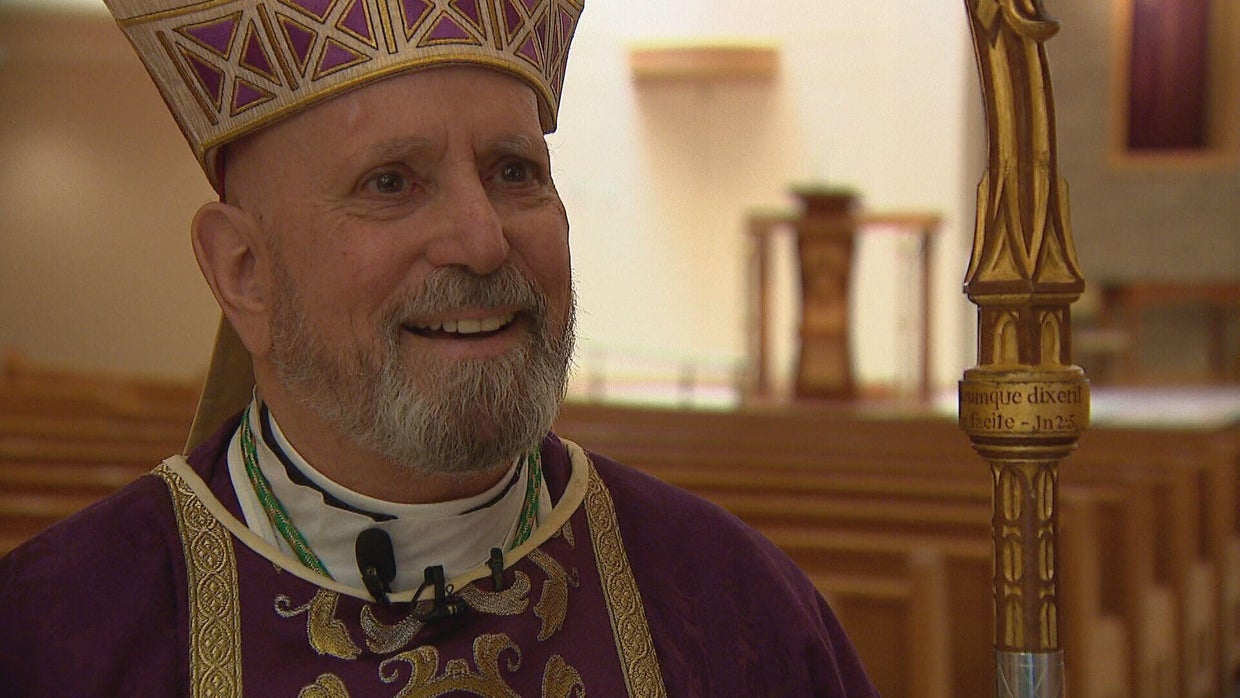
He said he hopes the diocese continues to grow in faith and that he believes Golka will be a good shepherd of that faith.
“The blessing is that my successor is an incredibly good man whose heart is on fire for Jesus Christ,” he shared. “And so, it’s like running a race and handing off the baton and saying, ‘Okay, you run with it.’ And knowing that Archbishop-designate Golka, who will be Archbishop Golka on Wednesday, that he will be one who continues caring for the gospel and making disciples for Christ.”
Golka’s installation as the new archbishop will begin with evening prayers at the CoBank Arena at the National Western Complex on March 24, followed by an Installation Mass the next day. A Mass of Taking Possession of the Cathedral will take place on March 26 at the Cathedral Basilica of the Immaculate Conception.

Georgia woman charged in abortion case granted bond as questions grow over murder charge

New downpours in Hawaii lead to more flooding on Oahu Island

Idaho Senate takes up bill to jail trans people for using public bathrooms

Illinois bill to expand sale of raw milk fails as advocates continue push

Indianapolis police investigate shooting near downtown canal

Florida High School Football Rankings: Top 25 teams – Oct. 21

How old is Bo Nix? What to know about Oregon quarterback ahead of 2024 NFL Draft

Cleary's 21 help Le Moyne down Central Connecticut State 69-64 in OT

99th annual Pony Swim held in Virginia

Indiana Members Credit Union announced as new anchor tenant at Bottleworks District

See How the LaGuardia Plane Crash Unfolded

Mullin confirmed as DHS chief as lawmakers near solution on shutdown standoff

Von der Leyen clinches Australia trade deal

Trump administration places Christopher Columbus statue on White House grounds

See TSA Wait Times at Major U.S. Airports
-

 Detroit, MI5 days ago
Drummer Brian Pastoria, longtime Detroit music advocate, dies at 68
-

 Oklahoma1 week ago
Family rallies around Oklahoma father after head-on crash
-

 Georgia1 week ago
How ICE plans for a detention warehouse pushed a Georgia town to fight back | CNN Politics
-

 Alaska1 week ago
Police looking for man considered ‘armed and dangerous’
-

 Movie Reviews5 days ago
‘Youth’ Twitter review: Ken Karunaas impresses audiences; Suraj Venjaramoodu adds charm; music wins praise | – The Times of India
-

 Education1 week ago
Video: Turning Point USA Clubs Expand to High Schools Across America
-
 Science1 week ago
Long COVID leaves thousands of L.A. county residents sick, broke and ignored
-

 Sports3 days ago
IOC addresses execution of 19-year-old Iranian wrestler Saleh Mohammadi