Denver, CO
Denver air quality program hopes to expand its services to reach more people


Bad air quality has unfortunately become a familiar issue in Colorado. At a few points last year, Denver’s skyline was completely blanketed with smoke, whether from wildfires in the state or nearby areas, as well as other sources.
Back in 2019, Denver launched a program called Love My Air. In its simplest form, it rates air quality as good, moderate, or hazardous. It’s a tool that lets people in the Denver area look up air quality in real time and decide how they’ll spend time outdoors.
Across the city, little boxes provide important information.
“We measure a couple of different pollutants you see up here,” said Ephraim Milton, a coordinator with the Love My Air program. “Ozone is a big one here in Colorado. PM2.5 is very common.”
Real-time information on air quality and how it affects different individuals is gathered through a network of 80 sensors, a combination of the program’s sensors and the state’s.
“It’s just very hyperlocal,” said Milton. “I mean, you go to the weather app and that, yeah, sure, that’ll tell you the general, you know, air quality for the area. But you go here to ours, and it’s definitely going to be more local.”
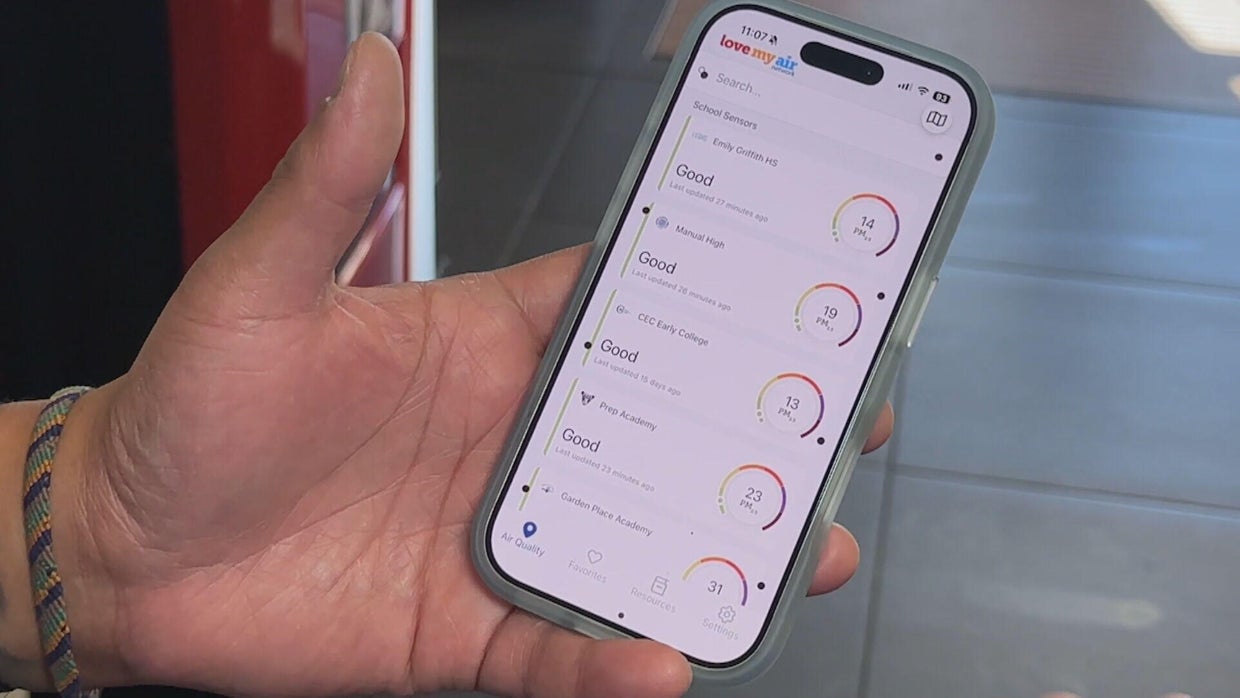
The program has expanded over the years and is now in Jefferson and Adams Counties, with sensors across the state and even into Wisconsin.
“They think they have six sensors in Milwaukee,” said Milton. “They’re really great partners.”
Inner City Health, a non-profit providing healthcare to underserved individuals, is a partner here in Denver.
“The technology that they’re providing affords us the ability to inform our patients and the community at large [that] today may be a good day to go outside and exercise, and today may actually be of danger,” said Charles Gilford III, the non-profit’s CEO. “Because we have folks who have asthma or COPD or different conditions that pose a risk to their safety and to their well-being.”
They have an interactive kiosk in their waiting room, but hope the program continues to evolve.
“To send a text message to our patient base and give them updates and say, ‘Hey, just as a heads up, we saw you the other day and today would be a good day to take that walk,” said Gilford. “What are the other iterations of this technology that folks can have? How can we make sure that in a society where everything is competing for our attention, we can just be that one little nudge to give people good information while they’re going about their lives, and not just in the clinic?”
This tool can also be useful in the event of a fire or nearby construction, for example. Love My Air hosts community workshops focused on education, in addition to their online resources, and the information is also used for policy and rulemaking across the state. They plan on adding multiple healthcare partners in 2026 and hope to continue expanding their reach.


There have been many great offensive linemen in Denver Broncos history, so this list is likely going to vary greatly from person to person. In fact, my take might be a little too bold, but I’m sticking with it.
At the top spot, I think Garett Bolles has earned it. Since coming into the league as a first-round pick in 2017, he has grinded through one of the worst periods in Broncos’ history and grown from beleaguered oft-penalized first-round bust into a perennial All-Pro caliber left tackle. Even more, he has stayed a Bronco through his entire career. The rest of my list speaks for itself and is a throwback to Super Bowl greatness.
Here’s where our Mile High Report staff landed on the top five for offensive line:
Scotty Payne: Tom Nalen was the leader of Mike Shanahan’s offensive line, Ryan Clady was a top LT on a Hall of Fame career before injury and Stink was a key member of the Broncos Super Bowl winning OL back in the 90s. I included Bolles and Meinerz since both will be on this list once their successful careers are over with.
Chris Hart: This position group was one of the toughest to come up with a top five. Denver has an incredible history of top-tier offensive lineman. There are several players I left off who were certainly deserving. I posted Tom Nalen as my top guy because he was a stalwart at the pivot for many years for the franchise. We all know what Gary Zimmerman and Mark Schlereth provided on the field and they are both Super Bowl champions. The last two spots go to two recent Broncos, left tackles Garret Bolles and Ryan Clady. Bolles, a decade into his career, continues to play at a high level and Clady was a fantastic blindside protector whose career ended earlier than it should due to injury.
Ian St. Clair: For the first time in Elway’s career, he had a blind-side protector. And Zimmerman is one of the best to ever do it. Same for Nalen, who should be in the HOF. Clady was special. Bishop was the first Broncos offensive lineman in franchise history to get a Pro Bowl invite and provided one of the best in-game quotes ever when he said in Denver’s endzone at old Cleveland Stadium before hiking the ball at the 2-yard line in what would become The Drive, “We got ‘em right right where want ‘em.” And Schlereth helped lock down the left side of the line that was one of the best in league history.
Sadaraine: The top 3 are largely indisputable, other than maybe swapping Schlereth and Zimmerman. Ken Lanier started 178 consecutive games, which is nuts for an OT, and appeared in 3 Super Bowls. Garret Bolles has crafted himself into an all-time great at tackle and may move up the list.
Ross Allen: The Hall-of-Famer Gary Zimmerman was everything you could ever ask for in a left tackle and was a huge reason why John Elway and that 1997 team was so dominant. Schlereth also gets his credit as he was a massive contributor to Denver’s Super Bowl successes. There’s a strong case for Tom Nalen deserving a spot in the Hall of Fame too. And for the past two years I’ve become a huge spouter of Bolles being destined for the Ring of Fame. He’s an incredible talent as has been the cornerstone of this team for a while now. I just hope he gets his Super Bowl.
Joe Mahoney: Top 3 are a no-brainer. Bolles will finish his career with more starts on the OL than any other Bronco. The man he will pass is Ken Lanier. Since stats from Lanier’s era don’t exist we only have starts to go off, but Lanier was an iron man. He started 167 NFL games and 165 were for the Broncos.
There is a bit of variation here, but a general consensus of who should be in the Top 5. I loved the throwback to Keith Bishop who was a big part of the John Elway fourth quarter magic back in the day.
Who gets into your top five offensive lineman list?

The Denver Nuggets are running it back with at least one free agent from last year’s team. According to Shams Charania of ESPN, the Denver Nuggets have re-signed point guard Tyus Jones.
Free agent guard Tyus Jones has agreed to a one-year deal to return to the Denver Nuggets, sources tell ESPN. Jones played a reserve role after joining Denver on the buyout market last season, and enters his 12th NBA season as his agent Kevin Bradbury of LIFT Sports Management… pic.twitter.com/OxPTfX8C7l
— Shams Charania (@ShamsCharania) July 2, 2026
Jones played 11 regular season games for Denver last year and got into 3 post-season contests as well. The Nuggets are desperately lacking in point guards who can handle the rock, especially after they decided not to pick up the fourth-year option on fellow point guard Jalen Pickett. Denver liked Jones and his ability to handle on-ball pressure better in the playoffs, and obviously feel there is utility in having him on the 15-man roster for his passing acumen and mistake avoidance despite being a target at just 6 feet tall. They did not draft a point guard, so it’s possible Jones is the first PG off the bench for the Nuggets – but in recent years they’ve relied on players like Bruce Brown to shoulder some of those duties as well even if they’re not pure point guards, so it remains to be seen just how much court time Jones is going to get.
His 5:1 assist-to-turnover ratio in his career points to his high floor in ball security though, and the Nuggets have proven time and again over the past several years that they can be truly great if they don’t have silly turnovers. Jones comes back to the Mile High looking to help the Nuggets minimize their mistakes so they can maximize their talent.
Welcome back, Tyus!

The Fourth of July weekend is one of the biggest celebrations of the summer, and Denver is delivering a packed lineup of events for every kind of adventurer. Whether you’re looking to watch fireworks light up the Colorado sky, catch a live concert at Red Rocks, enjoy rooftop parties, indulge in seasonal food and drinks or explore the city’s thriving arts and culture scene, there’s no shortage of ways to celebrate Independence Day.
Here’s your guide to the best music, food, fireworks, nightlife, arts, and cultural events happening across Denver this Fourth of July weekend.
Follow @303magazine on Instagram
Read: Best Rooftops to Watch 4th of July Fireworks + Sip Cocktails in Denver
Read: The Ultimate 4th of July Outdoor Colorado Music Guide
FASHION EVENTS

Denver Fashion Week Fall 2026 Second Model Auditions
Where: TBA
Cost: $10+
The Lowdown:
Following overwhelming demand from aspiring models across Colorado, Denver Fashion Week (DFW) has announced a second round of model auditions for its upcoming Fall/Winter 2026 runway season.
MUSIC EVENTS
Read: The Ultimate 4th of July Outdoor Colorado Music Guide


Gillian Grogan and EMMA ROSE
Where: Skylark Lounge – 140 S. Broadway
Cost: $18+
The Lowdown:

Zeds Dead with Sippy, Baauer, Holly, HYDRAULIX & LUMBERJVCK
Where: Red Rocks Amphitheatre – 18300 W Alameda Pkwy, Morrison
Cost: $205+
The Lowdown:

Flobots
Where: Levitt Pavilion Denver – 1380 W Florida Ave
Cost: $0+
The Lowdown:

Don Toliver with SahBabii, SoFaygo, Chase B
Where: Ball Arena – 1000 Chopper Cir
Cost: $105+
The Lowdown:
FOOD EVENTS
Read: Best Rooftops to Watch 4th of July Fireworks + Sip Cocktails in Denver

Dumpling Love: Dim Sum Party
Where: Stir Cooking School Highlands – 3215 Zuni St.
Cost: $120 per person
The Lowdown:
Join the dumpling party and learn how to make pork bao buns, shrimp shumai, pan-fried gyoza, and crab cheese rangoons. All classes include a full bar with beer, wine, and house-curated cocktails for purchase.

Stars, Stripes, and Deck Nights
Where: Woodie Fisher Kitchen & Bar – 1999 Chestnut Pl.
Cost: Free
The Lowdown:
Celebrate America’s 250th with our festive Bomb Pop Drinks, featuring real Bomb Pops and High Noon buckets!

4th of July Rooftop Fiesta at Cimera
Where: The Source Hotel – 3330 Brighton Blvd.
Cost: $60+
The Lowdown:
The experience is an open rooftop gathering featuring live-fire cooking, craft cocktails, and skyline views throughout the evening. Guests will enjoy Peruvian street skewers, duck & chorizo paella, and ceviche prepared live on-site.

Farmers Market Central Park
Where: Central Park – 29th Ave & Roslyn
Cost: Free
The Lowdown:
Local vendors provide Colorado-grown produce, tasty baked goods, specialty meats, gourmet food items and more!
LIFESTYLE EVENTS

Mystic Magnolias; A Southern Gothic Cabaret
Where: Colorado Sake Co – 3559 Larimer St
Cost: $25+
The Lowdown:
Saunter yourself out to The Mystic Magnolias, a Burlesque AND Drag Show with chilling charm and dripping in Southern Gothic atmosphere.

America 250 | Colorado 150 Drone Show presented by Visit Denver
Where: DPAC/Denver Performing Arts Complex – 1400 Curtis St.
Cost: Free
The Lowdown:
Following Sunset Cinema’s showing of National Treasure on July 3rd at Sculpture Park, stay to enjoy the 4th of July Drone Show! This special event will be brought to you by Visit Denver, celebrating American 250 | Colorado 150, including an appearance by Mayor Mike Johnston.

Beat The Bomb Summer Mission: America250 Edition
Where: Beat The Bomb – 3863 Steele St, Unit 1273
Cost: $39+
The Lowdown:
Beat The Bomb announces the limited-time-only Summer Mission: America250 Edition – celebrating America’s 250th with five new games, a collectible beach towel, and a red, white, and blue Paint Blast!

Independence Day Concert with Denver Municipal Band (Cheesman Park)
Where: Cheesman Park – 1900 E. 11th Ave.
Cost: Free
The Lowdown:
Price:Free
Join the Denver Municipal Band’s Concert Band for an Independence Day concert at Cheesman Park Pavilion with special guest Denver District 10 City Councilmember Chris Hinds narrating Aaron Copland’s Lincoln Portrait.
Follow @303magazine on Instagram
Whether you’re dancing at a concert, enjoying a garden dinner, cheering on your favorite soccer team or exploring a new exhibition, Denver offers plenty of ways to fill your 4th of July weekend calendar. Gather your friends, support local businesses, and discover something new around the city.
-

 Health20 minutes ago
Is Skipping Breakfast Bad? The Weight-Loss Truth May Surprise You
-
 Lifestyle35 minutes ago
Nearly half of Americans surveyed don’t know what America 250 commemorates
-

 Technology45 minutes ago
Amazon updated 2023’s Fire HD 10 tablet with 4GB of RAM
-

 World50 minutes ago
Interpol issues red notice for Ukrainian woman wanted for Monaco apartment bombing targeting oligarch
-

 Politics57 minutes ago
Mamdani blasts ICE agents, Elon Musk and ‘supremacy’ in America 250 speech ahead of July 4 weekend
-

 Health60 minutes ago
What killed Americans in 1776? The answer is dramatically different from today
-

 Sports1 hour ago
Knicks champion says he hopes ‘truth comes out’ after leaving team for Eastern Conference rival
-

 Technology1 hour ago
Cheap streaming box could hijack your home internet

