Colorado
Venezuelan gang activity confirmed by Aurora officials after release of Colorado woman’s surveillance video


Officials in Aurora have begun to acknowledge the presence of Venezuelan gang activity in their Colorado city after the release of a terrifying surveillance video.

For Cindy Romero, living at 12th Avenue and Dallas Street has become a daily struggle against escalating violence and neglect. Life deteriorated into a nightmarish ordeal, marked by frequent encounters with crime and what she calls a lack of support from the city and police.
She first noticed a gradual increase in crime in her part of the Denver metro area about a year-and-a-half ago. It got worse over the last three months.
“We were constantly forced to take measures to protect ourselves,” Romero said. “I installed more locks, bought additional cameras, and parked further away from the building. Despite all these efforts, the situation kept escalating. We felt like we were being tortured.”
She reported seeing people move automatic weapons and engage in shootouts.
“I’ve seen handguns, rifles with scopes, and other firearms. It got so bad that bullets even went through my friend’s apartment and hit my car,” Romero said.

Despite frequent calls to 911, the police response was nearly nonexistent.
“The police would call me and say they weren’t coming unless it was a severe crime,” Romero said. “When I called the police to report a shooting, one officer asked if I had considered moving. If I could have afforded to leave, I would have.”
Romero installed multiple cameras that captured violent activity over weeks. Doorbell video shows a group of armed men forcing their way into her neighbor’s home. Another night, her camera outside captured two men approaching a vehicle with guns drawn.

Romero criticized city officials for their failure to address the problem.
“You are elected to protect your constituents. You fundraise off your promises, yet you left us to die,” she said.
After a shootout on Aug. 18 Romero was driven to desperation. And this week, her pleas for help were finally answered. By Aurora City Councilwoman Danielle Jurinsky.
“Jurinsky was the only one who really took an interest in our safety and worked to find solutions. It meant a lot to have someone genuinely concerned,” Romero said.
Jurinsky helped her move out and find other housing.
“I went in myself to help people move out. There was a large police presence, and at one point, a gentleman charged up the stairs after me,” Jurinsky said. “It was an eerie feeling. Even as I was helping people move out, others were moving in right in front of me.”
Jurinsky first became aware of the escalating gang activity shortly after a large gathering in Aurora related to the Venezuelan election.
“People were saying that individuals were patrolling their properties with guns and walking through their buildings. They called the police repeatedly, but the response was lacking,” Jurinsky said.

According to her, police leadership had instructed officers that a minimum of three to four officers were needed to respond to such situations. If those numbers weren’t available, officers were told not to respond.
The council member expressed frustration about being one of the few voices raising awareness about the issue.
She says politics is being played with people’s lives.
“There’s human suffering on the other side of some of these doors and these apartment complexes, but there’s a big election coming up, and nobody wants to talk about this. Because if they start talking about this, someone has to admit there’s a problem somewhere,” she said.
On Wednesday, Aurora police said they’re aware that components of TdA are operating in Aurora.
In a statement, APD says in part:
“It would be improper at this time for the city and APD to make any conclusory statements about specific incidents or provide details about law enforcement strategy and operations. Based on our initial investigative work, we believe reports of TdA influence in Aurora are isolated.”
In response to the release of Romero’s video footage, Jurinsky hopes it will bring action.
“The footage is too real to deny,” she said. “There has to be something done now.”
Romero says she survived the ordeal by staying quiet, giving them food and bedbug spray.
Every night, she said she was praying she’d hear sirens.
In her new home, far away, the peace she feels is fleeting. Because for many others, she says there is no escape, no solution and no sign that help will ever come.
“My family lives in Aurora. My daughters live there. I talked them into moving to Aurora. If someone doesn’t do something now, their apartments are next,” she said.
The city and Aurora police established a special task force to address concerns about Venezuelan gang activity.
APD urges all community members, including members of our migrant communities, to please report crimes committed against them to their local law enforcement agencies and not remain silent victims. Crime victims can report crimes anonymously by calling Metro Denver Crime Stoppers at 720.913.STOP (7867). As always, information could change as the investigations continue at the local, state and federal levels.



With the NFL Draft approaching, many players will hear their names called, and their lives will be changed forever. The Colorado Buffaloes have been fortunate to have 25 of their players selected in the first round of the NFL Draft.
So here is a list of all 25 Colorado players who have been selected in the first round of the NFL Draft.
Every Colorado First Round Draft Pick
- RB Byron “Whizzer” White (1938): No. 4 overall, Pittsburgh Pirates
- LB Jerry Hillebrand (1962): No. 13 overall, New York Giants
- RB Bobby Anderson (1970): No. 11 overall, Denver Broncos
- DT Herb Orvis (1972): No. 16 overall, Detroit Lions
- RB Bo Matthews (1974): No. 2 pick, San Diego Chargers
- TE J.V. Cain (1974): No. 7 overall, St. Louis Cardinals
- C Pete Brock (1976): No. 12 overall, New England Patriots
- DT Troy Archer (1976): No. 13 overall, New York Giants
- OT Max Koncar (1976): No. 23 overall, Green Bay Packers
- DB Mark Haynes (1980): No. 8 overall, New York Giants
- OT Stan Brock (1980): No. 12 overall, New Orleans Saints
- WR Mike Pritchard (1991): No. 13 overall, Atlanta Falcons
- DE Alfred Williams (1991): No. 18 overall, Cincinnati Bengals
- DB Deon Figures (1993): No. 23 overall, Pittsburgh Steelers
- DT Leonard Renfro (1993): No. 24 overall, Philadelphia Eagles
- WR Charles Johnson (1994): No. 17 overall, Pittsburgh Steelers
- WR Michael Westbrook (1995): No. 4 overall, Washington Redskins
- RB Rashaan Salaam (1995): No. 21 overall, Chicago Bears
- OG Chris Naeole (1997): No. 10 overall, New Orleans Saints
- WR Rae Carruth (1997): No. 27 overall, Carolina Panthers
- TE Daniel Graham (2002): No. 21 overall, New England Patriots
- DE Tyler Brayton (2003): No. 32 overall, Oakland Raiders
- OT Nate Solder (2011): No. 17 overall, New England Patriots
- DB Jimmy Smith (2011): No. 27 overall, Baltimore Ravens
- WR/CB Travis Hunter (2025): No. 2 overall, Jacksonville Jaguars
Key First Round Buffaloes
There have been several Colorado players who have made a significant impact in the NFL after being drafted in the first round.
The first player to note is running back Byron “Whizzer” White, who was the first-ever Buffaloes player drafted in the first round of the NFL Draft. White had a solid career in the NFL and definitely was worth the selection.
Colorado also had an interesting trend of multiple players being selected in the first round on eight separate occasions, which showed the Buffaloes ‘ ability to develop talent on a consistent basis.
One of the more successful Colorado players in the NFL was an offensive tackle, Nate Solder, who was drafted by the Patriots in 2011 and won two Super Bowls while blocking for Tom Brady. Solder provided consistent protection and was someone that the Patriots could rely on to do his job well.
Former Colorado cornerback Jimmy Smith also had a successful career after being drafted in 2011 by the Baltimore Ravens. One of the highlights of Smith’s career was when he won Super Bowl XLVII with the Ravens and made crucial stops on the goal line to seal the game. Throughout his career, Smith was always solid in coverage and could make a play when he needed to.
Currently in the NFL is former Colorado Heisman Trophy winner Travis Hunter, who was selected by the Jacksonville Jaguars at No. 2 overall in the 2025 draft. Hunter had a decent rookie season, but it was unfortunately ended early by injury.
Heading into a sophomore season, Hunter will be making a change to cornerback and looks to be a great contributor for the Jaguars on defense while adding some value as a situational receiver.
As indicated by the number of players drafted in the first round from Colorado, the Buffaloes definitely have a history of being able to develop great talent that can be successful in the NFL.
Unfortunately, there are no Buffaloes projected to be first-round picks this season, however next year could be the perfect opportunity with players like wide receiver Danny Scudero and defensive tackle Santana Hopper poised for big seasons.
Sign up to our free newsletter and follow us on Facebook for the latest news.
 Add us as a preferred source on Google
Follow

South Broadway’s newest bar in Denver is a “nostalgic-forward neighborhood cocktail bar” called the Good Luck Club. However, it’s been anything but lucky.
“It would have been really helpful to have a road map of here’s how you open up a bar,” said Ben Hamilton, Good Luck Club’s general manager. “Here are the steps you need to take.”
It’s finally open, six months behind target, thanks to a guessing game they didn’t know they were playing.
“I was like jumping over hurdles and navigating a maze to try to figure out and put all the pieces of the puzzle together,” Hamilton added. “There was a good list of complications that we ran into when we were filing for our liquor licenses, our zoning permits, our assembly permits.”
However, the city knows about the problems behind the permit process.
Tuesday marks exactly one year since Denver Mayor Mike Johnston signed his first executive order overhauling the city’s permit process with a new office.
“It’s really hard for our customers to understand what is needed for every type of construction project that could be out there,” said Robert Peek, the director of development systems performance with the Denver Permitting Office.
Hamilton says that was exactly what he and his team faced: “It seemed like it was never the full answer.”
That’s why the Denver City Council approved a $4.6 million contract with ComplyAI for a tool that will help streamline and speed up the process.
“It’ll do an initial review of their applications and their plans and identify anything that I’m missing or anything that is approvable for the city,” Peek said.
The software could shave weeks off the process, and hopefully, in the future, businesses like the Good Luck Club can serve the community more quickly.
“We see this as part of our larger effort to really revitalize our local economy by getting these businesses and homeowners to move into their homes,” Peek said.
The permitting office is just beginning the implementation process to integrate the artificial intelligence tool into the system. They hope to launch it to the public by the end of the year.
Meanwhile, the Good Luck Club is having its grand opening on April 30.

The Colorado Avalanche’s head coach will not travel with the team this week due to injuries he sustained after being hit with a puck during a game over the weekend.
Jared Bednar will stay at home as the team travels for two of its last regular season games in Canada, according to a statement from the team. Bednar was diagnosed with facial fractures and a corneal abrasion, but is expected to make a full recovery without surgery.
During Saturday night’s game against the Vegas Golden Knights, a stray puck hit by the Knights’ Keegan Kolesar went over the boards and into the Avalanche’s bench. Bednar was struck on the right side of his face and taken to the hospital to be evaluated.
The assistant coaching staff, which includes Dave Hakstol and Nolan Pratt, took over after Bednar left the game. Pratt told reporters in the postgame press conference that the hit was “unnerving.”
“It’s scary when the pucks are flying in there, it happens all the time,” Pratt said, adding that it was “unfortunate tonight.”
But the team recalibrated and returned to play, Pratt said.
The Avalanche lost in overtime, but have already secured their playoff spot.
Pratt and Hakstol will lead the Avalanche in the Monday night game against the Edmonton Oilers and Tuesday’s game against the Calgary Flames. The team will return to Denver’s Ball Arena for its final home game before playoffs on Thursday.

Swalwell scandal sparks fears of deeper rot on Capitol Hill
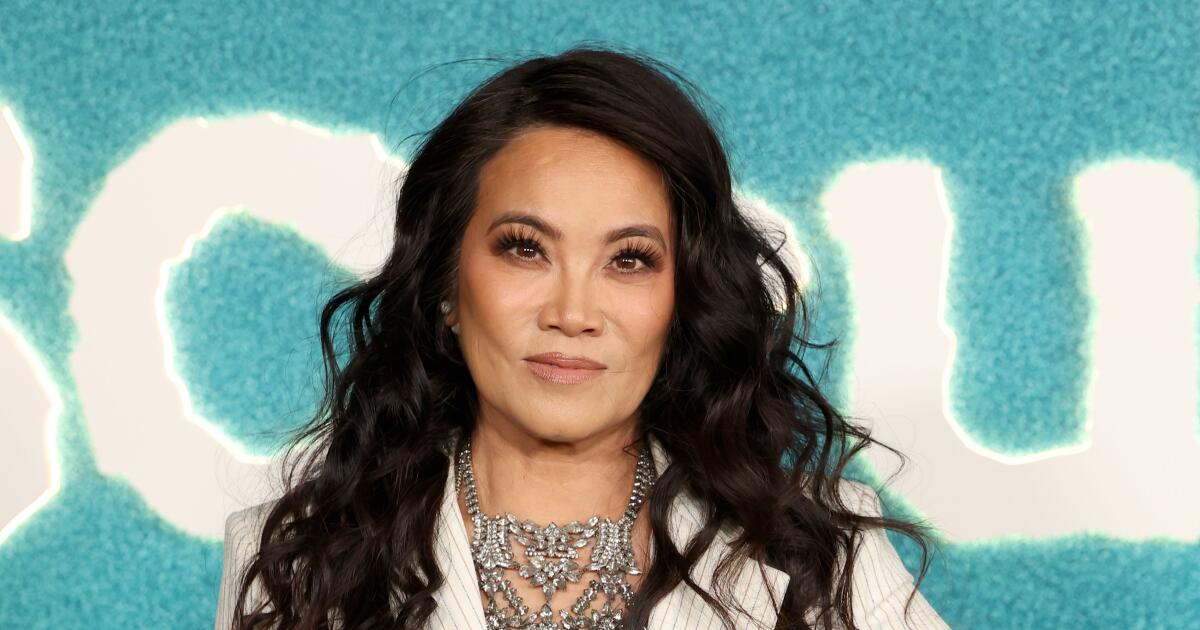
‘Dr. Pimple Popper’ Sandra Lee had a stroke last fall. Here’s how the TV doc is bouncing back

NFL reporter Dianna Russini resigns after photos published of her and Patriots coach Mike Vrabel

Fifth woman accuses former US lawmaker Eric Swalwell of sexual misconduct

Commercial Ships Transit Strait of Hormuz as U.S. Blockades Iran’s Ports

Florida High School Football Rankings: Top 25 teams – Oct. 21

How old is Bo Nix? What to know about Oregon quarterback ahead of 2024 NFL Draft

Cleary's 21 help Le Moyne down Central Connecticut State 69-64 in OT

99th annual Pony Swim held in Virginia

Indiana Members Credit Union announced as new anchor tenant at Bottleworks District
Fifth woman accuses former US lawmaker Eric Swalwell of sexual misconduct
Commercial Ships Transit Strait of Hormuz as U.S. Blockades Iran’s Ports

Video: How Stephen Miller Is Adjusting Trump’s Immigration Agenda

Biden DOJ weaponized FACE Act against pro-life Americans, 882-report alleges

Mass drone warfare is Europe’s rising security threat
-

 Atlanta, GA1 week ago
1 teenage girl killed, another injured in shooting at Piedmont Park, police say
-

 Georgia1 week ago
Georgia House Special Runoff Election 2026 Live Results
-

 Arkansas4 days ago
Arkansas TV meteorologist Melinda Mayo retires after nearly four decades on air
-

 Pennsylvania1 week ago
Parents charged after toddler injured by wolf at Pennsylvania zoo
-
 Milwaukee, WI1 week ago
Potawatomi Casino Hotel evacuated after fire breaks out in rooftop HVAC system
-

 Austin, TX7 days ago
ABC Kite Fest Returns to Austin for Annual Celebration – Austin Today
-

 World1 week ago
Zelenskyy warns US-Iran war could divert critical aid from Ukraine
-

 Ohio8 hours ago
‘Little Rascals’ star Bug Hall arrested in Ohio