Connect with us

Colorado

Scythe Robotics to expand in Colorado

Published

on

Scythe Robotics to expand in Colorado


In Longmont, Scythe Robotics expects to create 394 net new jobs at an average annual wage of $116,881, which is 157 per cent of the average annual wage in Boulder County

NEWS RELEASE
GOVERNOR JARED POLIS
**********************
DENVER – Today, Governor Polis and the Global Business Development Division of the Colorado Office of Economic Development and International Trade (OEDIT) announced that Scythe Robotics, a producer of advanced, commercial-grade autonomous solutions for the landscape industry, has selected Longmont, Colorado for expansion. The company has expanded its Boulder County headquarters and manufacturing facility to meet growing demand for its all electric, fully autonomous commercial mower. 

“Colorado is leading the nation in the industries of tomorrow and we are thrilled to see Scythe Robotics expand in Colorado, creating 394 good-paying jobs and helping to pioneer the future of robotics. Colorado’s highly educated workforce, pro-business environment, and commitment to innovation make us the best place to live, work, and do business,” said Governor Polis. 

Scythe Robotics selected Longmont for expansion because of its proximity to top universities, a vibrant and expanding robotics community, and the state’s outdoor recreation lifestyle. At 28,000 square feet, the expanded facility is more than double the original size. A unidirectional production line will increase output of the company’s mowers while prioritizing comfort and productivity for the company’s technicians.  

Advertisement

“The opening of our state-of-the-art robotics facility accelerates our ability to deliver high-quality, game-changing machines to our customers for the upcoming mowing season,” said Jack Morrison, Co-founder and CEO of Scythe. “We are proud that our growth is generating meaningful job opportunities within Colorado’s burgeoning cleantech sector and advancing our state’s culture of collaboration and creativity. Boulder County’s diverse talent pool and inspiring landscape make it the ideal place for Scythe to innovate and lead the way in robotics.”

In Longmont, Scythe Robotics expects to create 394 net new jobs at an average annual wage of $116,881, which is 157 per cent of the average annual wage in Boulder County. The positions will include engineers, manufacturers, and roles in sales and operations. 

“Colorado ranks fifth in the nation as a cleantech hub, and companies like Scythe Robotics play an important role in advancing this key industry. We are pleased to see the company expand in Longmont, creating new good-paying jobs while contributing to our state’s ongoing leadership in cleantech,” said OEDIT Executive Director Eve Lieberman. 

“Colorado is known for its startup ecosystem and knowledge-based economy. This exciting addition to our robotics sector will boost innovation and design, advancing Colorado’s position as a developer of leading edge technologies in the clean tech space,” said Michelle Hadwiger, OEDIT’s Director of Global Business Development. 

The Colorado Economic Development Commission approved up to $372,000 in a performance-based Strategic Fund Job Growth Incentive for the company at $6,500 per net new job over a five-year period. These incentives are contingent upon Scythe Robotics, referred to as Project Eldorado throughout the OEDIT review process, meeting net new job creation and salary requirements. 

Advertisement

“Scythe Robotics’ expansion in Longmont underscores Colorado as a premier destination for businesses driving technological advancement. By adding nearly 400 skilled positions, Scythe is helping to fuel economic growth and opportunity in our region. This expansion reaffirms Colorado’s position as a leader in the cleantech industry and highlights our commitment to fostering a diverse, thriving workforce,” said Metro Denver EDC President, Raymond H. Gonzales.

“The Longmont Economic Development Partnership is thrilled to celebrate Scythe Robotics’ expanded headquarters facility and manufacturing line in Longmont,” said Erin Fosdick, CEO & President of Longmont Economic Development Partnership. “Their sustainable, reliable, and highly advanced robots are revolutionizing landscaping and we are proud they choose to call Longmont home!   

In addition to Colorado, Scythe Robotics considered Florida and Texas for expansion. The company currently has 80 employees, 60 of whom are in Colorado. 

**********************

Advertisement


Source link

Continue Reading
Click to comment

Leave a Reply

Your email address will not be published. Required fields are marked *

This site uses Akismet to reduce spam. Learn how your comment data is processed.

Colorado

Grand jury indicts over half the officers in a rural Colorado county

Published

on

Grand jury indicts over half the officers in a rural Colorado county


DENVER — Five of the seven law enforcement officers in a rural Colorado county, including the sheriff, have been indicted in an investigation into allegations of misconduct, prosecutors said Friday.

A grand jury indicted Costilla County Sheriff Danny Sanchez and former Deputy Keith Schultz on charges of allegedly mishandling human remains discovered in October 2024, according to court documents. A man who found the remains and reported them to the sheriff’s office said Sanchez and Schultz took only the skull and left the other remains behind, including teeth, court documents state.

Two months passed before Schultz wrote a report, saying he left bones in a bag on his desk and went on another call, the documents state. A coroner’s official said he received the skull in an unlabeled paper bag from the sheriff’s office, the documents state.

Separately, Undersheriff Cruz Soto, Sgt. Caleb Sanchez — the sheriff’s son — and Deputy Roland Riley are charged in connection with the use of a Taser against a man who was suffering a mental health crisis in February and tried to leave when they insisted he go to the hospital, according to the documents. The man said he was “roughed up” by deputies and was left with broken ribs, according to the indictments.

Advertisement

Soto was charged with failing to intervene and third-degree assault, according to court documents. Caleb Sanchez and Riley were charged with second- and third-degree assault.

In announcing the indictments, 12th District Attorney Anne Kelly said she’s committed to investigating and prosecuting crimes no matter the offender.

“I cannot and will not ignore violations of the trust that a community should have in their police. No citizen of the San Luis Valley should have any doubts about the integrity of their police force,” Kelly said at a news conference Friday evening.

A person who answered the phone Friday at the sheriff’s office said it had no immediate comment but planned to post a statement online. Phone numbers listed for Danny Sanchez, Soto and Riley did not work. Caleb Sanchez did not have a listed number. An unidentified person who answered a number for Schultz referred The Associated Press to an attorney, Peter Comar. The AP left a message Friday for Comar seeking comment.

__

Advertisement


Source link

Continue Reading

Colorado

Colorado residents face earliest water restrictions ever — a harbinger of worse to come

Published

on

Colorado residents face earliest water restrictions ever — a harbinger of worse to come


As a result of a snow drought and a heat wave that have both set records, some Colorado residents face the earliest restrictions on their water use ever imposed.

Denver Water announced Wednesday that it is seeking a 20% cut in water use, asking people to turn off automatic watering systems until mid-May and restricting the watering of trees and shrubs to twice a week.

“The situation is quite serious,” said Todd Hartman, a spokesperson for the utility. “We’re in such a dire situation that we could be coming back to the public in two or three months and saying you’re limited to one day a week.”

It is the earliest in the year that Denver Water has ever issued a restriction, Hartman said.

Advertisement

Colorado’s snowpack peaked at extremely low levels on March 12 — nearly a month earlier than usual — then cratered during the recent heat wave that cooked nearly every state in the West.

“We already had the lowest snowpack we’ve seen since at least 1981, and now, with the heat wave conditions, we’ve already lost about 40% of the statewide snowpack” since the March 12 peak, said Peter Goble, Colorado’s assistant state climatologist. “Conditions are looking more like late April or early May.”

The water restrictions are a harbinger of what’s to come in many Western states as officials try to manage widespread drought concerns. Nearly every snow basin in the Mountain West had one of its warmest winters on record and is well behind normal when it comes to water supply, according to the U.S. drought monitor. The dwindling snowpack is likely to raise the risk of severe wildfires, hamper electricity generation at hydropower dams and force water restrictions for farmers.

Hartman said nearly every community east of the Rockies, along Colorado’s front range, is in much the same boat as Denver.

City Council members in Aurora are considering similar water restrictions; reservoirs there stand at about 58%, according to the city’s website. In the town of Erie, officials declared a water shortage emergency on March 20 after they observed a massive spike in consumption.

Advertisement

Gabi Rae, a spokesperson for the town, said Erie was perilously close to having taps run dry because so many residents had started watering their lawns early amid the unseasonable heat.

“We were a day away from running out of water. That’s why it was such an emergency,” she said.

Erie officials demanded that residents stop using irrigation systems altogether.

Goble said this month’s heat wave has set records in every corner of Colorado, sometimes by double digits.

“I can’t remember seeing a single heat wave that broke this many records, and seeing it across such a large portion of the country is certainly eye-popping,” he said, adding: “I’m located in Fort Collins, and we got up to 91 last Saturday. The previous record for March was 81, so we smashed that record. And it wasn’t just one day, either.”

Advertisement
Skiers at Breckenridge Ski Resort as temperatures reached into the 50s this month. Michael Ciaglo / Getty Images

Denver Water, which serves about 1.5 million residents in the city and its surrounding suburbs, gets about half of its water from the Upper Colorado River Basin and the South Platte River Basin. The latter’s snowpack was at about 42% of normal Tuesday, the utility reported. The Upper Colorado River Watershed was at 55%.

Systemwide, Denver Water’s reservoirs are about 80% full, which is only about 5 percentage points lower than in a typical year.

“That sounds pretty good,” Hartman said. “Except that what we’re not going to be able to rely on is that rush of water that will bring those reservoirs back up, because the snowpack is so low.”

In other words, the snowpack — a natural water reservoir — is mostly tapped already and won’t replenish reservoirs later this spring and into summer, when runoff usually peaks.

In Erie, city workers plan to aggressively police water use until sometime next week using smart meters that monitor residential usage. Rae said the city is also sending utility workers to patrol neighborhoods and look for sprinklers that are turned on.

Advertisement

“People have been kind of annoyed with how aggressive we were, and I don’t necessarily think they understand the ramifications if we weren’t,” Rae said. “It is an actual serious emergency situation. We were so close to reaching empty, there would literally be no water coming out of the taps — hospitals, schools, fire hydrants, your home would have no water.”

Although the limits on outdoor watering will be lifted soon, Rae expects more restrictions later this spring and summer.


Source link

Continue Reading

Colorado

Suddenly hazy skies in Denver prompt some residents concerned about wildfire smoke to call 911

Published

on

Suddenly hazy skies in Denver prompt some residents concerned about wildfire smoke to call 911


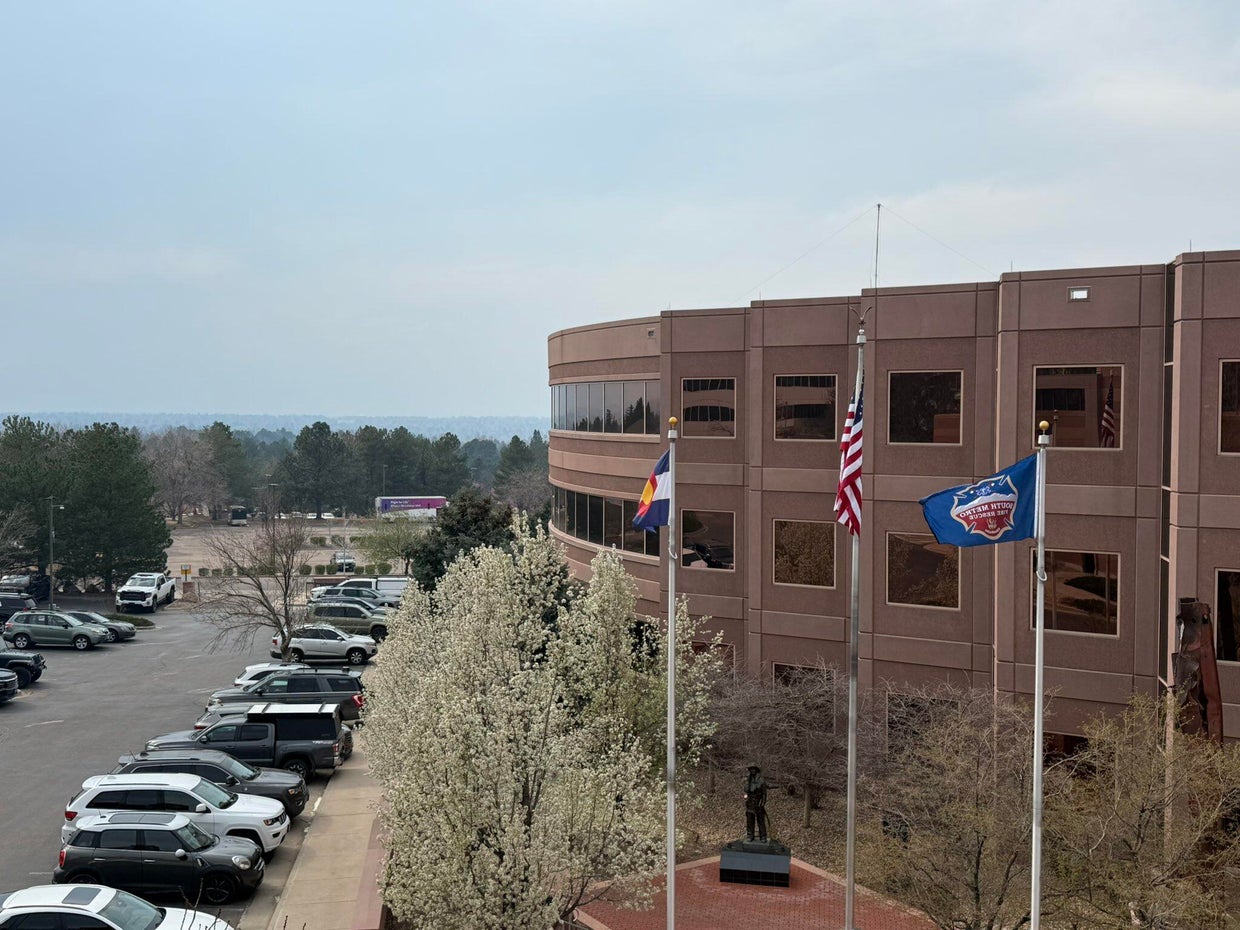
Some people who live in the Denver metro area on Thursday afternoon were making calls to 911 after skies became noticeably hazy and winds kicked up. It was due to smoke from wildfires in Nebraska moving into Colorado. A cold front also was moving through the Front Range, and there is dust in the air.

Advertisement

CBS


The poor air conditions led to reduced visibility downtown after 3 p.m. Several of CBS Colorado’s City Cams showed dust or smoke in the air.

Temperatures were expected to drop by as much as 20 to 30 degrees with the cold front.  

The suddenly dusty skies prompted at least one fire agency to put out a plea to residents to please only call 911 “if you see flames.” That warning was put out by South Metro Fire Rescue, which shared a photo on X of an office building with haze visible outside.

haze.jpg

Advertisement

South Metro Fire


South Metro Fire Rescue said in their post that the smoke is from Colorado’s neighbor to the east. They called it a “significant haze” in the air.

Earlier this month, the Morrill Fire and the Cottonwood Fire burned a significant amount of Nebraska grassland and ranchland. They have mostly been contained by firefighters. Nebraska Gov. Jim Pillen said those two fires combined with several others have burned approximately 800,000 acres of land. On Thursday, Pillen announced that he is signing several executive actions intended to ease the burden caused by the fires.  

There were no wildfires burning in the Denver metro area on Thursday afternoon.

Advertisement


Source link

Continue Reading

Trending