Colorado
Propterty taxes top of mind as Colorado government begins first legislative session of 2024


DENVER, Colo. (KKTV) – Both Democrats and Republicans have a *shared goal of coming up with a long-term solution to property taxes. That’s after lawmakers held a special session to lower property taxes temporarily in the fall.
11 News spoke with republican representative Rose Pugliese of Colorado Springs. She tells 11 News one of her party’s top priorities in this session is to look for options to make the cost of living more affordable for Coloradans.
She says she is hoping to reduce property taxes in the state and to reduce restrictions on construction to make it easier for entry-level homebuyers to buy a home.
”Our priority continues to be about affordability and cost of living and look at the legislation,” Pugliese said. “It’s really making it on affordable to live in Colorado and we talk to our constituents and all of our different areas that’s what we’re hearing.”
Democrat leaders in the Senate have announced five proposals. One would provide k-12 students with six free virtual counseling sessions, to improve mental health care statewide. Another addresses housing and would provide property tax credits for homeowners who convert their rental from short-term to long-term.
11 News reached out to multiple Democratic lawmakers for an interview. In a statement, Senate Majority Leader Robert Rodriguez said:
“This session, Democrats will continue to address the issues that are top of mind for folks and pass policies that ensure every Coloradan has the resources they need to thrive.”
Pugliese also says she is looking forward to finding a long-term solution for property taxes, Democrats agree.
Senator Chris Hansen tells 11 News it’s an urgent matter.
Copyright 2024 KKTV. All rights reserved.





Three-quarters of Colorado residents said they were worried about whether they would be able to afford to continue living in the state, according to a poll conducted this spring.
Last year, about 70% of people responding to the Colorado Health Foundation’s annual Pulse poll said they weren’t sure living here would remain financially feasible. That rose to 76% this year.
“That majority concern was cutting across regions, across income levels, across racial and ethnic groups,” said Lucia Del Puppo, senior vice president at FM3 Research, which works with Democrats.
The poll found that the majority of those sampled said they had already cut back on entertainment spending and charitable giving, with smaller shares saying they’d skipped meals, delayed medical or dental care, or paid a utility bill late.
Only about one in four people said they hadn’t changed their spending or dealt with a financial setback in the last year, with older people and Republicans reporting less budget strain.
“It’s significant and it affects the overall economy” when people reduce their discretionary spending, said Lori Weigel, principal of New Bridge Strategy, which works with Republicans.
The responses suggested a significant minority expected further financial strains in the coming year:
- About two in five worried they or a family member would lose health insurance
- Three in 10 worried about affording enough food
- One-third thought they might lose their housing because they couldn’t afford their mortgage or rent
Notably, more than half of renters were worried about whether they could continue to afford their housing, Weigel said. One-third said they’d avoided asking their landlords to fix problems to avoid rent increases, and one-quarter said they’d taken on high-interest debt, such as payday loans or credit card balances, to deal with housing costs, she said.
Lower-income people and those who identified as Black, Hispanic or Native American reported greater financial struggles than other groups.
Even people who haven’t had to cut back are worried about affordability. When asked to rate the seriousness of a list of potential problems, 85% said both the general cost of living and the cost of housing were either “very serious” or “extremely serious.” Additionally, 82% said the cost of health care was a very serious or extremely serious problem.
Younger people were particularly worried about housing costs, with 94% of millennials and 90% of Generation Z members describing the problem as very or extremely serious.
At the same time, when respondents got the chance to name the most important issue facing the state, the largest share — 28% — chose government and politics. The cost of living and inflation came close behind, with 25% deeming it the top issue.
Just one year ago, only 13% of people considered cost of living and inflation their top concern, Del Puppo said.
“It has jumped really since 2025,” she said.
The two may be related, as 72% of respondents said they weren’t satisfied with the government’s response to economic issues. The only question where a slight majority said they were satisfied with the state government’s performance was making the state “safe and welcoming” to everyone, Del Puppo said.
The poll asked more than 2,200 people about their personal finances, experiences with health care and perceptions of the state between March and April, then weighted their results to represent Colorado’s demographics.
As usual, both a Democratic and a Republican firm ran the poll, to reduce the risk of bias.
Sign up for our weekly newsletter to get health news sent straight to your inbox.

Winter Park will celebrate Colorado’s 150th anniversary of statehood and the nation’s upcoming 250th anniversary with musical performances and a drone show.
Hosted by the Town of Winter Park, the celebration will take place Friday, July 17 on the rooftop parking structure adjacent to Cooper Creek Square. The venue will be transformed into an open-air gathering space featuring a performance stage, a drone show, a photo booth, food and beverage vendors and seating for attendees.
Live entertainment begins at 5 p.m. with the Jessica Jones Trio featuring Kory Montgomery and Tommy Shugart. Hazel Miller & the Collective, one of Colorado’s best-known live acts, will take the stage from 7:15 to 9 p.m.
The evening will conclude with a drone show from 9 to approximately 9:30 p.m., illuminating the sky in honor of Colorado’s sesquicentennial and America’s semiquincentennial.
Guests are encouraged to explore the Cooper Creek Square Entertainment District before and during the event. Beverages purchased from participating businesses in the district may be brought to the rooftop, where additional beverage vendors and light snacks will also be available.
The free community celebration is supported by the Colorado Tourism Office and is part of the statewide America 250–Colorado 150 commemoration, which recognizes Colorado’s 150 years of statehood and the nation’s 250th anniversary in 2026.


Where is the proposed passenger rail station for Fort Collins?
Front Range Passenger Rail proposes a station just north of Drake Road. Take a tour of the area.
What it might be like to use a future Colorado Connector train to get from Fort Collins to Denver’s Union Station and beyond — along with the cities in between — is coming into clearer focus.
The Front Range Passenger Rail District’s website now shows the locations of all of its proposed passenger train stations.
And now the district has also unveiled how its trains will be branded to reflect the personality of Colorado Connector, nicknamed CoCo.
If all goes according to plan, the Colorado Connector will run on the existing BNSF railroad lines from Fort Collins to Pueblo, and eventually on to Trinidad.
Full buildout will require passage of a sales tax and years of work.
However, Phase 1, also known as joint service or starter service, could begin by 2029 and can be done without sales tax approval, according to the district.
This phase would run between Fort Collins and Denver’s Union Station, with stops in Loveland, Longmont, Boulder, Louisville, Broomfield and Westminster.
At least eight city councils have passed resolutions of support for the district’s proposed station locations in their communities.
It’s not a done deal because for the starter service to begin, almost half of its funding still needs to be approved by RTD, the Regional Transportation District serving the Denver metro area.
To fund anything beyond starter service will require voters who live within the Front Range Passenger Rail District boundaries to pass a sales tax.
Where Front Range Passenger Rail stations are to be located
- Fort Collins: The proposed station location is right in the geographic center of Fort Collins. North of Drake Road, running parallel and directly adjacent to the Mason Trail and MAX bus rapid transit line. The heart of Colorado State University is three MAX stops to the north. Old Town with its restaurants, shops and Old Town Square is about 2 miles north, and passengers can use the trail or the MAX bus to get there. The district’s station description notes that CSU’s Canvas Stadium, Moby Arena and key live music venues can be reached in 15 to 20 minutes.
- Loveland: The station would be located along Railroad Avenue between Seventh and Eighth streets, two blocks from the downtown historic district. There is a bus stop about a block away, the COLT South Transfer Point on Eighth Street, the district’s website says, adding that trails like the Loveland Loop and Long View Trail offer bicycle connectivity, while U.S. Highway 34, about six blocks to the north, gets visitors to Estes Park and Rocky Mountain National Park.
- Longmont: This station would be in Longmont’s lower downtown, along First Street near Main Street, off Coffman Road. Front Range Community College is planning a new campus in the area, Coffman Street is Longmont’s first dedicated multimodal corridor, and a future bus rapid transit line is planned for 2028, according to the district. The station would connect to the St. Vrain Greenway, an 8-mile trail that connects to other city and regional trails.
- Boulder: The proposed station is centrally located, north of Pearl Parkway and west of Foothills Parkway. It’s located within walking distance of Boulder Junction, a bus hub, and connects to the city’s network of bike paths, greenways, research and educational campuses, and downtown destinations, according to the district. The University of Colorado Boulder, about 3 miles away, and a cluster of federal research institutions could be accessed using high-frequency bus routes and are within biking distance, according to the location description. The Pearl Street Mall is less than 2 miles west.
- Louisville: The station is proposed on Front Street, a block away from the town’s walkable Main Street corridor with its restaurants and shops, between South and Short streets. The nearby Steinbaugh Pavilion hosts outdoor events like markets, and there’s existing pedestrian connectivity to the RTD line and city parking, according to the district’s location description.
- Broomfield: This station would be east of the Denver-Boulder Turnpike (U.S. Highway 36), at West 116th Avenue and Wadsworth Boulevard. This is “a gateway area where the character of the land is actively changing,” according to the location description, with new residential investment and connections “in every direction.” A pedestrian bridge over U.S. 36 to the west leads to a bus rapid transit station that links to Denver, Boulder, Denver International Airport and the Anschutz Medical Campus. The nearby U.S. 36 Bikeway connects to downtown Denver and downtown Boulder.
- Westminster: The station would be located at West 88th Avenue and Harlen Street, in a redeveloped spot that was once the site of the old Westminster Mall. This “new downtown” includes hospitality, shopping, restaurants, public parks and a new performance pavilion. The passenger rail district, in its description of the location, says the station’s connectivity “is among the strongest on the corridor,” adding that the Flatiron Flyer’s U.S. 36 and Sheridan Station is within walking distance of the future station and the U.S. 36 Bikeway is accessible. Westminster’s 180-mile trail system also passes through the station area, connecting riders from Standley Lake Regional Park on the west to the city of Thornton on the east.
- Union Station in Denver: Located in the heart of the city, seven RTD rail lines converge at Denver’s Union Station, including to and from Denver International Airport, along with more than a hundred regional bus routes, Amtrak’s California Zephyr, Canyon Spirit and CDOT’s future Mountain Rail. Free transit serves the 16th Street Mall and the state Capitol, and the station and surrounding area is a destination itself. Nearby trails connect to Denver’s broader trail network, according to the district. Union Station is where the Colorado Connector starter service, also known as joint service, ends. The rest of the Colorado Connector route below depends on taxpayer funding.
- Littleton: Here, the Colorado Connector rail platform would be integrated directly into the existing RTD light rail station at Mineral Station. There is a shopping and lifestyle district to the north. The South Platte River corridor, including to the Highline Canal Trail and C‐470 Trail, feeds to the station area, according to the district.
- Sterling Ranch: This location would bridge the gap between Douglas County and the Denver metro area. It would be located in the vicinity of U.S. Highway 85 (Santa Fe Drive) and Titan Road. The precise location has yet to be determined, but it would serve the Sterling Ranch community, Lockheed Martin, Roxborough, Highlands Ranch, Castle Rock and broader Douglas County.
- Colorado Springs: This station would be located adjacent to the US Olympic and Paralympic Museum and near America the Beautiful Park, Weidner Field and the Pikes Peak Center for the Performing Arts, near Interstate 25 and Cimarron Street. Connections are available via Sierra Madre Street, Pikes Peak Greenway Trail, the free ZEB shuttle and local bus routes, but “full community connectivity will require continued coordination in the future,” the district’s description says.
- Pueblo: This station would be the southern terminus of the Colorado Connector, located at the historic Pueblo Union Depot near Interstate 25 and Union Avenue. A future pedestrian bridge could connect to the Union Avenue Historic Business District, “a lively, walkable core of 1890s-era masonry buildings featuring boutique retail, residential lofts, and restaurants,” according to the rail district’s description. The Historic Arkansas Riverwalk is within a half mile of the proposed station. The Pueblo Transit Center is located within 1 mile of the station, and the plan envisions a regional bus port for rail and bus services.
- Trinidad: Front Range Passenger Rail District’s current plan calls for a Trinidad station as part of a future “border-to-border” service to come even further into the future. Trinidad is the only community in the FRPR District outside of Denver with intercity rail service already. The Amtrak Southwest Chief platform serves daily intercity passengers near I-25 and Commercial Street on the edge of Trinidad’s historic downtown. There’s a free seasonal trolley that could extend to the station, the district’s description says: “The station location provides immediate access to downtown, brand new lodging nearby, refuge for interstate travelers, and an eclectic mix of tourism offerings, including art, history, architecture, and adventure.”
Colorado Connector adopts fox mascot
The Front Range Passenger Rail District recently released its new branding for the Colorado Connector.
A rendering of the train features the new logo, with the words “CoCo” in orange and “Colorado Connector” in blue.
“Trustworthy and purposeful, yet fun, lighthearted and full of personality, CoCo is designed to reflect the culture, character and communities of Colorado’s Front Range,” a news release announcing the branding says.
The branding also features a fox mascot, “a native Colorado animal known for agility, intelligence, and the ability to navigate diverse landscapes with ease,” the news release says. “Curious, resourceful, and always on the move, the fox embodies the adventurous spirit of the Front Range and the joy of discovering what’s just beyond the next stop.”
-

 Detroit, MI21 minutes ago
Livestream: Mayor Sheffield, Detroit health chief to address wildfire smoke threat
-
 San Francisco, CA33 minutes ago
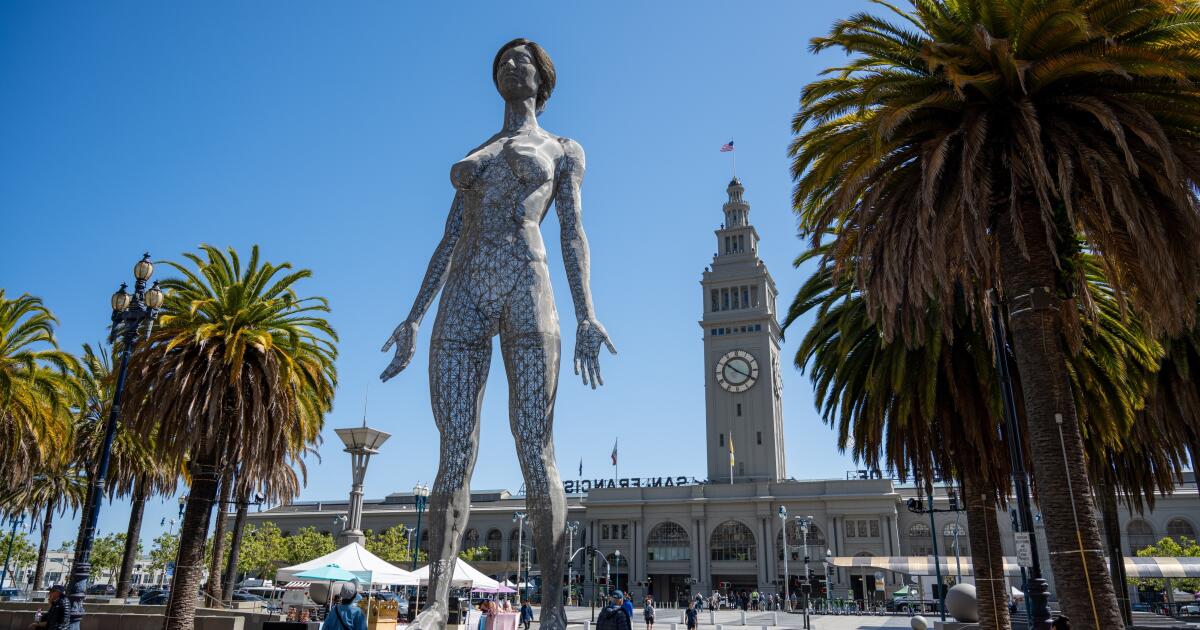
A sculpture of a giant naked woman goes on sale in San Francisco. Bring a crane
-

 Dallas, TX39 minutes ago
No ‘straight answer’: Why Pioneer Cemetery is the latest battleground at City Hall
-

 Miami, FL45 minutes ago
TSA hosts news conference ahead of World Cup third place match at Miami Stadium
-

 Boston, MA51 minutes ago
ICE Boston arrests Barbados national during targeted operations in Attleboro
-

 Denver, CO57 minutes ago
Denver Broncos training camp is 2 weeks away
-

 San Diego, CA1 hour ago
Daily Business Report: July 17, 2026, San Diego Metro Magazine
-
 Milwaukee, WI1 hour ago
‘You can see God’s hand in it’: How Milwaukee women are building a double Dutch community through sisterhood and fitness

