Colorado
Environmentalists decry softening of proposed regulation of drilling’s impact on Colorado’s poorest communities


Environmentalists and the oil and gas industry are battling over new state regulations that one side says would protect vulnerable communities that suffer the most from pollution and the other agues would effectively ban new wells in Colorado.
The latest clash involves the ongoing debate about how close those wells should be to homes.
Next month, the Colorado Energy and Carbon Management Commission must approve rules that define “cumulative impacts” of pollution and address how they affect what are known as disproportionately impacted communities across the state.
Gov. Jared Polis signed a bill last year directing the energy commission to establish rules regarding the cumulative impacts of drilling by considering how the oil and gas industry’s work can harm air and water quality, wildlife and public health, as well as increase odors and noise, in communities that are disproportionately impacted by pollution.
The cumulative impacts rule comes on the heels of the commission’s decision this week to approve a comprehensive plan from Crestone to drill up to 166 petroleum wells near Aurora Reservoir, despite strong opposition from a nearby neighborhood where homes cost between $600,000 and $1 million.
At issue in the newest debate is a provision that would have required a company to receive consent from every resident or building owner within 2,000 feet of a proposed drilling site. Right now, rules state drilling sites must have a 2,000-foot setback from homes, hospitals, schools and office complexes, but there are exemptions that allow companies to drill and those permits are rarely denied.
Environmentalists say those exemptions provide numerous loopholes that allow the industry to drill wherever it wants, and this latest provision was needed to protect the communities that suffer the most from air pollution, noise, traffic and other issues caused by drilling.
“It creates more room for the industry to continue to produce oil and gas in disproportionately impacted communities,” said Patricia Garcia-Nelson, an advocate for GreenLatinos Colorado.
“Blunt instrument to ban the industry”
The energy commission has been working on drafts of the new cumulative impacts rule for months, and those early versions — reviewed by environmentalists, oil and gas companies and lawyers — included the requirement for consent from neighbors. That changed last week when the commission’s staff released the latest draft.
Dan Haley, president of the Colorado Oil and Gas Association, said the industry urged the commission to drop the consent requirement.
“We feel those setbacks are unnecessary because they are a one-size-fits-all blunt instrument to ban the industry from Colorado,” he said.
The state already has rules in place to protect communities, Haley said.
Depending on the specific project, the state can require operators to use electric drilling rigs or install a closed-loop system that cuts toxic emissions. Regulators also can impose rules that reduce traffic, noise and odors, too.
“It’s not just about emissions,” Haley said. “Sometimes it’s about truck traffic. Sometimes it’s about odor. There are a lot of tools at the ready to make sure the communities are protected.”
Haley also noted that effectively banning new wells in the state would force Colorado to buy its gasoline and petroleum products from other sources. That would have an environmental impact, too, because the product would have to be shipped, trucked and piped into the state.
Colorado is the fourth-largest state supplier of crude oil and eighth-largest natural gas producer, according to the Energy Information Administration. The industry contributes nearly $2 billion in state and local tax revenue in Colorado.
“The commission has listened to their concerns for years, which is why we have the most protective environmental standards in the world right here in Colorado,” Haley said of environmentalists. “Some of these groups are not going to be satisfied until there’s a ban on oil and gas in Colorado.”
Considering cumulative impacts
Environmental advocates say the state regulators who make decisions on drilling permits ignore communities where residents are mostly Latino, Black or Indigenous and whose income levels are often lower than the state average. A consent provision would have given them a stronger voice in decision-making for drilling permits.
“I’ve been doing testimony in front of the commission since 2017 and we keep hearing the same ‘the sky is falling’ claims from the industry, but… the concerns of the community have never changed, and they’re never been addressed,” Garcia-Nelson said. “It’s really heartbreaking.”
To explain how cumulative impacts on a community should be considered, Garcia-Nelson, who lives in Greeley, offered as an example the neighborhood near the JBS Foods meatpacking plant on the north side of the city.
Three oil and gas operations sit within a half mile of the plant. There are homes less than a half mile from the plant and the drilling sites, and they’re all close to the Cache la Poudre River, she said.
If cumulative impacts were to be considered before issuing a drilling permit, regulators would need to consider how all of those industrial operations combine — air pollution, water pollution, traffic, noise and foul smells — to affect nearby residents rather than solely judging the impact of the single permit under consideration, as is the practice now.
Allowing residents to give consent would help people in a city surrounded by oil and gas drilling, Garcia-Nelson said.
“In Greeley, you can’t get away from it,” she said.
“Only one set of concerns being addressed”
When the energy commission’s staff released the latest draft on Aug. 2, the provision that would have required consent to override setbacks was struck from the proposal.
Environmentalists were livid that the provision not only was gone, but that it had been removed seemingly out of the blue after months of drafts included it. Now, their written rebuttals are due Friday and they have little time to organize opposition ahead of rulemaking hearings that begin Sept. 3.
“It literally seems like the ECMC accepted every one of the industry’s concerns and stripped out every one of the community’s concerns,” said Rebecca Curry, an attorney for Earthjustice, a nonprofit law center that takes on legal cases for environmental groups. “They made a bunch of changes that go in the wrong direction.”
Andrew Forkes-Gudmundson, senior manager for state policy at Earthworks, said about a third of the oil and gas developments in the past few years have been within 2,000 feet of neighborhoods. And most of those neighborhoods qualified as disproportionately impacted by the state, which uses a population-based formula that takes into account ethnicity and race, income, housing costs and language barriers.
Those communities are least likely to fight back because they do not have the time and resources to read hundreds of pages of technical material and sit through lengthy meetings.
“They’re most susceptible to having developments move in with little pushback,” he said.
That’s why regulators need to consider measures that protect those communities that suffer the most from toxic air pollution, Forkes-Gudmundson said. And it seems those regulators are going to ignore a legislative mandate to consider those neighborhoods in their decisions, he said.
“There’s only one set of concerns being addressed, and it’s certainly not to the disproportionately impacted communities who could have oil and gas developments in their backyards,” he said.
Get more Colorado news by signing up for our Mile High Roundup email newsletter.
Originally Published:



Editor’s note: Welcome to the 13th installment of our 15-week series Colorado 150, marking 150 years of statehood with our favorite Colorado things.
The best part about going up the mountain — and, to be honest, that part is pretty great, too — is that you then get to go back down. Sometimes at whooshing speed.
We in Colorado have found a seemingly infinite number of ways to turn our rugged state into a limitless playground. On rock and snow and ice and dirt and asphalt and grass and water, the Rocky Mountain rollercoaster brings joy in forms both familiar and completely weird. To wit: there’s a hugely popular coffin race at a festival in Estes Park dedicated to a frozen Norwegian grandpa and it’s not even the oldest coffin race in the state — that one, the world’s first, takes place every year in Manitou Springs.
The list below offers a snapshot of some of the sporting events that make Colorado so unique, but it is by no means exhaustive. There’s also the Pike Peak International Hill Climb, where cars race up America’s Mountain while drifting perilously close to the abyss; the Deer Trail Rodeo, which bills itself as the world’s first rodeo; and the Meeker Classic sheepdog trials, the herding version of the Super Bowl.
You can watch world-class skiing at the Birds of Prey course in Beaver Creek or head to Pueblo and take in the Bell Game, the oldest high school football rivalry west of the Mississippi River, or grab a hot dog and sit in the stands at Coors Field to watch a baseball move (or not move) in a way it does at no other Major League park.
Or maybe do something no one has thought up yet. If in 150 years we came up with all this, imagine what we’ll dream up in the next 150. Let us know your favorite Colorado sporting event or activity — past, present or future tense — and we’ll add it to the list of reader submissions.
Burro racing

Pack burro racing was named Colorado’s official summer heritage sport in 2012, but dates back to 1949, when the first official race was organized between Leadville and Fairplay. Per race rules, each burro must carry a pickax, a shovel and a gold pan. Since the burros were carrying a full load, the miners had to walk, which is why there’s no riding in pack burro races.
There are about a dozen races around Colorado every summer, uniting mountain towns and attracting crowds eager to watch the unique celebration of the state’s mining boom. Anyone can race, and no prior donkey experience is required.
MORE INFO
Skijoring

The Wild West spectacle called skijoring challenges even the most experienced skiers as they swerve past gates, jam their arms through dangling orange rings and soar over gaps nearly 13 feet long. Oh, and all while being pulled by a horse and hitting speeds of 40 mph down a snow-covered straightaway in a mere few gallops.
Across Colorado, folks line the main streets of mountain towns to watch the mashup of rodeo and ski racing, with adrenaline-seeking cowboys and skiers flying down the straight track set up along streets once lined with saloons and gambling halls.
MORE INFO
GoPro Mountain Games

Born in 2002 as a local whitewater paddling contest, the GoPro Mountain Games are a cultural celebration of mountain sports and music. The four-day festival still revolves around kayaking — with the world’s top paddlers racing and flipping through the swollen Gore Creek — and includes climbing, slacklining, trail running and mountain biking. The early-June weekend is the official launch of summer for Vail, with a rare blend of spectating and participation that typically injects more than $11 million into the local economy with nearly 100,000 attendees and more than 5,000 athletes competing in all kinds of contests.
MORE INFO
Leadville Series

Mountain bikers from around the world vie every summer for what has become a coveted spot to claim the sport’s biggest badge, er belt buckle, of honor. The 100-mile race starts in the early-morning hours at 10,152 feet and goes 50 miles across some of the toughest terrain, only to hit Columbine Mine to turn around and do it all again.
And for those who cross the finish line in less than 12 hours, a shiny belt buckle awaits. (And the following week, a smaller group of runners takes to a similar 100-mile track to race across the sky.)
MORE INFO
Hardrock 100

For more than 30 years, the world’s top trail runners have rallied in Silverton for the ultimate test. The Hardrock 100 race climbs some 33,000 vertical feet across 102.5 miles with lithe runners galloping above 12,000 feet a total of 13 times on a course that includes the summit of 14er Handies Peak. The average finish time for this race is around 40 hours, but the uber-elite runners finish in 25 hours or less.
About 3,000 runners apply for the Hard Rock 100 every year and only 146 are chosen in a golden-ticket lottery that balances gender and reserves spots for aspiring runners who have never started or crossed the finish line.
MORE INFO
Ouray Ice Festival

Every winter an army of ice-farming volunteers and climbers carefully sculpts more than 200 ice climbs, trickling 200,000 gallons of water a night down craggy limestone into the mineral-tinted Uncompahgre River. The precipitous frozen fangs lure nearly 25,000 climbers a year who fuel a vibrant winter economy in the city that calls itself the Switzerland of America.
The ice park is just a short stroll from hot springs, hotels and coffee shops. The peak of the park’s season comes with the Ouray Ice Festival and Competition every January.
MORE INFO
Bolder Boulder

Colorado summer doesn’t start until the race gun goes off for the Bolder Boulder. The marquee 10K is an annual showcase of the quirky and the inspiring. The day mixes an upward of 40,000 competitors, a Memorial Day celebration inside Folsom Field, and a crowd of adoring spectators.
Tens of thousands of runners fill the streets every year, from people running in costumes or pajamas to professional athletes drawn by the race’s hefty prize purses. Along the route, some fans have cookouts. Others cheer and spray competitors with a water hose while live music blares at points along the route.
MORE INFO
Colfax Marathon

The 26.2-mile run is centered around the longest continuous commercial street in the country, and after more than two decades the weekend has evolved to showcase runners of all abilities. There’s a 5k, 10k, half-marathon and even relay teams. So, you don’t have to be one of those 26-milers to join the masses.
The marathon also tours some of Denver’s most iconic spots: starting and finishing in City Park, but in between hitting the Broncos stadium, a fire station and plenty of views along the creeks and rivers as it heads toward the foothills before turnaround.
MORE INFO
Olympic Center

Located in downtown Colorado Springs, the Olympic & Paralympic Training Center draws more than 130,000 visitors a year to see where some of the world’s best athletes prepare for the Games. Sports fans can tour the campus, which includes among other facilities an aquatic center, gymnasiums, velodrome and shooting center.
And a few miles away, the U.S. Olympic & Paralympic Museum features a dozen galleries. There’s plenty to see and do as visitors can learn at exhibits on athlete training, the science and technology in athlete performance, the history of the Summer and Winter Games, and the USOPC Hall of Fame.
MORE INFO
Iron Horse Bicycle Classic

A brotherly bet birthed the Iron Horse Bicycle Classic in 1971 when Tom Mayer pedaled his Schwinn from Durango to Silverton faster than his brakeman brother in a coal-fired train. More than a half-century later, the Memorial Day weekend bike party draws thousands of pedalers in a celebration that pumps nearly $5 million into the Four Corners economy and anchors one of the most vibrant bike cultures in the West.
In an era where the graveyard of road bike races is stacked dozens deep, the Iron Horse has endured thanks largely to the unwavering embrace of the Durango community. It’s safe to say the Iron Horse’s vibrancy helped land the first-ever world championship of mountain biking, which returns in 2030.
MORE INFO

Aspen Dance Connection’s show, “Emergence,” will feature seven different dances from five well-established Colorado choreographers at 7:30 p.m. July 17 at TACAW.
“There’s so much talent in Colorado; they’re exceptional,” ADC director Fran Page said.
The choreographers — Carbondale resident Alexandra Jerkunica, Amy Anderson of Engage Movement Arts in Denver, Maureen Breeze of Maureen Breeze Dance Theater in Denver and Grand Junction-based Rebecca Fleishman and Liz Vrettos — have generated works for the 18 professional freelance dancers who will perform at TACAW. The artists also dance professionally with Colorado Ballet, Ballet Ariel and Wonderbound in Denver, as well as with choreographers in New York City.
It’s the only time this specific configuration comes together to perform “Emergence,” though Page does take dancers to show up at flash mobs at the Wednesday music at River Park in Basalt — the next one takes place Aug. 12 at 7 p.m.
The dancers will also give free sneak peaks, presenting excerpts from “Emergence,” at the Parachute, New Castle and Glenwood Springs libraries on July 15. From 10-11 a.m. July 16, they perform at the Carbondale library, where Breeze also leads children in combining gestures, rhythms and storytelling.
ADC started in 1978, when eight local choreographers launched it to highlight their original works. Page has been the director since 1986. ADC presented 34 years of Colorado Choreographer Showcases at the Wheeler Opera House before moving to TACAW. The organization also is known for its outreach programs at schools, libraries and outdoor events from Aspen to Parachute, extending to more than 6,450 people.
Friday’s show begins with Vrettos’ uplifting “Emanate.”
“It’s a very, light, spiritual, fluid dance that ends up being more energetic,” Page said.
Then, Gregory Gonzales and Sharon Wehner, the latter of whom was a prima ballerina at Colorado Ballet for 22 years, perform a duet called “Shoes.” It depicts a conflict around a kitchen table, choreographed by Anderson.
“This one really touches you emotionally but leaves on an upbeat (note),” Page said, adding that the ballet technique within the modern dance is very strong. “Gregory Gonzalez, who’s Amy’s husband, also has been a big part of a Colorado Ballet on a lot of different levels as a dancer and a choreographer. Now he’s a visiting dancer, and I think he’s in the best shape ever.”
One of the longest pieces, “Shifting Grounds,” by Breeze, portrays modern society’s divisive world as five dancers move around a long table.
“There’s this parallel of drama on the earth, as well as in our culture with people,” Page said, adding that it also has a light sense of humor.
Breeze’s other piece, “Remnants of You,” reflects on a past relationship and includes a playful duet with a large metal door serving as a unique trapeze. It features lifts and intricate partnering.
The name of ADC’s show, “Emergence,” partially took inspiration from Fleishman’s dance about a dragonfly shedding its skin, portraying the kind of strength that’s needed to emerge into one’s best self. She created the piece after her mother’s death.
“It symbolizes being strong enough to go on with life and making the transformations,” Page said.
Jerkunica’s piece follows, since shapes within the opening and closing reminded Page of a dragonfly.

“To me, it’s like another section — it’s very balletic. She calls it ‘Elevation,’ meaning just flying high,” Page said. “It’s really beautiful … (with) very strong technique, and those shapes, yet there’s a softness at times, too.”
The evening concludes with seven dancers performing Anderson’s “Panama Station,” about people waiting for a bus. It begins with a male drifter and incorporates three tourists, a honeymoon couple and an expatriate.
“(It includes) all the funny stuff you can do with falling off the bench, and the music is upbeat,” Page said. “Amy and her husband (Gonzales) have done a lot of tango, so those rhythms are in there, but again, lots of humor.”

The Front Range Passenger Rail District is rallying support from the cities where the future rail line will operate. Denver City Council got on board with a proclamation made Monday at its regular meeting. Denver is the latest of nearly a dozen municipalities to publicly express its support for the railway.
Councilman Darrell Watson sponsored the proclamation that received unanimous support.
“Right now, we’re dealing with forest fires throughout the state,” Watson said. “That air that’s coming in, having a cleaner approach to transit is important, and the Front Range Rail provides that.”
The proclamation also supports the creation of two additional “special events” stops that are south of Union Station and therefore would need voter approval.
“One is on South Broadway and I-25 for the new Denver Summit stadium, as well as Burnham Yard for the new Denver Broncos stadium,” explained Sal Pace, the Front Range Passenger Rail District’s general manager.
For Pace, the support is another step in the right direction for future expansion.
“We’re asking the local municipalities to agree with the station locations and the placement of stations across the district,” Pace said. “That way if we refer a ballot question, that it’s done in alignment with the local municipalities, such as here in Denver.”
But city support also brings monetary gains.
“Because of its population, Denver will be receiving $225 million in local return Pace explained. “And for passing this proclamation, they’ve just qualified themselves for an additional $22.5 million in local return dollars,” he said. “That money will be coming from any future tax revenue that a district is collecting.”
“This is a unique opportunity, not just for Denver, but for anyone that loves rail and anyone that lives in the Front Range,” Watson added.
The first phase of the railway that the Colorado Connector (CoCo) will make trips on goes from Denver up to Boulder, on to Fort Collins. That phase is already funded and is expected to begin service in 2029. The Rail’s board will have a meeting in August on a possible ballot measure for this November. Voters from Fort Collins down to Trinidad would vote on the tax measure to support future expansion if placed on the ballot.
-
Business6 minutes ago
Grocery Outlet restarts expansion with new California branches
-
 Entertainment12 minutes ago
Review: Christopher Nolan’s ‘The Odyssey’ is a mighty Trojan horse of his thematic obsessions
-
 Lifestyle18 minutes ago
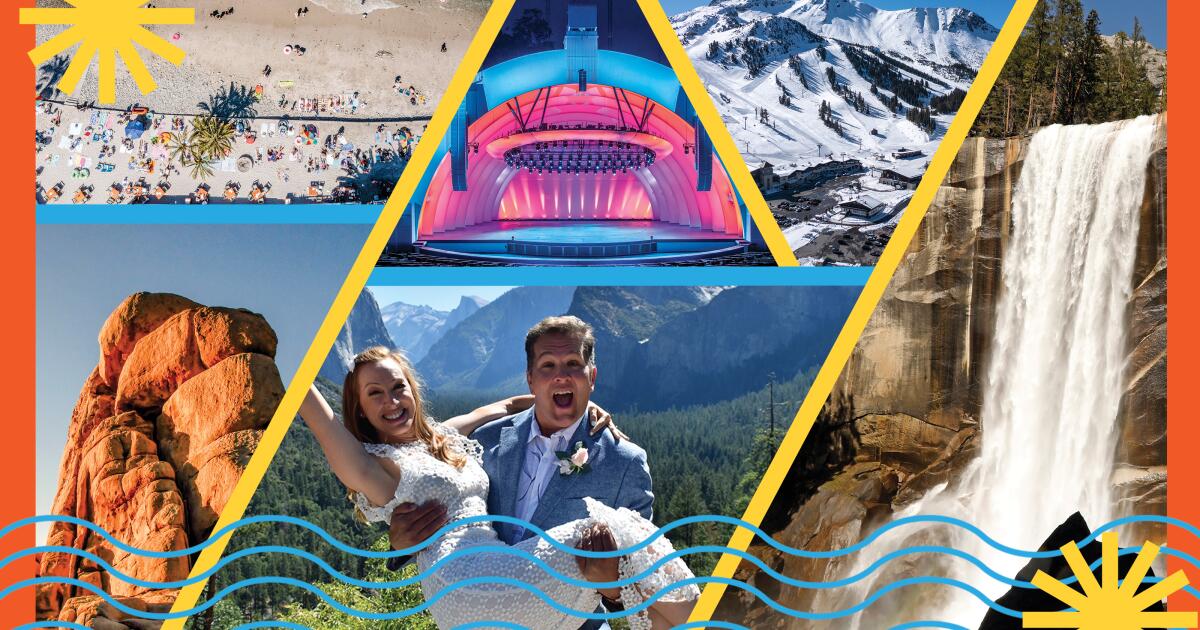
They just completed all of L.A. Times’ 101 Best California Experiences — and we’ve got questions!
-
 Politics24 minutes ago
Blanche to face questions about his independence at attorney general confirmation hearing
-
 Sports36 minutes ago
How World Cup senior citizens like Lionel Messi have bio-hacked longer careers
-

 World48 minutes ago
Baltic presidents warn of Russian infrastructure attack plans
-
News1 hour ago
ICE should do traffic stops despite recent shootings, Trump says, seeming to oppose new suspension
-

 Los Angeles, Ca3 hours ago
Southern California hits hottest day of its extreme heat warning


