Connect with us

Colorado

Colorado Springs wind storm downs power lines, closes schools and leaves thousands without power

Published

on

Colorado Springs wind storm downs power lines, closes schools and leaves thousands without power


Thousands of Colorado Springs residents were without electricity Monday after a windstorm ripped through the Pikes Peak region, according to Colorado Springs Utilities.

As of 7:30 a.m., wind gusts of 40-60 mph had contributed to multiple power outages, with about 10,000 customers affected, according to the utilities website.

The number of affected customers was down to around 6,700 as of 11:15 a.m.

Advertisement

Most of the outages have taken place west of Interstate 25, Utilities said. Broadmoor, Ivywild, Old Colorado City, Manitou Springs and Green Mountain Falls are among the hardest hit.

“Our electric troubleshooters and cable technicians are in full deployment to focus on power restoration efforts, and also our construction crews have been deployed as needed to assist with these restorations,” Utilities spokesman Jay Anderson said at a press conference held at 10 a.m. Monday at the Pikes Peak Regional Office of Emergency Management office, to address the regional weather response.

Winds were still too strong Monday for Utilities officials to respond to certain calls requiring bucket trucks, so crews are responding to many of the power outages remotely, he said.


Colorado Springs wind storm

A crew from Timberline Landscaping remove a downed fir tree in the yard of a home in the Skyway neighborhood on the westside of Colorado Springs Monday, May 6, 2024. Winds as high as 60 miles an hour hit the area early Monday morning. The homeowner said he heard the tree fall about 5:30 a.m. The house was mostly spared because the tree landed on top of a juniper tree instead of directly on the house. (The Gazette, Christian Murdock)

Advertisement


Downed lines and power outages have resulted in multiple school closures. The Cheyenne Mountain and Manitou Springs school districts have both canceled classes Monday. The Mountain Song Community School and The Colorado Springs School are also both closed. See a full list of closures and delays here.

Fires reported

At least two small fires had also been reported in the region, including one reported near Skyway Park Elementary School on Mercury Drive around 6:45 a.m. A pre-evacuation warning was also sent to residents in the lower part of Crystal Park neighborhood in Manitou Springs, due to a fire near 1150 Scrub Oak Drive. Officials said the warning had been lifted during the Monday morning press conference. 

Colorado Springs police and fire departments have taken numerous emergency calls regarding the windstorm and have requested that residents do not call 911 to report outages.

Technicians are working to restore power, but safety concerns might cause delays in some areas, Utilities officials said.

Colorado Springs Utilities’ in-house wildland fire team is assisting the Colorado Springs Fire Department and other agencies who request help to cut tree limbs and is also responding to reports of downed power lines, downed trees and small grassfires, Colorado Springs Fire Department spokeswoman Ashley Franco said Monday morning.

Advertisement

The forecast

The National Weather Service has issued a high wind warning for Colorado Springs and surrounding areas as gusts range between 40-60 mph, with higher gusts expected west of the interstate through at least noon today. 

Breezy conditions are forecast to continue through Tuesday, according to the Weather Service.

For updates on power restoration, visit www.csu.org.

Colorado Springs Airport

One incoming flight has been canceled and a handful of others delayed at the Colorado Springs Airport on Monday, according to Flight Aware. Arrival and departure updates can be found here. 


Colorado Springs weather: High wind warning Monday, cooler


Colorado Springs Weather: windy conditions with fire danger and thunderstorms later this week

Your morning rundown of the latest news from Colorado Springs and around the country

Success! Thank you for subscribing to our newsletter.


Source link

Advertisement

Colorado

Colorado residents face earliest water restrictions ever — a harbinger of worse to come

Published

on

Colorado residents face earliest water restrictions ever — a harbinger of worse to come


As a result of a snow drought and a heat wave that have both set records, some Colorado residents face the earliest restrictions on their water use ever imposed.

Denver Water announced Wednesday that it is seeking a 20% cut in water use, asking people to turn off automatic watering systems until mid-May and restricting the watering of trees and shrubs to twice a week.

“The situation is quite serious,” said Todd Hartman, a spokesperson for the utility. “We’re in such a dire situation that we could be coming back to the public in two or three months and saying you’re limited to one day a week.”

It is the earliest in the year that Denver Water has ever issued a restriction, Hartman said.

Advertisement

Colorado’s snowpack peaked at extremely low levels on March 12 — nearly a month earlier than usual — then cratered during the recent heat wave that cooked nearly every state in the West.

“We already had the lowest snowpack we’ve seen since at least 1981, and now, with the heat wave conditions, we’ve already lost about 40% of the statewide snowpack” since the March 12 peak, said Peter Goble, Colorado’s assistant state climatologist. “Conditions are looking more like late April or early May.”

The water restrictions are a harbinger of what’s to come in many Western states as officials try to manage widespread drought concerns. Nearly every snow basin in the Mountain West had one of its warmest winters on record and is well behind normal when it comes to water supply, according to the U.S. drought monitor. The dwindling snowpack is likely to raise the risk of severe wildfires, hamper electricity generation at hydropower dams and force water restrictions for farmers.

Hartman said nearly every community east of the Rockies, along Colorado’s front range, is in much the same boat as Denver.

City Council members in Aurora are considering similar water restrictions; reservoirs there stand at about 58%, according to the city’s website. In the town of Erie, officials declared a water shortage emergency on March 20 after they observed a massive spike in consumption.

Advertisement

Gabi Rae, a spokesperson for the town, said Erie was perilously close to having taps run dry because so many residents had started watering their lawns early amid the unseasonable heat.

“We were a day away from running out of water. That’s why it was such an emergency,” she said.

Erie officials demanded that residents stop using irrigation systems altogether.

Goble said this month’s heat wave has set records in every corner of Colorado, sometimes by double digits.

“I can’t remember seeing a single heat wave that broke this many records, and seeing it across such a large portion of the country is certainly eye-popping,” he said, adding: “I’m located in Fort Collins, and we got up to 91 last Saturday. The previous record for March was 81, so we smashed that record. And it wasn’t just one day, either.”

Advertisement
Skiers at Breckenridge Ski Resort as temperatures reached into the 50s this month. Michael Ciaglo / Getty Images

Denver Water, which serves about 1.5 million residents in the city and its surrounding suburbs, gets about half of its water from the Upper Colorado River Basin and the South Platte River Basin. The latter’s snowpack was at about 42% of normal Tuesday, the utility reported. The Upper Colorado River Watershed was at 55%.

Systemwide, Denver Water’s reservoirs are about 80% full, which is only about 5 percentage points lower than in a typical year.

“That sounds pretty good,” Hartman said. “Except that what we’re not going to be able to rely on is that rush of water that will bring those reservoirs back up, because the snowpack is so low.”

In other words, the snowpack — a natural water reservoir — is mostly tapped already and won’t replenish reservoirs later this spring and into summer, when runoff usually peaks.

In Erie, city workers plan to aggressively police water use until sometime next week using smart meters that monitor residential usage. Rae said the city is also sending utility workers to patrol neighborhoods and look for sprinklers that are turned on.

Advertisement

“People have been kind of annoyed with how aggressive we were, and I don’t necessarily think they understand the ramifications if we weren’t,” Rae said. “It is an actual serious emergency situation. We were so close to reaching empty, there would literally be no water coming out of the taps — hospitals, schools, fire hydrants, your home would have no water.”

Although the limits on outdoor watering will be lifted soon, Rae expects more restrictions later this spring and summer.


Source link

Continue Reading

Colorado

Suddenly hazy skies in Denver prompt some residents concerned about wildfire smoke to call 911

Published

on

Suddenly hazy skies in Denver prompt some residents concerned about wildfire smoke to call 911


Some people who live in the Denver metro area on Thursday afternoon were making calls to 911 after skies became noticeably hazy and winds kicked up. It was due to smoke from wildfires in Nebraska moving into Colorado. A cold front also was moving through the Front Range, and there is dust in the air.

Advertisement

CBS


The poor air conditions led to reduced visibility downtown after 3 p.m. Several of CBS Colorado’s City Cams showed dust or smoke in the air.

Temperatures were expected to drop by as much as 20 to 30 degrees with the cold front.  

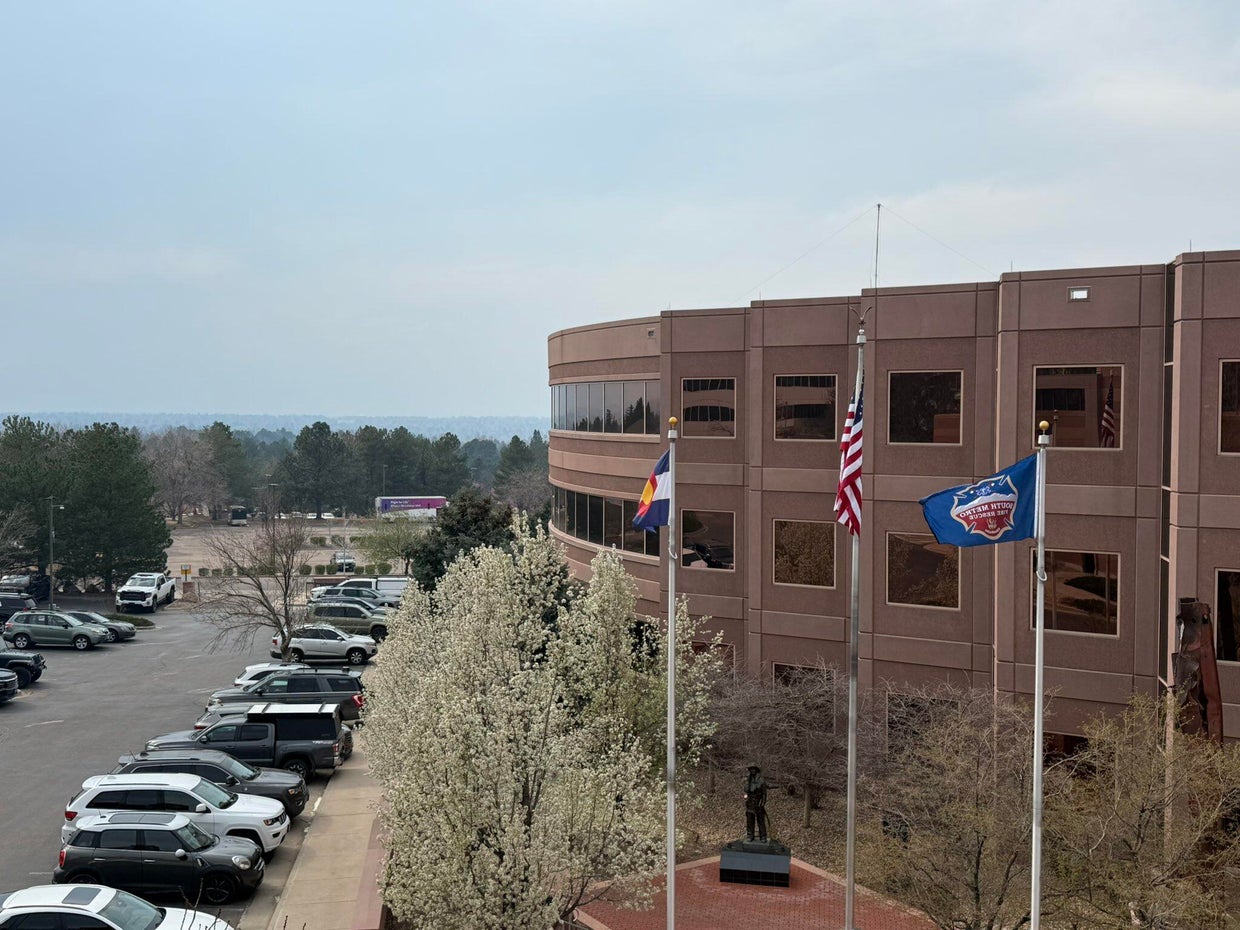
The suddenly dusty skies prompted at least one fire agency to put out a plea to residents to please only call 911 “if you see flames.” That warning was put out by South Metro Fire Rescue, which shared a photo on X of an office building with haze visible outside.

haze.jpg

Advertisement

South Metro Fire


South Metro Fire Rescue said in their post that the smoke is from Colorado’s neighbor to the east. They called it a “significant haze” in the air.

Earlier this month, the Morrill Fire and the Cottonwood Fire burned a significant amount of Nebraska grassland and ranchland. They have mostly been contained by firefighters. Nebraska Gov. Jim Pillen said those two fires combined with several others have burned approximately 800,000 acres of land. On Thursday, Pillen announced that he is signing several executive actions intended to ease the burden caused by the fires.  

There were no wildfires burning in the Denver metro area on Thursday afternoon.

Advertisement


Source link

Continue Reading

Colorado

Colorado homicide suspect wanted in fentanyl-related death arrested in Colombia

Published

on

Colorado homicide suspect wanted in fentanyl-related death arrested in Colombia


ARAPAHOE COUNTY, Colo. (KKTV) – A homicide suspect based out of Colorado, wanted in a fentanyl-related death, is back in the state after being captured in Colombia.

The Arapahoe County Sheriff’s Office (ACSO) said 33-year-old Max Arsenault had been on the run since January 17.

Deputies said this stemmed from an incident in May 2023, where deputies responded to a call for a man named Nicholas Dorotik, who was found unresponsive.

ACSO said the cause of death was a mixed drug overdose involving meth and fentanyl, having about three times the lethal amount of fentanyl in his system.

Advertisement

One year later, Arsenault was arrested. He was scheduled for trial in January 2026 when deputies said he fled the country while on bond three days before the trial was set to start.

He was caught in Medellin, Colombia, on March 4, following a two-month international investigation. He has since been extradited back to Denver, where he is facing charges and awaiting trial.


Source link

Advertisement
Continue Reading

Trending