California
Turkey vultures in California are testing positive for rat poison – High Country News


In humankind’s ongoing war against rats, rodents are far from the only casualties.
Over the last few years, a common class of chemicals known as anticoagulant rodenticides has come under fire for its heavy toll on wildlife. Despite statewide restrictions on these pesticides in California, a recent study found that as many as 13% of turkey vultures in the Los Angeles area tested positive for the chemicals. Given the birds’ unique ecological perch as nature’s carnivorous cleanup crew, the results reveal just how thoroughly anticoagulant rodenticides pervade the ecosystem. They are a reminder of how human actions can have vast environmental consequences, often compounded by climate change — and, in this case, for fundamentally limited returns.
Anticoagulant rodenticides work by causing their victims to bleed to death, often internally. Afflicted animals show signs of anemia and often bleed from their nostrils, mouth and anus before they die. Animal cruelty aside, these substances are problematic because they can persist in carcasses and the environment for up to a year. This means that a poisoned rat can in turn poison its predator, and that predator’s predator as well, long after the first fatal nibble. The upshot is vast collateral damage: raptors, foxes, coyotes, bobcats and mountain lions — all of which help keep rodent populations in check — have been sickened or killed by these toxins. Occasionally, pets fall victim, too.

“I consider them to be like our modern-day DDT, due to the fact that they have infiltrated the entire food web,” said Lisa Owens Viani, the director of Raptors are the Solution, a nonprofit that champions wild predators rather than rodenticides as a pest-control solution.
Thanks to the advocacy efforts of groups like Owens Viani’s, in 2020, California signed into law a ban on the most harmful anticoagulant rodenticides by the general public and pest control companies. In 2023 and again in 2024, the state passed additional legislation that added older versions of these rodenticides to that ban.
“I consider them to be like our modern-day DDT, due to the fact that they have infiltrated the entire food web.”
Immediately after the first ban was passed, raptor deaths by poison dropped nearly 15%, according to data from the California Department of Fish and Wildlife, though the numbers have fluctuated in subsequent years. But the new study, in which tested turkey vultures for the chemicals after the initial bill was enacted, showed that anticoagulant rodenticides still pervade the environment.
According to study author Miguel D. Saggese, an avian and wildlife researcher at Western University of Health Sciences in Pomona, California, the results “provide further evidence that there is still a problem out there for non-target species.”
SCAVENGERS LIKE TURKEY VULTURES, with their diverse carrion diet, are good sentinels of rodenticides’ footprint across an entire ecosystem. Still, the results might be an underestimate. The new study examined blood samples from live-captured vultures, so the results provide only a snapshot of the birds’ most recent encounters with the chemicals. Liver necropsies, which are more telling of chronic exposure, tend to register higher contamination rates — one 2022 study found that 93% of turkey vultures in Northern California and southern Oregon had anticoagulant rodenticides in their bodies — though necropsy results can skew toward animals that have already perished from the poisons.
Turkey vultures are not a threatened species, but their exposure sounds an alarm for their more vulnerable neighbors. Spotted owls, bald eagles and the iconic California condor are already at risk of extinction, and anticoagulant rodenticides are likely a contributing factor. In the past, monitoring efforts have detected the toxins among these birds of prey. The prevalence among turkey vultures indicates that the chemicals need to be eliminated from the environment to ensure the health of wildlife in the West, whether or not the animals are endangered.


California is the only state with legislation restricting anticoagulant rodenticides. But even the Golden State’s bills have gaping concessions: The agriculture industry and food producers are exempt from the bans, as are public health agencies. And some people still set out illegal rat bait boxes anyway, regardless of what the law says.
Still, there’s another compelling reason to renounce anticoagulant rodenticides: They’re not all that effective at reining in rats. Experts say that a more durable solution is to not give rodents a reason to come by in the first place — by sealing off food sources and fortifying trash bins. Not only do the relatively slow-acting poisons falter against the prolific reproduction of rodents, they also kill off the rats’ natural predators, which are humanity’s most valuable allies against rodent infestations. Ultimately, the chemicals we employ to control rat populations end up helping rat populations slide out of control. “None of it makes any sense,” Owens Viani said. “I just feel like it’s kind of a scam that’s been perpetrated to the public.”
“I just feel like it’s kind of a scam that’s been perpetrated to the public.”
And climate change is making things worse for pesticides-strained raptors. “Climate change is the very MOTHERSHIP of ecological stressors,” wrote Allen Fish, a raptor biologist and former director of the Golden Gate Raptor Observatory, in an email. Already-weakened species may lack the wherewithal to deal with dwindling food sources and shrinking habitats. Meanwhile, warming temperatures allow rats to remain active during mild winters, eating and mating instead of laying low underground, and society’s typical response — doling out even more rodenticides — only increases secondary poisoning events.
Anticoagulant rodenticides may well prove the last straw for some species’ survival. “It’s an ongoing environmental catastrophe that’s happening right before our eyes,” Owens Viani said.




A now 33-year-old Northern California man, who was on the run in Mexico for five nearly five years, has been sentenced for the murder of his estranged wife’s boyfriend while the couple was sleeping in her apartment in 2017.
Arturo Hernandez was 25 when he learned that a man named Anthony Freas was in a relationship with his estranged wife. His calls to her after hearing about the situation went unanswered, according to investigators.
On Nov. 19, livid over the relationship, Hernandez went to the Regency Apartments in the 5900 block of Riza Avenue, where his wife lived. He broke into the apartment where the couple was sleeping, entered her bedroom and stabbed Freas multiple times before fleeing the scene, according to a news release from the Sacramento County District Attorney’s Office.
Officers with the Sacramento Police Department responded to the apartment and found Freas suffering from at least one stab wound to the upper body. They began life-saving measures until paramedics arrived and rushed him to a hospital, where he later died.
Authorities launched a manhunt for Hernandez, who was considered armed and dangerous, The Sacramento Bee reported.
-
Arturo Hernandez, 33, was sentenced for killing Anthony Freas while he was sleeping at his estranged wife’s Sacramento apartment on Nov. 19, 2026.(Justice4Anthony/Facebook) -
Arturo Hernandez broke into his estranged wife’s home at the Regency Apartments and killed her boyfriend while the couple was sleeping on Nov. 19, 2017. (Google)


It was later learned that he fled to Mexico, though it is unclear where he had been hiding or with whom.
Hernandez evaded law enforcement until July 2023, when he was arrested by Mexican authorities and FBI agents. He was later extradited back to Sacramento to stand trial.
On March 24, a jury found Hernandez guilty of second-degree murder and found true the allegation that he personally used a weapon during the attack.
More than three months later, on July 10, Judge Alyson Lewis sentenced him to 16 years to life in state prison.

An Idaho father is recovering at home after a near-fatal encounter with a rattlesnake during a vacation in Northern California that required a hospital’s entire supply of antivenom to keep him alive.
The encounter highlights a “concerning” surge in rattlesnake bites in California this year, state poison control officers said.
Chris Howarth, his wife Jenny and their three children were visiting his parents in Oroville near Chico last month when he was bitten twice by a western rattlesnake while working in the backyard, Chico-based Action News Now reported July 3.
Howarth’s wife immediately drove him to Oroville Hospital, where he began showing signs of a reaction to the venom, including trouble breathing.
One of the bites reached his vein, Howarth told SFGate, sending venom into his bloodstream.
Within 24 hours, Howarth received 18 vials of antivenom at the hospital. Three days later, his condition worsened with swelling in his legs, requiring infusions of plasma and platelets as well as additional antivenom.
By the fifth day, the hospital was completely out of antivenom, Howarth told Action News Now.
Howarth was then flown to Stanford Hospital in Palo Alto where he continued to receive antivenom for another six days before he was released 11 days after the bite.
In total, Howarth received 54 vials of antivenom – 36 at the Oroville hospital, 18 at Stanford – according to a GoFundMe campaign set up to help with medical expenses.
Launched on July 5, the campaign had generated $9,629 in donations as of Tuesday, July 14.
Howarth’s case is part of a surge in rattlesnake encounters in California this year, according to the California Poison Control System, which reported in May that it had already received nearly 80 calls related to rattlesnake encounters five months into the year, compared to an average 200 calls a year. Three of those encounters this year were fatal, which CPCS medical expert Dr. Rais Vohra called “deeply concerning” in a May news release. On average, the state sees one rattlesnake-related death a year, according to officials.
“The number of bites and fatalities this early in the year underscores the importance of awareness and prevention,” Dr. Vohra said.
Here are some tips from the California Department of Fish and Wildlife to help you avoid coming face to face with a rattlesnake.
As the name implies, rattlesnakes are most commonly recognized by the distinct “ch ch ch” sound their rattles make. But, they don’t always use them. So, you can also identify them by their gray or light brown exterior and triangular shaped head. They usually range from 2 to 4 feet in length and easily camouflage to their surroundings.
When hiking, the Department of Fish and Wildlife recommends that people stay on well-used trails and avoid high grass, wear sturdy boots and loose-fitting long pants when walking through brushy, wild areas and avoid wearing flip-flops or sandals.
The department also recommends hikers check logs or rocks before sitting on them, and shake out sleeping bags before getting in.
Do not grab “sticks” in the water, as rattlesnakes can swim. Do not try to handle or touch a rattlesnake, even if they are dead.
Homeowners can prevent rattlesnakes from residing around their home by taking care of any rodent problems, cutting the grass and keeping doors and garages closed.
According to the Mayo Clinic, a bite from a venomous snake will cause severe burning pain at the bite site within 30 minutes. This can be followed by swelling and bruising at the wound and all the way up the arm or leg. Other signs and symptoms include nausea, labored breathing and a general sense of weakness, as well as an odd taste in the mouth.
If you or a companion are bitten by a rattlesnake, the Mayo Clinic recommends to do the following:
- Call 911 immediately and get to a hospital as quickly as possible.
- Minimize movement to slow the spread of venom through the bloodstream.
- Take off rings, watches, or tight clothing, as the affected limb will likely swell significantly.
- Keep the bite site even with or slightly below the level of the heart.
- For pets, contact a veterinarian immediately; many emergency clinics now stock specialized antivenom for dogs.
The California Department of Fish and Wildlife also has a list of things to not do in the event of a snake bite:
- Do not apply ice or heat to the wound.
- Do not use a tourniquet or any constricting bands.
- Do not attempt to “suck out” the venom or cut the bite site.
- Do not consume alcohol or take aspirin.
As for the Howarth family, Jenny told SFGate they are grateful Chris is recovering and they want to use the experience to raise awareness of the dangers of rattlesnakes.
“We just want people to know how serious it can be,” Jenny said.

SANTA BARBARA — The late-morning sun peeked through a gauzy veil of fog, bright laughter echoing over the giddy whisper of tulle as the brides posed for pictures outside the Santa Barbara County Courthouse.
Moments earlier, Zoë Weber and Jordan Cantor of Hollywood had traded vows above the compound’s famous Sunken Garden. The brief, heartfelt legal ceremony was made sweeter because the date, June 26, was the anniversary of the Supreme Court decision that legalized gay marriage across the U.S. in 2015.
Minutes before that, their officiant, Santa Barbara County Supervisor Roy Lee, had married off Brittney Hua, 27, and Steven Ly, 26. The Arroyo High School sweethearts made their relationship official that same day 11 years ago, an anniversary that matches their San Gabriel Valley area code, 626.
Lee was soon rushing across the lawn to join Carmen Cardenas Ayon and Santiago Martinez, both 28, who’d come up from Compton for the last-minute wedding of their dreams.
The groom, a bus mechanic, was starting his shift around 4:30 am Wednesday morning when he happened to check the courthouse website for cancellations and saw Friday’s open call event.
“He was like ‘We can get married on Friday in Santa Barbara!’” the bride recalled. “And I was like ‘OK, let’s do it!’”
Minshi DeHuff, 35, and Andrew DeHuff, 39, of San Francisco marry at City Hall on June 26.
(Sarahbeth Maney / For The Times)
Less than a decade ago, courthouse weddings were still the purview of camera-shy celebrities, mid-life second marriages and mother-to-be brides. But since the pandemic, their popularity has boomed — transforming certain courthouses and municipal buildings into sought-after locales to tie the knot.
Snagging an appointment to elope has become almost as difficult as scoring Olympics tickets.
In Santa Barbara, marriage appointments open 90 days in advance, with new slots released every hour while the courthouse is open. On a recent weekday, slots in October vanished in less than five minutes.
“They pretty much get picked up as soon as we release them,” said County Clerk Melinda Greene. “We have people from all over the world.”

-
Share via
Here comes the bride — and another, and another and another…
So-called “micro weddings” have emerged as an industry unto themselves amid the soaring costs of a traditional ceremony. A recent Bank of America analysis pegged the average cost of an American wedding at $36,000 — significantly more expensive than a year of rent at the median price in Los Angeles, or two years of in-state tuition at UC Berkeley.
“A lot of my elopement brides are low-key and private,” said Asha Marshall of So Fetch Photography, who specializes in courthouse ceremonies. “They don’t want to be spending all that money.”
The shift toward boutique legal ceremonies has transformed the marriage business and the municipal buildings where such nuptials take place, turning elopement from a breezy wedding alternative into a formal contact sport.
“It books up so fast, you have to be online at the exact time [of day] you plan on having your appointment,” explained the photographer, whose viral 2024 snaps helped supercharge the Santa Barbara courthouse’s popularity on social media. “A lot of my brides get stressed out.”

Shuting Zang, 28, is photographed on her wedding day at San Francisco City Hall.
(Sarahbeth Maney / For The Times)
Santa Barbara’s Moorish Revival hall of justice has long been Southern California’s most coveted civil marriage spot. Vice President Kamala Harris and Doug Emhoff took their vows in its storied Mural Room in 2014. Reality TV star Kourtney Kardashian and Blink-182 drummer Travis Barker were wed on the steps outside in 2022.
But officials say demand has exploded in recent years, thanks in part to Pinterest and TikTok.
“We see dozens a day, starting at 8 o’clock in the morning,” said Lee, the county supervisor and officiant for the day, whose office is across the street. “I see them line up right there outside the doors.”
Ly, the newlywed from El Monte, said that in order to secure their spot at the Santa Barbara courthouse, he and his bride were prepared for an experience akin to buying stadium tour tickets.
“Both of us were on two separate computers, each of us trying to copy and paste the details so we could get in early,” he said.
“I let him do the first one,” his wife, Hua, said. “He didn’t get it, so I did the second one and I got it.”
Others, including Amy Rodriguez, were left scrounging for cancellations.
“I decided one night, let me double check if there’s an opening,” the bride said as she waited for her groom-to-be near the front entrance to the courthouse, where wedding parties must pass through a metal detector. “I logged in — it was literally midnight, maybe one o’clock — and got the slot.”
The race to the clerk’s window is not limited to Santa Barbara. Other popular courthouses such as the L.A. County Courthouse in Beverly Hills and the Old County Courthouse in Santa Ana have seen a similar spikes in demand.
But no municipal building in the state compares to San Francisco City Hall, where Marilyn Monroe and Joe DiMaggio tied the knot in 1954.

Elias Salem, 33, left, and Samuel Tyler, 33, of San Francisco pose after being married at San Francisco City Hall.
(Sarahbeth Maney / For The Times)
Today, the gilded Beaux-Arts building sees as many as 7,000 marriage ceremonies a year. That’s two-thirds again more than its Santa Barbara rival, which does about 4,000, and roughly the same number as take place at the Norwalk headquarters of the Los Angeles County Registrar, a top contender for the country’s busiest wedding venue after New York’s Manhattan Marriage Bureau and the Office of Civil Marriages in Las Vegas.
“Over the last three to four years it’s been really dramatic,” said Cheri Tran, a popular elopement photographer in San Francisco. “When I did my first City Hall elopement six or seven years ago, we were only dodging 20 or 30 people. Now it’s hundreds.”
The TikTok-driven crowds leave many locals in the lurch. Tran nudges her brides toward the Marin County Civic Center, Frank Lloyd Wright’s final public building. Others, like photographer Anna Perlman, encourage “adventure elopements” in Joshua Tree or Big Sur.
Officials, too, have sought creative ways to relieve the pressure. On the last Friday in June, San Francisco and Santa Barbara both opened their books to scores of additional couples, ushering in a brief return to the romance of last-minute marriage.
“There were simultaneously four or five couples trying to take a picture on the staircase,” said newlywed Daniel Tran, 28, who chanced upon one of the extra slots opened for San Francisco’s annual Pride wedding event. “One of our witnesses took a picture, and you could see couples on every floor getting married. It was a little jarring.”

Newlywed couples wait their turn for photos on the grand staircase during the busiest wedding day of the year at San Francisco City Hall.
(Sarahbeth Maney / For The Times)
A similar scene played out in Santa Barbara, where officials agreed to marry couples without an appointment for “Palindrome Day,” a sought-after anniversary that reads the same backwards and forwards.
“This is the first time we’ve ever done no appointments out here,” Greene said. “We authorized overtime and we’re gonna take short lunches and we’re just gonna get as many as we can through.”
By 11 a.m., the building’s lush courtyard was aflutter with white dresses and mascara-streaked tissues, cameras snapping from every angle as clerks flitted back and forth with marriage licenses.
Some, like the El Monte couple, had planned their nuptials for months. Others, like the pair from Compton, had pulled their ceremony together virtually overnight.
But few had managed an eleventh-hour affair quite as swiftly as Susie Villacis and Gaspar Garcia Jr., who cruised into town around 2 a.m. Friday morning after hunting down an all-inclusive civil ceremony from halfway across the state.
“To be honest, it was last minute — it was yesterday,” the bride said of the decision to marry in Santa Barbara.
With their Catholic wedding in Ecuador looming, the San Francisco couple needed a license and a civil ceremony ASAP.
“We were going to get married at San Francisco City Hall, but the earliest appointment was September,” Villacis said. “This was the only place we could do everything in one go.”
Lee, the county supervisor, was happy to oblige. The black-robed officiant led the pair through their wedding vows, pronouncing them husband and wife as their mothers looked on with tears in their eyes.
Garcia dipped Villacis for a dramatic first kiss. Then the trio posed for a selfie.
-

 Michigan5 minutes ago
University of Michigan’s David C. Miller chosen to succeed Jeff Balser as Vanderbilt Health’s President and CEO and Dean of Vanderbilt University School of Medicine
-

 Massachusetts11 minutes ago
Massachusetts Broadband Institute distributes devices to underserved communities
-

 Minnesota17 minutes ago
Smoke from wildfires in Minnesota and Canada exposes millions to dangerous air quality
-

 Mississippi23 minutes ago
How permanent daylight saving time would impact Mississippi
-
 Missouri29 minutes ago
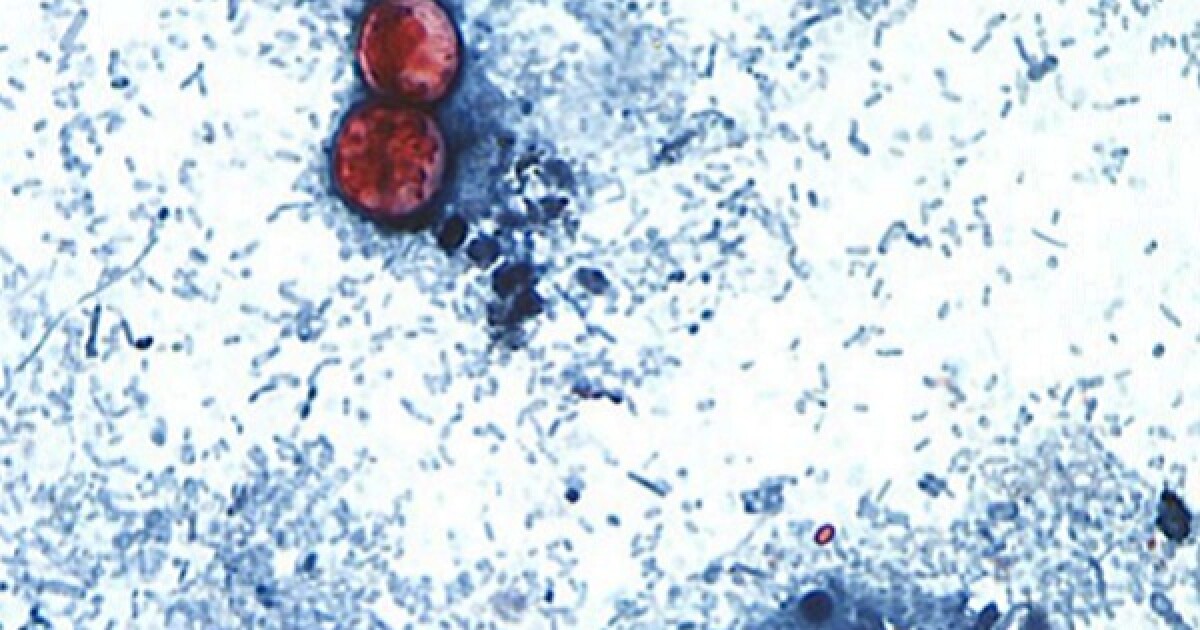
Missouri reports 43 cases of parasitic infection that’s sickened thousands nationwide
-

 Montana35 minutes ago
Governor Gianforte Announces Montana Ranks as Top 10 State for Job Growth
-

 Nebraska41 minutes ago
Roanoke County teen heads to national rodeo finals in Nebraska
-

 Nevada47 minutes ago
Nevada’s modern boomtowns are these fast-growing cities, study said

