California
One South Bay school flouts California recycling law — but few complain


Editor’s Note: This article was written for Mosaic Vision, an independent journalism training program for high school students who report and photograph stories under the guidance of professional journalists.
Like many other high schools, Los Gatos High School strives to make students better citizens who are knowledgeable about the impact of climate change. The issue is part of the school’s curriculum in advanced placement Environmental Science, Biology, Government, and English classes.
But when students need to dispose of their recyclable waste, there is no option but to toss everything into the solid waste garbage bin. The cafeteria serves food to around 1,200 students each day, creating a mountain of aluminum, plastic, and uneaten food. Yet composting, as well as recycling for aluminum and plastic, are not available options.The cafeteria recycling bins are padlocked shut during the day, with Los Gatos High offering recycling only for clean paper.
The school’s non-recycling stance contradicts California’s recycling laws. When the state’s Mandatory Commercial Recycling law took effect in June, 2012, public entities that generated a specified threshold of solid waste were required to “reuse, recycle, compost, or otherwise divert solid waste from disposal,” according to CalRecycle, the state entity responsible for recycling.
CalRecycle’s website clearly spells out the rules as they apply to schools: “Wherever recycling or organic waste is generated, a school must provide an appropriate container adjacent to the solid waste container to capture and divert recycling and organic waste. Containers must be easily accessible, visible, and clearly labeled.”
If the law is so straightforward, why isn’t the school complying?
A big issue was the contamination of the recycling bins with non-recyclable materials. Students were dumping non-recyclable garbage into the recycling bins to the point that, in 2021, the school’s Environmental Outreach Club decided to ask the school to padlock the bins to prevent students from disposing unsorted materials into them.
The school does collect recyclable paper in cardboard containers throughout the school – and the bins essentially are used as a collection point for that recycled clean paper – but not material generated from cafeteria lunches.
Despite acknowledging his familiarity with Senate Bill 1383, the state’s recycling legislation, Principal Kevin Buchanan stands firmly behind the school’s policy of non-compliance. “I occasionally notice one or two [recycling bins] with missing locks and I put in a work order to have them replaced,” he said.
CalRecycle only investigates school compliance if someone files a complaint. That’s something that rarely happens, to the degree that “Enforcement staff did not receive any complaints or referrals last year for school districts, so no local education agencies were evaluated in 2023,” said Lance Klug, a CalRecycle spokesperson.
Even as schools like Los Gatos High get a free pass on not recycling, the state is widening efforts to encourage recycling by passing laws as a new Edible Food Recovery law, which took effect on Jan. 1. It requires local education agencies with an on-site cafeteria to donate all uneaten and unused food to a food recovery organization and keep records about their donations.
Some students feel that the school could comply with recycling laws if it did a more aggressive job of educating students about what to recycle and how to properly do it.
“I think that we should have more clubs that teach people how to recycle. No one at our school has explained that type of stuff. ” said Kiana Mehrany, senior.
“I always see everyone throwing away the food and the trash in the same trash can,” said junior Haley Jung. “Nobody is doing recycling at the school except for paper, but I think that’s not going well.”
While some area schools have much more efficient recycling programs, the students have similar attitudes. Evergreen Valley High School Student Minh-Khang Le thinks his San Jose school’s program, which involves recycling bins that easily divide waste into trash recycling and composting, does a good job. However, he thinks that more people should be better educated on recycling, saying “some students don’t think too much about it and put everything in a nearby bin that looks like trash.”.
Amanda Robison, a student at Leigh High School in San Jose, mirrors Le’s beliefs, expressing concern that no matter what their school does, it is only as effective as the students’ willingness to actually recycle, saying “they’ll just throw stuff in whatever bin is closer.”
Meanwhile, unless anyone officially complains, Los Gatos High’s non-recycling approach is unlikely to change.
For those who want to take that step, CalRecycles spokesperson Klug says complaints may be filed online.


After three years of unprecedented closures that devastated California’s fishing industry, commercial salmon fishing is poised to reopen this spring.
The return comes with a catch: Regulators at the interstate Pacific Fishery Management Council will strictly constrain fishing dates and impose harvest limits for both commercial and recreational fishing to protect the threatened California Coastal Chinook. The council is set to finalize the details this weekend.
It’s not the season the fleet had hoped for after years of closures. But those who survived the shutdowns fear a graver threat: state and federal decisions could reshape California’s water systems and rivers.
“Water policy in California is about to change drastically and irreversibly, and nobody has the energy to pay attention to that,” said Sarah Bates, who fishes commercially from San Francisco. “I am concerned that salmon is going to be (commercially) extinct in our lifetimes.”
For the first time since 2022, Bates was preparing her century-old boat, the Bounty, docked at Fisherman’s Wharf. She ticked off the boat’s needs: an oil change, a hydraulics check, a run-through of the steering system, the anchor. Her fading fishing permit, now four years out of date, still clings to the outside of the cabin.
“Pay no attention to my paint job,” Bates said. “Try not to make my boat look bad.”
Looking at its cracking paint and tangled ropes, Bates — who wrestles waves and weather for a living and uses a fishing float dented by a massive shark bite — seemed a little daunted by the tasks ahead.
Without income from salmon, Bates allowed critical upkeep to lag. “There’s been a lot of deferred maintenance,” she said. “I’m actually a little worried about everybody charging out into the ocean in May to go fishing.”
‘A tremendous, avoidable hit’
Salmon is king in California. It’s what keeps the markets and restaurants buying, the industrial-scale ice machines running, the tourists booking charter boats and visiting the coast.
“It’s iconic,” said retired charter boat captain John Atkinson. “We have people who will fish every week for salmon. And for the other species, they come out once.”
But dams, water diversions, low flows and poor ocean conditions have driven decades of decline.
California experienced its driest three year stretch in history from 2020 through 2022 — worsening that burden and causing populations to plummet. Interstate fisheries managers cancelled commercial salmon fishing for an unprecedented three years in a row, and barred recreational fishing for all but a handful of days last year.
The financial damage was severe. California estimated the closures cost nearly $100 million in lost coastal community and state personal income during the first two years alone.
The fishing industry says these numbers vastly underestimate the economic and human costs: Boats went to the crusher, tourists took their money to other states, suppliers went out of business and fishers fled California or the industry altogether.
“This was a tremendous, avoidable hit. We have survived droughts throughout recent history, but none had impacts this drastic,” Vance Staplin, executive director of the Golden State Salmon Association, said in an email.
First: Fisherman’s Wharf in San Francisco on March 20, 2026. Last: Sunlight pours through a window of the Bounty, a commercial fishing vessel, on March 20, 2026. Photos by Jungho Kim for CalMatters Sarah Bates, a commercial salmon fisher, stands at the wheel of her boat, Bounty, at Fisherman’s Wharf in San Francisco on March 20, 2026. Photo by Jungho Kim for CalMatters California has requested disaster assistance from the U.S. Secretary of Commerce. But federal aid has come slowly, and fallen short. The U.S. government has released only $20.6 million, and only for the 2023 closure.
“The entire framework for fishery disasters has to be totally redone,” said U.S. Rep. Jared Huffman, a California Democrat and ranking member of the House Natural Resources Committee. “We need something that is much faster, that is less political, that doesn’t depend on all the vagaries of multiple federal agencies and congressional appropriations.”
Rain, but little respite
The rains returned in 2023 — bringing the flows and cool water young salmon need to survive and complete their ocean migration.
Now, the Pacific Fishery Management Council projects that roughly 392,000 Sacramento River fall-run Chinook salmon are swimming off the coast. These are the mainstay of California’s salmon fishery — and the forecasts are better than last year’s, though still a fraction of the millions that returned historically. But the limited fishing season is not the respite that the industry had counted on.
“We’re happy to get some fishing this year,” Staplin, of the Golden State Salmon Association, said, “but if we want to preserve the businesses and families that define California’s coastal and inland salmon economies, we need a little compromise and balance in prioritizing water during droughts.”
A plan or a patch?
Two years ago, Gov. Gavin Newsom released a plan aimed at protecting salmon from climate change.
The plan received mixed reactions.
Some scientists and members of the fishing community credited state agencies and the Newsom administration with concrete efforts like hatchery upgrades and cutting-edge genetic fish tagging. One$58 million state and federal effort — the Big Notch Project — connected salmon and other fish to prime floodplain habitat in the Yolo Bypass through seasonal gates.
“Anything that can be done is a help right now,” Atkinson said.
But others say that the strategy papers over policies that rob salmon of the cold water they need. California is built around nature-defying engineering that funnels vast amounts of water away from rivers to supply cities and the state’s $60 billion agricultural economy.
“As soon as it stops raining or snowing, we’re going to be back in the same situation with the salmon season closing,” said Jon Rosenfield, science director at The San Francisco Baykeeper. “If we don’t protect river flows and cold water storage, then we’re not protecting salmon.”
Some of the fiercest fights are over the contentious Delta tunnel and Newsom’s controversial deal with major water users, backed by $1.5 billion in state funding, to overhaul how farms and cities take water from the Sacramento-San Joaquin Delta and the rivers that feed it.
Carson Jeffres, a senior researcher at the UC Davis Center for Watershed Sciences, takes a more moderate view — the effect on salmon will depend on how California agencies manage these projects, but the status quo isn’t an option.
“I just don’t see a world where the salmon are prioritized over human water needs — and I think we should plan for it,” he said. “Then that might be a more sustainable place.”
On top of state policies is a Trump administration that called for “Putting People over Fish” and adopted a plan in December to send more Northern California water to Central Valley farms.
State wildlife officials said at the time that President Donald Trump’s actions “run counter” to California’s efforts to improve salmon populations, “harming the California communities that rely on salmon for their livelihood.”
California Secretary of Natural Resources Wade Crowfoot acknowledged the state’s finite water supply can’t satisfy everyone’s priorities.
“There’s no shortage of finger pointing by some groups who argue that not enough water is remaining in our rivers for salmon and aquatic habitat, and other groups that suggest that not enough water is being diverted for California communities and agriculture,” Crowfoot said.
“Water management in California,” he said, “involves balancing water across these needs.”
Last year, the Newsom administration announced that nearly 70% of the salmon strategy’s action items were underway, and more than a quarter were already complete.
That’s “crazy math … What is your outcome measure?” said Bates. “For us, our outcome measure is enough fish to go fishing.”
Adapting to survive
In the absence of enough fish, the industry has been piloting new strategies to survive.
Back at Fisherman’s Wharf, a few rows over from Bates, Captain Virginia Salvador was getting ready to take a group out to troll for halibut and striped bass. Her French bulldog, Anchovy, wandered the deck between the ropes.
Salvador started her charter boat business, Unforgettable Fishing Adventures, during the salmon shutdown — and had to quickly expand her offerings.
Now, she runs barbecue and barhopping cruises around San Francisco Bay and takes passengers to McCovey Cove during Giants games. She teams up with food influencer Rosalie Bradford Pareja to offer a chef experience. And she still holds down a second job working in a hospital pathology laboratory.
“When you rely on a natural entity for your income, you have to learn how to deviate, pivot, expand,” Salvador said.
Captain Virginia Salvador on her boat, Unforgettable, at Fisherman’s Wharf in San Francisco on March 20, 2026. Photo by Jungho Kim for CalMatters Where the front row of charter boats line the street like storefronts, Bates’ row at Fisherman’s Wharf has the feeling of a neighborhood. One fisherman clambered down the ladder to Bates’ boat, where they swapped great white shark stories. Bates hollered to another neighbor every time a tourist wandered down the dock, bucket in hand, looking to buy fresh crab.
This neighbor, a tattooed and lanky and exhausted fisherman named Shawn Chen Flading, had been out all night. His 12 hour mission to retrieve crab pots turned into a 26 hour ordeal when his throttle cable broke.
At the time Flading bought his boat, before the shutdowns, it looked like a pretty good living.
“A lot of people — the older generation — put their kids through college, bought their homes. And it just disappeared,” Flading said. “I lost basically half my revenue for the past three years straight.”
He tries to fill the gap by advertising on social media and selling Dungeness crab directly off his boat. But the crab season, too, he said, has been disappointing.
Now, salmon fishing is once again on the horizon.
“Whatever limited opportunity we have for salmon, at least we’re getting the ball rolling,” Flading said to Bates across the water between their boats, over the San Francisco mix of cars, construction and seagulls. “Without that, we’re just stuck.”
Bates, leaning on the railing of her own boat, agreed. “I really understand why people are upset,” she said. “But also, I’m so excited to catch some fish. Even though it’s not enough. It’s not even close to enough.”
This article was originally published on CalMatters and was republished under the Creative Commons Attribution-NonCommercial-NoDerivatives license.
California
Sheriff’s lieutenant with million-pound fireworks stash led to deadly blast, prosecutors say

A former Yolo County Sheriff’s Office lieutenant is one of five people charged with murder following a fireworks warehouse explosion that killed seven workers in the rural Northern California community of Esparto last summer, authorities said.
Samuel Machado is accused of illegally having 1 million pounds of fireworks on his property at the time of the blast and using his law enforcement position to shield the illicit operation from scrutiny for years, according to the Yolo County district attorney’s office.
Machado was placed on administrative leave following the violent July 1 explosion, which was felt by residents up to 20 miles away, destroyed a family farm and sparked a 78-acre grass fire.
Devastating Pyrotechnics LLC and Blackstar Fireworks, Inc., are accused of manufacturing and storing explosives — including some too powerful to even be legally considered fireworks — on Machado’s property. On Friday, Yolo County Dist. Atty. Jeff Reisig announced a 30-count felony indictment had been filed against seven people connected to the blast, following the largest investigation he’s seen in two decades at the office. A separate five-count felony indictment was filed against an eighth defendant, Machado’s wife.
The most serious counts are seven second-degree murder charges — one for each of the warehouse workers who died.
An investigative report filed by a Yolo County civil grand jury last month stated that various top county authorities were aware of the sprawling illegal operation for at least three years prior to the lethal explosion, yet failed to take action.
A county Building Services Department official received a tip that the property was being used by two pyrotechnics businesses in June 2022, according to the report. Department officials wrote in emails that they would inspect the site, but noted they would “tread lightly” as the property was owned by “deputies that we work with.”
“Inexplicably, no code enforcement occurred, even though all dangerous fireworks had been banned by ordinance throughout rural Yolo County since 2001,” the report states. “In the absence of official oversight and enforcement, unmitigated expansion of the fireworks businesses operating at the site in Esparto led directly to death and destruction.”
In addition to Machado, the owner of Devastating Pyrotechnics, Kenneth Chee, operations manager Jack Lee and business partner Gary Chan Jr. all were charged with murder, as was Douglas Tollefsen of Blackstar Fireworks, Inc.
Machado’s wife, Tammy, was working at the Sheriff’s Office in an administrative position at the time of the blast. She also has been placed on leave and was charged in a separate indictment with child and animal endangerment for allegedly storing illegal fireworks at their property, as well as tax fraud and mortgage fraud.
The 30-count indictment alleges a decadelong conspiracy that “turned the property of a former Sheriff’s Lieutenant Sam Machado into the Northern California hub for an illegal enterprise that imports illegal explosives on the black market,” Yolo County Deputy Dist. Atty. Clara Nabity said at a Friday news conference.
Devastating Pyrotechnics is accused of expanding its footprint from 13 storage containers on Machado’s property in 2015 to more than 50 containers and a 5,000-square-foot warehouse in 2025.
During that period, the enterprise allegedly imported more than 11 million pounds of explosives and related materials onto a site located near residents and a family pool, Nabity said. None of the storage containers were licensed by the Bureau of Alcohol, Tobacco, Firearms and Explosives, and there are no licenses that permit the storage of explosives near homes and public roadways, Nabity said.
Other counts filed in the indictments include charges for having a dangerous workplace, unlawfully causing a fire, insurance fraud, child endangerment, animal cruelty, tax fraud and possession of illegal assault weapons.
Seven people charged in connection with the explosion were arrested in a sweeping operation early Thursday morning, Reisig said, including Blackstar Fireworks owner Craig Cutright. Ronald Botelho III, who worked for Blackstar, has been in custody since December on separate charges, the Associated Press reported, and on Thursday was charged for his alleged role in the explosion.
Chee, the owner of Devastating Pyrotechnics, was arrested in Orlando, Fla. Jail records obtained by Monterey Bay area news station KSBW indicate that he was apprehended at Disney World.
The defendants are scheduled to be arraigned Monday, Reisig said. Chee and another defendant who was arrested outside the county will be arraigned once they have been transferred to local custody, he added.
“This investigation has thus far involved dozens, maybe hundreds of law enforcement agencies around the state and the country,” Reisig said. “It has taken us across California, it’s taken us across the nation and it’s even taken us across our national borders.”
The seven workers killed in the explosion were identified as Christopher Goltiao Bocog, 45, and Neil Justin Li, 41, of San Francisco; Joel Jeremias Melendez, 28, of Sacramento; Carlos Javier Rodriguez-Mora, 43, of San Andreas; brothers Jesus Manaces Ramos, 18, and Jhony Ernesto Ramos, 22, of San Pablo; and Angel Mathew Voller, 18, of Stockton, according to the Yolo County coroner’s office.
The families of the victims filed a $35-million claim against the county and state fireworks regulators alleging widespread negligence for allowing the illegal operation to continue.
California
7 arrested in a Northern California fireworks warehouse blast that killed 7 and injured 2

WOODLAND, Calif. (AP) — Seven people have been arrested in connection with a fireworks warehouse explosion in Northern California that killed seven people and injured two others last July, authorities said Friday.
The deadly fireworks explosion near the small farming community of Esparto in Yolo County sparked a massive fire and led to nearby Fourth of July celebrations being called off.
The Yolo County District Attorney’s Office is expected to announce the indictments for those arrested at a news conference Friday. Several of those arrested have been booked on murder charges, according to jail records.
Those arrested include Samuel Machado and Tammy Machado, who owned the warehouse about 40 miles (64 kilometers) northwest of Sacramento. At the time, Samuel Machado was a lieutenant with the Yolo County Sheriff’s Office and his wife, Tammy Machado, was a non-sworn administrative employee. They were put on leave after the incident.
Kenneth Chee, owner of Devastating Pyrotechnics, whose illegal fireworks were being stored at the warehouse, was arrested in Florida. He appeared in a Florida courtroom Friday and was told he will be extradited to California within the week, KCRA-TV reported.
Authorities also arrested Jack Lee, the operations manager for Devastating Pyrotechnic, and Gary Chan Jr., whose name is on the company’s federal license, the television station reported.
Craig Cutright, the owner of Blackstar Fireworks, which operated at the Esparto property owned by the Machados, was also among those arrested. Cutright, was a volunteer firefighter for the Esparto Fire District and was also listed as an employee of Devastating Pyrotechnics, KCRA-TV reported.
One of Cutright’s employees, Ronald Botelho III, has been in custody since December. More than a dozen new charges were filed against him Thursday, jail records show.

Americans wait overnight for access to free healthcare as costs soar ‘out of reach’

Caitlin Clark’s Fever make several key offseason signings in championship pursuit

Remove your personal info from the web; stop it from coming back

Man charged with arson after setting fires inside Ontario Mills mall
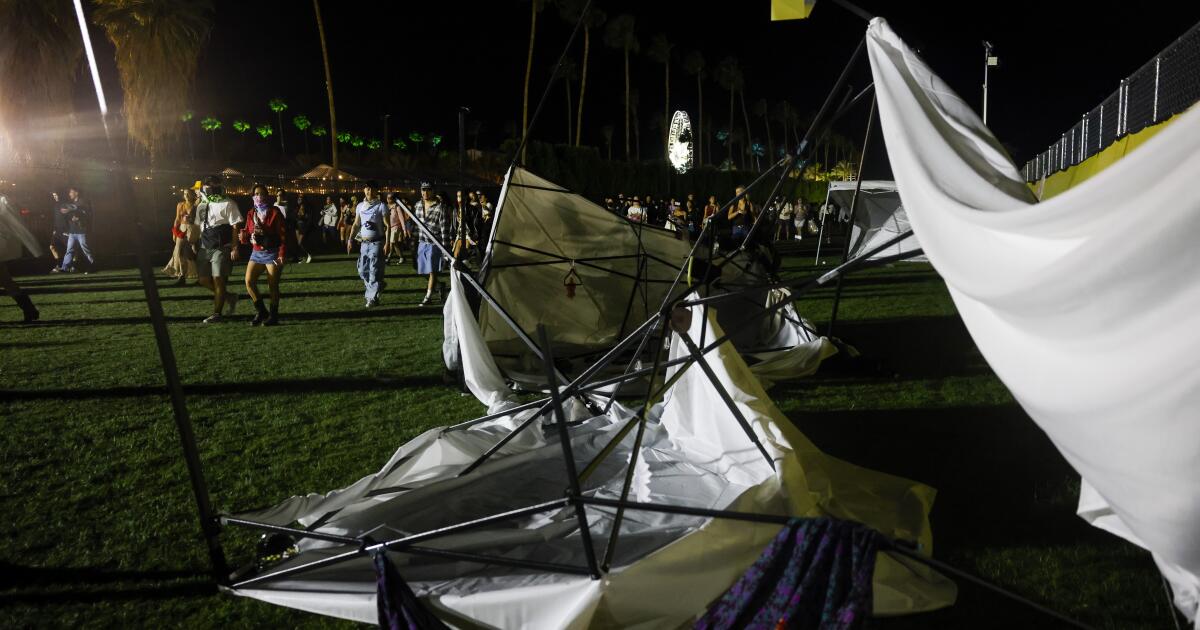
Coachella 2026: Violent winds disrupt festival, campgrounds

Florida High School Football Rankings: Top 25 teams – Oct. 21

How old is Bo Nix? What to know about Oregon quarterback ahead of 2024 NFL Draft

Cleary's 21 help Le Moyne down Central Connecticut State 69-64 in OT

99th annual Pony Swim held in Virginia

Indiana Members Credit Union announced as new anchor tenant at Bottleworks District

Pope Leo urges world leaders to reject war and negotiate peace

Manhattan DA’s office to investigate Swalwell sexual assault allegation

NASA’s Artemis II mission in 20 minutes

Trump adversary running for Senate borrows his filibuster playbook

Russian propaganda unit targets Hungary’s elections
-

 Atlanta, GA7 days ago
1 teenage girl killed, another injured in shooting at Piedmont Park, police say
-

 Movie Reviews1 week ago
Vaazha 2 first half review: Hashir anchors a lively, chaos-filled teen tale
-

 Georgia4 days ago
Georgia House Special Runoff Election 2026 Live Results
-

 Pennsylvania5 days ago
Parents charged after toddler injured by wolf at Pennsylvania zoo
-

 Arkansas1 day ago
Arkansas TV meteorologist Melinda Mayo retires after nearly four decades on air
-
 Milwaukee, WI5 days ago
Potawatomi Casino Hotel evacuated after fire breaks out in rooftop HVAC system
-
 Entertainment1 week ago
Inside Ye’s first comeback show at SoFi Stadium
-

 Indianapolis, IN1 week ago
Fighting Illini begin Final Four preparations in Indianapolis