California
Millions of Californians live near oil and gas wells that are in the path of wildfires

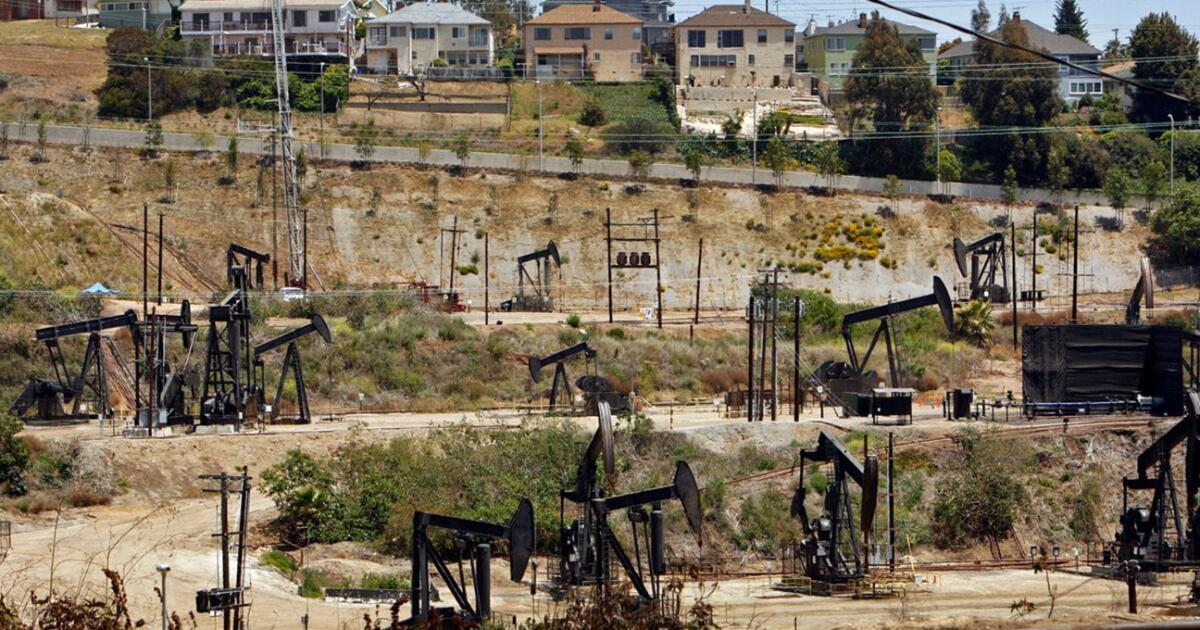
As firefighters continue to battle more than two dozen active wildfires in California, new research has found that millions of people are living in close proximity to oil and gas wells that are in the potential path of flames.
More than 100,000 wells in 19 states west of the Mississippi River are in areas that have burned in recent decades and face a high risk of burning in the future, with the vast majority in California, according to a study published recently in the journal One Earth.
What’s more, nearly 3 million Americans live within 3,200 feet of those wells, putting them at heightened risk of explosions, air and water pollution, infrastructure damage and other hazards.
“One of the things that surprised me was just the extent of how many oil wells had been in wildfire burn areas in the past, and how much this was impacting people in California — and is likely to in the coming century,” said David J.X. González, the study’s lead author and an assistant professor of environmental health sciences at UC Berkeley.
Aggressive and impactful reporting on climate change, the environment, health and science.
California is particularly vulnerable to the threat. Of the roughly 118,000 western oil wells in high fire risk areas, 103,878 of them — more than 87% — are in California, with 2.6 million residents living in close proximity to them, according to the study, which was described as the first to investigate historic and projected wildfire threats to oil and gas infrastructure in the United States.
The researchers examined active and inactive oil wells because some inactive wells continue to leak methane and other harmful or combustible emissions, González said. In California, the danger is particularly high in Los Angeles, Fresno, Kern and Orange counties, which are high fire risk areas that are also home to large populations and numerous wells.
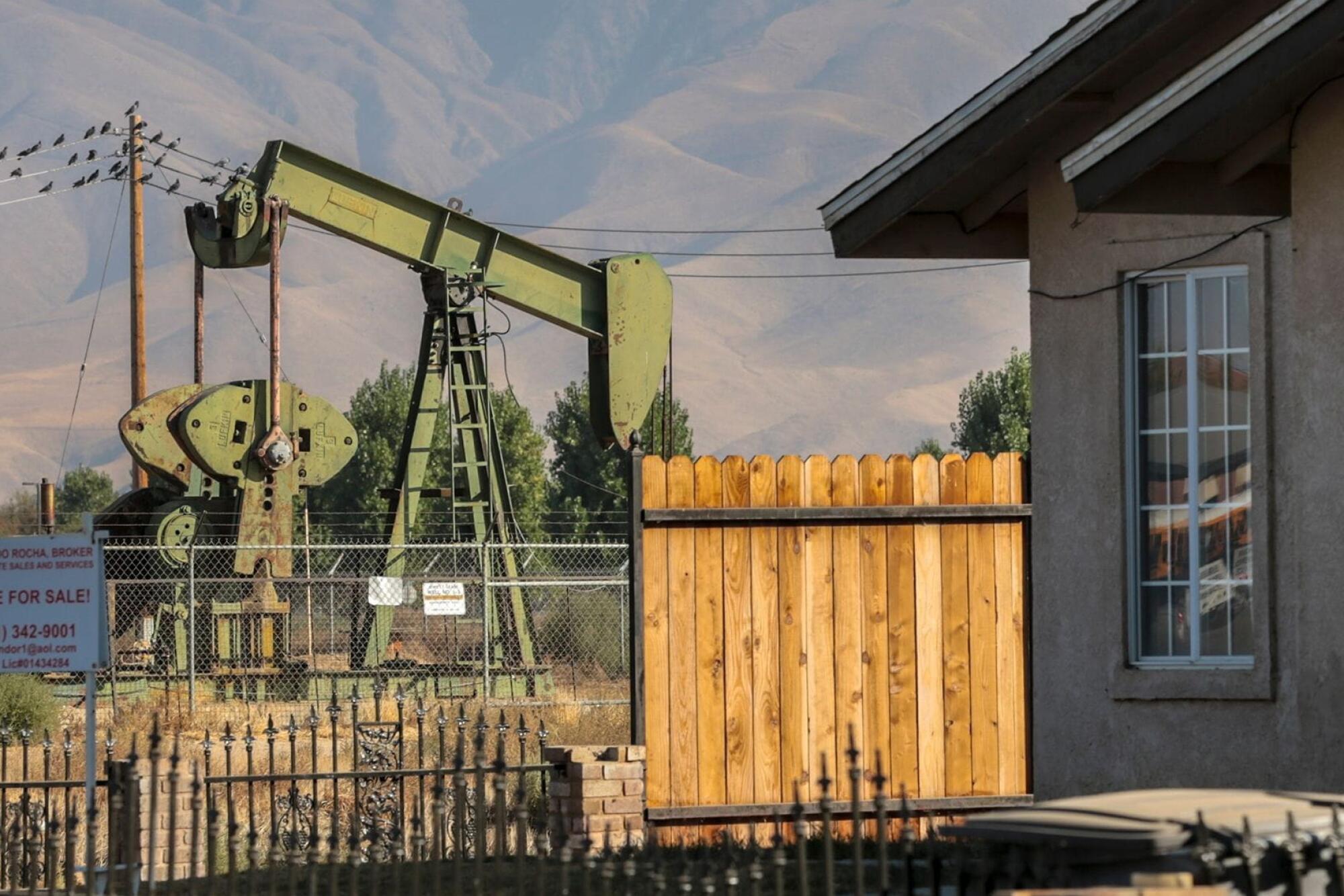
A pump station sits idle near homes in Arvin, Calif., where toxic fumes from a nearby well made residents sick and forced evacuations in November 2019.
(Robert Gauthier / Los Angeles Times)
Many Angelenos have already experienced the perils of living near oil and gas infrastructure. In 1985, methane linked to a long-abandoned oil field fed an explosion at a Ross Dress for Less store in Fairfax, injuring more than 20 people.
In 2015, a massive gas leak from the Aliso Canyon underground storage facility near Porter Ranch released about 100,000 tons of methane, ethane and other chemicals into the air, forcing more than 8,000 families to flee their homes and prompting reports of nausea, skin rashes, nosebleeds and other health issues.
Four years later, a 90-year-old well erupted beneath a construction site in Marina del Rey and spewed oil, gas and other debris into the air for several days.
And in 2017, the Thomas fire burned through areas of Santa Barbara and Ventura counties that contained more than 2,100 oil and gas wells — the long-term effects of which have yet to be studied.
It’s not only California that is at risk however. Texas, Oklahoma and New Mexico also host wells in high fire risk areas, the study says. The U.S., in general, has been the top global producer of crude oil and natural gas since 2014, with the majority of production concentrated in the West.
Additionally, oil drilling continues across the country, despite federal and state efforts to curb new wells and cap old ones. One of the provisions included in President Biden’s landmark climate bill, the Inflation Reduction Act, allows for new oil leases to be auctioned on federally managed lands, which means California and other states could see more new wells in the future.
But the California Department of Geologic Energy Management, which oversees oil and gas wells in the state, said production here has been steadily declining since its peak in 1985.
“Presently, CalGEM approves far more permitting applications from operators to plug oil wells than it does to drill new wells,” agency spokeswoman Janice Mackey said in an email. She noted that over the last 12 months, the state agency approved 5,059 permits to permanently plug oil and gas wells while approving only 56 new drills.
Mackey said most of the nearly 250,000 wells under the state agency’s jurisdiction are in the San Joaquin Valley, “but there are also many others in high fire threat areas such as Santa Barbara, Ventura, and Los Angeles counties.”
That could prove to be a problem as wildfire activity continues to worsen, even in the face of slowing oil production. One recent study found that wildfire burn areas in California could increase 50% or more by midcentury, due largely to climate change. Eighteen of the state’s 20 largest wildfires have occurred since 2000.
Additionally, Mackey said the placement of new wells — which are determined by oil and gas operators who seek permits from local governments — has little to do with fire risk.
“California’s oil fields are well established from decades to [over a] century old,” she said. “Operators continue to drill in areas where oil and gas is known to exist.”
Estimates included in the study indicate the hazards will get worse in the decades ahead as population and wildfire activity expand. Between 1984 and 2019, the researchers documented a five-fold increase in the number of wells located in wildfire burn areas, and a doubling of the population living within 3,200 feet of those wells.
By midcentury, more than 122,000 wells are expected to be in high wildfire risk areas, and by late century that number will grow to more than 205,000, according to the study. Both projections are significantly higher when also accounting for moderate wildfire risk areas, and both show that California will continue to experience the lion’s share.
“Wildfires are increasingly burning in oil fields over the past four decades, and it’s a trend that’s very likely to continue throughout the rest of the century, including near some densely populated parts of California,” González said.
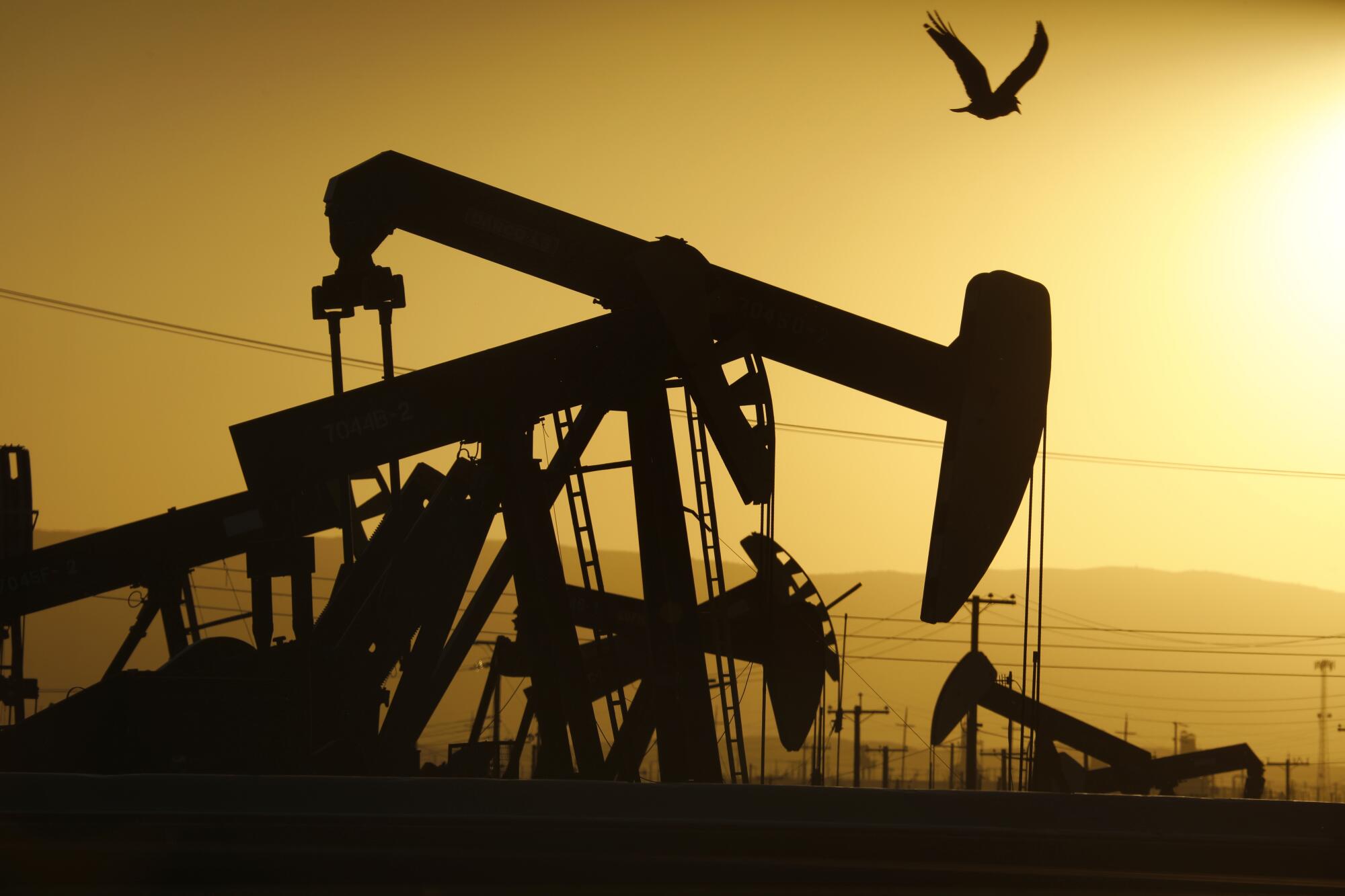
A 2020 photo shows one of more than 1,100 producing oil wells in the McKittrick oil field, just north of McKittrick, Calif., on State Route 33.
(Carolyn Cole/Los Angeles Times)
He added that estimates for the number of wells and people in harm’s way are likely conservative, as the study assessed wells drilled before 2020. That same year was California’s worst wildfire year on record, and saw more than 4.3 million acres burn.
The researchers also found that exposure to oil wells in the path of wildfires was unevenly distributed. Black, Latino and Native American people faced disproportionate risk.
The reasons for this are myriad, according to González.
For one, an estimated 350,000 new houses are constructed each year in the wildland urban interface, or the area where human development meets forestland and other natural landscapes. Such areas often draw people seeking lower costs of living, but face significant wildfire risks because of their remoteness and high vegetation content.
In urban areas, research has found that oil wells are more likely to be sited in neighborhoods that were historically redlined, or racially segregated. New wells are also disproportionately drilled in areas where Black and Latino people live.
There are solutions, however — or at least recommendations to help mitigate the risks of oil wells in populated, wildfire-prone regions. California recently approved legislation that prohibits new oil and gas wells within 3,200 feet of homes, schools, healthcare facilities and other sensitive sites.
The state will also receive more than $35 million in federal funding to help plug and remediate more than 200 high-risk orphaned oil and gas wells, and plans to invest more than a quarter of a billion state and federal dollars into orphan well plugging in the coming years.
The researchers also recommended limiting or eliminating drilling in high wildfire risk areas, and investing in better technology for monitoring wells for leaks of flammable gases.
“There’s a strong base of evidence that active wells are harmful for people that live nearby — even in the absence of wildfires,” González said. “So I think from a public health perspective, additional protections are well justified.”
Mackey, of the California Department of Geologic Energy Management, said oil and gas operators in the state are subject to multiple layers of regulation, including requirements that well pads and tanks be kept free of vegetation, and that wells within specified distances of homes and public rights-of-way have fire prevention devices, sensors and alarm systems.
“In the event of a fire, CalGEM will contact affected field operators to warn them of the possible risk and discuss strategies to prevent damage to wells and equipment,” she said. “Operators are directed to close pipelines and tanks and shut off power to wells if they are not already doing so. Operators also have fire suppression capabilities they deploy during emergencies.”
During the Thomas fire, which was the largest in California at the time, the operators in Santa Barbara and Ventura counties shut down their wells, pipelines and rig work as part of their emergency response to mitigate the risk of fire-related incidents, she said.
Despite such efforts, the study also highlighted what it referred to as a “pernicious feedback loop.” The production and consumption of fossil fuels are driving global warming, which is in turn increasing the frequency and intensity of wildfires, it says. Greenhouse gases emitted by fires are also exacerbating climate change and contributing to the cycle.
González said he hopes the study will prompt more action to not only reduce wildfires, but also to better protect people living in or near the oil wells in their paths.
“We have an opportunity now to take action to prevent future disasters,” he said.



LOS ANGELES – A routine internal monitoring sweep by the California Department of Motor Vehicles has flagged thousands of suspicious test results, prompting a massive recall of licensed drivers to testing centers.
The state agency has warned that anyone who fails to comply with the retesting directive will face immediate cancellation of their driving privileges.
What we know:
The California DMV sent letters to about 11,000 licensed drivers last month after identifying suspicious patterns in their written test results.
According to the agency, these irregularities were detected through routine internal monitoring and point to various methods used to circumvent the testing process.
PREVIOUS COVERAGE: 11,000 CA drivers told to retake written test or lose licenses
The DMV has stated that the issue is entirely “test-taker related” and not the result of an internal technical glitch or the involvement of artificial intelligence.
To address the suspected fraud, several cases have already been referred to county district attorneys for criminal prosecution.
What we don’t know:
The DMV has not revealed the specific cheating methods used by the test-takers, nor have they disclosed the exact locations or dates of the flagged tests.
It’s unclear exactly how many of the 11,000 affected drivers have already completed their retests or how many licenses have been canceled so far.
What they’re saying:
A DMV spokesperson emphasized the importance of exam security in an email to City News Service: “The California DMV has identified irregularities in certain driver knowledge test results that may indicate instances of cheating.”
The spokesperson further explained, “Some individuals may have attempted to circumvent the testing process using various cheating methods.”
Addressing the root cause, the spokesperson added, “Nonetheless, these irregularities are test-taker-related and not the result of an internal DMV technical issue, or the involvement of artificial intelligence. Ensuring the integrity of the knowledge testing process is essential to public safety and to confirm that drivers understand California’s rules of the road.”
Regarding the lack of specific details on how the cheating occurred, the department stated, “DMV is not sharing additional information at this time, so as not to reveal investigative methods and protect the integrity of the investigative process.”
Sen. Tony Strickland (R-Huntington Beach), vice chair of the Senate Transportation Committee, recently sent a letter to DMV administrators expressing concerns about the situation.
On Tuesday, Strickland released a statement saying the DMV’s own letter to drivers created “confusion and unnecessary anxiety” among new license holders.
“The DMV is a state agency that serves millions of Californians, and they deserve clear communication along with timely information when something like this happens,” Strickland said. “I have heard from Californians who believe this language suggests the DMV is accusing them of cheating or engaging in misconduct during the examination process. Whether that is the Department’s intent or not, the wording of the notice has created confusion and unnecessary anxiety. In my letter, I requested additional information about what happened and the steps the department is taking to address the issue.”
What’s next:
The DMV will continue to monitor test results internally while working alongside county district attorneys on the active criminal referrals.
Drivers who received the letters must schedule and pass their exams before their individual 30-day deadlines expire to avoid losing their driving privileges.
What you can do:
If you received a letter from the DMV regarding testing irregularities, you must visit a local DMV office as soon as possible to retake your knowledge test.
Be sure to complete and pass the exam within the mandated 30-day window to prevent your driver’s license from being canceled.
The Source: This report is based on official statements and email correspondence provided by the California Department of Motor Vehicles to City News Service.

A now 33-year-old Northern California man, who was on the run in Mexico for five nearly five years, has been sentenced for the murder of his estranged wife’s boyfriend while the couple was sleeping in her apartment in 2017.
Arturo Hernandez was 25 when he learned that a man named Anthony Freas was in a relationship with his estranged wife. His calls to her after hearing about the situation went unanswered, according to investigators.
On Nov. 19, livid over the relationship, Hernandez went to the Regency Apartments in the 5900 block of Riza Avenue, where his wife lived. He broke into the apartment where the couple was sleeping, entered her bedroom and stabbed Freas multiple times before fleeing the scene, according to a news release from the Sacramento County District Attorney’s Office.
Officers with the Sacramento Police Department responded to the apartment and found Freas suffering from at least one stab wound to the upper body. They began life-saving measures until paramedics arrived and rushed him to a hospital, where he later died.
Authorities launched a manhunt for Hernandez, who was considered armed and dangerous, The Sacramento Bee reported.
-
Arturo Hernandez, 33, was sentenced for killing Anthony Freas while he was sleeping at his estranged wife’s Sacramento apartment on Nov. 19, 2026.(Justice4Anthony/Facebook) -
Arturo Hernandez broke into his estranged wife’s home at the Regency Apartments and killed her boyfriend while the couple was sleeping on Nov. 19, 2017. (Google)


It was later learned that he fled to Mexico, though it is unclear where he had been hiding or with whom.
Hernandez evaded law enforcement until July 2023, when he was arrested by Mexican authorities and FBI agents. He was later extradited back to Sacramento to stand trial.
On March 24, a jury found Hernandez guilty of second-degree murder and found true the allegation that he personally used a weapon during the attack.
More than three months later, on July 10, Judge Alyson Lewis sentenced him to 16 years to life in state prison.

An Idaho father is recovering at home after a near-fatal encounter with a rattlesnake during a vacation in Northern California that required a hospital’s entire supply of antivenom to keep him alive.
The encounter highlights a “concerning” surge in rattlesnake bites in California this year, state poison control officers said.
Chris Howarth, his wife Jenny and their three children were visiting his parents in Oroville near Chico last month when he was bitten twice by a western rattlesnake while working in the backyard, Chico-based Action News Now reported July 3.
Howarth’s wife immediately drove him to Oroville Hospital, where he began showing signs of a reaction to the venom, including trouble breathing.
One of the bites reached his vein, Howarth told SFGate, sending venom into his bloodstream.
Within 24 hours, Howarth received 18 vials of antivenom at the hospital. Three days later, his condition worsened with swelling in his legs, requiring infusions of plasma and platelets as well as additional antivenom.
By the fifth day, the hospital was completely out of antivenom, Howarth told Action News Now.
Howarth was then flown to Stanford Hospital in Palo Alto where he continued to receive antivenom for another six days before he was released 11 days after the bite.
In total, Howarth received 54 vials of antivenom – 36 at the Oroville hospital, 18 at Stanford – according to a GoFundMe campaign set up to help with medical expenses.
Launched on July 5, the campaign had generated $9,629 in donations as of Tuesday, July 14.
Howarth’s case is part of a surge in rattlesnake encounters in California this year, according to the California Poison Control System, which reported in May that it had already received nearly 80 calls related to rattlesnake encounters five months into the year, compared to an average 200 calls a year. Three of those encounters this year were fatal, which CPCS medical expert Dr. Rais Vohra called “deeply concerning” in a May news release. On average, the state sees one rattlesnake-related death a year, according to officials.
“The number of bites and fatalities this early in the year underscores the importance of awareness and prevention,” Dr. Vohra said.
Here are some tips from the California Department of Fish and Wildlife to help you avoid coming face to face with a rattlesnake.
As the name implies, rattlesnakes are most commonly recognized by the distinct “ch ch ch” sound their rattles make. But, they don’t always use them. So, you can also identify them by their gray or light brown exterior and triangular shaped head. They usually range from 2 to 4 feet in length and easily camouflage to their surroundings.
When hiking, the Department of Fish and Wildlife recommends that people stay on well-used trails and avoid high grass, wear sturdy boots and loose-fitting long pants when walking through brushy, wild areas and avoid wearing flip-flops or sandals.
The department also recommends hikers check logs or rocks before sitting on them, and shake out sleeping bags before getting in.
Do not grab “sticks” in the water, as rattlesnakes can swim. Do not try to handle or touch a rattlesnake, even if they are dead.
Homeowners can prevent rattlesnakes from residing around their home by taking care of any rodent problems, cutting the grass and keeping doors and garages closed.
According to the Mayo Clinic, a bite from a venomous snake will cause severe burning pain at the bite site within 30 minutes. This can be followed by swelling and bruising at the wound and all the way up the arm or leg. Other signs and symptoms include nausea, labored breathing and a general sense of weakness, as well as an odd taste in the mouth.
If you or a companion are bitten by a rattlesnake, the Mayo Clinic recommends to do the following:
- Call 911 immediately and get to a hospital as quickly as possible.
- Minimize movement to slow the spread of venom through the bloodstream.
- Take off rings, watches, or tight clothing, as the affected limb will likely swell significantly.
- Keep the bite site even with or slightly below the level of the heart.
- For pets, contact a veterinarian immediately; many emergency clinics now stock specialized antivenom for dogs.
The California Department of Fish and Wildlife also has a list of things to not do in the event of a snake bite:
- Do not apply ice or heat to the wound.
- Do not use a tourniquet or any constricting bands.
- Do not attempt to “suck out” the venom or cut the bite site.
- Do not consume alcohol or take aspirin.
As for the Howarth family, Jenny told SFGate they are grateful Chris is recovering and they want to use the experience to raise awareness of the dangers of rattlesnakes.
“We just want people to know how serious it can be,” Jenny said.
-

 Vermont49 seconds ago
Ben & Jerry’s Foundation says it will shut down amid legal dispute with parent company – VTDigger
-

 Virginia7 minutes ago
Drought emergency declared for parts of Virginia; governor warns of water restrictions
-

 Washington13 minutes ago
Trump fires WA US Attorney within an hour
-

 Wisconsin19 minutes ago
Wisconsin Lottery Powerball, Pick 3 results for July 15, 2026
-

 West Virginia25 minutes ago
Concerned West Virginians speak out against proposed Monongalia County power plant – WV MetroNews
-

 Wyoming31 minutes ago
July 15 recap: Wyoming news you may have missed today
-

 Crypto37 minutes ago
Luno Pushes South Africa to Rewrite Crypto Rules Through Parliament, Not Proclamation
-

 Finance43 minutes ago
SixCap Healthcare Finance Appoints Carroll as Senior Relationship Manager

