California
A Step Towards Healing and Restoration: California to Support the Return of Ancestral Tribal Lands and Lands Management Projects | California Governor


WHAT YOU NEED TO KNOW: As part of an ongoing truth and healing process, California is supporting the return of over 38,000 acres of ancestral land to tribal stewardship and advancing nature-based solutions projects on tribal lands.
SACRAMENTO – As part of a first-in-the-nation effort to address historical wrongs committed against California Native American tribes, Governor Gavin Newsom today announced that the state has awarded more than $100 million for 33 tribal land projects. The funding, which was appropriated as part of the 2022-23 and 2023-24 state budgets, will be used for ancestral land return, implementation of Traditional Ecological Knowledge and tribal expertise, habitat restoration, climate and wildfire resilience projects, and more.
WHAT GOVERNOR GAVIN NEWSOM SAID: “These awards are an acknowledgment of past sins, a promise of accountability, and a commitment to a better future – for the land and all its people, especially its original stewards. Only through partnership with California Native American tribes can we address the climate and biodiversity crisis and build a healthier California.”
WHAT THIS MEANS: As part of the administration’s Native American truth and healing process, the Governor has worked collaboratively with tribes to establish the historic Tribal Nature-Based Solutions grant program. Designed to support tribal priorities – as determined by tribes themselves – grants can be used for ancestral land return, restoration, workforce development, implementation of Traditional Ecological Knowledge and tribal expertise, habitat restoration, and climate and wildfire resilience projects.
“Today marks a pivotal moment in our journey towards healing and reconciliation,” said Chairman Kevin Osuna, Iipay Nation of Santa Ysabel. “This award is not merely a financial contribution; it is a symbol of solidarity, a recognition of our inherent rights, and a commitment to stewarding our ancestral lands. With these funds, we will not only secure the physical boundaries of our land but also lay the foundation for a future where our children, grandchildren and local communities can thrive, rooted in the strength of our heritage.The Tribal Nature-Based Solutions are engrained in our traditional ways of life, and we are eternally grateful for the opportunity, as generational healing requires more than just the restitution of land; it demands the restoration of dignity, the preservation of culture, and the empowerment of our people. Let us remember those who came before us, whose sacrifices paved the way for this moment. Let us also honor our descendants, whose futures we hold in our hands. As traditional stewards, our tribe looks forward to welcoming the general public to experience the beauty, wonder, and wisdom of our ancestral homelands. Eyaay Ahan.”
“This sacred land is for our future generations, and the Kashia Band of Pomo Indians are committed to preserving the natural resources and cultural heritage of our people,” said Chairperson Dino Franklin with the Kashia Band of Pomo Indians. “We look forward to working closely with the state and local communities to ensure that this land is protected and cared for in a sustainable manner.”
“As California works to address the climate crisis, we can learn from the state’s historical wrongs by fully embracing opportunities to equitably and meaningfully partner with California Native American tribes to tackle these shared challenges,” said Tribal Affairs Secretary Christina Snider-Ashtari. “The investments from the Tribal Nature-Based Solutions Grant Program are the first in the nation directly supporting ancestral land return and ensuring tribal stewardship has a critical role in the broader conservation goals benefiting all of California.”
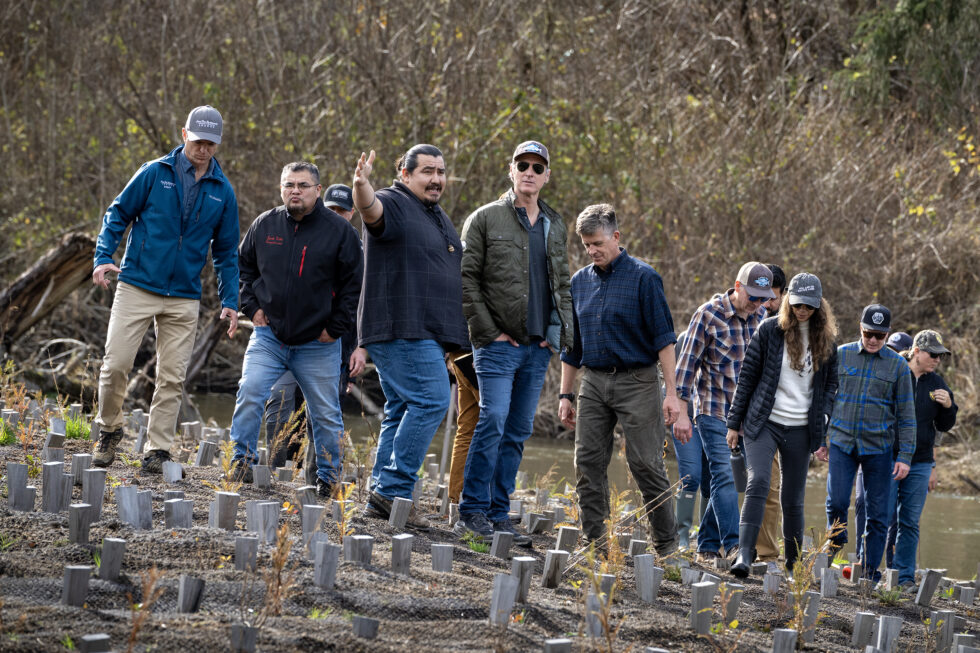
Visiting Native planting sites with members of the Yurok Tribe.
Early funding, as offered to time-sensitive and shovel-ready projects, went to the Hoopa Valley Tribe to acquire 10,395 acres of forested property and return Hupa Mountain to tribal stewardship. The Hoopa Valley Tribe’s ribbon-cutting ceremony for this ancestral land return is scheduled for May 14th.
“Supporting tribal leadership is essential to meet our most important environmental goals,” said Natural Resources Agency Secretary Wade Crowfoot. “This funding for ancestral land return and tribally led nature-based solutions is big step toward conserving 30% of California’s lands and coastal waters by 2030, and more broadly to help people and nature thrive together across California. It represents a downpayment on the state’s commitment to strengthen partnership with California Native American tribes in years and decades to come.”
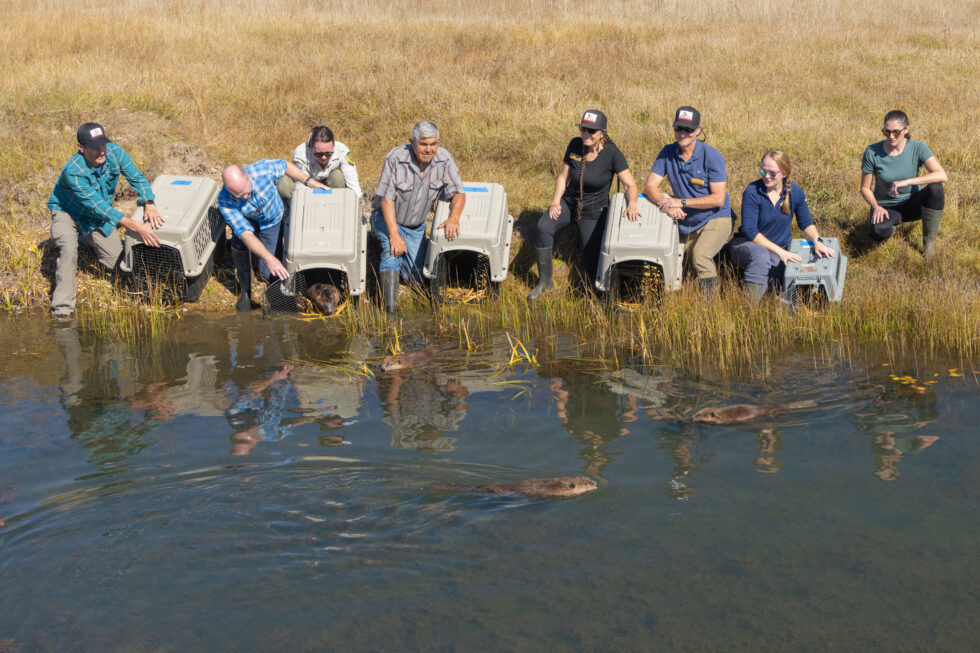
Releasing beavers into the waters on the ancestral lands of the Mountain Maidu people.
BIGGER PICTURE: Many of these projects will also help bring California closer to our ambitious goal to conserve 30% of lands and coastal waters by 2030, also known as the 30 x 30 initiative. The initiative builds on the Governor’s direction for state entities to work cooperatively with California Native American tribes in returning ancestral lands to tribal ownership in excess of state needs, and support California tribes’ co-management of and access to natural lands within a California tribe’s ancestral land.
See the full list of recipients and learn more about today’s announcement here.
###





Dad charged with incest after allegedly assaulting daughter
Makayla Rene Settles moved to California to chase her dreams. Two days later, her family says her biological father sexually assaulted her. She was 18. She died five months later. Now her family is fighting to make sure her accused attacker faces trial.
VENTURA COUNTY, Calif. – When Makayla Rene Settles turned 18, she left Raleigh, North Carolina, for a fresh start. She moved to Moorpark, California, to live with her biological father, Stephen Vincent Chavez, with plans to attend college and build a new life. Two days after she arrived, her family says she called terrified and asking for help.
“It was just the fear in her voice, her crying. I didn’t need details. I knew something was wrong, and I said, ‘I’m on the way,’” said Carolina Sandoval, Makayla’s mother.
Carolina says she rushed to Chavez’s home. When she saw her daughter, she was devastated.
“She’s barely walking,” Carolina said. “My brother picks her up and hugs her.”
Makayla was taken to a hospital, where a rape kit was performed. According to the family, the results came back positive for Stephen Vincent Chavez’s DNA. He was arrested that same night and charged with incest, taking advantage of a position of trust, and providing alcohol to a minor.
Her cousin, Crystal Sandoval, was in disbelief. She said, “I was screaming, I was crying. I just kept thinking, why would he do that to her? This is something she could not come back from.”
Crystal was right. Five months later, Makayla Rene Settles died by suicide.
“If I’m being honest, it feels like I handed my daughter to the devil,” said Carolina.
On the night Makayla was taken to the hospital, Sandoval says Chavez sent her a text message. It read, “I’m never drinking liquor again. I don’t want that blackout to happen again.”
Now, the family says they’ve been dealt another devastating blow. According to Crystal Sandoval, the Ventura County DA’s Office has told them the case may not go to trial because Makayla is no longer alive to testify.
“The DA was essentially saying, ‘We don’t know if we have a case because she’s no longer here,’ and when she told me that, I immediately said, ‘No, we’re not going to let that slide,’” said Crystal.
Determined to get justice, Crystal took to social media. Her videos went viral, drawing widespread outrage and prompting hundreds to promise to show up to Chavez’s next court hearing, scheduled for April 21 at the Ventura County Courthouse.
“It was like he took her sunshine away and just kind of broke her soul,” Crystal said.
The Ventura County District Attorney’s Office issued the following statement:
“We have seen the posts online and want to let the public know that our Sexual Assault Unit continues to prosecute the defendant for this extremely serious crime. This case has been filed since July 2025, when the evidence supported the filing of felony charges. As with any case, prosecutors filed charges based on the evidence. The court sets bail. Our office successfully moved to increase bail to $250K in July 2025 when the case was filed. The defendant requested that bail be reduced, but we successfully argued against that. The defendant has since posted $250K bail and is out of custody. With respect to the upcoming hearing, the April 21 date is an early disposition conference. This is a standard pretrial proceeding where the court and parties address the status of the case and set future dates as appropriate.”
Despite that statement, the family says they have already been told a trial is not guaranteed, and they are not backing down. Chavez has pleaded not guilty. His next court hearing is April 21 at 8:30 a.m. in Courtroom 14 at the Ventura County Courthouse.
California
California’s leading GOP candidate for governor reacts to Swalwell’s exit from race | CNN Politics

California’s leading GOP candidate for governor reacts to Swalwell’s exit from race
Republican Gov. candidate Steve Hilton joins CNN’s Dana Bash after one of his opponents, Rep. Eric Swalwell, exited the California governor’s race amid sexual misconduct allegations. “We desperately need change. And no Democrat can provide that,” Hilton says.

FRESNO, Calif. (FOX26) — A new effort to crack down on dangerous drivers in California is gaining attention as lawmakers push forward legislation aimed at repeat speeders.
Assembly member Esmeralda Soria has introduced a bill that would require certain drivers with multiple speeding offenses to install a device in their vehicles that automatically limits how fast they can go. The measure, known as the “Stop Super Speeders Act” (AB 2276), is designed to improve road safety and prevent deadly crashes.
The program could first roll out as a pilot in several counties, including Fresno, Kern, Los Angeles, San Bernardino, San Diego, Santa Clara, and Shasta. While the proposal was initially intended to be implemented statewide, consultants recommended starting with a smaller pilot program.
The legislation is driven in part by tragic cases like that of Paul Martinez, who was killed at just 21 years old after being struck by a speeding driver in Fresno. His father, Joe Martinez, says the loss is something he lives with every day.
“Being 21 years old and suddenly your entire life, dreams, goals—everything—is just wiped out by the distraction of one person who was speeding,” he said. According to reports, the driver who hit Paul was traveling 54 miles per hour in a 40 mph zone.
Traffic safety remains a serious concern in Fresno. Data from Smart Growth America ranks the city as the seventh worst in the nation for pedestrian deaths.
“I do not want to see another father who grieves every single day because he lost his child to someone driving recklessly,” Soria said.
Under AB 2276, judges would have the authority to require repeat offenders to install Intelligent Speed Assistance (ISA) devices in their vehicles. The technology functions similarly to cruise control but automatically adjusts a car’s speed based on posted limits using GPS data.
“Once the technology is installed, it knows the speed limit of the neighborhood or freeway and makes adjustments accordingly,” Soria explained. “This is for those folks who haven’t learned their lesson from simply getting a ticket.”
However, the proposal has drawn criticism from some groups. Opponents argue that the bill’s language is too broad and could create unintended safety risks. Critics say there are situations where drivers may need to accelerate quickly to avoid danger, and limiting speed could make those situations more hazardous.
Supporters counter that the bill is about accountability and protecting lives on the road.
“You would think this is a no-brainer bill,” said Martinez, “It holds repeat offenders accountable.”
The bill is still in the early stages of the legislative process. Its next step is review by the Assembly Appropriations Committee.

Popular weight-loss medications linked to hidden side effects, study finds

Orioles manager Craig Albernaz takes line drive to face in terrifying scene

Toyota joins hydrogen truck alliance push

How Waymo and Waze are pitching in to help solve L.A.’s pothole problem

Commentary: Am I the only one who hates delivery robots?

Florida High School Football Rankings: Top 25 teams – Oct. 21

How old is Bo Nix? What to know about Oregon quarterback ahead of 2024 NFL Draft

Cleary's 21 help Le Moyne down Central Connecticut State 69-64 in OT

99th annual Pony Swim held in Virginia

Indiana Members Credit Union announced as new anchor tenant at Bottleworks District

Mass drone warfare is Europe’s rising security threat
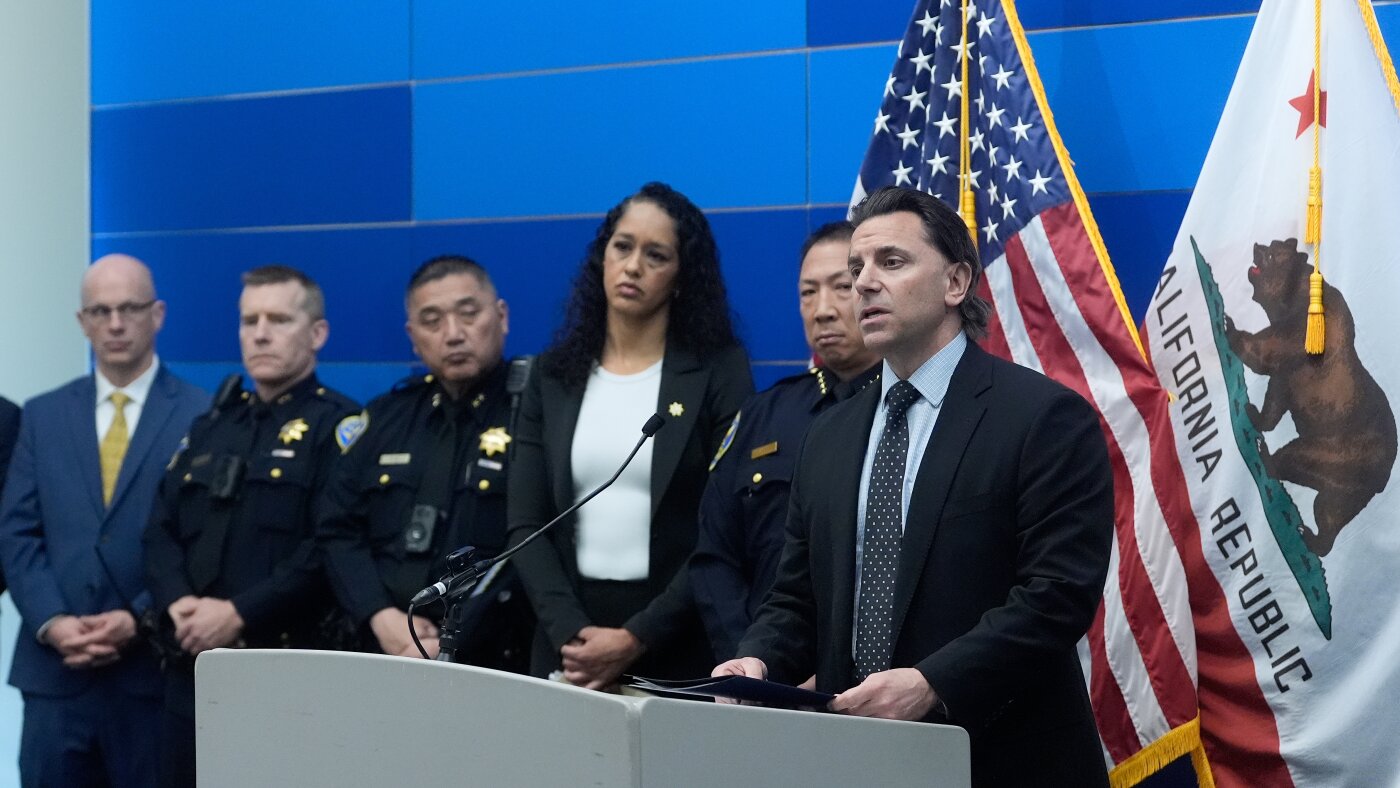
Man accused in Molotov cocktail attack of OpenAI CEO’s home charged with attempted murder

Embattled Rep Tony Gonzales announces plans to resign amid sexual misconduct allegations

UN experts slam attacks on Gaza shelters, forced displacement in West Bank

DOJ fires at least 4 prosecutors involved in FACE Act cases during Biden administration
-

 Atlanta, GA1 week ago
1 teenage girl killed, another injured in shooting at Piedmont Park, police say
-

 Georgia7 days ago
Georgia House Special Runoff Election 2026 Live Results
-

 Arkansas4 days ago
Arkansas TV meteorologist Melinda Mayo retires after nearly four decades on air
-

 Pennsylvania1 week ago
Parents charged after toddler injured by wolf at Pennsylvania zoo
-
 Milwaukee, WI1 week ago
Potawatomi Casino Hotel evacuated after fire breaks out in rooftop HVAC system
-

 Austin, TX6 days ago
ABC Kite Fest Returns to Austin for Annual Celebration – Austin Today
-

 World1 week ago
Zelenskyy warns US-Iran war could divert critical aid from Ukraine
-

 World1 week ago
Indonesia receives bodies of peacekeepers killed in southern Lebanon