West
California college students demand the university remove financial aid barriers for illegal immigrants

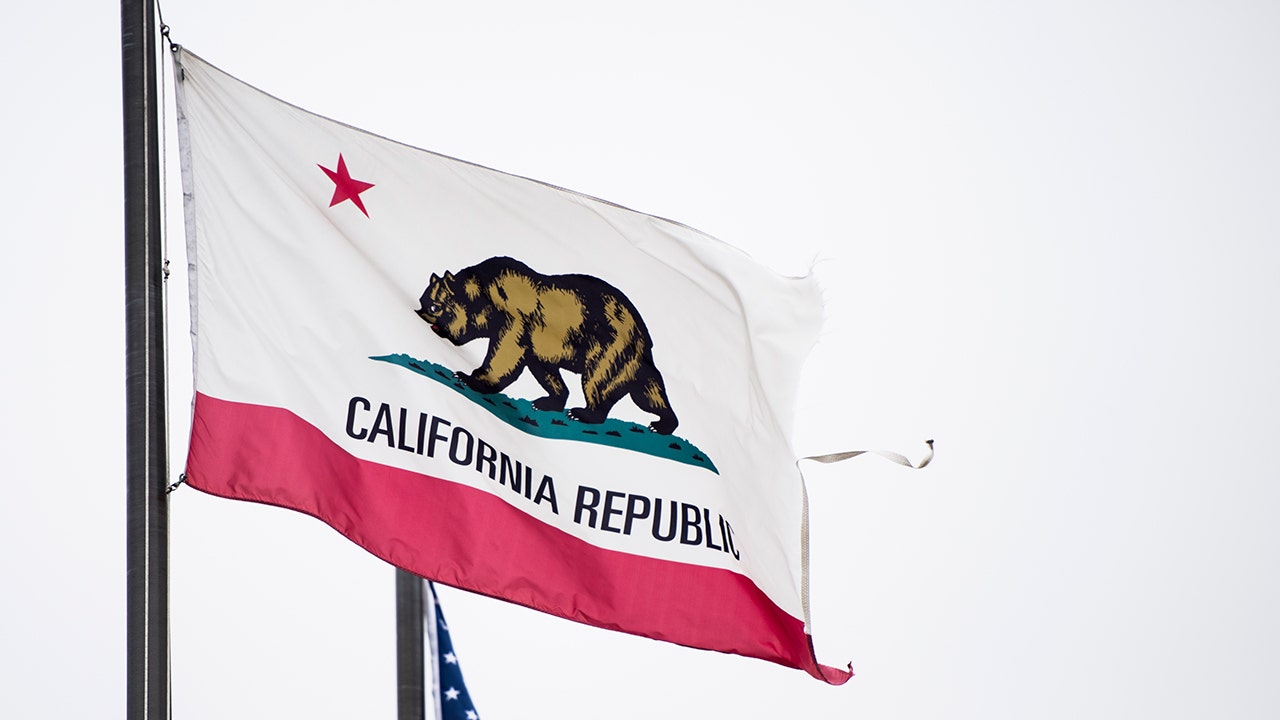
University of California San Diego students demanded their school’s administrators remove the financial aid barriers for illegal immigrants.
“We’re here because people in our own classrooms are living in fear,” one UCSD student told protesters, according to The UCSD Guardian. “Some students can’t even apply for financial aid or campus jobs because of their immigration status. That’s unacceptable at a public university that claims to be inclusive.”
Around 200 students gathered to protest the Trump administration’s deportation efforts and demand that the university take action to protect illegal immigrants. The UCSD Associated Student Senate developed a resolution pressuring the UCSD administrators to take action.
People are seen boarding a U.S. military aircraft. The White House announced Friday that “deportation flights have begun” in the U.S. (White House)
UNIVERSITY OF MINNESOTA STUDENTS RAIL AGAINST COLLEGE LEADERSHIP OVER WISHY-WASHY STAND ON ICE
The resolution, passed on Wednesday last week, wants the Vice-Chancellor of Student Affairs and Campus Life “to remove financial barriers for undocumented students,” which would entail “expanding grants for the professional development of undergraduate undocumented students, guaranteeing in-state tuition protections for undocumented students,” and “eliminating hidden fees and costs that disproportionately affect students without access to federal financial aid.”
They also want the chancellor to increase funding for the Undocumented Student Services Center by 20% in order to expand “basic needs resources, including housing, food security, and mental health support” for illegal immigrant students.
“We have student government representatives who say they support us, but now, it’s time for action,” sophomore Isabella Lopez told The UCSD Guardian in an interview.
“Passing this resolution is just the first step. We need administration to listen,” she added.
ICE Dallas officers arrested Dennis Alexander Valenzuela, 37, an illegally present Guatemalan national wanted for murder in his home country, according to ICE. (ICE)
President Donald Trump rescinded the previous administration’s executive order prohibiting ICE raids on locations such as churches, hospitals and schools — a measure that Trump’s border czar Tom Homan’s plans on utilizing.
UCSD said that they cannot prevent federal immigration officers from coming on campus.
LEAVITT ON OFFENSE AT FIRST BRIEFING, STRESSING TRUMP WILL DEPORT ‘HEINOUS’ ILLEGAL IMMIGRANT CRIMINALS
Their website states that since they are a “public university and a large portion of UC property is open to the general public,” they do not “have authority to prohibit federal immigration enforcement officers from coming on campus or entering health facilities to enforce federal law.”
“The areas on campus that are open to the general public are also open to federal immigration enforcement officers,” their website states.
However, the school stated that their campus police will not work with federal immigration enforcement authorities.
A protest that occurred last week was led by the Students’ Civil Liberties Union, an organization affiliated with the American Civil Liberties Union. Other groups involved are the Movimiento Estudiantil Chicanx por Activismo and the Latinx Student Association.
All the groups protested and marched last week, calling for the university to support students who are illegal immigrants and to divest from companies that are linked to immigration enforcement.
President Donald Trump rescinded the previous administration’s executive order prohibiting ICE raids in locations such as churches, hospitals and schools. (Bryan Cox/U.S. Immigration and Customs Enforcement via Getty Images)
According to The UCSD Guardian, students held signs and posters that read “School for Education NOT Deportation,” “Familias Belong Together,” and “Immigrants Built America.”
Among calls for administrators to remove the financial aid cap for illegal immigrants, the protesters also want to expand resources for the Undocumented Student Services Center to provide legal support, their university to sever ties with companies that maintain contracts with the U.S. Immigration and Customs Enforcement (ICE), and expand research opportunities for undocumented students.
UCSD did not immediately respond to a request for comment from Fox News Digital.
Read the full article from Here


PORTLAND, Ore. (KOIN) — The Oregon Department of Human Services is asking for help finding a 2-year-old boy who is believed to be in danger.
Armani Andrews disappeared on June 17 and is thought to be with someone in the Portland area, officials said.
He’s about two feet tall with brown hair and brown eyes and African American/mixed race, ODHS said.
-

Armani Andrews (file, courtesy Oregon Department of Human Services). -
Armani Andrews (file, courtesy Oregon Department of Human Services).


Locations around Portland that the child may have frequented include the Rose Haven shelter on Northwest Glisan Street, the Multnomah County Central Library on Southwest 10th Avenue and Southeast Portland between 82nd and 103rd avenues.
People who have any information about Andrews’ whereabouts are asked to call 911.

SALT LAKE CITY — A first-of-its-kind monument that could become one of the largest bronze sculptures in the western United States is under construction in Utah.
Surrounded by sculptures lining his home, sculptor Sabin Howard refines his model for what will become the Grand Liberty Arch, a 60-foot-long, 36-foot-tall bronze monument depicting American history.
“It’s based upon geometric solids and how they move in and out of space,” Howard said.
The Grand Liberty Arch tells the story of America through a series of bronze reliefs.
“It is an arch to honor what we can be and is built to celebrate our nation’s 250th year with pride for the original American virtues and ideals,” Howard wrote in the monument’s proposal.
The front of the monument depicts the birth of America, including the Revolutionary War and the Declaration of Independence. Visitors walking through the arch will see the Declaration of Independence and the Constitution displayed on the interior walls alongside an eternal flame.
The opposite side portrays westward expansion and the 20th century, from World War I through space exploration. The two ends depict emancipation and the Civil War.
Each figurine is deeply symbolic. One recurring figure throughout the monument is Lady Liberty.
“Because that liberty is here. It’s a symbol,” Howard said.
Another figure carries a shield, representing the protection of freedom.
The monument features 56 sculpted figures, some standing up to 12 feet tall.
One of those figures, carrying an American flag, is modeled after a Texas veteran. Howard said the veteran served in two wars and, shortly before returning from Afghanistan, stepped on an explosive device that resulted in the loss of his leg.
“He has a tremendous amount of strength and courage,” Howard said. “He’s still going forward, so we’ve been wounded, we’ve been injured, yet we still have the courage to proceed forward.”
Many of the models Howard found in the Beehive State were at local CrossFit. Howard wanted bodybuilders and athletes for his artistic style, something he described as putting a movie on a monument.
“It’s a superhero’s version of American history,” Howard said.
The $55 million monument has been approved by the Capitol Preservation Board and Gov. Spencer Cox for a site above the Capitol. A circular plaza will surround the arch, symbolizing unity and a beacon of guiding light.
Partnering with the American Preparatory Academy, Howard hopes it will design lessons and programs that allow students to recite founding texts and perform at the monument.
Howard will work alongside three or four sculptors, including two from the Beehive State. He has most of the project funded, but is still seeking donors.
“This will show the world what’s going on in Utah,” Howard said.
At 62, decades of dedication have led Howard to this moment.
“It took 42 years to get here,” Howard said.
Howard couldn’t even draw when he was 19 years old, yet he was determined to try.
“I decided one afternoon, I’m going to make art like Michelangelo, Leonardo and Raphael,” Howard said.
Becoming a sculptor for Howard is about more than mastering technique.
“You’re not only developing your skills, you’re also developing your ability to tell a story through visual narrative,” Howard said.
The story Howard is telling, he said, has never been presented on this scale before.
“What I’m basically doing is I’m manifesting a universe,” Howard said.
A universe that was inspired by his previous creations, and most recently, a monument for the nation.
After more than 75,000 hours of sculpting and after roughly four decades, Howard was commissioned to create the National World War I Memorial in Washington, D.C., featuring 38 figures.
The WWI model took six months to complete. Although the Grand Liberty Arch will be a larger monument, Howard said the current model took only three weeks, not because it’s less complicated, quite the opposite.
Howard attributes his successes to his belief in God.
“I operate with the assumption that someone has my back and Christ and God and light and truth are what drives things forward,” Howard said. “You cannot accomplish things of such magnitude if you do not have faith in something larger than yourself.”
That faith ultimately brought Howard to Utah.
“I was told, ‘Go make a monument for your country. Go make a monument to represent who we are and what our history is,’” Howard said. “There is no human commissioner here. It’s my maker.”
Howard was encouraged by Sen. Mike Lee to make Utah home to his monument, and Howard agreed that the faith-based communities would appreciate the monument more than any other location.
“I don’t think there’s another place in the country that could manage a sculpture of this magnitude or meaning except Utah,” Howard said. “Nothing like this has ever happened.”
The monument’s magnitude in size alone makes the project significant, and Howard called it akin to the Sistine Chapel with how many figurines and symbols will be portrayed.
“When they go look at a monument like that, they’re hit in the gut in a very visceral, alchemical way,” Howard said.
Howard’s six-foot model of the Grand Liberty Arch will be displayed during Independence Day weekend in the Capitol Rotunda.
He will begin sculpting the full-sized monument in July, hoping to install a new panel every 15 months. Howard plans to complete the monument in time for Utah to host the 2034 Winter Olympics.
The Key Takeaways for this article were generated with the assistance of large language models and reviewed by our editorial team. The article, itself, is solely human-written.

-

 Oklahoma3 seconds ago
Oklahoma Ford Sports Blitz: June 28, 2026
-

 Oregon3 minutes ago
Missing, endangered 2-year-old last seen in Portland area
-

 Pennsylvania8 minutes ago
MSU basketball extends offer to Pennsylvania 4-star center prospect
-
Rhode Island15 minutes ago
RI Lottery Numbers Midday, Numbers Evening winning numbers for June 28, 2026
-

 South-Carolina18 minutes ago
South Carolina Lottery Pick 3, Pick 4 results for June 28, 2026
-
South Dakota23 minutes ago
SD Lottery Millionaire for Life winning numbers for June 28, 2026
-
Tennessee30 minutes ago
TN Lottery Cash 3 Evening, Cash 4 Evening winning numbers for June 28, 2026
-

 Texas33 minutes ago
After historic floods, Texas Hill Country Little League is back

