Arizona
Trump issues rare dual endorsement in Arizona swing district


Are Trump’s signature tariffs even legal?
Rising health care costs, limits on executive power and two ongoing conflicts are all substantive issues Trump faces in the new year as midterms near.
President Donald Trump endorsed not one but two Republicans in a highly watched Arizona congressional primary, boosting a new candidate after his first pick met resistance from some in the GOP.
In a Jan. 6 social media post, Trump said he was backing Jay Feely, a former Cardinals kicker and sports commentator who recently switched his campaign into Arizona’s Scottsdale-area 1st Congressional District, in addition to Gina Swoboda, the state GOP chair whose candidacy has divided Republicans despite her securing Trump’s support in October.
The president praised both Feely and Swoboda as “Highly Respected America First Patriots.”
“JAY OR GINA WILL NEVER LET YOU DOWN!” he wrote on Truth Social, the social media platform he owns.
The announcement is a blow to Swoboda, a polarizing figure among Arizona Republicans. Her longtime rivalry with Turning Point, the network of conservative advocacy groups founded by the late activist Charlie Kirk, has shadowed her candidacy, prompting attacks and infighting among Arizona Republicans.
The president’s team had not publicly confirmed his endorsement of Swoboda before the Jan. 6 social media post.
In an interview with The Arizona Republic, Feely said he thought the endorsement came back to his “friendship” and shared values with the president.
“I love what he’s doing. I believe in what he’s doing. I’m committed to the same principles that he and his administration have,” Feely said.
“We wish Gilbert resident Jay Feely well in his latest campaign for Congress, but nothing has changed,” Swoboda campaign consultant Chris Baker shot back in a written statement to The Republic. “Gina Swoboda will be the Republican nominee in AZ01.”
The endorsement will also set back two other high-profile GOP candidates in the race, the ultra-conservative state Rep. Joseph Chaplik and businessman John Trobough, who both told The Republic they, too, had been in touch with the White House.
Though Trump’s endorsement will be a boon in the Republican primary, it could become a liability in the general election. The district, which includes wealthy pockets of Paradise Valley, Scottsdale, and north Phoenix, has a hot-and-cold relationship with the president.
National GOP leaders encouraged him to run in Scottsdale, Feely says
Feely initially launched his campaign in Arizona’s 5th Congressional District, which includes much of Chandler, Queen Creek and Gilbert, where he lives with his family. He billed himself as a home-grown candidate with a “heart to serve,” and a MAGA devotee who has a personal relationship with Trump.
His prospects in that district dimmed after the president endorsed one of his opponents, Mark Lamb, the well-known former sheriff of Pinal County. Early polling showed Lamb with a large advantage in the race.
But Trump took a liking to Feely, encouraging the former football player in a November social media post to “run in a different district, or for a different office.”
Feely followed the president’s advice. He switched his campaign into the Scottsdale district on Dec. 19. Trump’s endorsement followed about two weeks later.
In an interview Feely said national Republican leaders in D.C., and “grassroots leadership” in the Valley, encouraged him to pivot to the Scottsdale seat. He said he spoke several times with House Speaker Mike Johnson on the matter.
“I wanted to do what was best for the team,” he told The Arizona Republic.
“If they wanted me to run in CD1, and they felt like I was the best candidate, and the one that could hold that seat, then I was willing to do that.”
It’s rare but not unheard of for the president to endorse multiple candidates in a single race.
Last year Trump endorsed two congressional hopefuls in a West Valley-area Republican primary, including the eventual winner, U.S. Rep. Abe Hamadeh.
And in Missouri’s 2022 U.S. Senate race, Trump left election-watchers scratching their heads when he endorsed “Eric,” a first name shared by the race’s two front-runners. Both campaigns claimed the endorsement as their own.
For years the Scottsdale-area district has been considered one of the most competitive races in the country. Its incumbent, U.S. Rep. David Schweikert, announced last year he would not seek re-election in 2026, winding down his 15-year tenure on Capitol Hill and setting up a bitter contest for the rare open congressional seat.
Across the aisle, about half a dozen high-profile Democrats are fighting for their party’s nomination.
The candidates have already raised millions of dollars between them, with campaign spending only expected to escalate leading up to the Aug. 4, 2026 primaries. The Nov. 3, 2026, general election will bring millions more expensive television advertisements, mailers, and social media ads to the district, much of it financed by national Republican and Democratic groups wrestling for control over the U.S. House.
Feely has raised more than $1 million, about a third of which he has loaned himself, according to a report filed this fall. His personal financial disclosure shows he is worth at least $15 million, giving him a piggy bank that could help finance a campaign.
Swoboda has raised “quite a bit” of money, said campaign consultant Chris Baker, though her fundraising receipts aren’t yet public.
Rivals slam Feely’s out-of-district residence
Feely’s rivals have slammed him for running in a district where he doesn’t live.
“If Jay Feely wants to travel 50 minutes every day to run in Arizona’s 1st Ccongressional District, where he’s never lived, we will pay for his Uber,” Alfredo Rodriguez, a strategist with the Trobough campaign, wrote in a news release. “Tell him to send us the bill.”
“If Gilbert carpetbagger Jay Feely foolishly thinks he can win in AZ01, then more power to him I guess. But the outcome won’t change – Gina Swoboda will win the Republican primary,” Baker wrote in a statement to The Republic.
Feely said in an interview he has connections to the Scottsdale district, even though he doesn’t actually live there. The district is “about economics” and “represents the entrepreneurial spirit,” he said.
“I’ve invested in companies in this district. My friends and family live in this district. And I want to be an asset to all of them,” Feely said.



Ballot processing at Maricopa County Tabulation and Election Center
Election workers process ballots at the Maricopa County Tabulation and Election Center on Nov. 6, 2024, in Phoenix.
The Arizona Independent Party will appeal a court ruling that invalidated its name, guaranteeing more legal limbo and possibly a new chapter of confusion in the effort to give unaffiliated voters a viable third-party option at the ballot box.
Party chair Paul Johnson confirmed he would appeal the ruling from Maricopa County Superior Court Judge Greg Como, which forces the party to revert to its prior name: the No Labels Party. The ruling ordered elections officials in Arizona to follow suit.
The decision was a high-profile loss for Secretary of State Adrian Fontes, who Como said had permitted a “bait and switch” on voters by allowing the name change.
“We were given due process, the judge did a fair job,” Johnson said. “I don’t agree with his final position, but I like the way our country works in terms of the rule of the law.”
“I don’t feel discouraged at all,” Johnson said, adding that an appeal could proceed in federal court and raise claims of First and Fourteenth Amendment violations.
It is unclear how the judge’s order, if it stands, could impact candidates who submitted signatures to qualify for the ballot under the Arizona Independent Party label.
“The commission’s position has been that this would cause confusion,” said Tom Collins, executive director of the Clean Elections Commission, which was part of the case. “This is an example of that confusion.”
The number of signatures required to make the ballot is a percentage of registered voters for each party, but unaffiliated candidates had to collect roughly six times as many as Republican or Democratic candidates. Running with the Arizona Independent Party meant only 1,771 signatures were needed.
Como’s order was signed March 19 but made public on March 25, after a March 23 deadline for candidates to file signatures to make the ballot.
“Unfortunately due to the court order, this question is left unaddressed,” said Calli Jones, a spokesperson for Fontes. “This question will be left to the challenge process or other court proceedings.”
Clarity could come through any lawsuits filed challenging Arizona Independent Party candidates’ signatures. No such challenges had been filed as of March 25, and the deadline is April 6.
What’s preventing ‘Arizona Nazi Party’ or the ‘Arizona Anarchists’?
Last October, Fontes agreed to change the name of the No Labels Party to the Arizona Independent Party, saying to do so was not explicitly prohibited in law. The change was done at the request of Johnson, a former Phoenix mayor and advocate for open primaries. To Johnson, the party is something of a can’t-beat-them-join-them way to put independent candidates on an even playing field with those from the two major parties.
The name change quickly led to a trio of lawsuits filed by the state’s voter education agency, the Arizona Citizens Clean Elections Commission, and the Arizona Republican Party and Arizona Democratic Party. Those cases were merged into one, which ultimately led to the March ruling.
The commission and political parties argued the name change would create confusion for voters and election officials in terms of distinguishing when someone wanted to be part of the new party versus and independent voter in a colloquial sense, which means not registering with any party. Fontes did not dispute there could be confusion.
State law does not directly address when a political party wants to change its name, but Como said that request should follow the process for creating a new party. That includes gathering signatures from supportive voters. Como has been on the bench since 2015.
Como raised concerns of transparency, noting that voters who registered for the old party may not support the new party name. He said a party could gather support with an “innocuous sounding name,” then change it entirely. Como offered a grave example.
“Would the same 41,000 people who signed petitions to recognize the No Labels Party have signed to support the ‘Arizona Nazi Party’ or the ‘Arizona Anarchists’?” he wrote.
His ruling is guided by and affirms Arizona court precedent that statewide elected officials’ powers are only those that are given explicitly to them in statute or the constitution.
Legal challenges needed to bring clarity
Jones, Fontes’ spokesperson, said the office had no power to address whether signatures were valid, because the office presumes “anyone who met the requirements at the time of filing their signatures are valid candidates.” Fontes, a Democrat seeking reelection this year, said he would not appeal the ruling given the “fast approach of the election and the challenging job election administrators have before them.”
He also stood by his decision, but said the court ruled with voters. “Both approaches, being reasonable, the Court entered an order with a lean towards the voters, not the party leaders,” Fontes said.
Como did not find Fontes’ approach was reasonable, saying it was beyond Fontes’ authority.
“The judge noted that even Fontes admitted this issue would cause confusion for the voters, but Fontes disregarded that concern and the obvious truth, and proceeded to allow them to continue the charade,” Arizona Republic Party Chair Sergio Arellano said, responding to the ruling.
That Fontes will not appeal was welcome, because “he has already cost taxpayers too much money” and “further eroded trust in our election officials at a time when that trust is already at an all-time low,” Arellano said.
Eleven candidates are running for office with the Arizona Independent Party name, or whatever it turns out to be. That includes candidates for Congress, governor and state Legislature. Hugh Lytle, the party’s preferred candidate for governor, said in a statement the ruling proves “how far the political parties will go to protect their grip on power.”
Lytle is among the candidates who could face a challenge to his just over 6,000 signatures. Of those, just 132 were gathered via the state’s online system, which requires verification before signing. The remaining could be more vulnerable to objections.
Ultimately, Lytle said, the judge’s ruling wouldn’t change much.
“We are on the ballot,” he said.
Reach reporter Stacey Barchenger at stacey.barchenger@arizonarepublic.com or 480-416-5669.
Arizona
Arizona Senate committee passes three bills aimed at reforming the Department of Child Safety
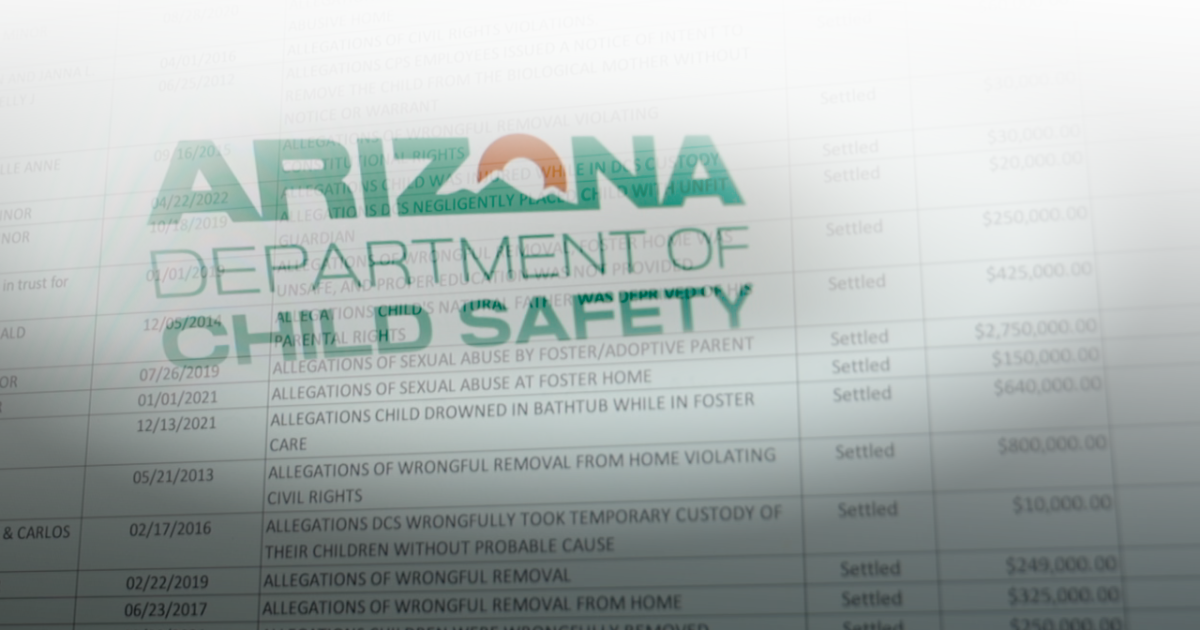
A state Senate committee passed three bills Wednesday morning aimed at reforming the Arizona Department of Child Safety.
The bills are part of a search for solutions following the murders of three girls known to Arizona’s child welfare system in 2025.
One of the bills strengthens the rules to place children with relatives or other adults they know. HB2035 would make kinship care presumptive and require a written explanation if a different placement were made.
Another bill, HB4004, encourages DCS to investigate new reports of child abuse, even if caseworkers had designated a “protective parent” who would shield the child from harm.
The third bill, HB2611, aims to improve the conditions of group homes. This includes improved building security, allowing foster children to participate in enrichment activities and live free from bullying, and randomly drug testing group home workers.
Hayden L’Heureux, who lived in foster group homes, spoke about the conditions youth face.
“For many foster youth group homes are not experienced as places of healing but as places of punishment or setback,” L’Heureux said.
Angelina Trammell also lived in foster group homes and shared her experience.
“I’ve been through things no child should ever have to go through in the hardest part. A lot of it could’ve been prevented,” Trammell said.
All three bills have already passed the state House and will move forward for consideration by the full Senate.
This story was reported on-air by a journalist and has been converted to this platform with the assistance of AI. Our editorial team verifies all reporting on all platforms for fairness and accuracy.

Welcome to SB Nation Reacts, a survey of fans across the NCAA. Throughout the year we ask questions of the most plugged-in Cardinals fans and fans across the country. Sign up here to participate in the weekly emailed surveys.
Happy Wednesday one and all.
The Arizona Cardinals have added a number of players and positions in free agency, so now, the question becomes what is the biggest need heading into the 2026 NFL Draft?
Now, if you choose quarterback, that does not mean it is a priority at the third overall pick, it is just acknowledging that they don’t have one to count on heading into the 2026 season.
So, it is a need, but maybe not one you can address in the 2026 NFL Draft.
For me, quarterback is the obvious need, but they also need an edge, in a class where maybe three of the five best players in the draft are edges.
This should be a slam dunk, right?

Connecticut Gas Tax Holiday Proposal Stalls – We-Ha | West Hartford News

DNREC’s decision to prohibit data center upheld by state board

Driver arrested after allegedly plowing onto Florida airport tarmac

Georgia residents rally against new Chick-fil-A saying it will bring too much traffic

Hawaii baseball’s Ryan Inouye has friendly duel with former team Hawaii Pacific

Florida High School Football Rankings: Top 25 teams – Oct. 21

How old is Bo Nix? What to know about Oregon quarterback ahead of 2024 NFL Draft

Cleary's 21 help Le Moyne down Central Connecticut State 69-64 in OT

99th annual Pony Swim held in Virginia

Indiana Members Credit Union announced as new anchor tenant at Bottleworks District

Video: Savannah Guthrie Says She Believes Her Mother Was Taken for Ransom

Stefanik grills University of Michigan leader on lack of audit after string of Chinese national arrests

Photos: More than one million displaced by Israel’s evacuations in Lebanon

DHS shutdown live updates as Senate holds test vote on funding bill

Video: Jury Rules Against Meta and YouTube for Addictive Features
-

 Detroit, MI1 week ago
Drummer Brian Pastoria, longtime Detroit music advocate, dies at 68
-

 Science1 week ago
How a Melting Glacier in Antarctica Could Affect Tens of Millions Around the Globe
-

 Movie Reviews1 week ago
‘Youth’ Twitter review: Ken Karunaas impresses audiences; Suraj Venjaramoodu adds charm; music wins praise | – The Times of India
-

 Sports5 days ago
IOC addresses execution of 19-year-old Iranian wrestler Saleh Mohammadi
-
 Science1 week ago
I had to man up and get a mammogram
-

 New Mexico4 days ago
Clovis shooting leaves one dead, four injured
-

 Texas7 days ago
How to buy Houston vs. Texas A&M 2026 March Madness tickets
-

 Tennessee3 days ago
Tennessee Police Investigating Alleged Assault Involving ‘Reacher’ Star Alan Ritchson