Arizona
As Trump celebrates birthday with military parade, Arizona protesters ‘build the resistance’


‘No Kings’ rally in Phoenix blasts Trump administration policies
Protester Chris Francis discusses why he’s participating in the “No Kings” rally at the Arizona Capitol in Phoenix on June 14, 2025.
While military tanks prepared to roll down Constitution Avenue in Washington, D.C., as part of President Donald Trump’s parade to celebrate the Army’s 250th Anniversary, a different army was building at the Arizona Capitol.
Thousands of Arizonans flooded the Wesley Bolin Memorial Plaza and braved triple-degree heat on June 14. They gathered to protest Trump and draw attention to what they called his authoritarian and king-like behavior.
“He wants to be a pretend king, but he’s following all the rules of a dictator! And he’s slowing picking out people he wants us to villainize,” Randy Hamilton, 78, said.
Parents pushing their children in strollers and seniors with walkers chanted against the president and watched drag queens perform as music blasted in the background. They held signs that said things like, “Unpaid protester but I hate Trump for free,” and “No Crown for the Clown.”
At the same time, musicians and live entertainment took the stage in D.C. for the inaugural military parade.
The “No Kings Day of Defiance” in Phoenix was one of more than 2,000 planned events across the United States. The event was meant to poke fun at Trump as he kicked off an expensive parade on his 79th birthday.
Erica Connell, a liaison for the 50501 movement that helped organize the event, said it was meant to build community before the summer heat would make it too difficult.
“We’ll have more policy-driven events in the future, but right now, it’s just so broad that it’s about building the resistance. It’s about making sure that we have the numbers,” Connell said.
Elected officials like Phoenix Councilwoman Anna Hernandez spoke to the crowd from onstage, telling attendees “revolution” was the “acceptable response to fascism.”
“It is not for us to take a more moderate approach to policy. It is not to take a moderate approach to politics,” Hernandez yelled to an uproar of applause. “It is revolution, and it is to invest in our communities!”
‘I don’t want to lose our democracy’
Attendees almost uniformly gave the same response when asked what brought them out: opposition to Trump. He’s acting like he’s king, protesters told The Arizona Republic. Congress isn’t standing up against him. The courts aren’t doing enough to rein him in.
Swanson, 88 and from Ahwatukee, attended against the wishes of her adult children, who feared for her safety. Swanson said she felt like she had to go.
“I don’t want to lose our democracy. Something dramatic has to be done,” she said. Swanson’s neighbor, 66-year old Stephanie Drobatschewsky, felt the same. Drobatschewsky said both her parents were Holocaust survivors, and that Trump’s immigration round-ups reminded her of World War II Germany.
Robert Lang, 64, said he hoped the number of protests taking place across the country showed elected leaders that change was wanted.
Attendees repeatedly echoed each other in the changes they wanted to see: for Donald Trump to resign or be impeached; to stop threatening Social Security and Medicare; for more humane treatment of immigrants; to reject attacks against the U.S. Department of Education, PBS and National Public Radio.
Connell, a main planner of the Phoenix protest, said the overarching demand was to “uphold the constitution.”
Up next: resistance at the neighborhood level
Connell said organizers conceived of a carnival-themed event partially to “have fun making fun of (Trump) on his birthday” and also partially to attract families.
“We’ve had very specific goals in mind and growing the movement in our state by hitting those various demographics in what we’re doing,” Connell said.
Organizers planned educational events and wanted attendees to identify causes they cared about, then connect with groups working on those issues. They focused on “inspiring and teaching people how to become activists on their own corner,” Connell said, “because that’s how we’re trying to grow the movement.“
Hernandez, the Phoenix councilwoman known for fiery rhetoric, was added to the speaker list to give more of a rally feel. Her speech amplified the crowd as she spoke about Trump “hunting” the public.
“Let me be clear: He is hunting us,” Hernandez said. “From Palestinian protesters to students to immigrant communities, we are under attack. His ICE minions are in our neighborhoods, our stores, our workplaces and our homes.”
Parents: Protest can be positive and powerful at any age
South of the stage, kids played in bounce houses while grown men dressed in chicken costumes. They held signs saying “TACO,” a nod to the joke about tariffs that, “Trump always chickens out.”
Jules and Audra Nelson stayed near the stage with their three children, who were 10, 8 and 3. The Nelsons brought their two sons and daughter to show them that protest could be a positive and powerful force for change.
The kids had seen the protests in L.A. and Audra said she wanted them to understand “when people come together, it’s really positive.”
She said she wanted her kids to know they weren’t “bound by their age,” and that young people had been “key catalysts of the civil rights movement.”
“Resistance is little pieces at a time. It doesn’t have to be big. It can just be you saying, ‘I’m not OK with this,’” Audra said. “Sometimes we think we’re so small, but we are so big.”
Taylor Seely is a First Amendment Reporting Fellow at The Arizona Republic / azcentral.com. Do you have a story about the government infringing on your First Amendment rights? Reach her at tseely@arizonarepublic.com or by phone at 480-476-6116.
Seely’s role is funded through a collaboration between the Freedom Forum and Journalism Funding Partners. Funders do not provide editorial input.



Eleven illegal Indian national truck drivers were arrested at the Arizona border in the month of February.
The Yuma Sector Border Patrol arrested 11 total Indian national truck drivers in Yuma, Arizona in February 2026.
According to a Facebook post by the Yuma Sector Border Patrol, all 11 truck drivers held commercial drivers licenses from the states of Florida, New York, Pennsylvania, Indiana, and California. All were “found to be present in the United States illegally.”
“Border Patrol remains committed to upholding immigration laws and protecting our communities,” the post continued.

Ballot processing at Maricopa County Tabulation and Election Center
Election workers process ballots at the Maricopa County Tabulation and Election Center on Nov. 6, 2024, in Phoenix.
The Arizona Independent Party will appeal a court ruling that invalidated its name, guaranteeing more legal limbo and possibly a new chapter of confusion in the effort to give unaffiliated voters a viable third-party option at the ballot box.
Party chair Paul Johnson confirmed he would appeal the ruling from Maricopa County Superior Court Judge Greg Como, which forces the party to revert to its prior name: the No Labels Party. The ruling ordered elections officials in Arizona to follow suit.
The decision was a high-profile loss for Secretary of State Adrian Fontes, who Como said had permitted a “bait and switch” on voters by allowing the name change.
“We were given due process, the judge did a fair job,” Johnson said. “I don’t agree with his final position, but I like the way our country works in terms of the rule of the law.”
“I don’t feel discouraged at all,” Johnson said, adding that an appeal could proceed in federal court and raise claims of First and Fourteenth Amendment violations.
It is unclear how the judge’s order, if it stands, could impact candidates who submitted signatures to qualify for the ballot under the Arizona Independent Party label.
“The commission’s position has been that this would cause confusion,” said Tom Collins, executive director of the Clean Elections Commission, which was part of the case. “This is an example of that confusion.”
The number of signatures required to make the ballot is a percentage of registered voters for each party, but unaffiliated candidates had to collect roughly six times as many as Republican or Democratic candidates. Running with the Arizona Independent Party meant only 1,771 signatures were needed.
Como’s order was signed March 19 but made public on March 25, after a March 23 deadline for candidates to file signatures to make the ballot.
“Unfortunately due to the court order, this question is left unaddressed,” said Calli Jones, a spokesperson for Fontes. “This question will be left to the challenge process or other court proceedings.”
Clarity could come through any lawsuits filed challenging Arizona Independent Party candidates’ signatures. No such challenges had been filed as of March 25, and the deadline is April 6.
What’s preventing ‘Arizona Nazi Party’ or the ‘Arizona Anarchists’?
Last October, Fontes agreed to change the name of the No Labels Party to the Arizona Independent Party, saying to do so was not explicitly prohibited in law. The change was done at the request of Johnson, a former Phoenix mayor and advocate for open primaries. To Johnson, the party is something of a can’t-beat-them-join-them way to put independent candidates on an even playing field with those from the two major parties.
The name change quickly led to a trio of lawsuits filed by the state’s voter education agency, the Arizona Citizens Clean Elections Commission, and the Arizona Republican Party and Arizona Democratic Party. Those cases were merged into one, which ultimately led to the March ruling.
The commission and political parties argued the name change would create confusion for voters and election officials in terms of distinguishing when someone wanted to be part of the new party versus and independent voter in a colloquial sense, which means not registering with any party. Fontes did not dispute there could be confusion.
State law does not directly address when a political party wants to change its name, but Como said that request should follow the process for creating a new party. That includes gathering signatures from supportive voters. Como has been on the bench since 2015.
Como raised concerns of transparency, noting that voters who registered for the old party may not support the new party name. He said a party could gather support with an “innocuous sounding name,” then change it entirely. Como offered a grave example.
“Would the same 41,000 people who signed petitions to recognize the No Labels Party have signed to support the ‘Arizona Nazi Party’ or the ‘Arizona Anarchists’?” he wrote.
His ruling is guided by and affirms Arizona court precedent that statewide elected officials’ powers are only those that are given explicitly to them in statute or the constitution.
Legal challenges needed to bring clarity
Jones, Fontes’ spokesperson, said the office had no power to address whether signatures were valid, because the office presumes “anyone who met the requirements at the time of filing their signatures are valid candidates.” Fontes, a Democrat seeking reelection this year, said he would not appeal the ruling given the “fast approach of the election and the challenging job election administrators have before them.”
He also stood by his decision, but said the court ruled with voters. “Both approaches, being reasonable, the Court entered an order with a lean towards the voters, not the party leaders,” Fontes said.
Como did not find Fontes’ approach was reasonable, saying it was beyond Fontes’ authority.
“The judge noted that even Fontes admitted this issue would cause confusion for the voters, but Fontes disregarded that concern and the obvious truth, and proceeded to allow them to continue the charade,” Arizona Republic Party Chair Sergio Arellano said, responding to the ruling.
That Fontes will not appeal was welcome, because “he has already cost taxpayers too much money” and “further eroded trust in our election officials at a time when that trust is already at an all-time low,” Arellano said.
Eleven candidates are running for office with the Arizona Independent Party name, or whatever it turns out to be. That includes candidates for Congress, governor and state Legislature. Hugh Lytle, the party’s preferred candidate for governor, said in a statement the ruling proves “how far the political parties will go to protect their grip on power.”
Lytle is among the candidates who could face a challenge to his just over 6,000 signatures. Of those, just 132 were gathered via the state’s online system, which requires verification before signing. The remaining could be more vulnerable to objections.
Ultimately, Lytle said, the judge’s ruling wouldn’t change much.
“We are on the ballot,” he said.
Reach reporter Stacey Barchenger at stacey.barchenger@arizonarepublic.com or 480-416-5669.
Arizona
Arizona Senate committee passes three bills aimed at reforming the Department of Child Safety
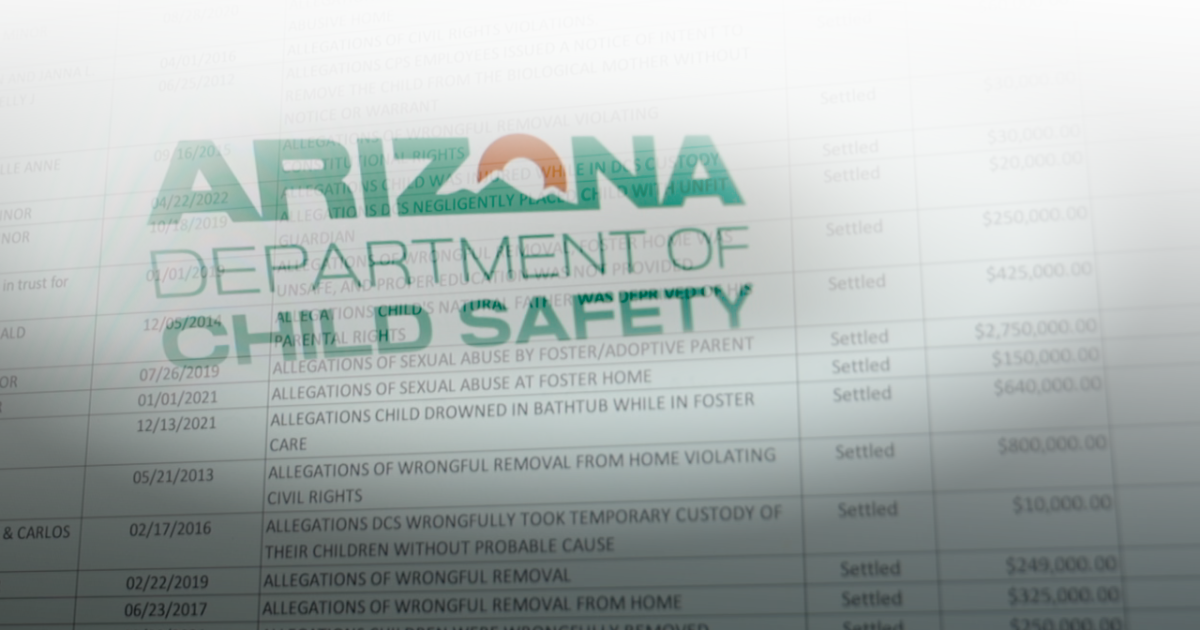
A state Senate committee passed three bills Wednesday morning aimed at reforming the Arizona Department of Child Safety.
The bills are part of a search for solutions following the murders of three girls known to Arizona’s child welfare system in 2025.
One of the bills strengthens the rules to place children with relatives or other adults they know. HB2035 would make kinship care presumptive and require a written explanation if a different placement were made.
Another bill, HB4004, encourages DCS to investigate new reports of child abuse, even if caseworkers had designated a “protective parent” who would shield the child from harm.
The third bill, HB2611, aims to improve the conditions of group homes. This includes improved building security, allowing foster children to participate in enrichment activities and live free from bullying, and randomly drug testing group home workers.
Hayden L’Heureux, who lived in foster group homes, spoke about the conditions youth face.
“For many foster youth group homes are not experienced as places of healing but as places of punishment or setback,” L’Heureux said.
Angelina Trammell also lived in foster group homes and shared her experience.
“I’ve been through things no child should ever have to go through in the hardest part. A lot of it could’ve been prevented,” Trammell said.
All three bills have already passed the state House and will move forward for consideration by the full Senate.
This story was reported on-air by a journalist and has been converted to this platform with the assistance of AI. Our editorial team verifies all reporting on all platforms for fairness and accuracy.

Rubio meets G7 ministers in France as US leads on Iran — allies under fire for tepid response

DHS shutdown breakthrough comes at cost for Republicans as funding fights nears end

Dementia risk signals could lie in simple blood pressure readings, researchers say

Indiana coach Cignetti sends message to star transfer with pre-practice dress code lesson

Drone food delivery launches in New Jersey

Florida High School Football Rankings: Top 25 teams – Oct. 21

How old is Bo Nix? What to know about Oregon quarterback ahead of 2024 NFL Draft

Cleary's 21 help Le Moyne down Central Connecticut State 69-64 in OT

99th annual Pony Swim held in Virginia

Indiana Members Credit Union announced as new anchor tenant at Bottleworks District
DHS shutdown breakthrough comes at cost for Republicans as funding fights nears end

Rubio joins crucial G7 talks as Iran war set to dominate second day

A surprise resignation could open the door for an independent to win a Montana Senate seat

Video: Savannah Guthrie Says She Believes Her Mother Was Taken for Ransom

Stefanik grills University of Michigan leader on lack of audit after string of Chinese national arrests
-

 Detroit, MI1 week ago
Drummer Brian Pastoria, longtime Detroit music advocate, dies at 68
-

 Science1 week ago
How a Melting Glacier in Antarctica Could Affect Tens of Millions Around the Globe
-

 Movie Reviews1 week ago
‘Youth’ Twitter review: Ken Karunaas impresses audiences; Suraj Venjaramoodu adds charm; music wins praise | – The Times of India
-
 Science1 week ago
I had to man up and get a mammogram
-

 Sports6 days ago
IOC addresses execution of 19-year-old Iranian wrestler Saleh Mohammadi
-

 New Mexico4 days ago
Clovis shooting leaves one dead, four injured
-

 Texas7 days ago
How to buy Houston vs. Texas A&M 2026 March Madness tickets
-

 Tennessee3 days ago
Tennessee Police Investigating Alleged Assault Involving ‘Reacher’ Star Alan Ritchson