Arizona
Arizona’s Koa Peat has won at all levels, Michigan next in Final Four


Hear from Arizona basketball players ahead of Final Four
Hear from Arizona men’s basketball players Anthony Dell’Orso and Jaden Bradley ahead of the Wildcats’ Final Four matchup against Michigan.
INDIANAPOLIS – Chandler native Koa Peat has won a lot of big games.
He led Perry High School to four straight state high school championships. He’s been part of gold-medal-winning entries for Team USA. And he’s a star freshman on the No. 1 University of Arizona team, which is on the precipice of the school’s first national championship since 1997.
It should have been hard for him to come up with an answer when asked the last time he actually “lost” a big game, but he did come up with one.
He singled out Arizona’s loss to then-No. 9 Kansas at Phog Allen Fieldhouse in February. That was one of just two games the Wildcats dropped this season. It says a lot that it was the worst loss he can remember.
Peat and the Wildcats (36-2) will square off against Michigan (35-3) in the second of two NCAA semifinals on Saturday, April 4 at Lucas Oil Stadium, home of the NFL’s Indianapolis Colts. The game is scheduled to tip off at roughly 5:50 p.m. MST, and will be televised on TNT, TBS and truTV.
The first Final Four game will pit Illinois against Connecticut at 4 p.m. and will be televised on TBS and truTV. The winners will compete for the national championship on Monday, April 6.
Arizona has won 13 straight games since back-to-back losses to Kansas and Texas Tech in February. Peat has hardly looked the part of a freshman.
“They call him Mr. Arizona,” said Wildcats’ coach Tommy Lloyd, who agreed to a contract extension on the eve of the team’s semifinal showdown. “Koa is special, and I know you guys hear it, but you got to hear it again. Four state championships at the same high school. Didn’t go to a prep school. Four gold medals with USA Basketball. No one in FIBA history has ever done that. And helped lead Arizona to a Final Four.”
At 6-foot-8, 235 pounds, Peat hardly looks like a freshman physically. He doesn’t play like one either.
Peat is averaging 14.1 points, 5.5 rebounds, and 2.7 assists. That might sound pedestrian compared to some athletes who have put up video-game-like offensive numbers. But this Arizona team is balanced offensively, with all five starters averaging double figures.
Peat has been at his best in the big moments. He was named the most outstanding player in the West Region, scoring 21 points against Arkansas in the Sweet 16 win and 20 against Purdue in the Elite Eight victory, which earned the Wildcats a berth in Indianapolis.
He came onto the scene with a bang, scoring a season-high 30 against defending national champion Florida on Nov. 3.
Message delivered.
While that game was a long time ago, it was a good indicator that the Wildcats could go the distance because they beat a team like Florida, which is similar to Michigan with size in the front court.
“We always watch our good highlights, so just seeing those (against Florida) definitely gives us confidence for sure,” Peat said.
Michigan coach Dusty May said it takes a certain kind of player to be able to compete at this level as a true freshman, and Peat fits the bill, as does Brayden Burries.
“When we were at Florida (Atlantic) we used to talk about how there are certain prerequisites to be able to play as a freshman at a Power Five level,” May said. “And one of those prerequisites was playing USA Basketball because of the amount of intensity that it takes to compete during the trials, during the practices and also the games and also the sacrifice it takes because you’re playing with 11 of the best players in our country and you have to sacrifice so much just to play.”
Genes and a competitive drive probably help too. Peat grew up in a house full of athletes as the youngest of seven siblings, all of whom played football or basketball. His brother, Andrus Peat, has been in the NFL for 10 years and currently plays for the Pittsburgh Steelers. His father, Todd, played for four teams in the NFL, most notably the Cardinals.
“It’s been a blessing to have great people like that around me, a family as I have with so many athletes who played Division I sports,” Peat said, on the eve of the national semifinal. “I would say I am the most competitive just because their competitiveness was passed down to me, seeing how good they were and what it took to compete.”
Lloyd has been impressed, although not necessarily surprised, with how Peat has performed as well as the way he has remained grounded.
“The dude, he’s amazing. His ability to perform the way he did in these moments, you know, he’s been in a lot of them,” Lloyd said. “I told our guys, don’t make too much out of this. It’s like a state championship game. You guys have all played in them. Or a gold medal game or whatever. Let’s just find a way to win the game. Don’t make it more than it is.”



PHOENIX — Happy Wednesday!
We’re staying on top of the latest happenings from across the Valley, state, and our nation for Wednesday, July 15; here’s what you need to know as you start your day:
The monsoon is not done with us yet. A few scattered storms could pop up in the Valley later today. Until then, partly cloudy, hot, and humid with a high of 108º. Better storm chances arrive tomorrow.
The mother of a 21-year-old woman who was found dead near Lake Pleasant over the weekend is speaking about her daughter’s death to ABC15.
Arianna Jones, 21, was last known to be at her apartment near 59th and Northern avenues. When her family went to check on her, they said they found damage to her front door, and she was not there. Her family has had no contact with her since July 5.
A friend told police that she had planned to meet “an acquaintance” for a movie. Evidence shows the man, identified by police as Domonic Rodolico, had picked Jones up from her apartment and never returned.
On Saturday, July 11, officials located “decomposing human remains in this area along with additional evidence,” including movie theater cups and clothes.
Glendale police confirmed Monday that Rodolico was taken into custody on charges including first-degree murder. Police say he is being held on a $2 million cash bond.
Mother of Glendale woman found dead near Lake Pleasant speaks to ABC15
One person is dead, and four others are hurt after a multi-vehicle crash in Scottsdale.
Police say they were called to the crash at Scottsdale Road and Shea Boulevard around 4:45 p.m.
When officers arrived, they found six vehicles involved in the crash.
All told, Scottsdale police say five people were taken to the hospital for their injuries.
One person later died of their injuries. That person has not yet been identified.
abc15
Arizona’s 1st Congressional District has become one of the most watched races in the country, with political experts calling it a toss-up ahead of the primary election.
CD1 is among a small number of truly competitive House races, said Kyle Kondik, managing editor of Sabato’s Crystal Ball at the University of Virginia’s Center for Politics.
“We only have 16 tossups in the House in our Crystal Ball House ratings. Two of them are Arizona One and Arizona Six, so they’re really, really important,” Kondik said.
CD1 is home to about 820,000 people. The district includes northeast Phoenix, Scottsdale, Fountain Hills, and Cave Creek. Because the race is so competitive, campaigns are spending heavily to reach voters.
“There are a lot of people who live in the Phoenix area who don’t live in Arizona One. But they’re going to be seeing those ads for Arizona One anyway,” Kondik said.
Arizona’s 1st Congressional District race is one of the most competitive in the country
In a world where headlines often focus on what teenagers are doing wrong, one Valley band is giving people a reason to turn up the volume.
Anthem-based rock band The Deadline, made up of local teenagers, recently returned from a remarkable trip to Poland, where they performed for U.S. and NATO troops stationed near the Ukraine border.
The opportunity came after the young musicians caught the attention of Polish officials and continued building a reputation through Alice Cooper’s Proof Is in the Pudding competition.
What followed was a once-in-a-lifetime invitation to use their music to boost morale for troops serving far from home.
Arizona teens bring musical talent to audience of troops near Ukraine

We’re here for you! Share your issue, comment or story idea:

An
Maricopa County, Ariz., asked the court to affirm its determination that the location was a 30-auditorium mixed used movie theater worth nearly $29 million in full cash value and $12.5 million in limited value.
However, AMC’s expert appraiser didn’t err when he limited the property’s valuation to the 17 auditoriums the theater currently uses to show films, the court determined in an unsigned opinion posted Tuesday. …

The Week 7 matchup between K-State and Arizona State will feature two of the youngest coaches in all of college football: Kenny Dillingham and Collin Klein. They are tied for the youngest in the Power 4 conferences, and only Kirby Moore of Washington State (35) and Zach Kittley (34) are younger Division I coaches.
While Dillingham didn’t play football at Arizona State, like Klein, he is at his alma mater. An injury in his high senior year forced him to stop playing and get into coaching. He became the offensive coordinator at Chaparral High School at 21 years old, and was hired just two years later by Mike Norvell as an offensive analyst at Arizona State. He went back to Tempe in 2023, after spending the previous season as the offensive coordinator at Oregon.
Both of these guys are looking to lead their alma maters to a Big 12 Championship, and this is one of those games that could be pivotal in that pursuit.
K-State Early Opponent Preview Series: Nicholls| Washington State| Tulane| Cincinnati| Houston| Kansas
Offense
Quarterback Sam Leavitt wasn’t able to live up to the hype after leading the Sun Devils to the Big 12 Championship in 2024, and he announced he was transferring to LSU during the off-season. Dillingham and his staff were quick to fill the vacany, as they picked up former Kentucky quarterback Cutter Boley in the transfer portal.
Boley was the highest-rated quarterback to ever commit to Kentucky, as he was a consensus 4-star recruit. He had an up-and-down freshman year in 2025, as he threw for 2,160 yards, 15 touchdowns and 12 interceptions. In a loss to Tennessee, he showed off the talent by throwing for 330 yards and five touchdowns.
The offense lost two great playmakers in Kaleek Brown and Jordan Tyson. Brown was one of the best running backs in the Big 12, as he rushed for 1,141 yards and 4 touchdowns. Tyson had to deal with injuries, but he still had 61 catches for 788 yards and eight touchdowns and ended up going No. 9 to the New Orleans Saints in the 2026 NFL Draft.
One guy who could make a strong impact in the Arizona State offense is Boston College transfer Reed Harris. He had 39 catches for 673 yards and five touchdowns. He is a matchup nightmare, as he towers over defensive backs with his 6-foot-5 frame. He plays a style similar to Tyson, and he stands three inches taller and 17 pounds heavier.
Defense
There are a lot of changes on the defense at Arizona State, but defensive lineman C.J. Fites is a player who is capable of being an anchor on a defense. He took a major leap last season, finishing the year with 27 tackles and 6.5 sacks. He was named a preseason All-Big 12 defensive tackle and is a guy who figures to hear his name in the 2027 NFL Draft. Fite’s presence will force offenses to throw double-teams at him, and should open up opportunities for others to get after the quarterback.
The two leading tacklers last year were linebackers Jordan Crook and Keyshaun Elliott, who had 101 and 98 tackles, respectively. With both of these players gone, Martell Hughes is a guy who the Sun Devils will need to step up.
While there were losses in the off-season, the Sun Devils’ secondary has a chance to be one of the better units in the country. They bring back two very talented safeties in Adrian Wilson and Jessiah McGrew. The cornerback duo of Rodney Bimage Jr. and Montana Warren was good, but the arrival of LSU transfer Ashton Stamps.
He made major news last year after he hit the transfer portal after playing in only one game against Louisiana Tech. While it was a weird year, he is the type of talent that could give the Sun Devils the best secondary in the Big 12.
Schedule
In today’s college football, many teams are becoming hesitant to take big challenges during the non-conference season. However, that isn’t the case with the Sun Devils, as they go to College Station to take on Texas A&M in Week 2. After that game, the schedule lightens up. Including the matchup against K-State, four of Arizona State’s next five games will be at home.
The challenging part of the Sun Devils’ conference schedule is that some of their toughest matchups are on the road. They have road trips at Texas Tech, BYU, and Arizona, who are looked at as contenders in the Big 12.
Outlook
Dillingham has been outstanding early in his tenure in Tempe. After going 3-9 in his first year in 2023, he helped lead the Sun Devils to an 11-2 record and an appearance in the College Football Playoff during the 2024 season. Last year, they finished the year 8-5, despite losing quarterback Sam Leavitt early in the year.
The Big 12 is wide-open, and the Sun Devils once again to have the pieces to compete for a spot in the conference championship.
Game Info
Date: Saturday, October, 24
Time: TBD
TV: TBD
Location: Mountain America Stadium
Series history: Arizona State leads the all-time series, 6-1. The Sun Devils have dominated this series, and won the most recent game 24-14 in 2024. The only time the Wildcats have knocked off Arizona State was in the 2002 Holiday Bowl.
Follow
-

 Minnesota16 seconds ago
Smoke from wildfires in Minnesota and Canada exposes millions to dangerous air quality
-

 Mississippi6 minutes ago
How permanent daylight saving time would impact Mississippi
-
 Missouri12 minutes ago
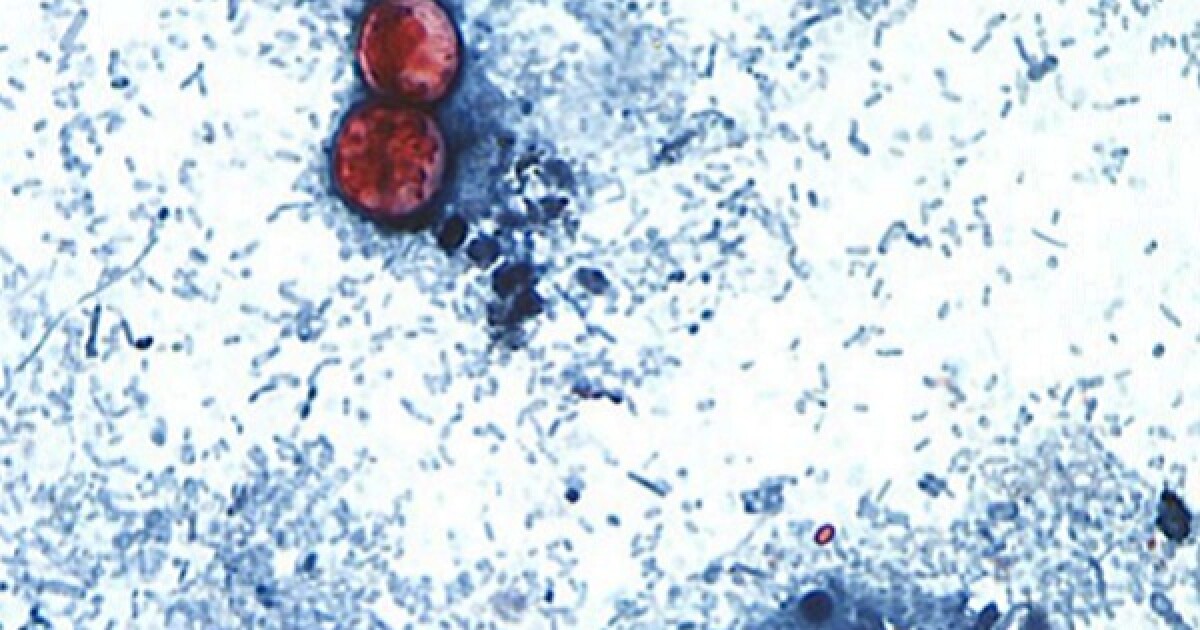
Missouri reports 43 cases of parasitic infection that’s sickened thousands nationwide
-

 Montana18 minutes ago
Governor Gianforte Announces Montana Ranks as Top 10 State for Job Growth
-

 Nebraska24 minutes ago
Roanoke County teen heads to national rodeo finals in Nebraska
-

 Nevada30 minutes ago
Nevada’s modern boomtowns are these fast-growing cities, study said
-

 New Hampshire36 minutes ago
NH Forests: A Story of Revival and the Challenges Ahead: Business NH Magazine
-

 New Jersey42 minutes ago
NJ Spine Doctor, Daughter, Granddaughter Killed In Plane Crash, Police Say

