Arizona
Arizona volleyball notebook: Spring tournament happenings


Arizona volleyball hosted its spring volleyball tournament on Saturday, Mar. 22 in McKale Center. It was the first chance to get a look at most of the team that will compete with the Wildcats next season.
Arizona faced UTEP, GCU, and Western New Mexico in the first of three tournaments they will play this spring. The Wildcats play ASU in Tempe on Mar. 29. They go to San Diego on Apr. 5, then follow that with a return trip to UTEP on Apr. 12.
The Wildcats want to take a step forward after winning the NIVC last year. Spring tournaments w
On choosing tournaments and opponents
Different sports and coaches have different philosophies about opponents in their off-season scrimmages. Some don’t like to play teams they usually play in the regular season. That’s not the mindset of Arizona head coach Rita Stubbs.
“I wanted to play teams who made the tournament last year in a non-threatening environment,” she said.
That means teams like ASU and UTEP. The Sun Devils have been one of the best stories in the sport the last two seasons, making a complete turnaround under JJ Van Niel. They have made two straight trips to the NCAA Tournament after being a stranger to late fall play for years.
UTEP is on a similar rise, albeit one that stretches longer. The Miners started their turnaround in the pandemic-shortened season in the spring of 2021. A 5-21 record in 2018 was 13-15 in 2019 then 10-7 in 2020-21. The 2021 fall season marked their first year with 20 or more wins since 2005. They’ve had at least 20 wins in two of three seasons since and at least 17 wins in each of the past four years.
The Miners showed that they have the potential to be that kind of team again in 2025. They also showed where Arizona needs to improve, with Stubbs noting that UTEP controlled the serve and pass game in their scrimmage.
On the other hand, having at least one team that isn’t your equal can be helpful, too. Stubbs had the opportunity to play freshmen Chloe Giehtbrock and Maya Flemister against Western New Mexico. Giehtbrock will redshirt this season. Flemister is adapting to the speed of the game.
On fostering volleyball IQ
The spring tournaments also provide an opportunity for young players to learn the game beyond their own positions. During timeouts, Stubbs picked players to talk to the group about what they were seeing in the games. Two players were given the chance without advance warning.
Stubbs said that most of them talk about the game only as it pertains to their own contributions. She was trying to get them to see the entire game.
On roster needs
It’s unlikely that the roster that plays this spring is the final roster that will play this fall. There is still need for a middle blocker and at least one more pin. There have been no losses to the portal so far, but current members of the team could still enter.
The Wildcats lost fifth-year pin Jaelyn Hodge after last year. Middle blockers Kiari Robey and Alayna Johnson also exhausted their eligibility. Defensive specialist Ava Tortorello and opposite Amanda DeWitt played their last game in college last fall, as well. As of now, the seniors are the only roster losses.
The team should get its other main pieces back, though. Setters Avery Scoggins and Ana Heath, outside hitters Jordan Wilson and Carlie Cisneros, middle blocker Journey Tucker, and liberos Haven Wray and Brenna Ginder were all critical in Arizona’s turnaround and NIVC title last year. There is every indication that those players will be back in cardinal and navy in the fall.
What happens on the right side, which Hodge patrolled last season, might be the biggest question. As far as the current roster goes, the frontrunner is probably Sydney Vanek. Vanek didn’t get a lot of playing time last season, but the two-sport athlete has considerable potential and athleticism. She’s not alone at opp, though.
Heath also played the position during the spring tournament. She played in a 6-2 as a setter and was occasionally listed as a pin on recruiting sites during her prep days. She also got some run at opposite her freshman season under former head coach Dave Rubio. Stubbs said last year that she would like to find more ways to use Heath, and this might be one of them.
The other primary option is freshman Renee Jones. Jones reclassified from the 2024 class, spending two years in the new volleyball program at IMG Academy.
Jones comes from a very athletic family with a great deal of volleyball success. Her older sister was a record-setting middle blocker at Maryland. Her twin was a freshman on the Pitt Panthers’ Final Four team this past season. She is trying to make her mark on the other end of the country.
Arizona needs experience and offense at middle blocker. Tucker will be a junior and she made a huge jump last season, but she’s more of a blocker than an offensive threat. She was a latecomer to the sport, so some of her skills are still in the development stage. She was working on the slide a bit during the spring scrimmages, but it’s a timing issue that may not come together quickly.
Adrianna Bridges got very little time on the court last year as a freshman. She appears to have more offensive variety than Tucker, but she’s extremely inexperienced and has a very slight frame.
The only other option on the current roster is Flemister. It’s a huge adjustment for freshmen to come into college and jump right in, especially if Arizona wants to take another step forward this season.



An
Maricopa County, Ariz., asked the court to affirm its determination that the location was a 30-auditorium mixed used movie theater worth nearly $29 million in full cash value and $12.5 million in limited value.
However, AMC’s expert appraiser didn’t err when he limited the property’s valuation to the 17 auditoriums the theater currently uses to show films, the court determined in an unsigned opinion posted Tuesday. …

The Week 7 matchup between K-State and Arizona State will feature two of the youngest coaches in all of college football: Kenny Dillingham and Collin Klein. They are tied for the youngest in the Power 4 conferences, and only Kirby Moore of Washington State (35) and Zach Kittley (34) are younger Division I coaches.
While Dillingham didn’t play football at Arizona State, like Klein, he is at his alma mater. An injury in his high senior year forced him to stop playing and get into coaching. He became the offensive coordinator at Chaparral High School at 21 years old, and was hired just two years later by Mike Norvell as an offensive analyst at Arizona State. He went back to Tempe in 2023, after spending the previous season as the offensive coordinator at Oregon.
Both of these guys are looking to lead their alma maters to a Big 12 Championship, and this is one of those games that could be pivotal in that pursuit.
K-State Early Opponent Preview Series: Nicholls| Washington State| Tulane| Cincinnati| Houston| Kansas
Offense
Quarterback Sam Leavitt wasn’t able to live up to the hype after leading the Sun Devils to the Big 12 Championship in 2024, and he announced he was transferring to LSU during the off-season. Dillingham and his staff were quick to fill the vacany, as they picked up former Kentucky quarterback Cutter Boley in the transfer portal.
Boley was the highest-rated quarterback to ever commit to Kentucky, as he was a consensus 4-star recruit. He had an up-and-down freshman year in 2025, as he threw for 2,160 yards, 15 touchdowns and 12 interceptions. In a loss to Tennessee, he showed off the talent by throwing for 330 yards and five touchdowns.
The offense lost two great playmakers in Kaleek Brown and Jordan Tyson. Brown was one of the best running backs in the Big 12, as he rushed for 1,141 yards and 4 touchdowns. Tyson had to deal with injuries, but he still had 61 catches for 788 yards and eight touchdowns and ended up going No. 9 to the New Orleans Saints in the 2026 NFL Draft.
One guy who could make a strong impact in the Arizona State offense is Boston College transfer Reed Harris. He had 39 catches for 673 yards and five touchdowns. He is a matchup nightmare, as he towers over defensive backs with his 6-foot-5 frame. He plays a style similar to Tyson, and he stands three inches taller and 17 pounds heavier.
Defense
There are a lot of changes on the defense at Arizona State, but defensive lineman C.J. Fites is a player who is capable of being an anchor on a defense. He took a major leap last season, finishing the year with 27 tackles and 6.5 sacks. He was named a preseason All-Big 12 defensive tackle and is a guy who figures to hear his name in the 2027 NFL Draft. Fite’s presence will force offenses to throw double-teams at him, and should open up opportunities for others to get after the quarterback.
The two leading tacklers last year were linebackers Jordan Crook and Keyshaun Elliott, who had 101 and 98 tackles, respectively. With both of these players gone, Martell Hughes is a guy who the Sun Devils will need to step up.
While there were losses in the off-season, the Sun Devils’ secondary has a chance to be one of the better units in the country. They bring back two very talented safeties in Adrian Wilson and Jessiah McGrew. The cornerback duo of Rodney Bimage Jr. and Montana Warren was good, but the arrival of LSU transfer Ashton Stamps.
He made major news last year after he hit the transfer portal after playing in only one game against Louisiana Tech. While it was a weird year, he is the type of talent that could give the Sun Devils the best secondary in the Big 12.
Schedule
In today’s college football, many teams are becoming hesitant to take big challenges during the non-conference season. However, that isn’t the case with the Sun Devils, as they go to College Station to take on Texas A&M in Week 2. After that game, the schedule lightens up. Including the matchup against K-State, four of Arizona State’s next five games will be at home.
The challenging part of the Sun Devils’ conference schedule is that some of their toughest matchups are on the road. They have road trips at Texas Tech, BYU, and Arizona, who are looked at as contenders in the Big 12.
Outlook
Dillingham has been outstanding early in his tenure in Tempe. After going 3-9 in his first year in 2023, he helped lead the Sun Devils to an 11-2 record and an appearance in the College Football Playoff during the 2024 season. Last year, they finished the year 8-5, despite losing quarterback Sam Leavitt early in the year.
The Big 12 is wide-open, and the Sun Devils once again to have the pieces to compete for a spot in the conference championship.
Game Info
Date: Saturday, October, 24
Time: TBD
TV: TBD
Location: Mountain America Stadium
Series history: Arizona State leads the all-time series, 6-1. The Sun Devils have dominated this series, and won the most recent game 24-14 in 2024. The only time the Wildcats have knocked off Arizona State was in the 2002 Holiday Bowl.
Follow

Sanjay Suchak
Two Arizona Public Enemy concerts in one year? As Chuck D. might say, bring the noise.
After a searing set in February at Tempe’s Innings Festival, the legendary hip-hop group will return to metro Phoenix on Saturday, Oct. 24, to perform as part of the Arizona State Fair’s concert series.
The concert starts at 7 p.m. inside the Arizona Veterans Memorial Coliseum with no opening act.
Public Enemy joins a growing lineup of artists set to perform at the 2026 Arizona State Fair, which runs weekends from Oct. 1 to Nov. 1.
Previously announced Coliseum Concert Series performers include alt-rockers Gin Blossoms on Friday, Oct. 2, R&B/pop star Becky G on Friday, Oct. 9 and punk favorites The Offspring on Friday Oct. 16.
Few hip-hop acts are as iconic as Public Enemy. Fronted by Chuck D. and Flavor Flav, the group has performed since the early ‘80s and has spent decades mixing politically charged lyrics with fierce bests on classic tracks like “Fight the Power,” “Bring the Noise” and “Welcome to the Terrordome.”
Public Enemy’s upcoming concert marks the first time the iconic hip-hop act has performed at the Arizona State Fair and their latest in a series of Valley gigs. It also continues a decades-long history of Valley performances.
Over the years, Public Enemy has played venues large and small across metro Phoenix, from arenas and stadium shows to concert halls Tempe’s Marquee Theatre. The group also famously staged an impromptu performance at the long-running local hip-hop event The Blunt Club back in 2006.

When do Arizona State Fair concert tickets go on sale?
Tickets for Gin Blossoms and Russell Dickerson are already available through azstatefair.com/concerts.
Tickets for Public Enemy at the fair go on sale at 10 a.m. on Friday through azstatefair.com/concerts. A presale for subscribers to the Fair Fandom newsletter begins at 10 a.m. on Thursday.
Reserved-seat upgrades are available for all four concerts. Each concert ticket also includes admission to the Arizona State Fair.
-
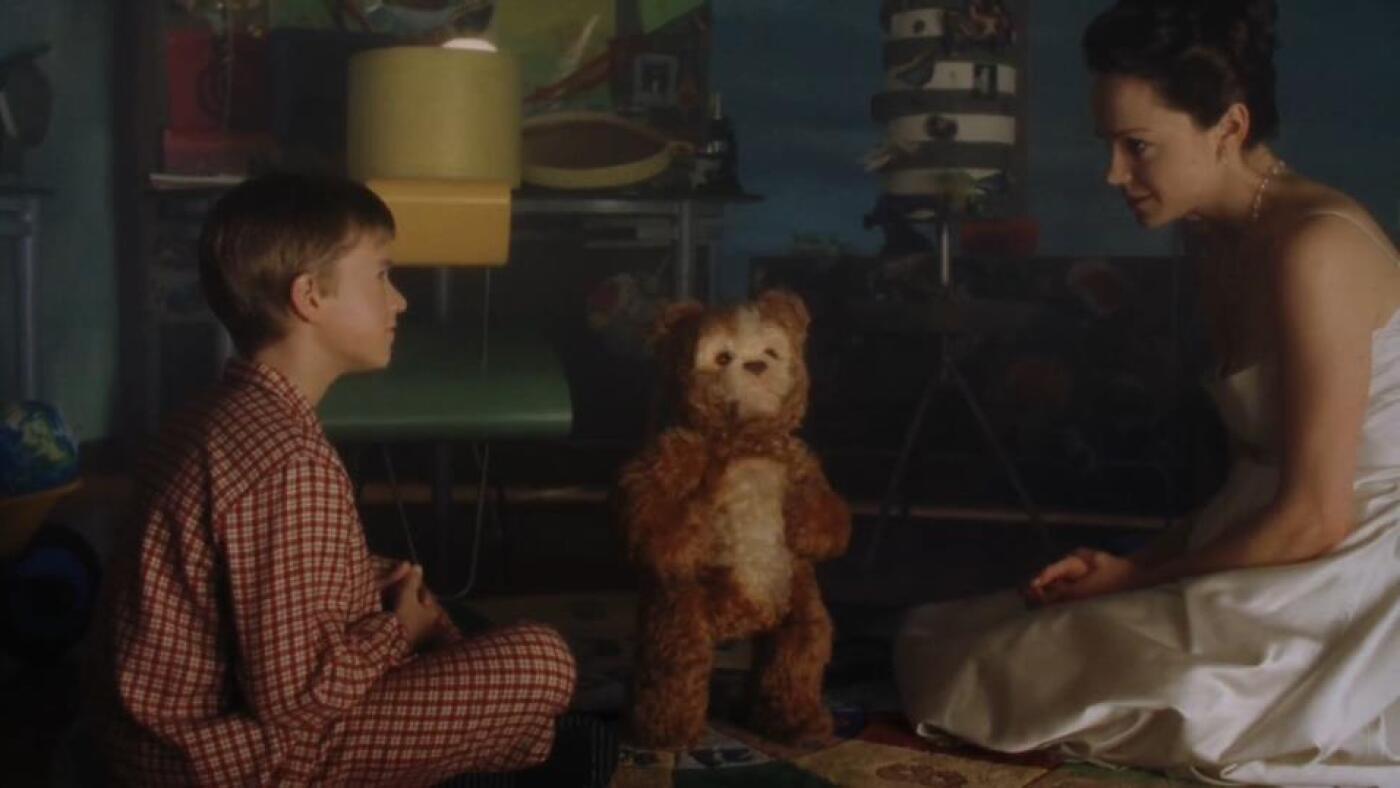 Lifestyle12 minutes ago
‘The Trojan Teddy Bear’: The promise and peril of childhood in the age of AI
-

 Technology24 minutes ago
Google and Epic give up fighting — third-party Android app stores are coming next week
-

 World30 minutes ago
FBI snares an American heir indicted for allegedly bankrolling anti-cop, pro-Hamas communist revolution
-

 Politics36 minutes ago
Biden special counsel’s ‘runaway train’ scooped up sensitive lawmaker info: ‘Abuse of power’
-

 Health42 minutes ago
‘Miracle on the Hudson’ hero Captain ‘Sully’ Sullenberger reveals Alzheimer’s diagnosis
-

 Sports48 minutes ago
American League stars outshine National League in 96th MLB All-Star game
-

 Technology54 minutes ago
Before you connect another smart TV, tablet or phone, lock it down
-
 Business1 hour ago
Commentary: Trump greenlights California’s dumbest water project

