Arizona
Arizona Republican unveils bill to cut college presidents’ salaries amid waning state support


Trump wants Education secretary to ‘put herself out of a job’
President Donald Trump told reporters that Linda McMahon, his nominee to lead the Education Dept., should eventually “put herself out of a job.”
The leaders of Arizona’s public universities each receive more than a million dollars a year in salary, bonuses and other benefits combined. A bill introduced this week looks to change that.
Senate Bill 1453 from Sen. David Farnsworth, R-Mesa, proposes capping the base salary of university presidents at $500,000 and limiting all bonuses at 15% of that base salary. Those bonuses would only be for performance exceeding their “assigned duties” and must directly benefit the school’s students, staff or faculty.
All three presidents currently make more than that in their base salaries. Arizona State University’s Michael Crow earns $892,500 annually, while that figure stands at nearly $713,000 for Northern Arizona University’s José Cruz Rivera and $810,000 for the University of Arizona’s President Suresh Garimella. Each receives additional benefits and bonuses.
According to a 2023 analysis from The Chronicle of Higher Education of public universities, each of the leaders of Arizona’s three major universities is among the top 30 presidents nationwide based on pay.
Some of the schools are facing difficult choices in the face of financial pressures. The University of Arizona currently faces a more than $60 million budget deficit, compared to an overall budget of $1.3 billion. University officials said they have worked to keep the scope of cuts focused on administrative costs.
This semester, in-person students at Arizona State University received a $350 tuition surcharge on their bill. University leadership said the decision was made after careful consideration of how $24 million in state funding cuts would impact the school.
Conservative leaders at the state Legislature have discussed targeting university presidents in the past. Senate President Warren Petersen argued last fall the presidents could be “doing better for less.”
“Would you support a reduction/cap on their pay?,” Petersen wrote on X. “Sounds like a good bill to hear in our #DOGE committees.”
University presidents are often not the highest-paid employees at a school — with salaries for top coaches continuing to rise. Both of the head basketball coaches at ASU and UA make more than $2 million with opportunities for other bonuses. Sen. T.J. Shope, R-Coolidge, expressed interest late last year in making it easier for the Arizona Board of Regents to reach contract deals with coaches. His bill has yet to gain traction in the Legislature.
The bill is being introduced after several years of falling support from the Legislature. Arizona currently invests less than half of the national average per capita, according to the State Higher Education Executive Officers Association.
The issue is often a point of contention for higher education leaders. The Arizona Board of Regents, the body overseeing the state’s public university system, is calling for a considerable funding jump this year. They asked for $732 million more in funding to support its mission in providing higher education opportunities to Arizonans.
Students express frustration at increasing costs
Miranda Lopez of the Arizona Students’ Association, an advocacy group supporting the bill, said her peers have become increasingly frustrated over how money is spent at the schools.
She noted that pushing for legislation that would change the higher education landscape in the way they want has been difficult, noting the Republican majorities in Arizona’s House and Senate which have previously opted for conserving spend on higher education.
But this was something they agreed on.
“One thing that we can all agree on is that we think that these people who are in executive administrative positions, especially the president, are making too much money when they don’t need to be,” Lopez said.
She said the bill has received mixed feedback from lawmakers so far, with Democrats hesitant to support it. Lopez said Democrats have indicated that limiting presidents’ salaries feels too similar to a spending cut.
Lopez said their goal is not to cut support to higher education but to redirect money to issues they believe are more important.
“We’re not trying to cut the total amount, but rather, we’re trying to limit the amount that’s being given to one particular position,” she said.
Helen Rummel covers higher education for The Arizona Republic. Reach her at hrummel@azcentral.com. Follow her on X, formerly Twitter: @helenrummel.



Cardinals’ Burch shares what he learned as a rookie in 2025
Arizona Cardinals second-year player Jordan Burch says his defensive line teammates have formed a bond heading into the 2026 NFL season.
Last year in early July, Cardinals edge rusher Jordan Burch was a rookie third-round draft pick out of Oregon who was looking forward to his first NFL training camp and eventual first season.
That rookie year is behind him now, and Burch has identified what he needs to improve on heading into his second season. He said he now knows what to expect and look for, and after talking with outside linebackers coach Matt Feeney, Burch built an offseason plan with which he was comfortable.
“I don’t think anything was like a surprise,” Burch said on Thursday, July 9, at the Cardinals’ Tempe headquarters. “I kind of know what to prep for, so this offseason I can look at my old plays, and then I can call my coach and tell him, from last year to this year, what does he want to see on the field.”
Burch seeks to improve his pass rush. He played in all 17 games last season and had five solo tackles with a sack, and also broke up three passes.
Much of his position was dropping into pass coverage, so Burch looks to recognize pass catchers’ routes better in 2026. He gets help from veteran Josh Sweat, who is there to answer questions about the position they share.
“Every week, every game going against somebody good,” Burch said about takeaways from last season. “The talent of the quarterbacks. We’re playing the Rams, how quickly they get the ball out.”
Burch looks forward to building a stronger bond with his teammates, having invited some of them for dinner or to watch TV. He said he was happy with his progress as a player throughout last season.
The Cardinals open training camp Wednesday, July 22, at State Farm Stadium. It’s a week earlier than most teams because Arizona plays the Carolina Panthers in the Aug. 6 Hall of Fame Game in Canton, Ohio.
Cardinals legend Larry Fitzgerald will be among those inducted into the Pro Football Hall of Fame Aug. 8.

A new study has ranked Arizona as one of the worst states to move to for two years in a row, largely due to what it calls a poor quality of life.
The study conducted by Consumer Affairs analyzed the best states to move to in the United States, putting Arizona at the bottom of the list.
Before Arizonans get too defensive about the Grand Canyon State, Consumer Affairs used factors such as affordability, safety, economic strength and education to measure each state, leaving out factors like entertainment, retirement benefits and other considerations that may be important to people living here.
Popular states such as California and New York also landed at the bottom of the list due to their lack of affordability, even though they both have some of the best health care and education in the nation, Consumer Affairs noted.
Here’s why the study says you shouldn’t move to Arizona. Do you agree?
Why you shouldn’t move to Arizona
Arizona ranked No. 10 out of the worst states to move to, scoring especially poorly in quality of life.
Quality of life was measured by the state’s Social Progress Index, average air quality, weather, environmental protection and number of national parks. Due to Arizona’s extreme summers and Phoenix’s consistently poor air quality, it’s easy to see why Arizona ranked No. 44 in quality of life out of 50 states, even though the Grand Canyon is one of the most popular national parks in the nation.
However, Arizona also ranked poorly in other categories, sitting at No. 42 in health care and education, No. 41 in safety and No. 34 in affordability out of 50 states.
There was one category Arizona did impressively well in, ranking No. 5 in economic strength even as one of the youngest states in the country. Still, Arizona’s economic power wasn’t enough to boost its ranking.
Top 10 worst states to move to
Arizona wasn’t alone; some of the biggest states in the country were also considered the worst states to move to in 2026.
- New Mexico
- Louisiana
- California
- Arkansas
- Oklahoma
- Nevada
- Alaska
- Mississippi
- Oregon
- Arizona
Top 10 best states to move to
- Utah
- New Hampshire
- Idaho
- Minnesota
- Massachusetts
- Maine
- North Dakota
- Pennsylvania
- Iowa
- South Dakota
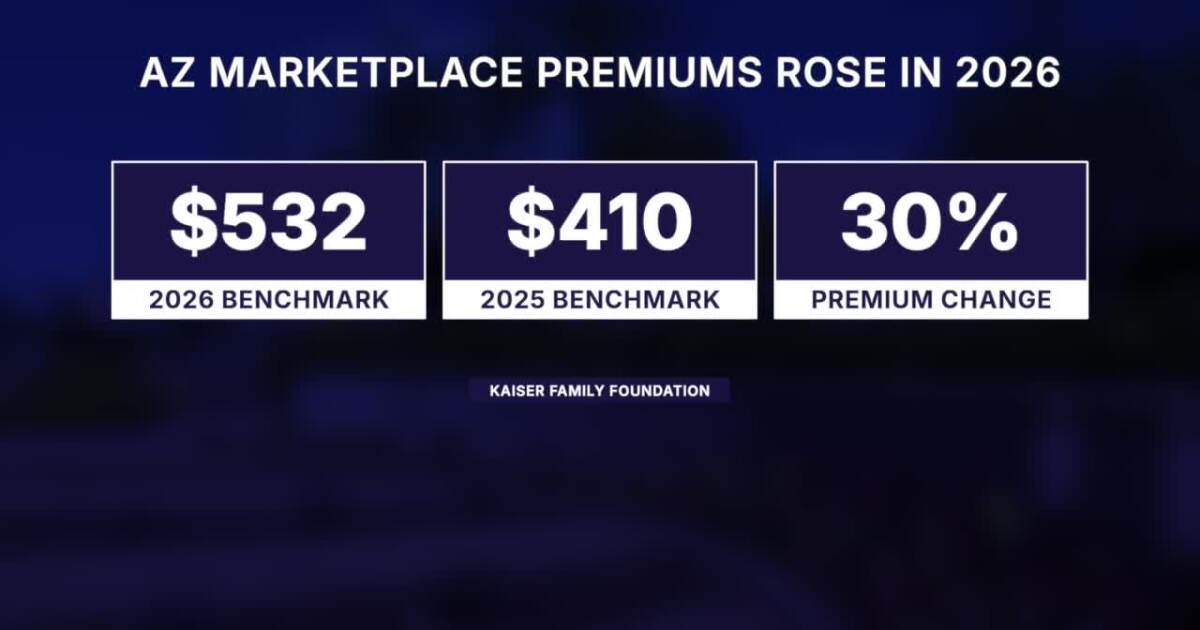
PHOENIX — Arizona’s ACA marketplace enrollment fell from 363,000 to just over 255,000 in a single year — a nearly 30% decline and the third-largest annual drop in the country.
Rising premiums and expired tax credits are driving the trend, with the average benchmark plan premium in Arizona now at $532 — up 30% from 2025.
In the player above, ABC15 Data Analyst Garrett Archer takes a look inside the numbers on how healthcare premiums are impacting health insurance enrollment.
This story was reported on-air by a journalist and has been converted to this platform with the assistance of AI. Our editorial team verifies all reporting on all platforms for fairness and accuracy.
Want more news in your community? Add ABC15 as a preferred source on Google below:

-

 South-Carolina5 minutes ago
South Carolina Lottery Pick 3, Pick 4 results for July 9, 2026
-

 South Dakota12 minutes ago
Iverson Ford Welcomes the 2027 Ford Expedition to Drivers Across Eastern South Dakota
-

 Tennessee15 minutes ago
Tennessee Highway Patrol holds open house at Jackson district office
-

 Texas27 minutes ago
Longhorns Daily News: Texas coach Steve Sarkisian named among Dodd Trophy watch list
-

 Utah29 minutes ago
Utah Jazz vs Washington Wizards recap: Darryn Peterson is only a man
-
Vermont35 minutes ago
VT Lottery Gimme 5, Pick 3 results for July 9, 2026
-

 Virginia42 minutes ago
Virginia cannabis budget language triggers legal confusion, political fallout
-

 Washington44 minutes ago
Trump’s proposed 250ft Washington arch clears key planning hurdle

