Alaska
LNG pipeline legislation debate divides Alaska lawmakers after consultant calls it ‘essential’


ANCHORAGE, Alaska (KTUU) – Alaska lawmakers are divided over whether new legislation is needed for a liquified natural gas pipeline, with the state’s energy consultant calling it “essential” while some legislators say existing laws are sufficient.
“A successful project will likely require suitable enabling legislation from the state legislature, among other key prerequisites,” state-contracted energy consulting firm GaffneyCline, hired by the Legislative Budget and Audit Committee for up to $200,000 in April 2024, says in a document made public for the first time Monday.
The 62-page document, presented to the Legislative Budget and Audit Committee last month, concludes that legislation is essential for the pipeline to be viable but more needs to be done to get the project across the finish line.
“A detailed economic model of the project is required before the legislature can take an informed view as to the appropriate degree of government take that the project can sustain, and how this could evolve over time,” the document states.
Alaska’s News Source reached out to Glenfarne Tuesday for comment on who presents the economic model and when that model could be presented. Spokesperson Tim Fitzpatrick referred on the report for GaffneyCline.
“We will continue to work closely with the legislature to discuss policy issues that may affect Alaska LNG and work collaboratively on solutions that enable Glenfarne to provide Alaskans with affordable energy security as rapidly as possible,” he said in a statement.
The document’s release comes amid optimism from pipeline developers and federal officials but growing skepticism from some state lawmakers.
During a November Legislative Budget and Audit Committee which discussed the same topic, House Speaker Bryce Edgmon, NA-Dillingham, left believing “the upcoming 2026 legislative session could be dominated by policy measures related to advancing the Alaska gas line project.”
“We don’t have any of this,” Edgmon said last month, relating to laws GaffneyCline says are essential.
Rep. Mia Costello, R-Anchorage, former House minority leader and co-chair of the Alaska Gasline Caucus, said she believes legislation for the pipeline is not needed, citing previous legislative involvement.
“Large scale LNG projects around the world are successfully developed through commercial agreements, private capital, and existing regulatory processes not legislative intervention,” Costello said in a statement. “Alaska already has established permitting, taxation, and regulatory framework capable of supporting energy development. Legislative involvement risks introducing political uncertainty, delaying timelines, and discouraging investors who prioritize stability and market driven decision-making.”
However, Sen. Elvi Gray-Jackson, D-Anchorage, told Alaska’s News Source the policy measures currently in place are more than a decade old, created for a different project, and don’t easily mesh with the task in front of them today.
“When project leadership … and financial models change, it’s our responsibility to revisit the policy framework that governs the state involvement, and that’s what we’re going to do as a legislature,” Gray-Jackson said.
Legislative action?
The asks pipeline developers want in those policies could be steep.
On the list of asks is a concept called “fiscal stability,” essentially a promise if Alaska changes its tax or regulatory policies later, the state would make up any financial losses to investors, according to a GaffneyCline presentation shown to lawmakers on the Legislative Budget and Audit Committee.
Those guarantees can mean a “tax freeze” — locking in the current tax system for the life of the project — potentially 20-30 years, according to GaffneyCline’s presentation to lawmakers. If Alaska later raises taxes or imposes new regulations, the presentation said the state would have to compensate investors to maintain their original profit expectations.
Another ask is the lowering of property taxes for the pipeline, something GaffneyCline’s November presentation said could cost the project $1 billion and add 9% to the cost of delivered gas.
Gov. Mike Dunleavy plans to introduce a bill to lower property taxes for the pipeline, spokesperson Jeff Turner confirmed Tuesday. No other LNG bills are planned at this time, he added.
Time crunch
Whatever the legislature decides to do, they’ll need to do it quickly. The regular session convenes Jan. 20, and for the following 120 days, the process to create a package of policies and framework addressing LNG issues will likely be front of mind.
That comes after Glenfarne Alaska LNG set expectations in October that construction for the pipeline will begin in late 2026 and be operational by mid-2029.
“What Alaskans should take away from the report is that we need to hope for the best, but prepare for the situation not moving as fast as Glenfarne and the other players are thinking,” Gray-Jackson said.
Lawmakers have signaled a mixture of optimism for what the pipeline could create, but it comes with skepticism, too. Gray-Jackson said she was “cautiously optimistic.”
“Frankly, I don’t know where we’re at as far as the legislature is concerned because we haven’t gotten any real answers from Glenfarne,” Gray-Jackson said.
A Glenfarne spokesperson said last month they are active in providing information to the state legislature.
“Glenfarne is making rapid progress on Alaska LNG and regularly meets with legislators to provide updates and discuss important state and local policy considerations,” Glenfarne communications director Tim Fitzpatrick said. “We appreciate the legislature’s continued engagement to help make Alaska LNG a success for the state.”
“I understand the potential, huge, multi-generational impact of the state, as well as being very positive,” Sen. Bert Stedman, R-Sitka, told Alaska’s News Source following the Legislative Budget and Audit Committee meeting in November.
“Concentrating on the benefit of the project that we know, if it’s successful, it’s going to be very beneficial, and if it’s unsuccessful, it could be detrimental for generations.”
“Will the project even come unless we present the right scenario?” House Majority Leader Chuck Kopp, R-Anchorage, asked Nick Fulford, GaffneyCline senior director and global head of gas and LNG.
“You mentioned the buyers want 20–30 years of stability … our fiscal framework might be a little bit out of alignment, if I’m hearing you correctly,” Kopp said.
“If those things are all true, our needs, our situation, us being out of alignment, we’re going to have to look at possibly a reality that this line doesn’t even get [built],” the representative added.
Federal permits completed
The project completed 20 federal permits and environmental reviews last week, according to the Permitting Council, clearing what the governor called “the last major regulatory hurdle.”
“Alaska LNG received the major federal permits needed to proceed in 2020,” Fitzpatrick said. “Some of these permits have a five-year renewal cycle, which was completed last week and all of Alaska LNG’s major permits are current and in effect. Glenfarne has an ongoing process to maintain permits and authorizations for Alaska LNG.”
With the permits cleared, the pipeline inches toward a final investment decision (FID). Natural Gas Intelligence, a natural gas news provider, described an FID as “the last step of determining whether to move forward with the sanctioning and construction of an infrastructure project.”
A source familiar with the pipeline developments previously told Alaska’s News Source to expect an FID early next year.
“Alaska LNG will strengthen our economy, create long-term jobs, and provide reliable energy to Alaskans and our global partners for generations to come,” Dunleavy said.
“I am thrilled to see the Alaska LNG project finish federal permitting actions ahead of schedule,” said Permitting Council Executive Director Emily Domenech in the press release.
“This combined effort reflects our commitment to the State of Alaska and to achieving President Trump’s energy dominance agenda.”
Domenech visited the state alongside the congressional Natural Resources Committee in August, when Dunleavy signed a deal with the Trump administration aimed at bringing more resource development investment will come to Alaska.
LNG, however, was not heavily discussed at the meeting.
“Completing federal permitting for Alaska LNG ahead of schedule shows how the Trump administration is restoring America’s Energy Dominance by cutting unnecessary delays and unleashing our abundant resources,” Interior Secretary Doug Burgum said in the release. “This project strengthens U.S. energy security, creates jobs for Alaskans, and reinforces our commitment to a permitting system that works at the speed of American innovation.”
National momentum
The federal push comes as as GaffneyCline’s presentation said both LNG supply and demand are expected to boom globally. Liquefaction, or the process of turning gas into liquid, is expected to increase by 42% by 2030, reaching about 594 million tons per year.
This summer, Dunleavy vetoed several bills and cut more than $100 million from the state budget, largely due to reduced state revenues from oil price declines.
“The oil situation has deteriorated,” Dunleavy said in a video statement before his budget was revealed. “The price of oil has gone down; therefore, our revenue is going down.
“Basically, we don’t have enough money to pay for all of our obligations. So, as a result of that, you’re going to see some reductions in this year’s budget.”
The pipeline project has support from both the state and federal levels. President Donald Trump has pledged to ensure an LNG project gets built “to provide affordable energy to Alaska and allies all over the world.”
On Jan. 20, Trump signed the “Unleashing Alaska’s Extraordinary Resource Potential” executive order, which the administration says prioritizes “the development of Alaska’s liquefied natural gas (LNG) potential, including the sale and transportation of Alaskan LNG to other regions of the United States and allied nations within the Pacific region.”
Despite the optimistic timeline, Alaska has seen multiple LNG pipeline proposals fail over the past two decades due to financing challenges, regulatory delays and market conditions.
Environmental groups and some Alaska Native groups have also raised concerns about the pipeline’s potential impact on wildlife and traditional lands.
See a spelling or grammar error? Report it to web@ktuu.com
Copyright 2025 KTUU. All rights reserved.



MANLEY HOT SPRINGS — It’s so quiet in these spruce hills and tamarack swamps that 27 hours and 50 miles passed between when Forest Wagner and I said goodbye to one human being at Old Minto and hello to the next near Baker.
Space is in ample supply here on these pressed-in snow trails between towns and villages of Interior Alaska.
Forest and I are out here riding these ephemeral ribbons of blue-white moving westward, with a goal of reaching Nome.
Last Saturday, when it warmed to minus 12 degrees Fahrenheit, I lurched my loaded fat bike out of my home in Fairbanks. Saying goodbye to my wife and dogs, I rumbled eastward on a boot-packed trail that after a mile led to a plowed bike path. I then rolled through the familiar University of Alaska Fairbanks campus and onward 8 miles to Forest’s cabin.
He handed me a mug of coffee and an egg sandwich. Then we started pedaling our fat bikes down Chena Pump Road until we reached the Tanana River.

We found a trail groomed for a multi-sport winter race, turned right, and headed downstream on our home river, there half a mile wide. It was a day when the weather finally nodded toward spring. Fair-a-dise showed up with bluebird skies as the day warmed to 8 degrees Fahrenheit.
After a month of pillowy snows and crazy cold temperatures and re-telling people our new takeoff days to semi-suppressed eye rolls, we were finally unstuck from the glue of town.
If an object wasn’t hanging off our bikes, we didn’t need it. No more fiddling with the load or obsessing on the 7-day weather forecast. Just big ol’ tires humming on dry snow.
Now, five days and 145 miles later, Forest and I are digesting French toast and bacon our friend Steve O’Brien cooked for us as we wait on the dryer in the Manley washeteria. When we get a few dollar bills we will take showers.

It’s a good life here on the trail, just-add-water living at its finest. Eat everything in front of you, apply some sunblock and keep mashing on the pedals.
Steve O’Brien is one of the many people helping us move westward. In one of the most clutch moments, my wife Kristen and our friend Jen Wenrick appeared wearing headlamps on the packed snow ramp off the Tanana River in Nenana. They handed us burgers and fries from the Monderosa.
After a surprise tough day due to soft trail that had us working real hard, those burgers and Cokes were like oxygen.
There have been many other acts of kindness from Jenna and David Jonas, Steve Ketzler, Forest’s dad Joe Wagner and others. Tonic for the body and soul.

We will meet more excellent people, including some old friends, as we ratchet toward Nome.
When my satellite tracker is on, you can see our arrow creeping across the landscape here: https://share.garmin.com/NedRozell.

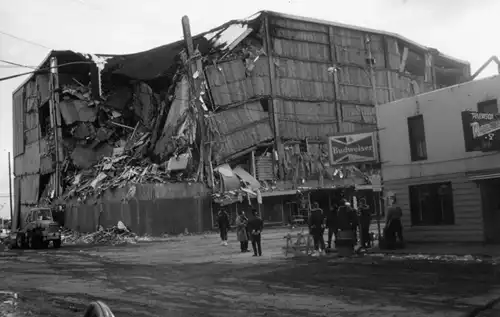
It was on this day in 1964 that a massive 9.2 earthquake in Southcentral Alaska.
The massive quake at 5:36 pm on March 27th caused much devastation throughout the region and generated a huge tsunami that inundated many communities in the region.
The quake was the largest in the history of the United States and initially killed 15 people while the resulting tsunami killed an additional 100 people in the new state and another 13 in California as well as five in Oregon.
The megathrust earthquake endured for four minutes and thirty-eight seconds and ruptured over 600 miles of fault and moved up to 60 feet in places.
The deadly quake occurred 15 and a half miles deep 40 miles west of Valdez and generated a ocean floor shift that created a wave 220 feet high.
As many as 20 other smaller tsunamis were generated by submarine landslides.

I grew up greeting friends and neighbors on my walk to my neighborhood Anchorage public school, just as my kids do now. It’s an essential, and value-added, part of living in our community.
In the late 1990s, when I attended Service High School, I had amazing teachers. My AP chemistry teacher left the oil and gas industry to teach. He could have earned significantly more money in another field, but teaching was competitive enough, given pensions and compensation, that he stayed in the job he loved and gave a generation of students a solid foundation in chemistry.
Now, my kids, who are in first, third and fifth grade, face a different reality. Teachers across our state are leaving in droves. Neighborhood schools across Alaska are closing. Art and music are being combined, which is nonsensical — they are not the same and they are both valuable independently. When he was in second grade, my oldest had a cohort of more than 60 students in his grade — split between two teachers. When he enters sixth grade next year, there will be no middle school sports and he will lose out on electives. Support systems and specialists to help when kids are falling behind have been cut. I’m lucky that my children have had amazing teachers, but many excellent teachers are nearing retirement age or don’t have a pension and are pursuing other careers. What happens then?
Despite skyrocketing inflation, last year was the first time in years that our schools received a significant increase in the Base Student Allocation — and that money doesn’t begin to make up for what they have lost over the years. Even that increase had to overcome two vetoes from what a recent teacher of the year calls “possibly the most anti-public education governor in the history of Alaska.” Shockingly, my own representative, Mia Costello, despite voting for the increase, failed to join the override to support education. She has failed to explain that decision when asked.
State spending on corrections is up 54% since 2019; meanwhile, spending on education is up only 12% in the same timeframe. Schools are now working with 77% of the funding they had 15 years ago when accounting for inflation.
When we starve our public schools of funding, Alaska families leave. No one wants their child to suffer from a subpar education and the lower test scores and opportunities that come with it. A significant number of people are working in Alaska but choosing not to raise their families here.
To the elected officials who preach school “choice” but starve public schools: our family’s choice is our neighborhood school. It’s our community. It’s where our friends are. Neighborhood public schools, which are required to accept all children, should be the best option out there. Public schools should be a good, strong, viable option for communities and neighborhoods across our great state. Once, they were.
I am thankful for those in the Legislature working to solve these problems. This includes HB 374, which raises the BSA by $630, and HB 261, which would make education funding less volatile.
It breaks my heart that across the state, dedicated teachers keep showing up for our kids while being underpaid and undervalued. Underfunding our schools is also a violation of Alaska’s constitution, which requires “adequate funding so as to accord to schools the ability to provide instruction in the standards.”
Not so long ago, Alaska’s public schools were adequately funded, and they produced well-educated students and retained excellent teachers. It’s up to all of us to reach out to our elected officials and urge them to make that the case once again.
Colleen Bolling is a lifelong Alaskan and mother of three who cares deeply about Alaska’s schools.
• • •
The Anchorage Daily News welcomes a broad range of viewpoints. To submit a piece for consideration, email commentary(at)adn.com. Send submissions shorter than 200 words to letters@adn.com or click here to submit via any web browser. Read our full guidelines for letters and commentaries here.

Minnesotans mobilize for third and potentially biggest No Kings Day

Saints open with road victory in Indianapolis

Pittsburgh has rainiest March in nearly 60 years as flooding causes issues across area

Augusta’s Turpin neighborhood to get affordable homes with $1.85M federal grant

‘Strong smell’ shuts down flights at major DC-area airports for the second time this month

Florida High School Football Rankings: Top 25 teams – Oct. 21

How old is Bo Nix? What to know about Oregon quarterback ahead of 2024 NFL Draft

Cleary's 21 help Le Moyne down Central Connecticut State 69-64 in OT

99th annual Pony Swim held in Virginia

Indiana Members Credit Union announced as new anchor tenant at Bottleworks District

WATCH: Senate hearing goes silent after Angel Father confronts top Dem over daughter’s death

US diplomat Marco Rubio denounces settler violence, tolls in Hormuz strait

Iran-linked hackers have breached FBI Director Kash Patel’s personal emails | CNN Politics

Live: CPAC 2026 Day 2

Video: Will ICE Change Under Its New Leader?
-

 Detroit, MI1 week ago
Drummer Brian Pastoria, longtime Detroit music advocate, dies at 68
-

 Movie Reviews1 week ago
‘Youth’ Twitter review: Ken Karunaas impresses audiences; Suraj Venjaramoodu adds charm; music wins praise | – The Times of India
-

 Sports6 days ago
IOC addresses execution of 19-year-old Iranian wrestler Saleh Mohammadi
-

 New Mexico5 days ago
Clovis shooting leaves one dead, four injured
-
 Business1 week ago
Disney’s new CEO says his focus is on storytelling and creativity
-

 Technology5 days ago
YouTube job scam text: How to spot it fast
-

 Tennessee4 days ago
Tennessee Police Investigating Alleged Assault Involving ‘Reacher’ Star Alan Ritchson
-

 Texas1 week ago
How to buy Houston vs. Texas A&M 2026 March Madness tickets