Alaska
Documenting an Alaska Village, Before and After the Storm That Destroyed It


Joann Carl’s dog Rocky, a long-eared, short-legged mix the color of graham crackers, has become Alaska famous since I first met Carl in April. Over the past few months, she’s seen his photo all over Facebook, she said, rescued after Typhoon Halong wiped away more than half the homes in her coastal Alaska Native village of Kipnuk, population 700.
At the Anchorage Daily News, we’re based in Alaska’s largest city but travel as often as we can to small communities like Kipnuk in an attempt to cover a state that’s twice the size of Texas. We try to report more than one story at a time to justify the expense of plane tickets. Flights to a remote village in a small plane cost the same as a trip to New York. But rarely do we have the chance to document a community just before the breaking news arrives.
Maybe you didn’t hear much about the typhoon. It began as a tropical storm, dumping record rainfall in parts of Japan before swirling toward Alaska. By the time it reached our shores, the remnants of the storm still carried enough force to flood two villages, sweeping away homes and leaving as many as three people dead.
I’m writing to you about the storm because photojournalist Marc Lester and I happened to visit Kipnuk shortly before the typhoon. Marc returned to cover the evacuation, providing a look at an Alaska village on the front lines of climate change just before and after the devastation.
The story of destruction in Carl’s hometown, along with the nearby village of Kwigillingok, adds an exclamation point to long-simmering fears about the future of Alaska coastal villages. Which town will be wiped away next? Where will climate refugees live? Should their former homes be rebuilt? If not, what does it mean for the future of these communities?
Emily Schwing, reporting for KYUK public radio in Bethel and ProPublica’s Local Reporting Network, wrote in May about climate refugees the government helped relocate from the Yup’ik village of Newtok. In November, while covering Alaska’s crumbling public school infrastructure, she wrote how the school in Kipnuk housed hundreds of residents as an emergency shelter during the storm surge from Halong.
When Marc and I first visited that schoolhouse in April, we were reporting on a very different kind of story. Justine Paul, Carl’s son, spent seven years in jail charged with murder in Alaska’s glacially slow justice system, where serious cases can take a decade to resolve. Paul’s case was ultimately dismissed after the evidence against him turned out to be deeply flawed. After struggling with addiction on the streets of Anchorage upon his release, Paul returned to live with Carl in the little Kipnuk house where he grew up.
Our visit to their village before the storm gave Marc a chance to document a version of Kipnuk that no longer exists and maybe never will again.

The people we met in the spring were subsequently airlifted to emergency shelter in an evacuation unlike any the state had experienced. They arrived in Bethel via helicopters and small planes. Some stayed in the regional hub. Others were packed shoulder-to-shoulder on the floor of a massive Alaska Air National Guard cargo plane bound for Anchorage. Many would end up staying for weeks in Anchorage at a convention center and a sports arena that had been transformed into emergency shelters.
Five days after the storm, Marc toured Kipnuk on the back of an all-terrain vehicle with one of the village’s few holdouts.
The floodwaters had devastated a community that’s been settling into melting permafrost like others on the coast. The central part of the village resembled a collapsed Jenga tower, rectangular homes scattered and strewn, Marc reported. Most were lifted from their pilings by the raging floodwater and deposited elsewhere. Some were surprisingly intact, but muddied, sodden, compromised and unlivable where they came to rest. Gone was the thrum and throttle of normal life we had seen earlier in the year, Marc found, replaced by an eerie vacancy.

It had taken Carl’s family five hours to travel the three blocks from their house to the makeshift shelter at the school when the storm first hit. Carl’s son Raymond helped elders get over debris on the ground. Pieces of houses washed against the town’s boardwalk. She said the whole village smelled of diesel fuel — spilled stove oil.
Villagers had to ration food that had been stored at the schoolhouse for students. “One cracker and a spoonful of hashbrowns” per person, Carl said. Eventually, volunteers salvaged dried Native foods from homes that were still standing: fish, berries, moose meat.
“We fed the kids more and the mens that were doing all the work, the rescues,” Carl said.
A volunteer pilot flew Rocky from Kipnuk to safety, she said. “Used her own gas.”
One house floated 15 miles away, Carl said. Bodies from some of Kipnuk’s aboveground graves had been seen near the town’s airport.
The storm, whose impacts the Alaska Climate Research Center later linked to global warming, killed 67-year-old Ella Mae Kashatok in Kwigillingok. The home she was in broke loose and floated toward the Bering Sea, state troopers said. Two members of her family, Vernon Pavil, 71, and Chester Kashatok, 41, have not been found.

Paul flew to Bethel and then to Togiak, a coastal village 140 miles from Kipnuk that was less impacted by the storms. Carl, who has diabetes, said she evacuated Kipnuk on a Blackhawk helicopter. She sat next to a 2-year-old girl whose name she didn’t know and who was traveling without her parents. Carl made a show of looking out the window and appearing interested in the scenery, she said, to keep the toddler occupied and calm.
Carl said Kipnuk’s subsistence culture made the villagers especially well-equipped to survive the aftermath of the storm. Hunters regularly face life-and-death decisions, she said. Starvation times weren’t so long ago. Elders taught everyone to dry and save food.
Carl, however, is not likely to be around to experience that way of life in the village anymore.

Although her home is one of the few that survived — it was built in the late 1970s or early ’80s on pilings moored deep in the tundra — she’s not optimistic about returning to the village full time.
She burst into tears when asked if Kipnuk will exist in the future.
“It’s probably the end,” she said over a recent lunch of Whoppers at an Anchorage Burger King. “It’s a ghost town.”




Veteran musher Jessie Holmes (bib # 7 ), of Brushkana, Alaska was the first musher to reach the McGrath checkpoint at 8:03 p.m. today with 16 dogs in harness, winning the Alaska Air Transit Spirit of Iditarod Award.
First presented in 2019 and given to the first musher to reach the McGrath checkpoint, this award is presented by Lead Dog partner, Alaska Air Transit. First introduced in 2019, this award honors the first musher to arrive at the McGrath Checkpoint. The McGrath community shares deep ties to the Iditarod, and the award reflects that connection, featuring beaver fur mushers mitts with Athabaskan beadwork on moose hide, handcrafted by Loretta Maillelle of McGrath, along with a beaver fur hat made by Rosalie Egrass of McGrath. The award was presented to Holmes by Jessica Beans-Vaeao, Charter Coordinator for Alaska Air Transit
“Our team is excited to present this Spirit of Iditarod award in McGrath again this year. The Beaded Moose Hide and Beaver Mitts were made by Loretta Maillelle of McGrath, and the hand sewn Beaver Hat was made by Rosalie Egrass of McGrath. Rosalie Egrass was able to fly home on our plane that took our crew and the award to McGrath, which made for a pretty special trip! We are proud to be providing service to McGrath, and feel that all local Air Carriers represent the spirit of Iditarod throughout Alaska on a daily basis. It is great to be a part of the air carriers that service the state with essential supplies and transportation, and to be a part of the Iditarod in a meaningful way,” said Josie Owen, owner of Alaska Air Transit.
This is Alaska Air Transit’s eighth year sponsoring the Iditarod and seventh year presenting the Spirit of Iditarod Award. Alaska Air Transit offers crucial flight support statewide via air charter and provides scheduled service to the Upper Kuskokwim communities of Nikolai, McGrath, Takotna and Tatalina as well as the Prince William Sound communities of Tatitlek and Chenega.

The 2026 Alaska high school girls basketball state championships begin this week, and High School On SI has brackets for all four classifications.
The brackets will be updated with scores and matchups throughout the week.
All four classifications will play their state championship games at Alaska Airlines Center in Anchorage.
The 1A and 2A championships run March 11-14. Classes 3A and 4A play the following week, March 18-21.
Alaska High School Girls Basketball 2026 State Championship Brackets, Matchups, Schedule – March 10
3/11 – Shaktoolik (1) vs. Arlicaq (16)
3/11 – Kake (8) vs. Tri-Valley (9)
3/11 – Fort Yukon (4) vs. Andreafski (13)
3/11 – Sand Point (5) vs. Napaaqutgmiut (12)
3/11 – Scammon Bay (2) vs. Nunamiut (15)
3/11 – Akiuk Memorial (7) vs. Newhalen (10)
3/11 – Davis-Romoth (3) vs. Cook Inlet Academy (14)
3/11 – Hoonah (6) vs. Shishmaref (11)
3/12 – Seward (1) vs. Chevak (8)
3/12 – Metlakatla (4) vs. Cordova (5)
3/12 – Craig (2) vs. Susitna Valley (7)
3/12 – Glennallen (3) vs. Degnan (6)
3/18 – Barrow (1) vs. Kotzebue (8)
3/18 – Grace Christian (4) vs. Galena (5)
3/18 – Monroe Catholic (2) vs. Delta (7)
3/18 – Mt. Edgecumbe (3) vs. Kenai Central (6)
3/18 – Mountain City Christian Academy (1) vs. North Pole (8)
3/18 – Colony (4) vs. West (5)
3/18 – Bartlett (2) vs. Juneau-Douglas (7)
3/18 – Wasilla (3) vs. Service (6)
More Coverage from High School On SI

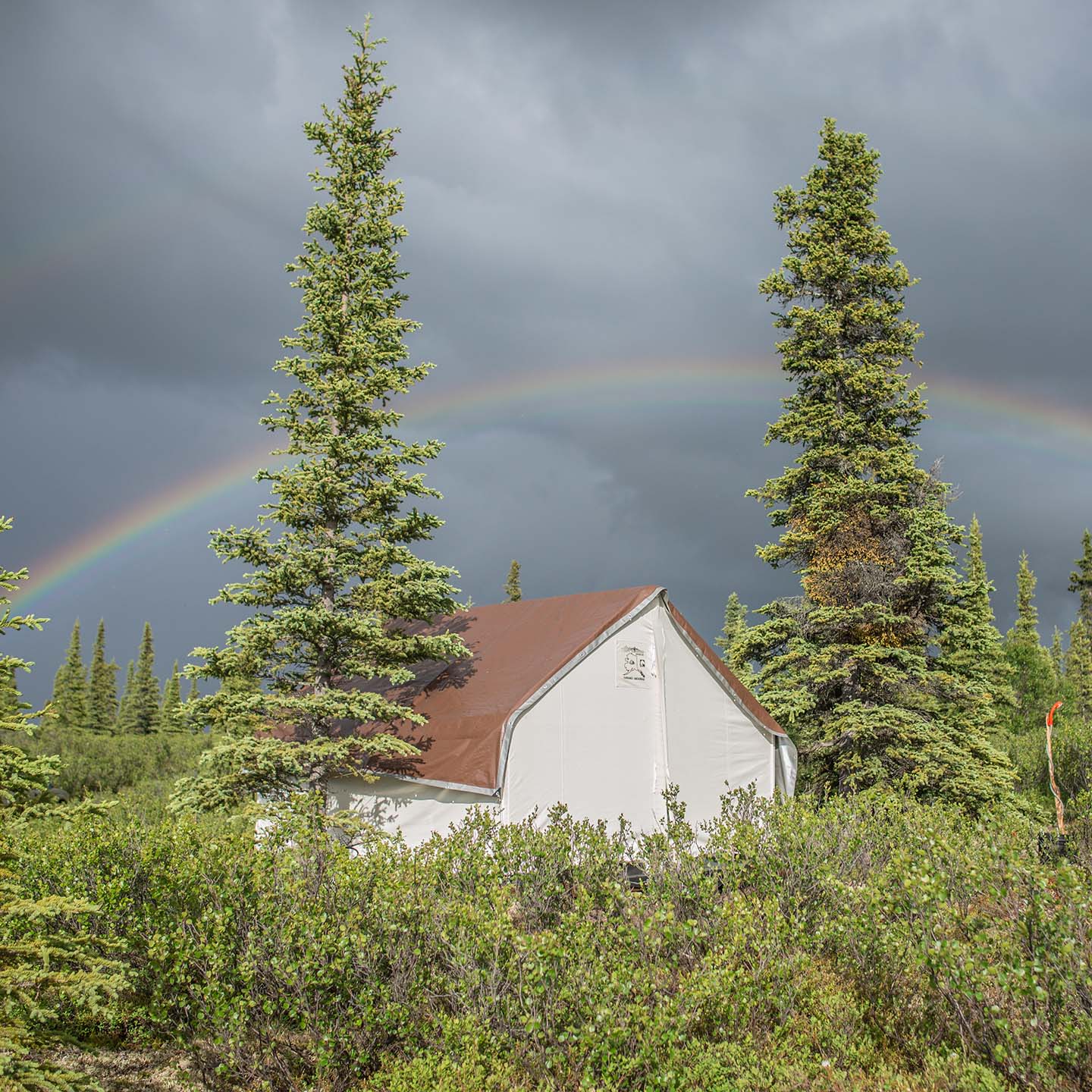
This is the Alaska Wall Tent by the Alaska Gear Company, each one is made in the United States from Sunforger 13oz DLX, a double-filled, pre-shrunk, marine-grade canvas ideal for longterm outdoor use.
The Alaska Wall Tent comes in an array of sizes and versions, allowing you to choose the one that best suits your individual use-case. They’re all individually made in Alaska, and perhaps even more importantly, they’re all tested extensively to be able to handle local conditions.
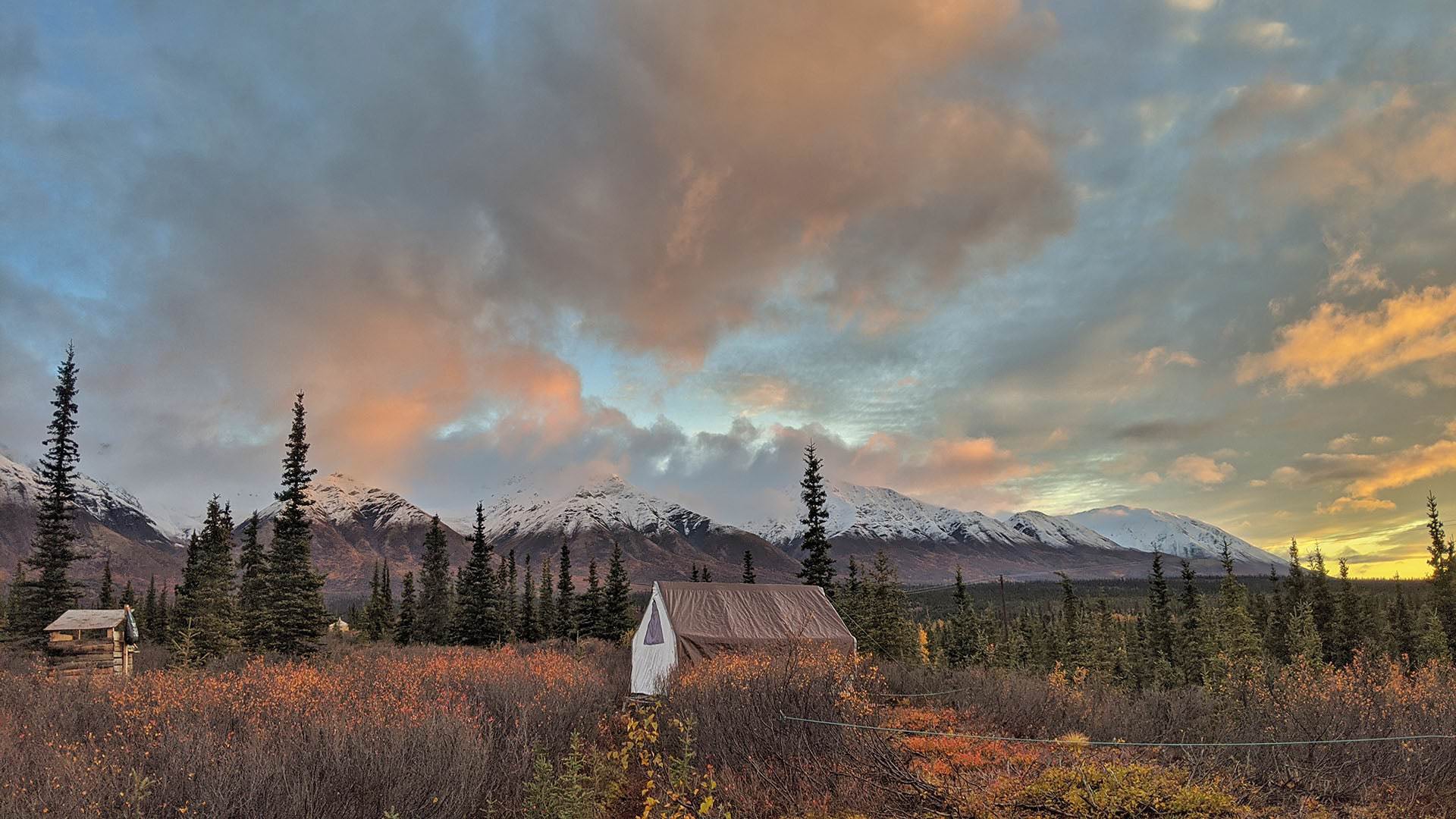
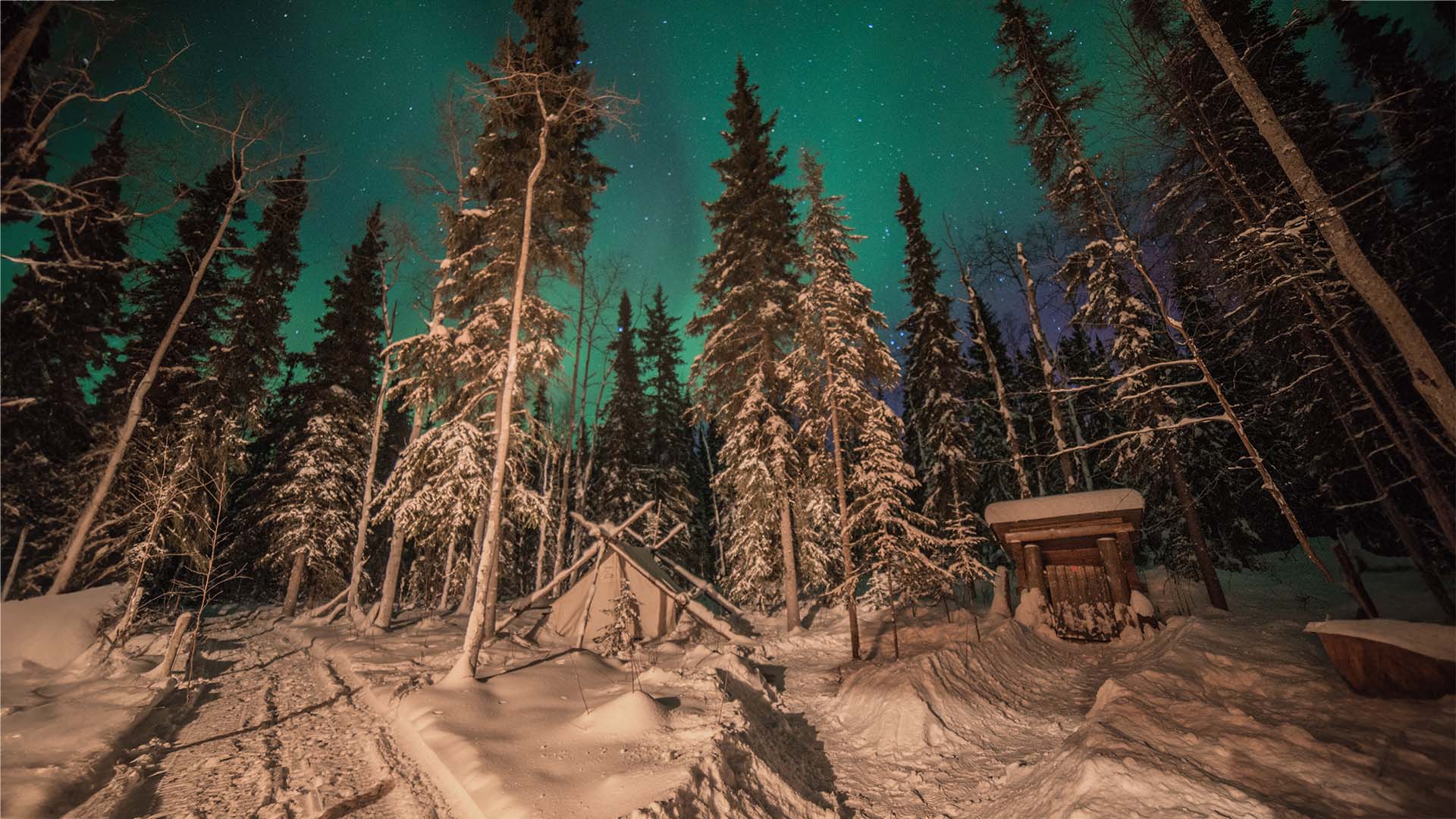
 This is the Alaska Wall Tent by the Alaska Gear Company, each one is made in the United States from Sunforger 13oz DLX, a double-filled, pre-shrunk, marine-grade canvas ideal for longterm outdoor use.
History Speedrun: The Alaska Gear Company
The Alaska Gear Company was formerly known as Airframes Alaska, it’s an aviation and outdoor equipment supplier and manufacturer headquartered in Palmer, Alaska. The company is led by majority owner Sean McLaughlin, who bought the original bush airplane parts business when it had just two employees and $100,000 in annual revenue. McLaughlin has since grown it to approximately 100 employees and $20 million in annual sales.
The company can trace its early roots to a licensed maker of Piper PA-18 Super Cub fuselages at Birchwood Airport. Through a series of acquisitions, including Reeve Air Motive (an aircraft parts retailer operating out of Anchorage’s Merrill Field since 1950, Alaska Tent & Tarp, and Northern Sled Works, the company grew well beyond aviation into outdoor recreation and cold-weather gear.
That diversification ultimately drove the rebrand from Airframes Alaska to Alaska Gear Company in late 2023, as the old name no longer conveyed the full scope of what the company produces and sells.
The Alaska Gear Company now operates out of three locations – a 100,000 square foot manufacturing facility in Palmer, a production facility in Fairbanks, and a retail store with an in-house sewing workshop at Merrill Field in Anchorage.
Its product lines span two major categories. On the aviation side, the company is best known for its hand-built Alaskan Bushwheel tundra tires, FAA-approved titanium landing gear, Super Cub fuselage modifications, and a wide range of bush plane parts. On the outdoor side, it manufactures Arctic Oven hot tents, canvas wall tents, custom freight and pulk sleds, and a modernized version of the iconic military bunny boot designed for extreme cold weather conditions.
More recently in 2024, the Alaska Gear Company was named “Made in Alaska Manufacturer of the Year” by the Alaska Department of Commerce.
The Alaska Wall Tent By The Alaska Gear Company
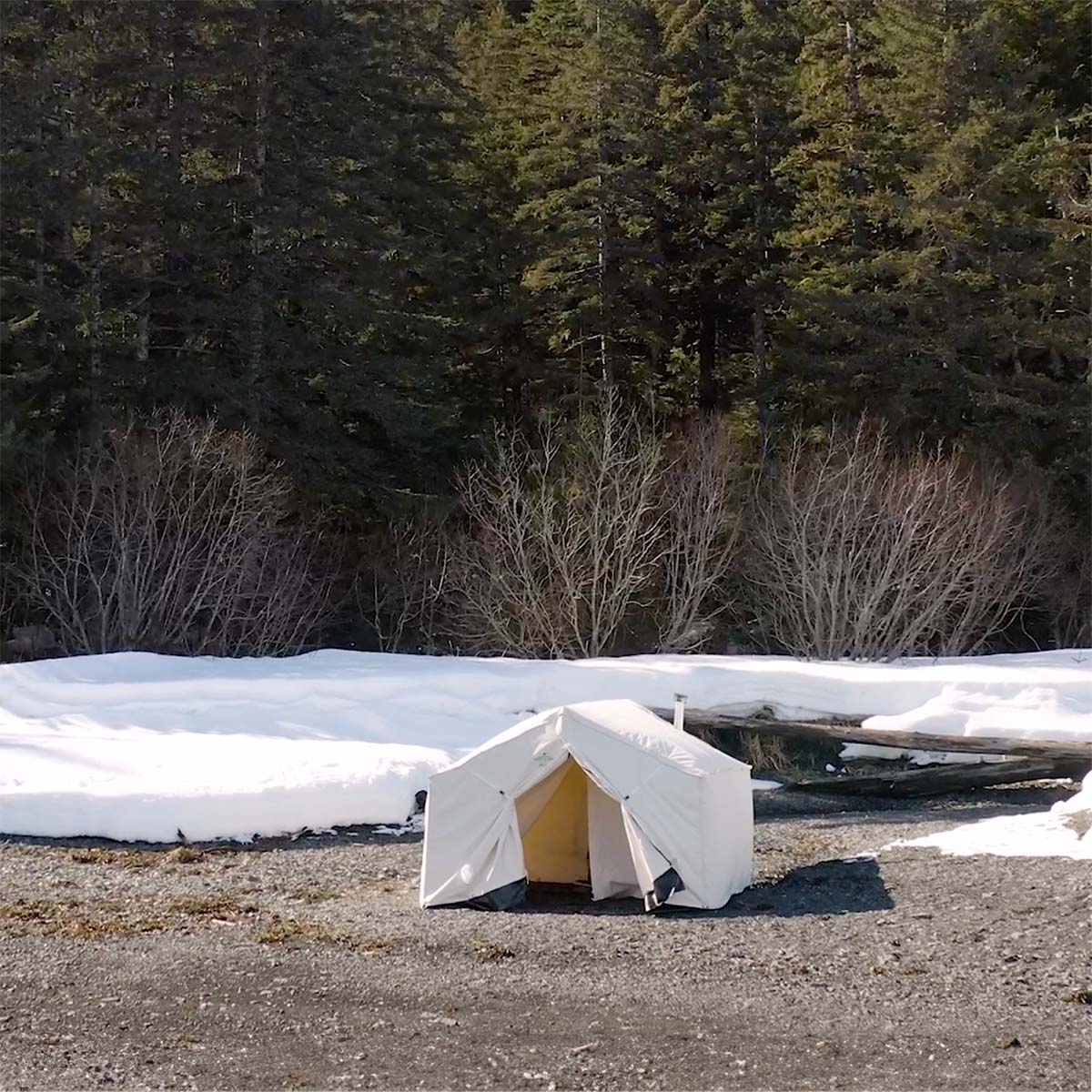
The Alaska Canvas Wall Tent is a handmade-in-Alaska canvas tent made from 13oz Sunforger DLX double-filled, preshrunk, marine-grade cotton canvas that’s treated to resist fire, water, and mildew while still remaining breathable.
It comes in four sizes, including 8×10, 10×12, 12×14, and 14×16 feet, all with 5-foot wall heights, and it’s available either unframed (starting at $1,295) or with a frame (starting at $2,300). The unframed version can be constructed in the field using lengths of wood sourced from the area, reducing the initial pack weight – this is crucial for trips into the wilderness by bush plane where every pound of weight is critical.


It comes in four sizes, including 8×10, 10×12, 12×14, and 14×16 feet, all with 5-foot wall heights, and it’s available either unframed (starting at $1,295) or with a frame (starting at $2,300). The unframed version can be constructed in the field using lengths of wood sourced from the area, reducing the initial pack weight – this is crucial for trips into the wilderness by bush plane where every pound of weight is critical.
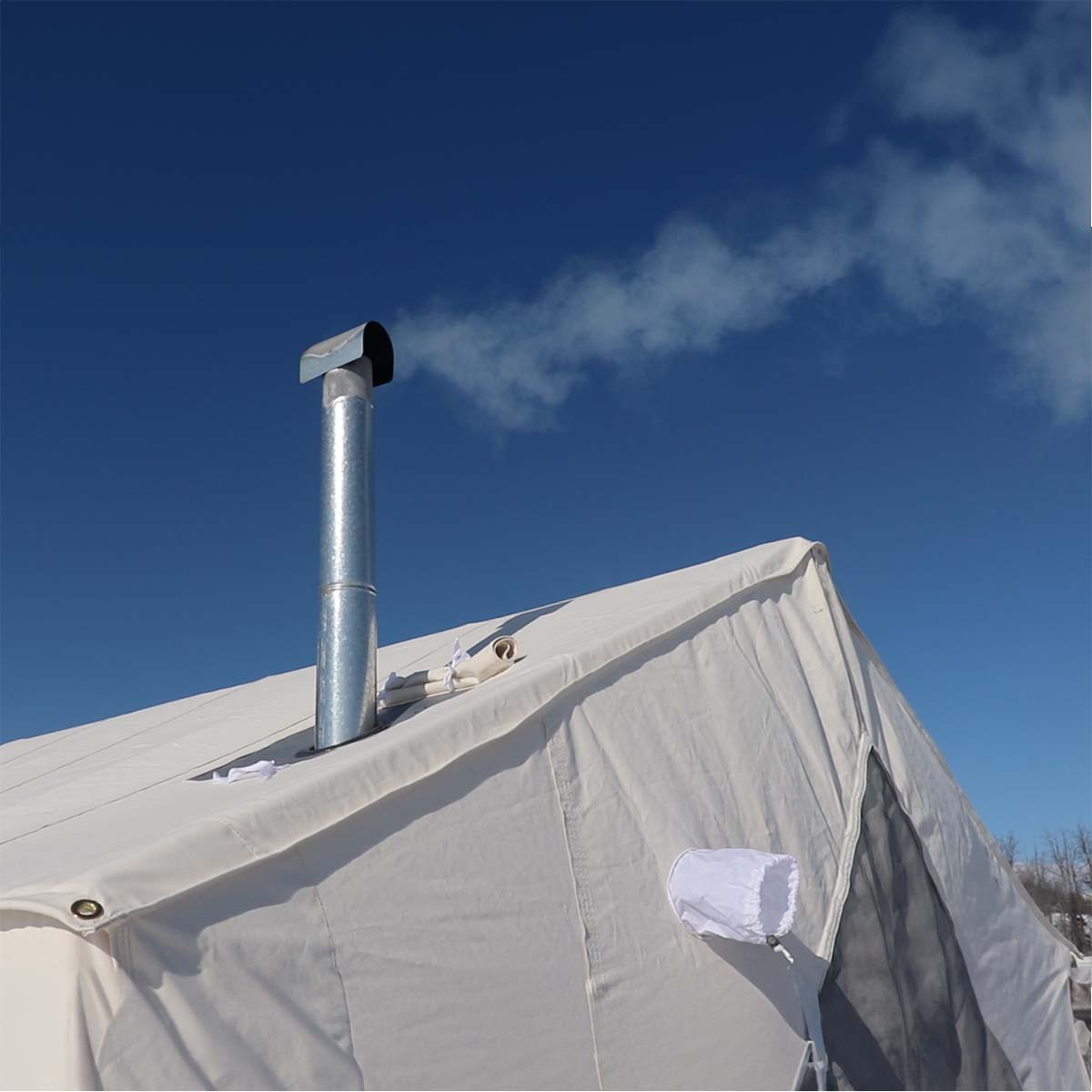
All tents include a 4.5 inch oval stove jack for use with wood or propane stoves, as well as a 56 inch triangular rear window with insect screening, an 18oz vinyl sod cloth around the base to block drafts and moisture, ridgepole openings at both ends, rope-reinforced eaves, brass grommets, overlapping door flaps with ties, a heavy-duty zippered door, and 100 feet of sisal rope for tie-downs.
The tents are now available to buy direct from the Alaska Gear Company here, and at the time of writing they have stock ready to ship out immediately.

Images courtesy of the Alaska Gear Company
Articles that Ben Branch has written have been covered on CNN, Popular Mechanics, Smithsonian Magazine, Road & Track Magazine, the official Pinterest blog, the official eBay Motors blog, BuzzFeed, Autoweek Magazine, Wired Magazine, Autoblog, Gear Patrol, Jalopnik, The Verge, and many more.
Silodrome was founded by Ben back in 2010, in the years since the site has grown to become a world leader in the alternative and vintage motoring sector, with well over a million monthly readers from around the world and many hundreds of thousands of followers on social media.

4Warn Weather Alert issued for Wednesday morning in Metro Detroit — What this means

Court document details attack on SF mayor’s bodyguard as Lurie responds to incident

Cowboys Team Doctor Played Role in Maxx Crosby-Ravens Trade Debacle

2-year-old boy bitten in face by two pit bulls in Miami Gardens backyard, police say

Shay Maloney’s overtime goal lifts Boston Fleet to road victory

Florida High School Football Rankings: Top 25 teams – Oct. 21

Cleary's 21 help Le Moyne down Central Connecticut State 69-64 in OT

How old is Bo Nix? What to know about Oregon quarterback ahead of 2024 NFL Draft

99th annual Pony Swim held in Virginia

Indiana Members Credit Union announced as new anchor tenant at Bottleworks District

EXCLUSIVE: ICE says El Paso detention facility will stay open under new contractor after $1.2B deal scrapped

Von der Leyen ‘acting outside of competence,’ Araud tells Euronews

Wheelchair curler Steve Emt’s path from drunk driver to three-time Paralympian

Map: 2.3-Magnitude Earthquake Reported North of New York City

Trump stirs GOP primary drama with visit to Massie’s Kentucky home turf
-

 Wisconsin1 week ago
Setting sail on iceboats across a frozen lake in Wisconsin
-

 Massachusetts1 week ago
Massachusetts man awaits word from family in Iran after attacks
-

 Pennsylvania6 days ago
Pa. man found guilty of raping teen girl who he took to Mexico
-

 Detroit, MI5 days ago
U.S. Postal Service could run out of money within a year
-

 Miami, FL7 days ago
City of Miami celebrates reopening of Flagler Street as part of beautification project
-

 Sports7 days ago
Keith Olbermann under fire for calling Lou Holtz a ‘scumbag’ after legendary coach’s death
-

 Virginia7 days ago
Giants will hold 2026 training camp in West Virginia
-

 Culture1 week ago
Try This Quiz on the Real Locations in These Magical and Mysterious Novels