Few places provide as awe-inspiring a maritime landscape within a short drive of a major international airport as the 16,000-square-mile Kenai Peninsula, which hangs from the coast of Southcentral Alaska like an emerald pendant earring.
A popular destination with cruise ships, this minimally developed tract of evergreen-shrouded coastal mountains, deep frigid fjords and sprawling glaciers is also the southern terminus of the Alaska Railroad. Additionally, it’s the western tip of the state’s — and the continent’s — contiguous road system. Fun fact: It’s a 5,330-mile drive from Homer, the last town on this itinerary, to the other end of the continent, Key West.
Kayaking near Holgate Glacier in Aialik Bay in Kenai Fjords National Park. MATT HAGE/VISIT ALASKA
On the roughly 300-mile drive from Anchorage down through this captivating peninsula, you’ll pass through quirky towns popular with outdoors enthusiasts, artists, craft beer makers, chefs and free spirits. Along this route, you can visit the wildlife-rich waters of Prince William Sound, Kenai Fjords National Park and Kachemak Bay. And while it’s well worth booking a local day cruise or kayak trip to fully explore the region’s waters, a car provides the most enjoyable way to get from point to point.
If you have time, combine this trip with an adventure north from Anchorage to Denali National Park and Fairbanks.
Kenai Peninsula road trip planning
STATE OF ALASKA/BRIAN ADAMS/VISIT ALASKA
You’re never more than a two- or three-hour drive between the key points on this itinerary, most of which lie along the Seward and Sterling highways. On a map, these roads are numbered as Highway 1 and, for the short spur of road into the small city of Seward, Highway 9, but Alaskans always refer to roads by their name rather than their route number.
Roads leading to the main towns and attractions on the Kenai Peninsula are well-maintained and marked, and gas stations are located fairly regularly. Because cell service is unreliable in places, it’s a good idea to download maps before you set out. Always watch for wildlife: Moose, bears and other creatures frequently cross these forested roads.
Advertisement
Alaska car rentals are pricey from late spring through early fall, with one-week round-trip rentals in Anchorage starting at around $600. Give yourself plenty of time to drive to Ted Stevens Anchorage International Airport (ANC) if you have a flight to catch. From Homer, the drive can take as little as four and a half hours, but road construction and bus traffic in high season can cause delays. It’s best to allow at least six or seven hours to avoid rushing.
DIY versus an organized tour
Several tour companies can lead you on a group excursion through much of this itinerary — especially Seward, Whittier, Girdwood and Anchorage — but plenty of compelling reasons exist to experience the Kenai Peninsula on your own. The cost of either approach is fairly similar, but road-tripping independently allows for more flexibility, freedom from crowds and the promise of more intimate and distinctive hotels and restaurants.
For more on this topic, see our Southcentral Alaska road trip guide, as the tour options for that region overlap with those on the Kenai Peninsula.
Daily Newsletter
Reward your inbox with the TPG Daily newsletter
Join over 700,000 readers for breaking news, in-depth guides and exclusive deals from TPG’s experts
Advertisement
Budgeting your time
Although it’s possible to drive from Anchorage to Homer in under five hours, allow at least four nights and five days to explore the region without rushing. (Spend two of those nights in Homer, which is particularly rich in things to see and do.) Ideally, take a full week to explore the Kenai Peninsula.
Getting to Anchorage
This itinerary starts in the state’s largest city, Anchorage. It is home to Ted Stevens Anchorage International Airport, which offers flights to numerous North American hubs of most major airlines and several direct international routes.
The best months to visit the Kenai Peninsula
Prince William Sound along the Kenai Peninsula. BEN PRESCOTT/VISIT ALAKSA
As is true throughout Alaska’s coastal regions, the ideal season for visiting the Kenai Peninsula is late spring through early fall. Many tourism-related businesses — including accommodations, recreation outfitters and restaurants — shut down or greatly reduce hours for the rest of the year. And the odds of encountering clear skies on the Kenai Peninsula are best during these months.
However, even in summer, rain and fog can occur in these parts. Always pack layers, including at least one all-weather jacket, a hat and waterproof footwear. Other advantages to visiting in summer are the many hours of daylight and the mild temperatures. In Homer and Seward, the thermometer typically climbs into the mid-60s on summer days.
Anchorage to Girdwood
The view of Turnagain Arm from the lookout at Bird Point. BRUCE YUANYUEBI/GETTY IMAGES
Anchorage is a practical place to start and end your trip, and it also offers a bounty of interesting attractions, eclectic restaurants, comfortable hotels and easily reached hikes and outdoor adventures. Find recommendations on what to see and do and where to stay in Anchorage in our Southcentral Alaska road trip guide.
Views of the calm waters of Turnagain Arm, a long and narrow finger of Cook Inlet, and the steep, jagged mountains of the Chugach range dominate the 40-mile drive from Anchorage down Seward Highway to tiny Girdwood.
Along this drive, you’ll encounter several roadside pullouts — Beluga Point being the most popular — where you can stop to watch for whales in July and August and see surfers riding the arm’s bore tide, considered the longest wave in the United States. (This typically happens twice daily, a few hours after low tide.) Popular treks include the easily navigated boardwalks of Potter Marsh bird sanctuary and the 4.5-mile round-trip Bird Ridge hike, a vertiginous but rewarding scramble with unparalleled Chugach Mountains and Turnagain Arm views.
Advertisement
Be very careful not to walk out onto the wet, muddy flats of Turnagain Arm at low tide. It may appear to be a docile, almost inviting landscape for a stroll, but the silty mud flats here can trap people like quicksand. Over the years, several have become stuck here and drowned.
Exploring Girdwood
Alyeska Nordic Spa. KIRSTIAN L IREY/ALYESKA NORDIC SPA/FACEBOOK
When you reach the left turn for Girdwood, follow Alyeska Highway a few miles into the rustic downtown, which has a handful of shops and cafes as well as the famed Double Musky Inn, an upscale restaurant with a down-home personality and New Orleans-style cuisine. Established in the 1890s as a gold-mining community, Girdwood is more closely associated these days with Alyeska Resort, an expansive, mountainous property that contains one of the state’s poshest hotels and offers myriad recreational opportunities. You can hike or take the aerial tram up to the state’s most acclaimed ski area — the recipient of nearly 700 inches of snow annually and known for seriously steep terrain. Summer activities include mountain biking, hiking and walking across a pair of 2,500-foot-high sky bridges.
Near the base of the tram, the serenely stylish Alyeska Nordic Spa opened in 2022 and is a delightful place to laze for a couple of hours, immersing yourself in a forested hydrotherapy circuit comprising cold plunge pools and wooden hot tubs as well as saunas and steam rooms. An array of massage and body treatments are available, too, and a casually chic restaurant serves healthy spa-minded cuisine. But for the ultimate culinary experience, reserve (well in advance) a table at Seven Glaciers, which serves locally sourced multicourse feasts in a glass-enclosed dining room at the top of the tram.
Where to stay in Girdwood
Alyeska Resort in Girdwood. TRAVEL ALASKA
In Girdwood, the Alyeska Resort (rates start at $459 per night) features eight floors of smartly decorated rooms and provides easy access to nature. A cozier and quieter option in the center of town, Carriage House Accommodations (rates start at $190 per night) comprises three charmingly rustic rooms in the main lodge and three cottages ideal for families or small groups. A hearty breakfast is included, and guests can soak away their stresses in the covered outdoor hot tub.
Girdwood to Seward
Brown bear living in the Alaska Wildlife Conservation Center. MANONTHEGO/GETTY IMAGES
About 10 miles south of Girdwood on Seward Highway, stop for an hour to explore the Alaska Wildlife Conservation Center, a 200-acre sanctuary with huge natural enclosures inhabited by injured or orphaned animals that can’t be released back into the wild. You can view just about every major species of mammal common to the state, including musk oxen, brown and black bears, moose and reindeer. You can walk or drive along pathways that get you close to the enclosure’s fences. There’s also a central area near the gift shop with several smaller enclosures that hold eagles, owls, porcupines and lynx.
Detour to Whittier
Whittier, Alaska. ANNHFHUNG/GETTY IMAGES
Just past the Alaska Wildlife Conservation Center, turn left onto Portage Glacier Road toward Whittier. About six miles later, you’ll pass the shore of icy-blue Portage Lake and the side road to Begich, Boggs Visitor Center, where you can view exhibits about the immense Portage Glacier, which lies at the end of the lake and has receded out of view due to global warming. You can, however, get a great view of the glacier — and sometimes massive pieces of ice breaking off into the lake — by taking a one-hour cruise on the 80-foot Ptarmigan.
To reach Whittier, you’ll need to time the journey with the opening of the Anton Anderson Memorial Tunnel, a 2.5-mile-long passageway beneath 4,100-foot Maynard Mountain, the longest combination vehicle-train tunnel in North America. In the direction of Whittier (eastbound), it opens to vehicles for 15 minutes every hour on the half-hour (the toll, which you can pay by cash or credit card, is $13). Westbound, the tunnel opens every hour on the hour. The tunnel can get busy in summer, so try to arrive about a half-hour before the time of your crossing.
Aerial shot of Portage Glacier, Portage Lake and the Chugach Mountains near Whittier, Alaska. PATRICK J. ENDRES/GETTY IMAGES
After driving through the tunnel, you’ll emerge into this diminutive town surrounded by the Chugach Mountains and Passage Canal, a slender arm of the enormous Prince William Sound (nearly half the size of Lake Michigan). Along with Seward, Whittier is one of the region’s two major cruise ship ports. Before 2000, when the tunnel opened to cars, you could get there only by train or boat. Developed as a military transport hub during World War II, Whittier’s utilitarian midcentury architecture won’t win any beauty contests, but it’s a fantastic port for maritime adventures. The friendly and informative guides at Alaska Sea Kayakers lead fascinating paddles to a black-legged kittiwake bird rookery and around the soaring waterfalls and secret coves of Passage Canal, while Phillips Cruises & Tours conducts memorable half-day glacier-viewing excursions around Prince William Sound on high-speed catamarans.
Continuing to Seward
Once you’re back on the main route, follow the Seward Highway around the southern end of Turnagain Arm and be sure to stop at the pull-off to snap a selfie in front of the big wood-carved Welcome to Alaska’s Kenai Peninsula sign. The Seward Highway then climbs over 900-foot Turnagain Pass before plunging through the rugged wilderness of Chugach National Forest.
Where the road enters a deep valley at shimmering Tern Lake, bear left, continuing onto the spur of Seward Highway (labeled Highway 9 on maps). This final 40-mile stretch to Seward offers plenty of eye-popping scenery as it meanders over Moose Pass and alongside the shores of a few different rippling bodies of water, including the southern shore of boomerang-shaped Kenai Lake.
Advertisement
Exploring Seward
Seward, Alaska. NIAZ UDDIN/TRAVEL ALASKA
Seward is at the head of narrow Resurrection Bay, framed on both sides by emerald peaks. Kenai Fjords National Park encompasses the west side of the bay. The road into town first passes by the small airport and then the Seward Cruise Ship Terminal.
From the adjacent marina, several companies offer half- and full-day wildlife-viewing cruises, which are the best way to experience the coastal sections of Kenai Fjords National Park. The well-respected company Major Marine Tours is an excellent choice, as its narrated 6- to 8.5-hour cruises on a sleek and stable catamaran offer views of the sea lion colonies on the rocky Chiswell Islands and of the formidable Aialik Glacier. You’ll typically see cavorting orcas and humpback whales on these narrated cruises, along with sea otters, mountain goats, Dall’s porpoises, puffins, eagles and countless other birds.
It’s just a few miles south from the marina into Seward’s small but lively downtown of galleries, gift shops and restaurants. Resurrect Art Coffee House and Seward Brewing Company are excellent choices for a bite to eat. The must-see attraction here is the Alaska SeaLife Center, a nonprofit marine mammal rehabilitation center on the bay’s edge that’s both an informative, well-designed environmental science museum and an engaging public aquarium. Here you can see local seabirds and marine mammals up close and better understand the region’s critical ocean ecology.
Ice hiking Exit Glacier in Kenai Fjords National Park. JANICE CHEN/GETTY IMAGES
The town’s other major draw is the opportunity to visit Exit Glacier, a valley glacier within Kenai Fjords National Park that is receding rapidly like many others. In recent memory, you could walk a short distance from the parking lot at Exit Glacier Nature Center, a 20-minute drive from downtown Seward, and stand at the base of this massive ice field. These days, you need to hike about a half-mile up a well-marked trail to a viewing area that affords a decent but increasingly distant view of the glacier.
For a more dramatic look at the park’s icy monoliths, set aside about six hours to make the 8.6-mile there-and-back hike up to the 700-square-mile Harding Icefield, the source of all 38 of the park’s glaciers. You need to be reasonably fit to contend with this hike’s 3,100-foot elevation gain, but the views of massive glaciers and roaring waterfalls keep improving the whole way up.
Where to stay in Seward
The Harbor 360 Hotel in Seward, Alaska. JODY OVERSTREET/HARBOR 360 HOTEL/FACEBOOK
Just north of downtown Seward, the Harbor 360 Hotel (rates start at $379 per night) is a cheerfully decorated three-story hotel with stunning bay views — ask for a waterfront room with a balcony. This property is a terrific option for planning a Kenai Fjords cruise with Major Marine Tours, as boats depart from the hotel’s pier. The upscale Hotel Edgewater (rates start at $260 per night) has the advantage of being located right in the center of Seward, steps from restaurants and the Alaska SeaLife Center. Many of its 75 rooms have balconies and Resurrection Bay views, but these premium rooms have steeper rates.
Seward to Homer
Cooper Landing. STATE OF ALASKA/BRIAN ADAMS/VISIT ALASKA
It takes about three and a half hours to drive nonstop from Seward to Homer, but there are a few notable things to see and do on this drive. After taking Seward Highway north back to Tern Lake, turn left onto Sterling Highway to continue your journey into the peninsula’s southwestern reaches. If you have the time and are game for a rafting or salmon-fishing trip on the Kenai River, consider tacking on an overnight. There are some inviting wildlife lodges in Cooper Landing and several practical motels and guest houses in the peninsula’s main population center, which comprises three adjoining communities: Sterling, Soldotna and Kenai.
Soldotna and Kenai
TRAVEL ALASKA/STATE OF ALASKA/BRIAN ADAMS
The main reason to stop in this area is to pick up groceries and refill your gas tank, but if you’re not in a hurry, it’s also worth making a 12-mile side excursion to Kenai’s Old Town, which overlooks the point where the Kenai River empties into Cook Inlet. Old Town is also home to the Holy Assumption Russian Orthodox Church, a stately building crowned with ornate blue onion domes built in 1896 when there was still a significant Russian community in many Alaskan towns. You’ll find some noteworthy lunch and dinner options, including Flats Bistro in Kenai, plus Addie Camp and St. Elias Brewing in Soldotna.
Ninilchik
Russian Orthodox Holy Transfiguration of Our Lord Chapel on the Kenai Peninsula. MOELYN PHOTOS/GETTY IMAGES
The final 75-mile stretch of Sterling Highway from Soldotna to Homer is quite scenic, as Cook Inlet and the distant volcanic peaks to the west come into view. There are a couple of great photo ops along the way. In Ninilchik, turn right at the Transfiguration of Our Lord Church sign. After a short distance on this dirt road, you’ll come to this small, photogenic wooden church with a green roof, several golden onion domes, a white picket fence and a wildflower-strewn burial ground. Watch for bald eagles overhead — a wary-eyed mother eagle often builds a gigantic nest for her chicks in one of the trees visible just to the east of the cemetery.
Anchor Point
Fly fishing in Upper Twin Lakes in Lake Clark National Park and Preserve. ANDREW PEACOCK/GETTY IMAGES
About 20 miles south, follow the signs from Sterling Highway about 2 miles west to Anchor River State Recreation Area. At the end of the road, you can watch fishermen casting for steelhead and salmon and take in impressive views 40 miles across Cook Inlet toward the volcanic peaks of Lake Clark National Park and Preserve. Geography buffs should walk over to Halibut Point Campground to snap a photo of the sign that tells you you’re standing at the most westerly point of North America’s highway system.
Where to stay between Seward and Homer
For breaking up your drive between Seward and Homer, it’s hard to beat the comfort and setting of Kenai Princess Wilderness Lodge (rates start at $269 per night), a cabin-inspired building with steep red roofs and great views of the surrounding mountains. Set directly along the Kenai River, the 86-room lodge caters heavily to group tours, but it also offers awesome rafting, kayaking and float trips and has an excellent bar and restaurant.
Exploring Homer
Aerial view of Homer, Alaska. VISIT HOMER ALASKA/FACEBOOK
Although Homer has just over 6,100 residents, this jewel of a town on Kachemak Bay punches well above its weight with its art and culinary scenes. It’s also a vibrant hub of outdoor recreation and commercial fishing, and because few cruise ships call here, it’s generally less crowded than Seward and Whittier. Sea-to-table restaurants like the Pacific Rim-inspired Kannery, the cozily romantic Fresh Catch Cafe and the casual seafood-bowl purveyor Johnny’s Corner turn out some of the finest food in the state.
As Sterling Highway descends into town, snap a photo from Homer Baycrest Overlook for a panoramic view of Homer Spit, a 1,500-foot-wide sliver of sand and gravel that juts 4.5 miles into the bay and is home to several excellent art galleries and restaurants, as well as companies offering fishing, water taxi and wildlife-watching services.
Advertisement
Before heading out onto the spit, stop by the free Alaska Maritime National Wildlife Refuge Visitor Center, which has extensive exhibits related to the human and natural history of this vast preserve that stretches as far as the Aleutian Islands and is home to about 80% of North America’s seabird population. It’s adjacent to Homer’s tiny and enchanting Old Town, where you can get lunch at homey Wild Honey Bistro (famed for its sweet and savory crepes) or Two Sisters Bakery.
Boat ride full of tourists looking for marine wildlife in Halibut Cove in Homer. TRAVEL ALASKA/STATE OF ALASKA/BRIAN ADAMS
Another enjoyable activity is extending your road trip slightly and making a scenic 22-mile meander along Skyline Drive through the verdant highlands that rise above the north shore of Kachemak Bay. Stop for a hike through the wildflowers at Eveline State Recreation Site.
Homer is a jumping-off point for several classic Alaska adventures, from charter sport-fishing excursions for salmon and halibut to sea kayaking and glacier hikes across the bay at Kachemak Bay State Park to flightseeing trips to Katmai and Lake Clark national parks. For example, Emerald Air Service offers full-day trips to watch the prolific bear population at legendary Brooks Falls in Katmai National Park. Or, for an aerial view over Kachemak Bay and the glaciers in and around Kachemak Bay State Park, book a trip with Alaska Helicopter Tours; these tours typically include landing for a walkabout for a better look at the astounding terrain. And on an excursion with well-established True North Kayak Adventures, you can book a paddle around beautiful Halibut Cove.
Where to stay in Homer
The Bay Avenue Inn in Homer. SCOTT DICKERSON/BAY AVENUE BED AND BREAKFAST INN/FACEBOOK
The reasonably priced Bay Avenue Inn (rates start at $190 per night) has seven comfy rooms. It overlooks Kachemak Bay and Homer Spit in a quiet, centrally located residential neighborhood. Perks include a friendly and knowledgeable staff, complimentary breakfast and inviting indoor and outdoor common spaces. Located in Homer’s cute Old Town, the Driftwood Inn & Suites (rates start at $145 per night) offers a nice range of lodging options, all of them casually but comfortably decorated, including cozy, economical rooms in the original historic inn, several cottages and lodges geared toward groups and longer stays, and even an RV park. (Note that the least expensive rooms have shared bathrooms.)
Several exclusive wilderness retreats across Kachemak Bay are accessible by water taxi, floatplane or helicopter. These properties are generally all-inclusive (with meals and activities) and require at least a three-night minimum stay, but they do offer a luxury experience in a dazzling and remote setting at the end of your road trip. These hideaways include Kachemak Bay Wilderness Lodge (from $7,000 per person for five nights) and Tutka Bay Lodge (from $8,900 per person for three nights).
The first Jesuit missionaries in Alaska sailed up the Yukon River in 1887. By the turn of the 20th century, the religious order of the Catholic Church had as many as 50 Jesuits in the state.
Now, only two remain. And by the end of June, there will be none.
The Jesuits’ nearly 140 years in the state was honored at an event at Bethel’s Immaculate Conception Church on June 16. A procession of priests wearing long white gowns with red hems walked down the aisle to open the event. The Bishop of the Diocese of Fairbanks, Stephen Maekawa, thumped the ground with a shimmering silver staff known as a clozier as he approached the altar.
Bishop of the Diocese of Fairbanks, Steven Maekawa, walks toward the altar at the Immaculate Conception Church in Bethel.
“My brothers and sisters, we gather together to celebrate this wonderful and blessed occasion to acknowledge the love of God and the work of God through the 139 year mission of the Society of Jesus of the Jesuit fathers,” Maekawa said to open the event.
Advertisement
A traditional Catholic mass followed, with readings in both English and Yup’ik. During the sermon, Maekawa acknowledged the vastness of the Fairbanks diocese, and the tremendous amount of work done by the Jesuits to establish it.
“All of the 46 churches of the Diocese of Fairbanks that we currently have were established by either the Jesuit fathers or by direction of a Jesuit bishop,” Maekawa said. “We have a long history of the Society of Jesus’ presence and ministry here in all of Alaska.”
The Jesuits are an order within the Catholic Church, akin to the Dominicans or Franciscans. They have a reputation for taking on some of the Catholic Church’s most remote assignments.
That missionary spirit brought the Jesuits to the Yukon River in 1887, where they built churches, schools, and ministries. Without their work, Catholicism may not have taken root in huge swaths of Alaska, particularly among Alaska Native communities.
The Immaculate Conception Church in Bethel.
But the Jesuits leave a complicated legacy. Their methods of converting Native people to the religion, particularly in the first half of the 20th century, created generational traumas still felt to this day.
Advertisement
Fr. Sean Carroll is the provincial of the Jesuits West Province, which oversees Alaska and nine other states.
Fr. Sean Carroll, provincial of the Jesuits West Province, speaks at an event recognizing nearly 140 years of Jesuit service in Alaska.
“Thank you for all that you have taught us about who Jesus is and how to love and serve Him wholeheartedly,” Carroll said. “I also thank you for your patience with us. For there have been times when we have sinned and when we have hurt you.”
Missionaries, including the Jesuits, forcefully converted and assimilated Alaska Native people into Western culture and religion. Students at Jesuit-run boarding schools were forced to abandon their Native languages and physically punished when caught speaking languages other than English. Native dancing and drumming were also banned.
The Jesuits West Province maintains a list of 150 Jesuits with credible claims of sexual abuse against minors or vulnerable adults. A quarter of the accused Jesuits served in Alaska at some point in time.
“I ask for your forgiveness for all that we have done that was not rooted in Christ and love for Him, and for when we did not value your culture nor recognize the presence of God in you,” Carroll said.
Advertisement
Carroll gave the order to withdraw from the state last spring. A big issue was the recruitment of Jesuits willing to travel and serve in remote villages. He told the congregation that the Jesuits’ work would continue, just without a permanent presence.
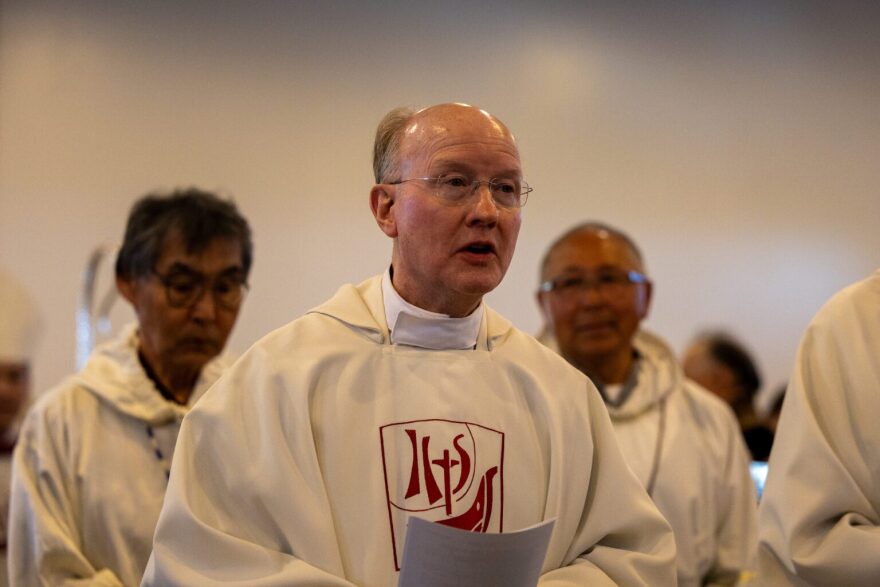
Fr. Rich Magner, one of the two remaining Jesuit priests in Alaska, attends a ceremony in Bethel.
Fr. Rich Magner is one of the two remaining Jesuit priests in Alaska. His last day serving Chevak, Hooper Bay, and Scammon Bay is June 30.
“We all always knew coming in, or should have known, that we’re not going to be here forever. It’s going to be mission accomplished at some point,” Magner said. “And then we hand it off to the diocese that we’ve helped create, and so that’s a good feeling.”
Magner’s next stop is a Clinical Pastoral Education residency in Tacoma, Washington.
The other remaining priest, Fr. Tom Provinsal, first came to Alaska in 1968 to teach. A fond memory, he said, was meeting Elders that practiced traditional subsistence lifestyles.
Advertisement
“Some of the grandmothers, their fingers were just all bent with arthritis and stuff like that, you know, their whole lives they’ve been working out in the cold and the wet, doing food, sewing, all that kind of stuff,” Provinsal said. “I’d say I just feel very privileged to have come when I did come and to see that.”
Provinsal returned in 1975 as a priest and has served in the region ever since. After moving away, he plans to take a five month sabbatical. What happens next, he said, is in God’s hands.
Two lines formed in the aisle for communion at the end of the mass. After taking communion, Bethel’s Parish Administrator Susan Murphy gave a final thank you.
“It’s difficult to say goodbye to people who have been a part of our lives for so long,” Murphy said. “We know that you have done what was yours to do, and have taught us to do what is ours to do. We are grateful.”
Jesuit priests form a row along the altar of Bethel’s Immaculate Conception Church as members of the congregation lift their arms and pray.
Dominic Hunt, a Yup’ik deacon that flew in from Emmonak for the event, led the congregation through a final prayer.
Advertisement
“Bless them with your wisdom, that they may be a word of hope, a world in need. We ask this through Christ, our Lord. Amen,” Hunt said.
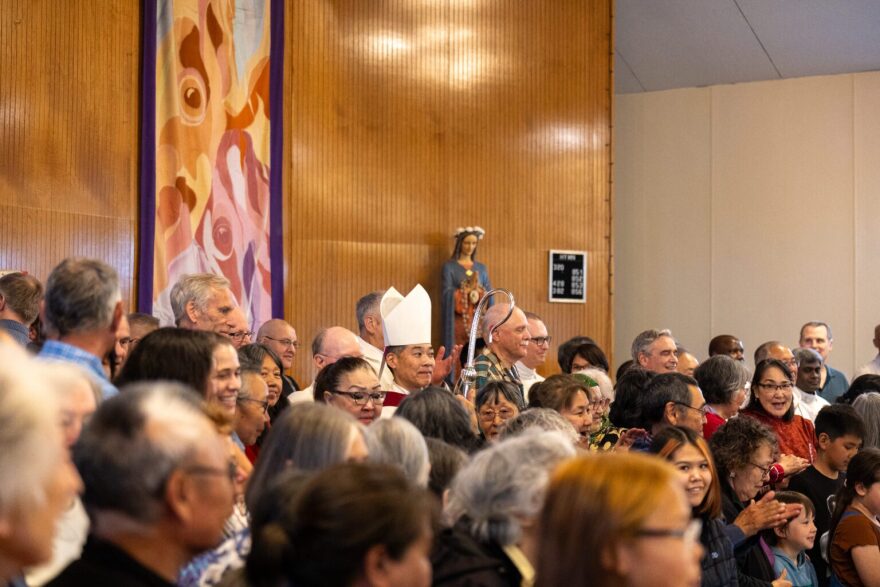
About 70 people posed for a photo on the altar – priests, deacons, parishioners, Elders and children — many of them smiling, some standing quietly.
The photo doesn’t tell the whole story. But it’s a moment when gratitude, grief, and memory all shared the same room.
Bishop of the Diocese of Fairbanks, Steven Maekawa, stands in the middle of a crowd waiting to take a photo at Bethel’s Immaculate Conception Church.
JUNEAU, Alaska (KTUU) – The Supreme Court of Alaska will be taking up the case of the State of Alaska, Division of Elections v. Daniel J. Sullivan, Jr.
The oral arguments will be held Monday at 10 a.m. via Zoom, according to an order and opening notice.
The document also specifies that a decision is expected to be made before noon on Tuesday.
According to documents from the Division of Elections, the state must start printing ballots at noon on the same day.
Advertisement
This comes after an Anchorage Superior Court Judge ordered Dan J. Sullivan on to the ballot Friday.
See a spelling or grammar error? Report it to web@ktuu.com