Alaska
Alaska Airlines passengers refile Boeing door plug lawsuit


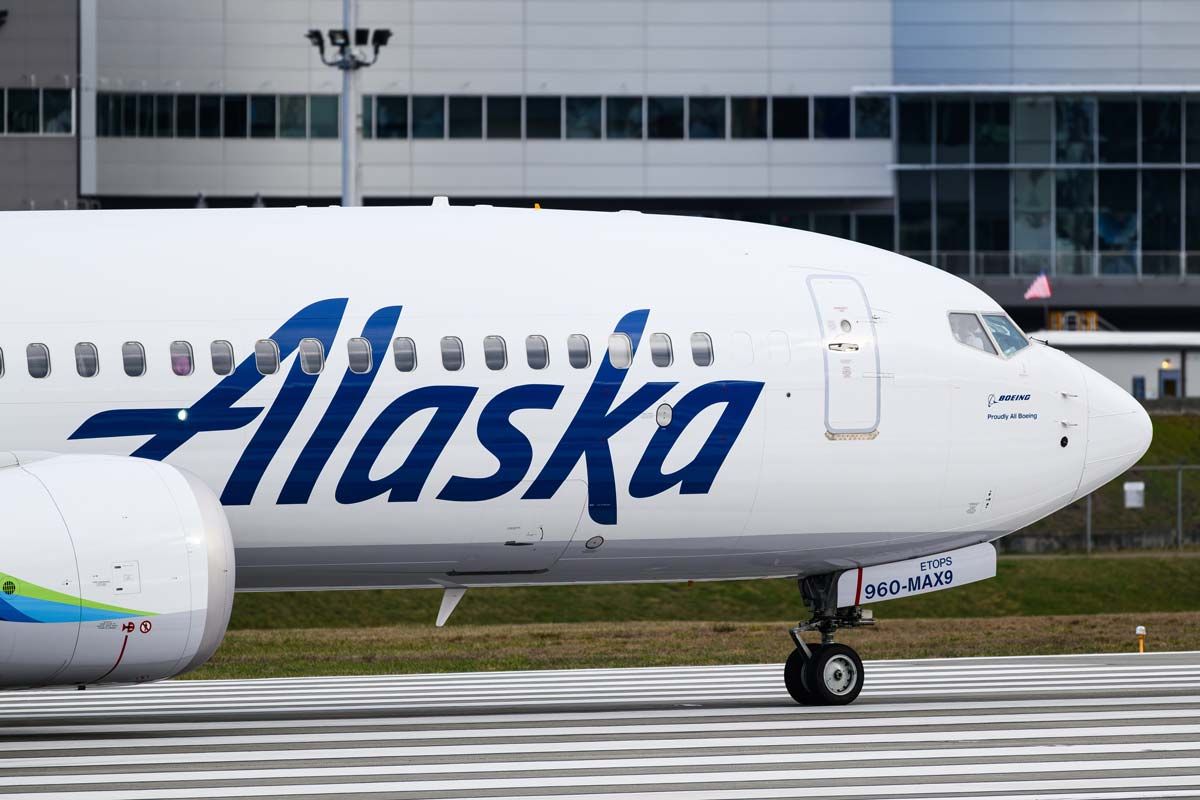
Boeing lawsuit overview:
- Who: A group of passengers on a Jan. 5 Alaska Airlines flight refiled a lawsuit against Alaska Airlines Inc. and The Boeing Company.
- Why: They claim Boeing has a culture of “cutting corners” and failed to detect the missing bolts that caused a door plug to detach during their flight.
- Where: The Boeing lawsuit was filed in Washington federal court.
Alaska Airlines passengers traveling on Jan. 5 when the door plug blew out during their flight have refiled their Boeing lawsuit claiming the company’s culture of “cutting corners” put their safety at risk.
Cuong Tran, Huy Tran, Ket Tran and Tram Vo filed the Boeing lawsuit against The Boeing Company, Spirit Aerosystems Inc., Alaska Airlines Inc. and 10 unnamed defendants a few days after voluntarily dismissing their earlier lawsuit filed in state court. Three minor children, listed only by their initials, are also included as plaintiffs.
During their flight from Portland, Oregon, to Ontario, California, the left mid-exit door plug separated from the 737 Max 9 aircraft, “leaving a gaping hole in the fuselage,” the Alaska Airlines lawsuit says.
Rapid decompression of the passenger compartment caused phones, seatbacks and passengers’ clothing to be sucked out of the plane, the plaintiffs allege.
“As a result of this violent and terrifying event the passengers and crew suffered harm including physical injuries and serious emotional distress, fear and anxiety,” according to the Boeing lawsuit.
Boeing lawsuit says company has culture of ‘cutting corners’
The plaintiffs allege the door plug separated from the plane because arrestor bolts meant to prevent the plug from sliding had never been installed and suggest the oversight was part of a pattern of lax safety protocols within the company.
Within the last decade, the Federal Aviation Administration (FAA) reportedly found Boeing failed to follow important safety protocols, such as marking assembly tasks as “complete” even though they were not completed. Boeing entered into a settlement over these issues in 2015 requiring the airplane manufacturer to implement mandatory safety improvements and regular auditing of its systems, the Boeing lawsuit explains.
The U.S. Department of Justice reportedly filed a criminal complaint against Boeing in 2021, and Boeing subsequently admitted to a count of conspiracy to defraud the United States. As part of a deferred prosecution agreement, Boeing again was supposed to strengthen its compliance programs and bolster its safety procedures.
However, the Alaska Airlines lawsuit asserts Boeing’s implementation of safety measures was inadequate and the plaintiffs blame the incident on Boeing’s “practice and culture … of cutting corners.”
They claim the disaster would have been prevented with reasonable quality control measures that would have detected the missing bolts and other potential problems with the door plug.
Another Alaska Airlines lawsuit was filed in January in King County Superior Court in Washington.
What do you think about the allegations in the Alaska Airlines lawsuit? Join the discussion in the comments.
The plaintiffs are represented by Brian D. Weinstein, Alexandra B. Caggiano and Dylan J. Johnson of Weinstein Caggiano PLLC and Ari Friedman and Timothy Loranger of Wisner Baum.
The Boeing lawsuit is Cuong Tran, et al. v. The Boeing Company, et al., Case No. 2:24-cv-00791-JNW, in the U.S. District Court for the Western District of Washington.
Read About More Class Action Lawsuits & Class Action Settlements:



After decades of fierce debate over oil drilling in the Arctic National Wildlife Refuge, oil companies largely appear leery of the idea.
The contested swath of federal land, on Alaska’s Beaufort Sea coast, is politically fraught and far from existing roads and pipelines. And given the limited data on its geology, oil executives still aren’t sure how much petroleum is trapped underground.
In spite of three federal lease sales of refuge land in the past decade — with the most recent sale just last month — not a single major oil company has bid.
Instead, the industry is flooding into a different federal area far to the west, the National Petroleum Reserve–Alaska, where there are proven oil deposits and fewer political obstacles to development.
But the decades-long quest to find oil in the Arctic refuge isn’t over. The largest oil and gas exploration program in the area’s history could soon begin — funded not by companies like ConocoPhillips or ExxonMobil but by an arm of the state of Alaska.
Alaska’s economic development corporation, the Alaska Industrial Development and Export Authority, known as AIDEA, is launching its own, up-to-$175-million plan to search for fossil fuels beneath the refuge’s coastal plain, a sliver of tundra along the Arctic Ocean.

The state agency is the largest leaseholder in the refuge, having bought up more than 600 square miles since Congress opened the area to leasing in 2017. If AIDEA can acquire key permits, large trucks could roll across the frozen tundra as soon as next winter, shooting shockwaves deep underground to scan for oil reservoirs.
But the plan faces stiff blowback, and it’s stirring up debate about the future of the Arctic refuge and spending decisions by AIDEA — a state-owned corporation that’s already under attack by opponents of its pro-resource extraction agenda.
AIDEA and its allies argue that its work will help prove the refuge contains vast amounts of oil, and could unleash a flood of corporate investment that would translate into jobs and state revenue for Alaska.
Critics, meanwhile, say that a state entity shouldn’t take on the role, and risk, of an oil company — spending big in an area where industry has refused to invest.
“They’re lone wolves out on the tundra, so to speak,” said Pat Pourchot, a former U.S. Department of Interior official who also once served as commissioner of the Alaska Department of Natural Resources.
AIDEA was one of only two participants in the latest federal lease sale, along with a small Alaska gas producer, HEX.
The two entities bid on just one-tenth of the acreage offered by the Trump administration.
‘Very serious concerns about reporting on ANWR’
The exploration work that AIDEA now intends to fund is known as “3-D” seismic because it generates a three-dimensional image of rocks deep underground. That information would give analysts a much clearer and more detailed idea of what’s beneath the ground than older, 2-D data that was collected in the refuge in the 1980s.
The effort could yield crucial insight into the area’s oil potential, said Mark Myers, a former director of the U.S. Geological Survey who’s also worked as a top land manager for Alaska state government.
“You would need 3-D out there, quite clearly, to understand what’s under the ground,” Myers said. “Modern data will inform a lot.”
Promising results could attract oil companies — but there’s no guarantee the data will be positive, he added.
“Whether or not the oil is there is independent of what we want to believe,” Myers said.
Oil prospecting is speculative work, typically the domain of private investors and companies with technical expertise — and a willingness to sustain big expenses that don’t always pay off. Merely searching for oil in the Arctic can cost hundreds of millions of dollars, and ramping up to production can cost billions.
While AIDEA has loaned money to other oil and gas companies before, it has never overseen its own Arctic exploration program. Its staff is not made up of petroleum geologists nor other technical experts typically employed by oil firms.
But in May, AIDEA’s governor-appointed board approved spending up to $175 million on the 3-D seismic testing, including “permitting and regulatory work.” It did not include money for drilling, which would typically come after seismic data has been collected.
Industry experts say that budget is higher than usual for a season of seismic work on the North Slope. But the resolution does not specify how long the project will last, and AIDEA is not obligated to spend all the money approved by the board.
In 2013, then-Gov. Sean Parnell’s administration proposed spending $50 million on oil exploration in the refuge, equivalent to some $70 million today when adjusted for inflation. But the Obama administration blocked that effort.
AIDEA has not released details about its effort to gather seismic data, and officials with the agency declined to answer questions or release basic information about it, including an expected timeline. The agency has not yet applied for key permits from the federal Bureau of Land Management and U.S. Fish and Wildlife Service, according to spokespersons for those agencies.
“We’re advancing seismic. We’re advancing a drilling plan. We’re fighting the opponents of the project in the federal district court,” AIDEA Executive Director Randy Ruaro said at a board meeting last month.
Ruaro did not respond to questions seeking clarification about his comments, though in a previous email to Northern Journal, he expressed “very serious concerns about reporting on ANWR and bias.”
Some positive impacts of development of the refuge’s coastal plain “seem to get omitted from every story,” Ruaro added, pointing to potential revenue to state and local governments, royalties that oil producers would pay to the state and the resulting higher Alaska Permanent Fund dividend checks for state residents.

Ruaro also said media coverage tends to ignore “the unfair treatment of Kaktovik,” an Iñupiaq community inside the refuge whose leaders support development, as well as “intentional discrimination against Alaska and North Slope oil and gas development by banks and insurers instigated by the Gwich’in.”
Leaders of the Gwich’in, an Indigenous group in Alaska’s Interior and northwestern Canada, have long opposed drilling on the coastal plain. The area encompasses the calving grounds of a major caribou herd that migrates south into Gwich’in lands, where the animals are harvested for food.
“Advocating for our way of life does not discriminate against anyone, but it most certainly doesn’t discriminate against massive corporations with huge stores of wealth that are making decisions based on financial return and risks,” Kristen Moreland, executive director of the Gwich’in Steering Committee, wrote in an email to Northern Journal.
‘We’re not going to do anything radical’
To lay the groundwork for its seismic program, AIDEA is spending $1 million on a contract with a subsidiary of the North Slope’s Indigenous-owned corporation, Arctic Slope Regional Corp. — a longtime supporter of drilling in the refuge.
The subsidiary, ASRC Consulting and Environmental Services, is working on community outreach, environmental studies and permitting related to the seismic program, according to documents that Northern Journal obtained through a records request.
ASRC is also subcontracting with a Houston-based firm, SAExploration, that has been working on proposals for seismic testing in the refuge since 2018.
A spokesperson for the ASRC subsidiary referred Northern Journal to AIDEA for comment.
Under a separate, $70,000 contract with AIDEA, the ASRC subsidiary last year issued a glowing report on the coastal plain’s oil and gas potential.
The report described the refuge as the most promising unexplored area in North America — excluding offshore deposits — citing historical data and large new discoveries on state land nearby. Decades ago, the U.S. Geological Survey estimated that as many as 16 billion barrels of recoverable oil lie beneath the coastal plain.

While the Legislature oversees AIDEA’s annual operating budget, the agency’s finances are separate from other government funds — and only certain kinds of spending, like issuing bonds over a certain amount, require specific legislative approval.
Still, some lawmakers aren’t convinced that seismic testing in the refuge is the best use of AIDEA’s money
“I do think that the scale of some of these projects — the type of development that they pursue, and the lack of oversight on that development — does really raise questions about: What are our priorities as a state?” said Rep. Ashley Carrick, a Democrat from Fairbanks who chairs the House State Affairs Committee.
Carrick introduced a bill last year that would require legislative approval of AIDEA spending proposals over $100 million. It failed to advance.
Most of Alaska’s elected officials — as well as many Iñupiaq leaders in Kaktovik and across the North Slope — have pushed hard to open the Arctic refuge to development, citing potential economic benefits.
One longtime proponent, Republican U.S. Sen. Lisa Murkowski, said the recent lease sale results “were not surprising, given the acreage already leased and the continued partisan push against responsible development.”
Murkowski described the refuge as “basically unexplored,” suggesting that it could be similar to an oil-rich geologic formation, the Nanushuk, that was discovered only about a decade ago. That formation has since led to the industry’s revival in the petroleum reserve, to the west of the refuge.
The coastal plain’s “true prospectivity can only emerge as leaseholders move forward under a federal administration willing to work with them,” Murkowski said in a statement to Northern Journal.
The other petroleum company with leases in the refuge, HEX, has not announced plans for the area it acquired in the recent sale.
“I’m here as an Alaskan trying to be a responsible developer for Alaska, so we have opportunities in the future for our kids and my grandkids,” said John Hendrix, HEX’s chief executive.
HEX mostly produces natural gas in a different petroleum basin, Cook Inlet, near Anchorage. Hendrix declined to comment on the potential for partnering with AIDEA on development in the Arctic, but the two entities have worked together before. Two years ago, AIDEA opened a $50 million line of credit to HEX to fund the company’s drilling in Cook Inlet.
Hendrix described HEX’s foray into the Arctic as a way to diversify his business. He would not say if the company is already planning work on its leases — and if so, when it might happen.
“We’re a private company, and we keep that stuff tight to ourselves,” Hendrix said. “We’re not going to do anything radical. But we will do what we have to do to bring production forward.”
Northern Journal-Anchorage Press contributor Max Graham can be reached at max@northernjournal.com. This article was originally published in Northern Journal, a newsletter from Nathaniel Herz that is merging with the Anchorage Press. Subscribe at northernjournal.com.

Enter your email and we’ll send a secure one-click link to sign in.
WKRN is provided by Nexstar Media Inc., and uses the My Nexstar sign-in, which works across our media network.
Nexstar Media Inc. is a leading, diversified media company that produces and distributes engaging local and national news, sports, and entertainment content across its television and digital platforms. The My Nexstar sign-in works across the Nexstar network—including The CW, NewsNation, The Hill, and more. Learn more at nexstar.tv/privacy-policy.

Located 60 miles above the Arctic Circle, Coldfoot is a busy truck stop on Alaska’s Dalton Highway. Step off the gravel pad, which underlies a year-round population of 34, and you’ll head into several hundred miles of dense boreal forest and the mountain tundra of the Brooks Range.
It’s midsummer and peak travel time on the Dalton, Alaska’s only road to the Arctic Ocean. Large trucks of many types haul freight, fuel, machinery and other supplies to Deadhorse and Prudhoe Bay, and passenger vehicles haul tourists hoping for musk oxen.
From the edge of the Coldfoot truck stop, a pair of yellow eyes in a softly severe, silver face looks out from dense willows and alders. They curiously and calmly take in the people coming and going from their vehicles, tapping on phones, ripping open candy bars, taking selfies.

The eyes belong to Alaska’s only native wild cat, the Canada lynx. She quietly turns away from the parking lot, exposing a leather collar with a GPS transmitter. Her kittens are not quite old enough to accompany her on hunting trips, so she heads back alone toward her den in the hills, a shallow scrape of dirt under a willow bush. The collar identifies her as F700529, but she has a nickname — Lucy.
Lucy is one of more than 50 lynx tracked by Knut Kielland, a professor at the University of Alaska Fairbanks’ Institute of Arctic Biology. Together with his graduate student Emily Wieser and UAF wildlife biologist Ophelie Couriot, they hope to answer questions about lynx resiliency to human disturbance along the Middle Fork of the Koyukuk and Dietrich rivers, which flow near the Dalton.

Understanding how lynx respond to Dalton traffic is now of particular interest. Trucks servicing ConocoPhillips’ Nuna and Willow oil development projects will use the highway year-round as their main artery, and if the proposed Ambler Mining Project is approved, vehicles supporting mining operations will also use the Dalton.
Lucy and generations of lynx before her have lived, died and raised families alongside the pipeline’s Haul Road. After workers built 390 miles of highway between April and September 1974, others began constructing the 800-mile trans-Alaska pipeline. At its peak in 1977, the Coldfoot-Wiseman stretch of highway felt the passage of more than 450 large trucks each day. After a sharp decline in the 1980s, truck traffic has remained steady over the past 40 years, though passenger vehicle traffic has increased since the highway opened to the public in 1994.
How have lynx like Lucy responded to road construction and use? Until recently, it’s been difficult to measure. In environmental impact statements they prepared for the Alyeska Pipeline Service Co., contractors focused on how large mammals — caribou, moose, bears — might be impacted by the pipeline. Lynx were not a focus of environmental assessment during litigation and construction, so little pre-pipeline information is available.

Enter Kielland and GPS collars, which he started buckling onto Coldfoot-Wiseman lynx in 2017. Kielland’s collars capture location six times a day, which gives an unprecedented picture of lynx behavior and movement in the area.
The lynx resiliency project is only a year old — too early for conclusions. However, based on recent research led by former UAF graduate students Akashia Martinez-Dragomir and Matt Kynoch, Kielland predicts that lynx, whose personalities differ just like yours and mine, will respond in various ways to the expected increase in traffic volume.

Martinez-Dragomir found that female lynx’s response will be mostly influenced by whether or not they raise kittens — denning mothers will stay closer to their dens, while kitten-less females may roam more broadly. Kynoch saw that lynx are most active during twilight, which coincides with but may not be caused by quieter Dalton traffic. Individual differences in lynx behavior may augment or mask any traffic-volume effect, so more GPS data are needed to suss out general patterns.
As Lucy slips back to her shallow den on a quiet hillside, Kielland and his collaborators track her from their Fairbanks offices, watching how this cryptic cat moves as trucks in increasing numbers continue to rumble their way north.
-
Massachusetts5 minutes ago
Trial begins for Massachusetts mom who says postpartum issues led her to kill 3 children
-

 Minnesota11 minutes ago
St. Cloud Picked Up 0.12 Inches Of Rain Overnight As Storm Risk Shifts East
-

 Mississippi17 minutes ago
What we know about the Black teen found dead after Mississippi boat trip | CBC News
-

 Montana29 minutes ago
How Nashville’s country music talent helps shape Big Sky’s music scene
-

 Nebraska35 minutes ago
Nebraska volleyball great Jordan Larson feeling at peace after coming out of retirement
-

 Nevada41 minutes ago
REG – Sunrise Resources – New Copper-Silver-Gold Project, Nevada
-

 New Hampshire47 minutes ago
PFAS found in loon eggs across New Hampshire raise new concerns about lakes and fish
-

 New Jersey53 minutes ago
Online coffee brand plants roots with café in Hackensack

